CodeSmith Tool Architecture: Fifty Tools, One Slot

CodeSmith governs 100+ tools through a single interface slot, so each cross-cutting concern is implemented exactly once.
Based on the CodeSmith v0.5.0 source code, the article dissects its tool governance architecture: all built-in, MCP, extension, and sub-agent tools plug into the same slot. The slot comprises three trait layers — framework-layer Tool, production-layer ToolSpec (approval derived from capabilities), and seam-layer ToolDispatcher. A unified registry converges heterogeneous tools under Arc<dyn ToolSpec>, with fail-closed preventing collateral damage. The dispatch pipeline supports speculative starts, approval fingerprints, and RwLock-controlled concurrent batches. Fault tolerance offers a five-level repair ladder that distinguishes in-protocol corruption from out-of-protocol forgery. Results use 22K-head + 8K-tail truncation with disk overflow.
CodeSmith Tool Architecture: Fifty Tools, One Slot
When an agent ships with fifty-plus built-in tools, plus MCP external tools, dynamic library extension tools, and sub-agent tools, the total easily exceeds one hundred. How are they all governed uniformly? CodeSmith's answer: every tool plugs into the same slot, so each cross-cutting concern is implemented exactly once at the interface.
Based on the CodeSmith v0.5.0 (commit 3a74c82f) source code, this article dissects this slot's three-layer trait design, unified registration mechanism, dispatch pipeline, and fault-tolerant repair ladder.
Three Layers of Traits: The Slot's Family Tree
The slot has three layers of lineage, each living in a separate crate.
At the bottom is the framework-layer Tool (crates/agent/src/tools/mod.rs:46-78), a minimal, host-agnostic contract whose doc comment calls itself "the analog of LangChain's BaseTool." It has only name, description, input_schema, and a run method returning a boxed future. It deliberately knows nothing about approval or sandboxing; the comment explicitly states that this layer's capabilities are merely "advisory metadata for the host" — the framework core does not gatekeep; gatekeeping is the host's job.
In the middle is the production-layer ToolSpec (crates/agent-runtime/src/tools/spec.rs:809-886), the layer that actually does the work, and thus far more bloated. Its most opinionated design is capability as approval policy.
fn approval_requirement(&self) -> ApprovalRequirement {
    let caps = self.capabilities();
    if caps.contains(&ToolCapability::ExecutesCode) {
        ApprovalRequirement::Required
    } else if caps.contains(&ToolCapability::WritesFiles) {
        ApprovalRequirement::Suggest
    } else {
        ApprovalRequirement::Auto
    }
}
Anything that executes code always requires approval, anything that writes files always suggests approval, and everything else passes automatically. The approval level is not an isolated knob each tool declares on its own — it is derived from the capability set. A new tool only needs to truthfully declare its capabilities, and the gates fall into place by themselves. If fine-grained control by input is needed, there is also the approval_requirement_for_input hook — the same code-executing tool can treat rm and ls differently.
The interface also has two quiet but critical methods: validate_input performs centralized semantic validation before approval, and defer_loading registers a tool without sending it to the model, leaving activation to on-demand tool search.
Outermost is the seam-layer ToolDispatcher (crates/agent-runtime/src/tool_dispatch.rs:53-105): each round the engine holds only this Box<dyn ...>, querying tools through an "eager, input-independent" metadata snapshot, never depending on the TUI's concrete registry. The motivation is written in the module comment: ToolContext carries roughly thirty host-coupled service fields (terminal, notifications, task manager, etc.) that "cannot live in the runtime crate."
Reading the three layers together: the framework layer defines "can be executed," the production layer defines "how it is governed," and the seam layer defines "governed without seeing the details." Each layer knows only what it should know.
Boxed Future is an idiomatic term in Rust async programming, referring to a Pin<Box<dyn Future<Output = T> + Send>> returned after boxing an async block or Future via Box::pin. Because async fn return types in trait methods are not yet fully stabilized, and different implementations return concrete Future types of unknown size, using impl Future as a trait method return type is currently not feasible. The cost of boxing is one heap allocation and one layer of dynamic dispatch, in exchange for trait objectification — Tool can be written as dyn Tool, allowing a registry to hold a heterogeneous collection of tools. CodeSmith chose this trade-off precisely so that fifty-plus tools from different sources can all be type-erased through the same interface and dispatched uniformly, consistent with the Arc<dyn ToolSpec> storage approach.
Unified Registration: All Roads Lead to One Vec
Every tool ultimately becomes an Arc<dyn ToolSpec> in the same registry: built-in tools implement it directly, MCP tools are wrapped by an adapter, and extension tools are bridged through ExtensionToolSpecAdapter. The sub-agent's tool surface is built by the same builder as the parent agent — the comment calls this "staying in sync" — which is exactly why sub-agents can recursively spawn sub-agents.
MCP capability determination starts from the conservative side: only discovery-class helpers with list_mcp/read_mcp in their names count as read-only; everything else is treated as "requires approval, requires network."
"Unless it is a known discovery-class helper, conservatively treat MCP tools as requiring approval and network access." —
crates/tui/src/tools/registry.rs:867-925module comment
There is a fail-closed checkpoint at the registry entrance (crates/agent-runtime/src/tools/registry.rs:484-642): the tool name must match ^[a-zA-Z0-9_-]{1,64}$, and the schema root must be an object. A non-compliant tool neither panics nor returns a 400 — it is replaced with a FailClosedTool whose description reads "Unavailable: this tool failed to initialize and is in a fail-closed state. Do not call it." Any call to it always returns unavailable. The comment spells out why: if a bad plugin's definition blows up mid-round, it "either panics mid-round or triggers a 400 that invalidates every tool" — one bad tool's sin must not be inherited by all tools.
Fifty weapons sounds impressive, but "many" is itself a disease: beyond one hundred tools, even the most advanced models start making mistakes on multiple-choice; flattening them all into context both eats tokens and pierces the KV Cache with every change to the toolset.
The industry's answer has three tiers, each more "on-demand" than the last. The first is indexation: Cursor syncs MCP tool descriptions to a folder, and the model by default sees only a name index — A/B testing showed a 46.9% drop in total token consumption for MCP-related tasks; Anthropic's retrieval-based pre-filtering selects candidates by semantic similarity before injection, raising tool-use accuracy from 49% to 74% in scenarios with over one hundred tools.
The second is API nativization: OpenAI's tool_search, CodeSmith's defer_loading, and Codex CLI's BM25 retrieval enabled by default — the static prefix retains only tool names and a one-line summary, with full schemas appended to the end of context after the model requests them on demand, thereafter pinned at their original position in the trajectory to keep hitting the cache.
The third is proactive discovery: MCP-Zero pre-loads no schemas at all; the agent declares "what capability I need" while thinking, and the system routes semantically in two hops (server first, then tool), matching and injecting from thousands of candidates, reporting roughly 98% token savings.
CodeSmith sits between the first and second tiers: defer_loading registers a tool without sending it to the model, and activation follows a two-pass approach — resident tools first, mid-session activated tools appended to the end of the catalog, keeping the cached byte prefix intact.
MCP (Model Context Protocol) is an open protocol open-sourced by Anthropic at the end of 2024, allowing models to access external tools and data sources through a standard client–server interface. An MCP server can expose a set of tool definitions (name, description, JSON Schema) along with resources, prompt templates, and other capabilities; after a client (here, an agent host like CodeSmith) connects, it adapts remote tools into the local unified interface. Its value lies in decoupling: tool authors need not write a separate integration for each agent, and hosts need not hardcode each capability. The cost is a wider governance surface — remote servers' schema quality varies, capability declarations are not necessarily trustworthy, which is precisely why CodeSmith adopts a conservative approval policy for MCP and backstops dirty schemas during schema cleaning.
Dispatch Pipeline: From Streaming to Backfill
From the model emitting a structured tool_use to the result landing back in context, the complete pipeline is as follows:
SSE stream
├─ ToolUse block starts: record id/name, arguments empty
├─ InputJsonDelta: assemble input_buf piece by piece
│    (comment: argument JSON is never shown to the user, only buffered and assembled)
│    read-only tools may speculatively start here
├─ Block ends: finalize_tool_input parses arguments
▼
Planning (serial)
├─ Truncation gate: when a round is cut off by the output limit, calls that fail argument parsing are rejected outright and told to resend
├─ loop_guard: same name + same arguments, blocked on the 3rd occurrence
├─ Approval decision: by capability or by input
▼
Batching
├─ Consecutive parallelizable read-only tools are grouped into a concurrent batch
├─ The rest each form a serial batch
▼
Execution
├─ Concurrent batch: FuturesUnordered, started in order, completed in reverse (LIFO pairing)
├─ Serial batch: approval gate (Event::ApprovalRequired → block waiting for user)
├─ RwLock: parallelizable ones take a read lock, serial tools take a write lock; tool-calling-tool reentrancy skips the lock to prevent deadlock
▼
Post-processing (serial, by index)
├─ loop_guard records success/failure (3 consecutive failures warn / 8 pause)
├─ LSP diagnostic collection, read_file result observation
└─ Backfill: network-sourced results are first wrapped in <external_content> delimiters, then pushed into the ToolResult block
Two details in the pipeline deserve a pause. The first is speculative early start: while arguments are still streaming in, a tool already judged read-only departs early — by the time the model finishes speaking, the file has already been read. The bet is that "the latter half of the arguments will not overturn the read-only judgment," a sure win for tools like read_file.
But network tools have recently been asked to leave this casino: after the network policy default was changed to Prompt, the per-input approval level for network tools may be Required, while speculative scheduling happens before the approval decision — the static approximation cannot see host-dependent policies, hence fail-closed. The comment does the accounting clearly: hosts that policy allows lose nothing — the call merely falls back from "speculative early" to "normal invocation at execution." Change the approval semantics, and the list of tools eligible for early start must be recomputed.
The second is approval fingerprints — one strict, one loose: rejections use precise fingerprints — rejecting rm -rf /tmp/x should not also suppress a different call; approvals use a looser arity-aware fingerprint — once you've approved cargo build, cargo build --release no longer interrupts you within the session. Strict against bypasses, loose for convenience, two rulers pointing in opposite directions, each minding its own scenario.
Behind the concurrent-batch discipline is a textbook principle: every tool should declare whether it supports concurrent execution, defaulting to no (fail-safe); failures propagate only within the same parallel batch of calls, never upward to the parent operation. Translated into a concrete scenario: read three files at once, one doesn't exist, only it errors, the other two return normally — the whole task of course must not be aborted because of it.
CodeSmith implements this principle in two places. Concurrent eligibility by declaration: tool_plan_is_parallel_safe requires read_only && supports_parallel, plus no approval needed and non-interactive. Failure boundaries by structure: concurrent batches collect results into pre-allocated slots, which the batches.rs comment calls "an index-preserving drain — completion order doesn't matter" — a single future's failure pollutes only its own slot.
SSE (Server-Sent Events) is a unidirectional streaming protocol built on HTTP, where the server continuously pushes several event:/data: frames under text/event-stream. The streaming output of mainstream LLM APIs is built on it: text deltas, tool_use block starts, input_json_delta argument fragments, and block ends each have their own events. This is the key to understanding the pipeline — the model's tool-call arguments do not arrive all at once but are sliced into fragments pushed along the SSE stream, and the client must assemble them piece by piece into complete JSON before parsing. The protocol itself does not guarantee fragments fall on natural JSON syntax boundaries; strings can be cut mid-way, which is the direct source of the common death "chunk boundary cutting through a JSON string" in the argument repair ladder.
Fault Tolerance: Treating the Model's Shaky Hand as a Constant
When the model oversteps, the stripping mechanism handles it; when the model stays within protocol but wavers, the repair ladder takes over.
Argument repair: DeepSeekAd sends tool_calls.function.arguments as streaming deltas, and the module comment records two common deaths — SSE chunk boundaries cutting through the middle of a JSON string, leaving trailing commas or unclosed brackets after reassembly; and some local backends emitting literal control characters inside string values. The repair ladder has five levels: strict parse → strip control characters in strings → remove trailing commas before }/] → close unclosed brackets → strip extra closing symbols. The cap is 1 MiB, beyond which repair is refused. The fallback always succeeds: when all ladder steps fail, return an empty object {} — dispatch always continues, at the cost of a missing-field error on the tool side. But the fallback is contextual: when a round is truncated by the output limit, the ladder is forcibly closed — half a sentence must never be repaired into an executable command.
Name repair: when the model misspells a tool name, the parsing ladder takes over: exact lowercase → hyphens to underscores → CamelCase to snake_case → strip _tool suffix → fuzzy prefix matching. Still no hit? Not even the error comes back empty-handed: candidates with edit distance ≤ 3 are listed as "Did you mean: ...". Called a lazily-loaded tool that was never registered? The hydration result not only errors but also attaches the correct field name mapping (old_string → search, new_string → replace) plus "retry_required": true. The error message is itself a textbook — everything needed to correct the next call is in that one message.
Schema cleaning: semantic-preserving transformations are applied before sending to the model — anyOf:[X,{type:"null"}] is folded into nullable X, bare objects get empty properties filled in, dangling required entries are pruned — all designed for the dirty schemas various MCP servers spit out that the API strict mode rejects.
Hostility as Virtue
Parsing tolerance has a line that must never be crossed: you can repair a shaky hand, but you must not accept a forgery. The module comment at crates/agent-runtime/tests/protocol_recovery.rs:1-23 is worth reading in full:
//! These tests exist to keep the engine hostile to forged
//! tool-call wrappers (XML/Replit/markdown pseudo-calls in
//! assistant text).
//! ...
//! 2. The legacy text-based `tool_parser` does not treat the newer
//!    `<function_calls>` wrappers as real tool calls — only the legacy
//!    `[TOOL_CALL]` and `<invoke>` shapes ever produced structured calls,
//!    and nothing should quietly re-enable text-based execution.
//!
//! The point is that protocol drift in model output should be visible (we still strip it
//! and emit a status notification), not quietly converted into tool execution.
The old text parser tool_parser.rs is still in the repository, its module header introducing itself: "The engine no longer calls this parser" — retired but kept on the books. Its living legacy is the boundary of that iron rule: skewed arguments can be repaired, because that is in-protocol corruption; a completely malformed "call" must be stripped, because that is out-of-protocol forgery — repairing the latter amounts to opening a channel for attackers.
The Economics of Results
Tool result backfill connects directly to the context ledger. Shell output is capped at 30,000 bytes, but the split is not a flat cut: the head retains 22K, the tail retains 8K — the tail budget is reserved for error messages and test summaries, precisely the high-value content most often appearing at the end.
The truncated middle section is not discarded forever but enters a disk envelope: the instant truncation triggers, the full output is atomically written to ~/.codesmith/tool_outputs/, with head and tail remaining in context as before. A retrieval pointer is attached to the truncation marker (Full output saved; call retrieve_tool_result ref=<id> to view it.), which the model can copy to retrieve the middle section. All three truncation points are wired up; files are retained for 7 days and cleaned at startup.
The overflow itself has four guardrails. First, polls in Running state do not overflow: otherwise every poll fully rewrites the accumulated output — O(poll count × byte count) of disk churn — only polls observing a final state write the final view. Second, after a task is evicted (stale), it does not overflow: stale details retain only the saved tail, and overwriting previously overflowed full output with a downgrade is worse than not offering the retrieval pointer. Third, synthetic overflow ids incorporate the pid: the tool_outputs directory is shared across processes, and millisecond + sequence number would collide between two processes started in the same millisecond. Fourth, write failures changed from silent degradation to logging warn!: the retrieval pointer promises "full output is on disk," and silent failure quietly breaks that promise.
As for the 100 KB overflow threshold for general tool results, the pipeline has always existed but long lacked a production caller — the shell's 30KB budget got wired up first. The tool catalog's serialized result is cached in a OnceLock and sorted by name (prefix caching again); oversized outputs take the summary route, and oversized results become var_handle tokens.
KV Cache is the key-value cache used during LLM inference: after a Transformer layer computes attention and value vectors for generated tokens, they can be reused for subsequent tokens, avoiding recomputation and reducing multi-turn conversation cost from quadratic to linear. Prefix caching is a further optimization — if a new request's token prefix is byte-identical to a cached sequence, that prefix directly hits the cache. Therefore any insertion, deletion, or rewriting of earlier content in the trajectory invalidates the cache from the point of change, and all subsequent tokens are recomputed. This is exactly why the tool catalog must be sorted by name, lazily-loaded tools can only be appended to the end of the catalog, and truncation preserves head and tail: a stable byte prefix is itself an explicitly protected asset.
Conclusion: Everything Hanging on the Slot
Reviewing the value of this slot: approval is derived from capability (another regret pill after the snapshot), concurrency is declared through read-write locks, the catalog earns cache hits through sorting, bad tools fail-closed without collateral damage, shaky hands get a five-level handrail, forgeries meet hostile stripping, and result backfill carries its own economics — every cross-cutting concern hangs on a hook in one interface, and tool implementers write only business logic. This is the full meaning of "fifty weapons, one slot": abstraction is not about writing less code — it is about writing each governance action exactly once.
But the slot only guarantees how tools are governed. Each weapon's own user manual — why read_file advises against cat, why edit_file errors on multiple matches, why fetch_url treats 169.254.169.254 as a fatal threat — is a separate craft.
One-line Summary
CodeSmith governs 100+ tools through a single interface slot, so each cross-cutting concern is implemented exactly once.
Paragraph Summary
Based on the CodeSmith v0.5.0 source code, this article dissects its tool governance architecture: all built-in, MCP, extension, and sub-agent tools plug into the same slot. The slot comprises three trait layers — the framework-layer Tool defines the executable contract, the production-layer ToolSpec derives approval policy from capability sets, and the seam-layer ToolDispatcher decouples from the host. A unified registry converges heterogeneous tools under Arc<dyn ToolSpec>, and fail-closed ensures one bad tool never causes collateral damage. The dispatch pipeline supports speculative starts for read-only tools, one-strict-one-loose approval fingerprints, and read-write-lock-controlled concurrent batches. Fault tolerance offers a five-level argument repair and name resolution ladder, but strictly distinguishes in-protocol corruption from out-of-protocol forgery. Result backfill uses 22K head + 8K tail truncation with disk overflow.
Related articles
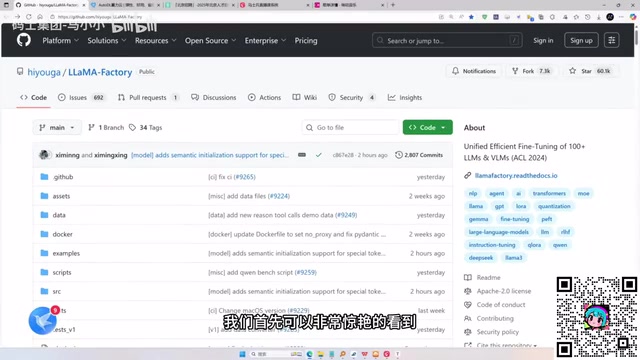
LLaMA-Factory in Practice: A Complete No-Code Guide to Fine-Tuning Large Models
An introduction to LLaMA-Factory, the open-source fine-tuning tool: its 60.1K-star background, supported models and algorithms, local vs. cloud deployment, and CUDA setup steps.

Zeng Ming's Deep Retrospective: Why OpenAI May Not Be the Ultimate Winner — and Why the Corporate System Will Disappear
Zeng Ming's deep retrospective on the AI endgame: model companies are just infrastructure, OpenAI and Anthropic won't be the final winners; the next battle is the Agent entry point standard; the corporate system will disappear as AI restructures collaboration, and only mission-driven companies can survive the cycle.

OpenHands v1.28.0: OpenCode and PI Added as Built-in Agents, API Keys Requestable In-Conversation
OpenHands ships 5 releases in 21 days: v1.27.0 adds OpenCode and PI as built-in agents, v1.28.0 enables in-chat key requests. ACP integration, credential reuse, model list changes, and upgrade advice.