Connecting Claude and ChatGPT to Paper Trading via MCP: A New Approach to AI-Assisted Market Analysis

MCP protocol connects Claude and other AI agents to paper trading platforms for data analysis and chart vision.
This article explores how AI Agents like Claude, ChatGPT, and Gemini can be connected to the paper trading platform slushy.trade via MCP (Model Context Protocol). Once integrated, these models can access structured market data and use multimodal vision capabilities to analyze candlestick charts. The piece also examines MCP's broader role as a universal interface between LLMs and real-time data, critiques paid signal and "guru" culture in trading education, and cautions readers that the source is a promotional short video lacking verifiable technical detail.
When AI Agents Meet Paper Trading
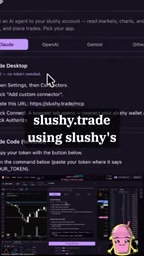
A short YouTube video has sparked an interesting conversation: if you have access to Claude, ChatGPT, or Gemini, you can connect these AI Agents to a paper trading platform called slushy.trade through Slushy's MCP server — giving the AI direct access to all of the platform's underlying data to help you analyze the market.
The core idea isn't complicated, but the trend it reflects is worth unpacking. MCP (Model Context Protocol) is rapidly becoming the universal interface between AI models and external tools and data sources — and trading and market data, with their highly structured, real-time nature, are exactly the kind of scenarios where MCP can shine.
What MCP Actually Does in This Context
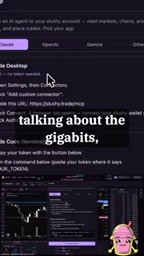
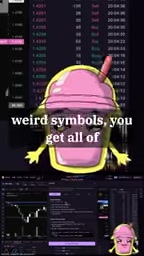
According to the video, once connected to the MCP server, an AI Agent gains access to all the platform's "hard data" — described with playful irreverence as "gigabits, the numbers, the decimal points, and those weird symbols." Jokes aside, this essentially refers to structured data: market quotes, price precision, and various trading indicators.
This is precisely where MCP delivers value — by standardizing the data exchange layer. Previously, getting a large language model to read real-time data from a specific platform typically required writing your own API wrappers, handling authentication, and dealing with format conversions. MCP provides a unified protocol that lets a model pull from data sources as if calling a "tool," dramatically lowering the barrier to integration.
MCP (Model Context Protocol) is an open protocol released by Anthropic in late 2024, designed to solve the "last-mile" connectivity problem between large language models and external data sources and tools. Its design philosophy mirrors that of the USB-C standard — replacing the fragmented, proprietary integrations from various vendors with a single unified protocol. The MCP architecture has three layers: the MCP Host (clients that run the model, such as Claude Desktop or Cursor), the MCP Client (the protocol client embedded within the host), and the MCP Server (deployed by data or tool providers to expose resources and capabilities). Slushy plays the role of an MCP Server here, wrapping its platform data into protocol-compliant interfaces so that any MCP-compatible AI client can call them directly — no API authentication or data format parsing required on the user's end. Compared to the old approach of building separate plugins or API wrappers for each platform, this significantly lowers both development and integration costs.
Computer Vision: Letting AI "Read" Charts
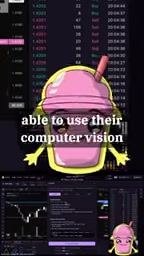
The video also highlights a particularly interesting capability: through the MCP server, AI Agents can leverage their own computer vision abilities to help analyze charts.
This means the interaction isn't limited to text-based data queries. You can hand candlestick charts, technical indicator charts, and other visual information to multimodal models (like vision-enabled Claude or the GPT series) for recognition and interpretation. For trading scenarios where technical analysis relies heavily on chart patterns, this combination of "data + vision" offers a genuinely useful analog to how real analysis workflows operate.
The visual understanding capabilities of multimodal large language models are the technical foundation for chart analysis. Modern models like the Claude 3 series and GPT-4o can not only process text but also accept image inputs and extract semantic information from them. In a technical analysis context, this means a model can identify candlestick patterns (such as hammer candles or engulfing formations), recognize trend lines and support/resistance levels, and even read the visual state of overlaid indicators like MACD or RSI. That said, the accuracy of visual recognition is highly dependent on image quality and the model's domain-specific training data. Models don't carry the accumulated contextual experience of a human trader — their "pattern recognition" is fundamentally statistical pattern matching, not genuine market understanding. This kind of visual assistance is therefore best treated as a supplementary tool for synthesizing information, not as a standalone basis for decisions.
"Be Your Own Guru": A Response to Trading Education Grift Culture
The video's message goes beyond a simple feature walkthrough — it carries a clear point of view. The creator repeatedly emphasizes that on slushy.trade, you can figure out the market "with your own hands and mind," without getting taken advantage of by so-called "gurus."
He directly calls out a familiar pattern: some random person pulls you into a Telegram channel, gets you to subscribe, and then charges you on an ongoing basis through PayPal or similar services. In contrast, the video argues for letting every user become their own "guru" on the platform — equipped with their own analysis tools and data, rather than outsourcing their judgment to a paid signal group.
This stance has real-world relevance given the broader ecosystem of crypto and trading education content. Paid signal services, subscription alerts, and trading courses have long been controversial, and giving users AI-assisted access to a paper trading environment — where they can practice and validate strategies without risking real money — is genuinely a healthier way to learn.
A Grounded Take: The Information Limits of Short-Form Marketing
It's worth being clear-eyed here: this content is fundamentally a promotional short-form video (#Shorts), with an exaggerated tone and limited information density. It effectively communicates the core pitch — "MCP-connected AI + paper trading + visual chart analysis" — but provides no verifiable technical details: how to configure the MCP server, which data fields are supported, what the latency and accuracy look like, and so on.
For readers, the genuinely meaningful signal here is this: MCP is pushing large language models out of the "chat box" and into the role of an execution layer that connects to real data and tools. Trading is just one of many possible application domains. As for any specific platform's real-world performance, that still requires official documentation and independent evaluation — one promotional short video is not enough to draw conclusions.
Regardless, the philosophy of "AI assists, humans decide" is far more worth advocating than blindly following paid signals. Paper trading combined with AI analysis provides, at minimum, a low-risk sandbox for experimentation.
Paper trading is a practice method that simulates real market trading using virtual funds, allowing traders to test strategies, learn platform mechanics, and understand market dynamics without risking actual capital. While the simulated environment effectively lowers the cost of learning, it has a few inherent limitations: first, it lacks the emotional pressure that comes with real money — greed and fear in live trading are significant influences on decision-making; second, the simulated order-matching on some platforms differs from real market conditions, especially for less liquid instruments; and third, simulated profits don't directly prove live trading ability. Combining AI assistance with paper trading is well-suited for validating strategy logic and getting comfortable with analytical tools, but the transition from paper trading to live trading still warrants careful, measured steps.
Related articles

M&M's Spent Millions Replacing Artificial Blue Dye — Why Is It So Hard?
Mars spent millions trying to replace artificial blue dye in M&M's with spirulina, but thick material clogs pipes and residue risks mold, forcing a full production-line rebuild. Here's the engineering behind the reformulation.
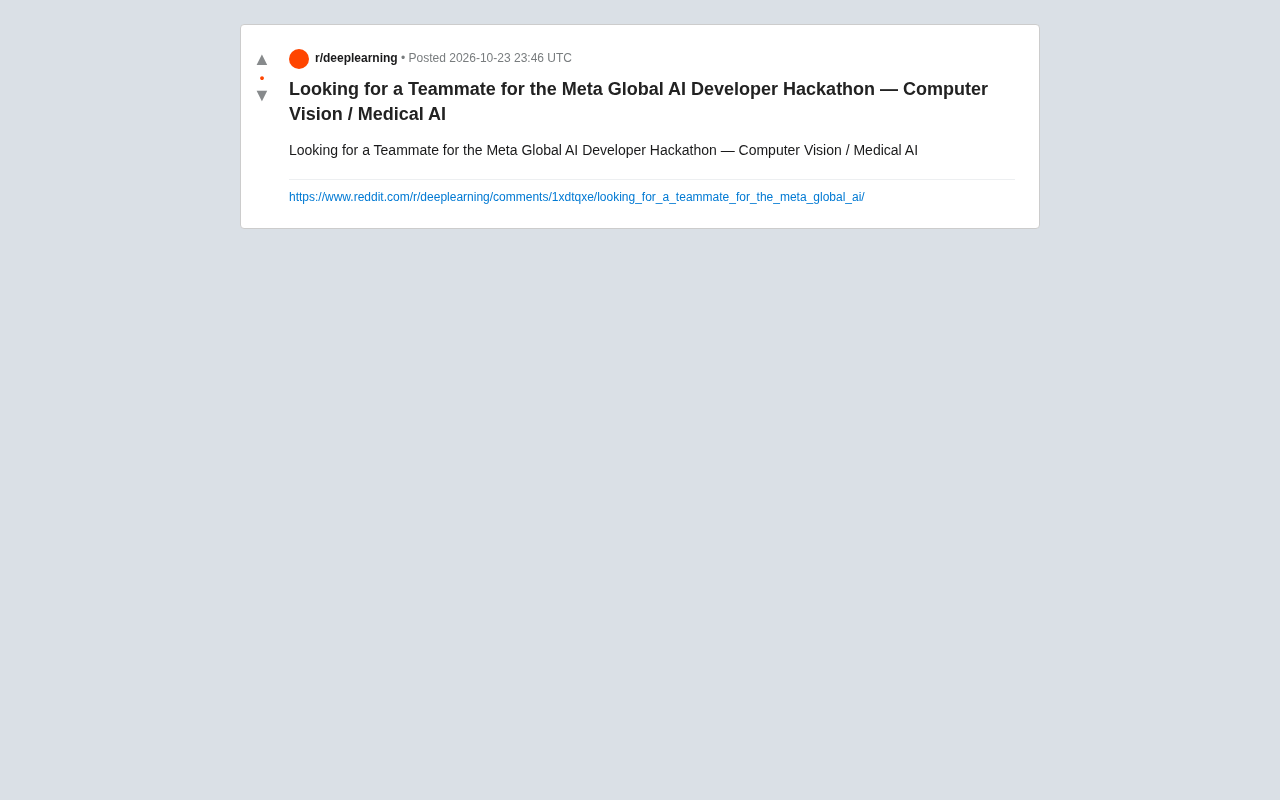
Teammate Wanted for Meta Global AI Developer Hackathon: Computer Vision & Medical AI
A Reddit developer seeks teammates for the Meta Global AI Developer Hackathon, focusing on computer vision and medical AI. This article analyzes the track logic, skills-complementarity needs, and topic selection strategy behind this teaming signal.
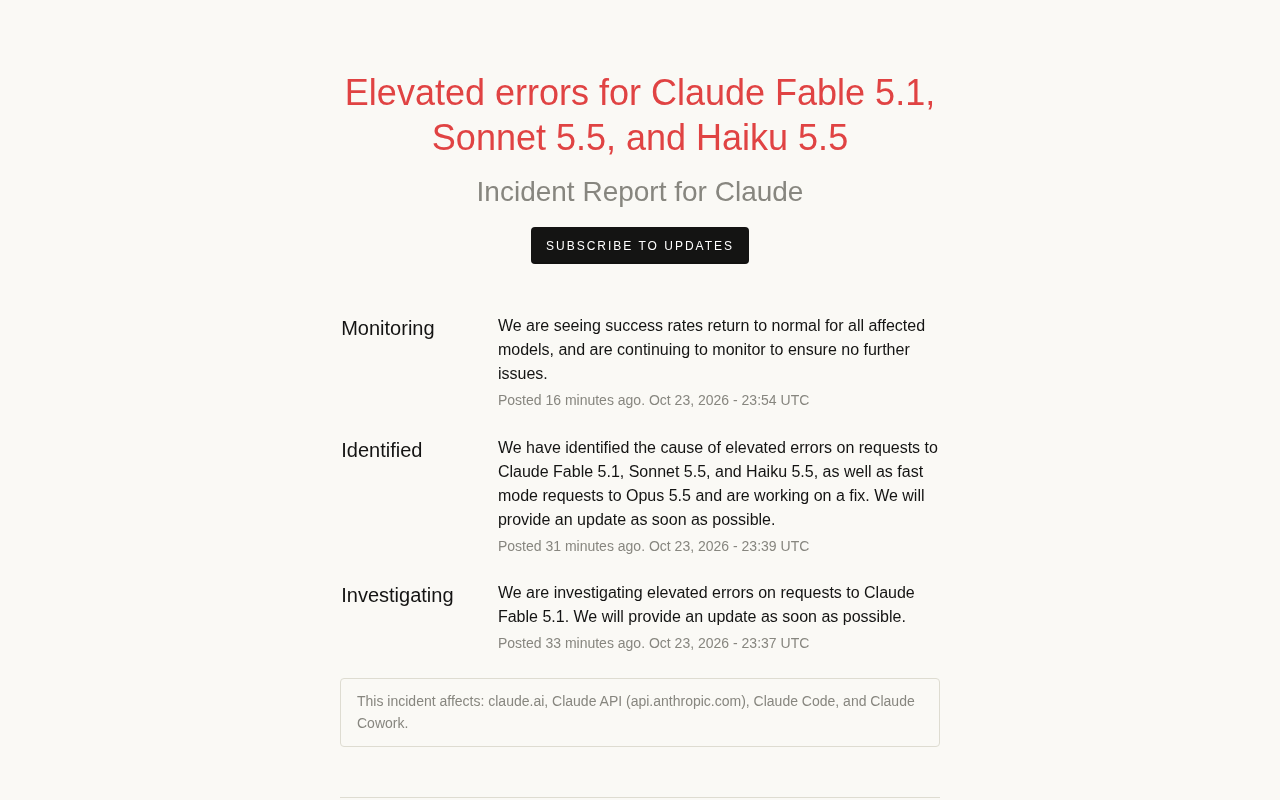
Multiple Claude Models Hit by Errors: A Postmortem of Fable 5.1, Sonnet 5.5, and Haiku 5.5
Claude Fable 5.1, Sonnet 5.5, Haiku 5.5, and Opus 5.5 fast mode saw elevated errors; Anthropic identified and resolved the issue in 17 minutes. This postmortem covers the timeline, the technical reasons for the multi-model cascading failure, and practical lessons for retry and degradation strategies.