DeepSeek Harness Explained: The Engineering Layer Beyond the Model

Why the Harness engineering layer — not the model — determines how capable an AI agent truly is.
DeepSeek Harness is the engineering system wrapped around a large language model, covering external integrations, memory management, constraint mechanisms, feedback loops, and sandbox execution. While the model sets the capability floor, the Harness sets the ceiling — explaining why the same model can seem brilliant in one tool and useless in another. Mastering this layer is the defining skill of the AI engineering track.
What Is a Harness? A Core Concept You Can't Avoid in AI Engineering
If you're preparing for an AI-related job interview, being asked "what is a Harness?" is nearly inevitable. The word itself comes from the world of horse riding — it refers to the full set of equipment used to control and guide a horse. That metaphor maps perfectly onto its role in AI engineering.
Today's large language models are extraordinarily capable — like a powerful thoroughbred. But they're also like a wild horse: strong, yet untamed. To deploy them reliably in enterprise tools or production-grade agents, you need an entire external "set of equipment" to constrain and direct them. That equipment is the Harness.
In one sentence: the model handles reasoning and computation (like a CPU), while the Harness handles everything else.

Two Ways to Think About Harness
In an interview, addressing Harness from two angles shows real depth:
- Broadly: Harness is an architectural paradigm. Claude Code, Codex, and various AI frameworks all operate on this architecture. DeepSeek's "DeepSeek Harness" takes this paradigm, names it explicitly, and productizes it — officially positioned as "an agent that closely embodies the Harness architecture."
- Narrowly: It is the engineering layer wrapped around the model.

What Engineering Modules Does a Harness Actually Include?
At its core, a Harness is the full set of engineering capabilities needed to turn a bare model into a usable, reliable agent. At minimum, it covers the following areas:
1. External System Integration
A large model by itself is an island. The Harness connects it to the real world: file systems, retrieval engines, web coding capabilities, browsers, and more. Without these external connections, the model can't actually get anything done.
To understand why models are islands, we need to look at their technical foundations. An LLM is fundamentally a probabilistic text-generation engine built on the Transformer architecture. It acquires language understanding and reasoning during training on massive text corpora, but at inference time its inputs and outputs are limited to sequences of text tokens. This means the model itself cannot directly read local files, query databases, call APIs, or control a browser. To solve this, the industry developed protocols like Function Calling and Tool Use — the model generates a specially formatted JSON instruction expressing "I need to call an external tool," and the Harness layer parses that instruction, executes the actual operation, and returns the result. OpenAI's Function Calling, Anthropic's Tool Use, and Google's Gemini Function Calling are all different implementations of this idea. MCP (Model Context Protocol) goes further, aiming to establish a unified open standard for tool integration so that different models and tools can achieve plug-and-play interoperability.
2. Memory System
This is an easily overlooked but critically important piece. Large models have no memory — whatever you said in the previous message, the model has already forgotten. The Harness must build a memory system that records the interaction history between the agent and the model, giving conversations continuity and context awareness.
The model's memory-less nature stems from its inference mechanism: every call is an independent forward pass, and the model retains no history automatically. While the context window allows historical messages to be passed in a single request, it's bounded by a token limit (e.g., 128K tokens for GPT-4 Turbo, 200K for Claude 3.5). When a conversation exceeds the window, earlier content gets truncated and lost. The Harness memory system typically uses a multi-tier architecture to address this: short-term memory is maintained via a sliding-window conversation history; mid-term memory uses summarization to compress long conversations into key information digests; long-term memory encodes important information as vector embeddings using vector databases (such as Pinecone, Milvus, or Chroma) for persistent storage, recalled on demand via semantic search. The MemGPT project is a notable exploration of this direction — it models the OS virtual memory mechanism to build a hierarchical memory management system for LLMs.
3. Boundary and Constraint Mechanisms
The Harness defines behavioral limits for the model — what it's allowed to do and what it isn't — preventing it from going "off the rails" and causing uncontrollable consequences.
This need arises from several inherent risks in LLMs: hallucination can lead the model to fabricate nonexistent APIs or file paths; prompt injection attacks can manipulate the model into executing malicious operations; and in an agent loop, the model can generate cascading errors. As a result, Harness constraint mechanisms typically span multiple dimensions: a permission control layer defines which tools the model can call and which file paths or network domains it can access; an operation approval layer inserts Human-in-the-Loop checkpoints for high-risk operations (like deleting files, sending emails, or executing financial transactions); an output filtering layer uses rule engines or safety classifiers to review model output and intercept harmful content; and a budget control layer limits the maximum token consumption, API call count, and execution time per task, preventing the model from entering an infinite loop and exhausting resources. Anthropic's Constitutional AI concept can be seen as a built-in constraint at the model level, while the Harness engineering constraints provide a more flexible, configurable external safety net.
4. Feedback Loops and Fallback Handling
When the model makes an error, the system needs pre-defined response strategies: automatic retry with backoff, or escalation to a human? This feedback loop directly determines the agent's stability in production.
Feedback loops are a core concept from control theory. In Harness architecture, they manifest as a closed cycle of monitoring, evaluating, and correcting the model's execution results. Typical engineering patterns include: Retry with Backoff, automatically retrying tool call failures using an exponential backoff strategy; Self-Correction, resubmitting the error along with the original instruction to the model so it can analyze the failure and revise its plan; Escalation, pausing execution and notifying a human operator when automatic retries exceed a threshold or when the model is detected to be stuck in a loop; and Rollback, recording state snapshots after each step so execution can automatically revert to the last stable state on failure. LangGraph's conditional edges and checkpoint mechanisms are concrete engineering implementations of feedback loops at the agent orchestration layer. It's fair to say that an agent's production stability depends heavily on the quality of its feedback loop design.
5. Sandbox Execution Environment
For scenarios that require running code or performing dangerous operations, the Harness provides a sandboxed environment to isolate execution and keep the system secure.
A sandbox is a classic concept from computer security — running untrusted code in a restricted, isolated environment to prevent it from damaging the host system. In AI agent contexts, model-generated code may contain dangerous operations (like deleting files, making unauthorized network requests, or consuming large amounts of compute), so it must be executed in a sandbox. Common sandbox implementations include: container-level isolation (e.g., Docker containers, which use Linux namespaces and cgroups to restrict a process's access to the filesystem, network, and resources), VM-level isolation (e.g., Firecracker micro-VMs, which is also the underlying technology powering AWS Lambda), and WebAssembly sandboxes (providing lightweight isolated execution environments in the browser or on the server). OpenAI's Code Interpreter runs inside isolated sandbox containers — each session gets its own filesystem and Python runtime, and the environment is destroyed after execution completes, ensuring that code execution cannot affect the safety and stability of production systems.
Why Does the Same Model Seem Dumb in a Different Tool?
Many people have noticed this: you're using the same DeepSeek, but in Tool A it's impressive, and in Tool B it seems completely lost.
The answer lies in the Harness.

Imagine two agents, A and B, both running on the same underlying model:
- Agent A: Has a solid memory system, complete tool-calling, good context management, constraint mechanisms for when things go wrong, and safe execution in a sandbox — naturally, it performs brilliantly.
- Agent B: All of those capabilities are missing or poorly implemented, with no feedback or fallback on errors — it comes across as dim.
This leads to a core conclusion:
The model only sets the floor of what an agent can do. The Harness sets the ceiling.
In other words, the model defines the baseline capability, while the engineering system built around it — the Harness — determines how capable the agent ultimately becomes. The same DeepSeek model, paired with a world-class Harness, becomes a productivity powerhouse. Paired with a shoddy Harness, it's a toy.
This insight also explains the competitive dynamics of the current AI application market: as underlying models converge in quality (with multiple vendors achieving similar benchmark scores), what actually differentiates products is often not the model itself, but the Harness engineering built around it. That's why AI coding tools like Cursor and Windsurf — which may use similar underlying models — can still deliver dramatically different user experiences. The difference is in the craftsmanship of the Harness.
The Fork in the Road: Algorithm Track vs. Engineering Track
Understanding Harness also clarifies an important career divide in today's AI job market:
- Working on the model itself (training, optimization) → Algorithm track
- Working on the engineering layer outside the model → Engineering track, also known as the Harness track
This also explains why interviewers increasingly care whether candidates understand the engineering layer beyond the model. For most companies, training a model from scratch isn't the goal — the real competitive advantage lies in engineering a powerful, existing model into a working product. And that is precisely where Harness lives.

From Deep Agents to Harness: How the Concept Evolved
It's worth noting that the ideas behind Harness architecture predate the unified name. Long before DeepSeek Harness was formally released, the industry was already exploring similar frameworks.
The "Deep Agents" framework, for instance, is essentially a complete Harness architecture implementation — built around tool calling, file systems, sandbox environments, context management, memory systems, logic orchestration, feedback loops, and constraint mechanisms. These are exactly the core components of a Harness. The industry just hadn't settled on a standardized name yet. Now, this entire "engineering system outside the model" has been given a clear label: Harness.
Retracing this evolution helps build a deeper understanding of where Harness came from. The viral success of AutoGPT in 2023 first showed the general public what an LLM autonomously executing complex tasks could look like — but its lack of effective constraints and feedback mechanisms meant real-world usability was very low. LangChain then introduced the Chain and Agent abstractions, modularizing tool calls and reasoning pipelines. CrewAI and AutoGen explored orchestration paradigms for multi-agent collaboration. In 2024, LangGraph brought directed graphs (DAGs) and state machines to agent execution, making flows far more controllable and debuggable. Anthropic's Claude Computer Use and MCP protocol, along with OpenAI's Assistants API, pushed the standardization of tool integration forward. The significance of DeepSeek Harness is that it unifies these previously scattered engineering practices — tool calling, memory management, sandbox execution, constraint mechanisms, feedback loops — under a single, clearly named architecture, giving the industry a shared conceptual framework for "the engineering system outside the model."
Closing Thoughts: Embracing the New Paradigm
AI technology moves fast, and employers and interviewers tend to reward those who keep up with new paradigms — the sooner you master them, the stronger your position in job searches, interviews, and technical leadership roles.
At its core, the release of DeepSeek Harness brings "agent engineering" into the spotlight. For developers, understanding Harness isn't just interview prep — it's the key to grasping what AI application deployment is really about: the real value is often not in the model itself, but in the engineering layer built around it.
Key Takeaways
Related articles
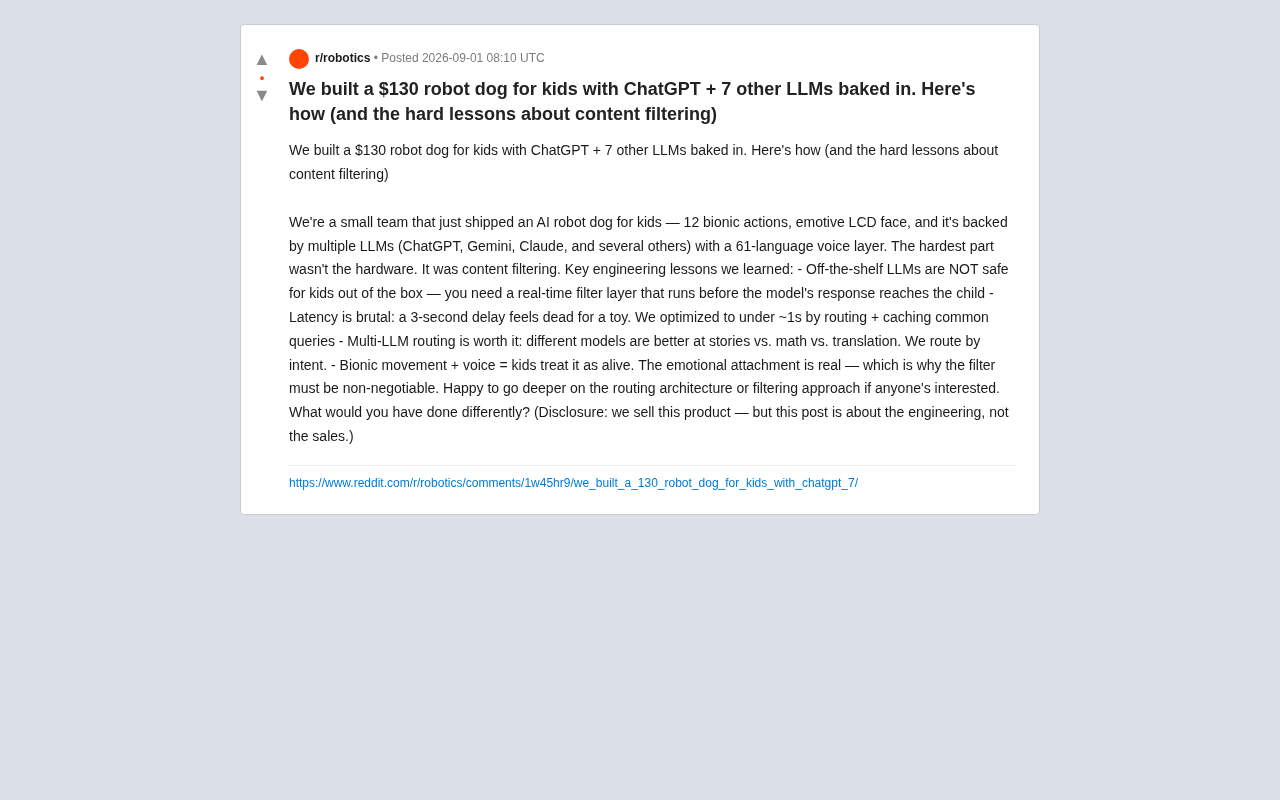
Building an AI Robot Dog for Kids: Multi-Model Routing, Content Filtering, and Latency Optimization
A $130 AI robot dog for kids integrates 8 LLMs with 61-language voice interaction. The team shares key engineering lessons on content safety filtering, multi-LLM intent routing, and sub-1-second latency optimization.
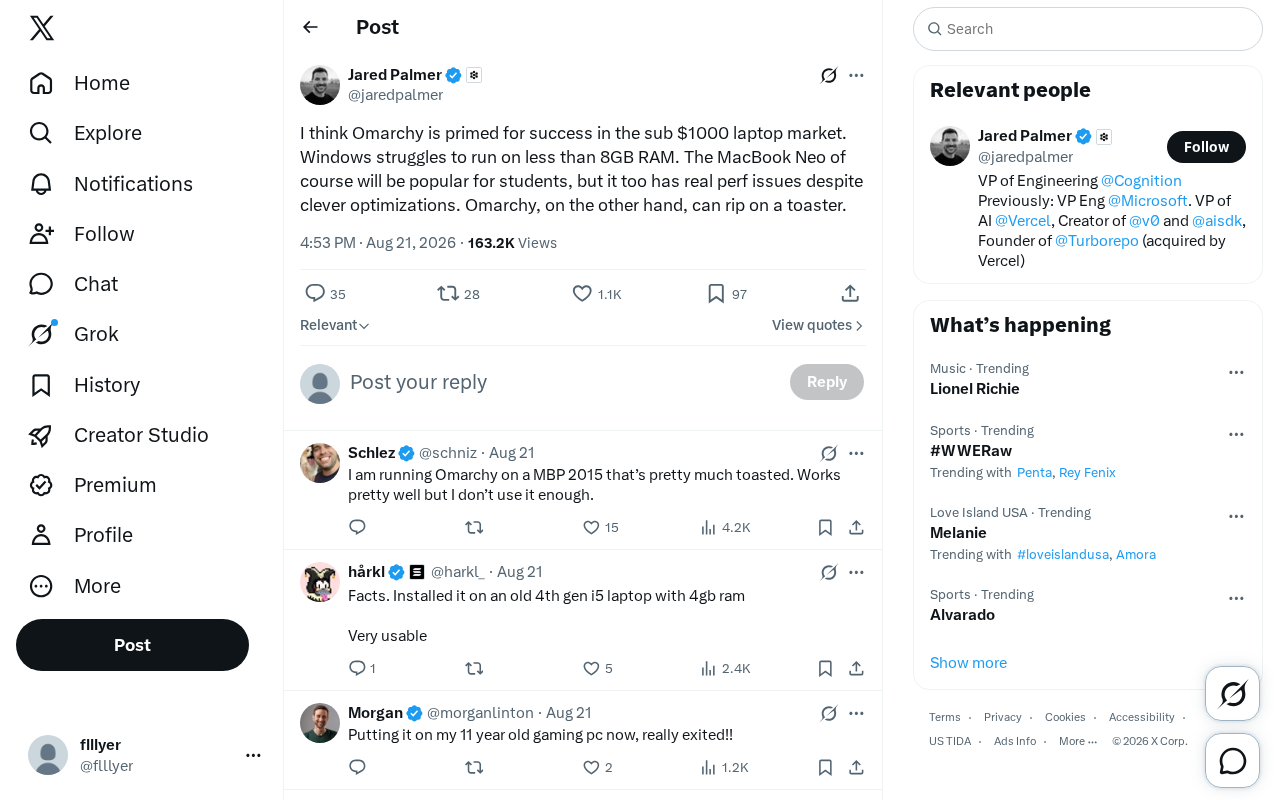
Can Omarchy Dominate the Sub-$1000 Laptop Market? An In-Depth Analysis
Omarchy, based on Arch Linux, shows unique advantages in the sub-$1000 laptop market. This analysis compares Windows and MacBook performance bottlenecks on low-spec hardware and examines why Omarchy enables cheap laptops to run smoothly, plus the ecosystem challenges and market prospects it faces.
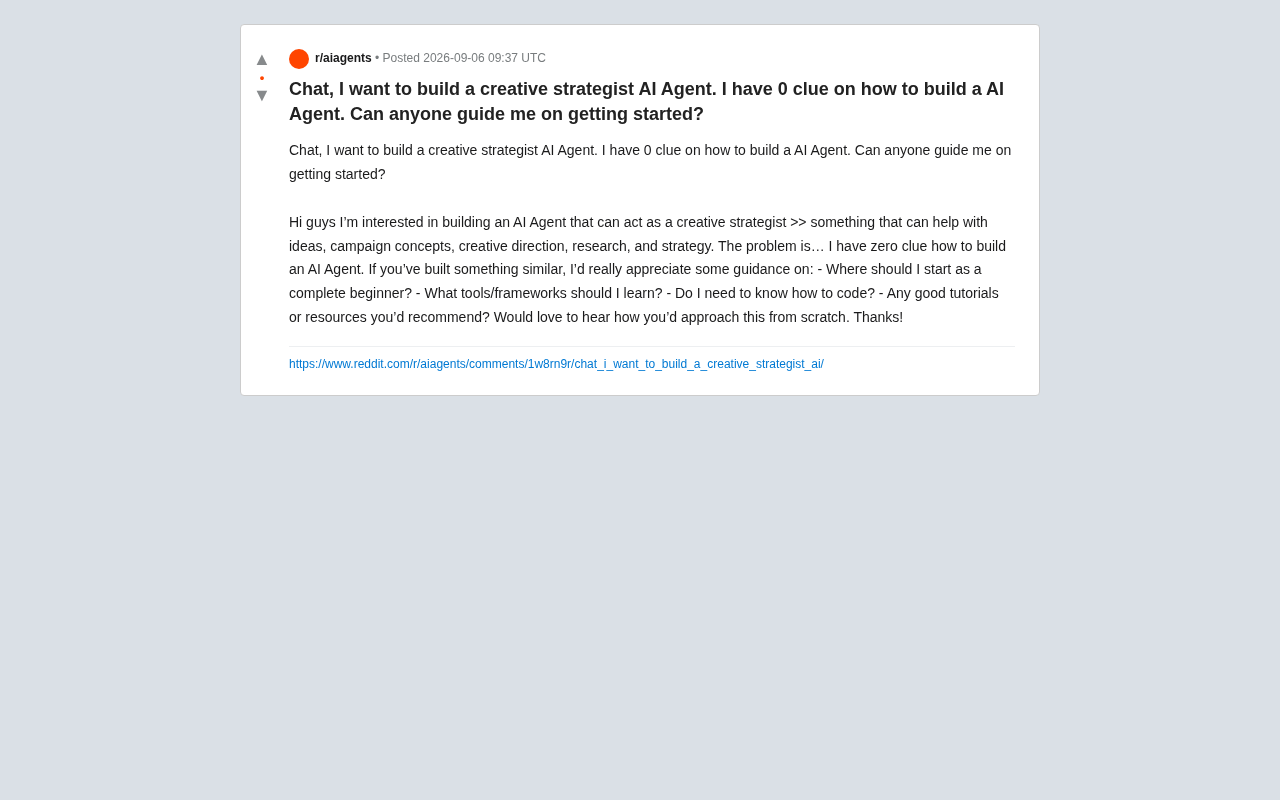
AI Agent Beginner's Guide: Building a Creative Strategy Intelligent Assistant from Scratch
A complete guide to building a creative strategy AI Agent from scratch. No coding required — use tools like Dify and Coze to quickly build an intelligent assistant.