Dense or MoE? How to Choose the Right AI Model Architecture

Dense activates all parameters for quality; MoE uses sparse activation for throughput — choose based on your constraints.
This article compares two dominant large model architectures: Dense models activate all parameters per token, offering simplicity and predictability ideal for maximizing single-inference quality on a single GPU; MoE models split parameters into expert modules, using a router to dynamically select a subset per token, achieving higher throughput at lower per-inference compute cost — especially suited for high-frequency agentic workloads with heavy tool calls. However, MoE's efficiency gains come with greater routing complexity, expert load balancing challenges, and higher total memory requirements. The key takeaway: there's no universally better architecture — the right choice depends on balancing quality, latency, memory, and deployment goals.
When selecting a large model architecture, Dense and Mixture of Experts (MoE) are often compared side by side. Both share the same foundational structure — what truly sets them apart is how they use parameters. Understanding this difference is key to making the right trade-offs between quality, latency, memory usage, and deployment cost.
The Core Difference Between Dense and MoE
The logic behind Dense models is straightforward: every parameter is activated for every token processed. This approach is simple, consistent, and predictable — no extra routing logic, and every part of the model participates in every inference pass.
MoE models take a different approach. They split parameters into modules called "experts" — which are essentially parallel copies of feedforward networks. When a token enters the model, a "router" decides which tokens get sent to which experts.

In other words, Dense models deploy "all hands on deck," while MoE models "dispatch only the experts needed." This seemingly subtle mechanism difference directly determines how the two architectures perform in real-world applications.
From a parameter scale perspective, one of the defining characteristics of MoE is the separation between "total parameters" and "active parameters." Take Mistral's Mixtral 8x7B as an example: the model has ~46.7B total parameters, but only ~12.9B are actually activated per inference — roughly equivalent to a Dense model of the same class. This means MoE can achieve the computational cost of a Dense model while storing far more total "knowledge" in its parameters. This design principle — known as sparse activation — is the core efficiency lever of the MoE architecture. Routers typically use a Top-K mechanism, selecting only the K highest-scoring experts for each token (a common configuration is K=2). The selected experts process the token, and their outputs are then weighted and merged before being passed forward.
When to Choose a Dense Model
Dense models excel at maximizing intelligence on a given piece of hardware, at the cost of speed. If your primary goal is to make every inference as capable as possible and latency isn't a critical concern, Dense is the safer choice.

A classic use case: you have a single GPU and want to squeeze every last bit of intelligence out of it. Since Dense models have no routing or expert scheduling overhead, deployment and serving pipelines are simpler, and model behavior is more predictable. For resource-constrained scenarios where single-output quality is the priority, Dense models are often the better fit.
When to Choose a MoE Model
MoE models shine in throughput efficiency. When you need to process large volumes of tokens quickly and are willing to trade some intelligence for speed, MoE is the better option.

The most representative use case is high-frequency agentic workloads — such as applications with heavy tool calls. These tasks demand fast response times and consume large numbers of tokens. By activating only a subset of experts, MoE can reduce per-inference compute cost while maintaining a much larger total parameter capacity.
But nothing comes for free. The cost of MoE is greater routing and serving complexity. The router itself requires training and tuning, and expert load balancing and deployment orchestration all introduce additional engineering overhead. Choosing MoE is not just a model-level decision — it's also a test of your entire serving infrastructure.
Several specific engineering challenges around MoE's routing and serving complexity are worth highlighting. First is expert load imbalance: if the router consistently favors a few experts, some experts become overloaded while others sit idle. Auxiliary losses are typically introduced during training to enforce balanced routing. Second is memory distribution: all expert parameters must be loaded into memory — even though only a subset are activated per inference, total VRAM consumption is far higher than a Dense model with equivalent active parameters, placing greater demands on network communication bandwidth in multi-GPU distributed deployments. Finally, there is sensitivity to inference batch size: MoE's efficiency advantages are most apparent at large batch sizes, but in single-request, low-latency scenarios, the overhead of routing can actually negate the gains from sparse activation.
How to Make the Right Choice
To summarize, the divide between the two can be distilled into one sentence: Dense models use all parameters; MoE models use only the selected experts.
| Dimension | Dense | MoE |
|---|---|---|
| Parameter activation | All parameters activated per token | Only selected experts activated per token |
| Strengths | Maximizes intelligence per inference | High throughput, efficient token processing |
| Trade-offs | Slower speed | Higher routing and serving complexity |
| Best for | Single-GPU, maximum quality | High-frequency tool calls and agentic workloads |
There is no objectively superior architecture — only the one that best fits your goals. What truly drives the decision is how you weigh quality, latency, memory, and deployment objectives. If you're chasing the intelligence ceiling for a single inference, Dense is a reliable starting point. If you're facing high-volume, high-frequency, latency-sensitive tasks, MoE delivers better efficiency returns.
Before deploying in production, clarifying your infrastructure constraints and business priorities matters far more than blindly chasing parameter counts. Architecture selection is fundamentally an engineering trade-off — not a ranking of technical superiority.
Related articles
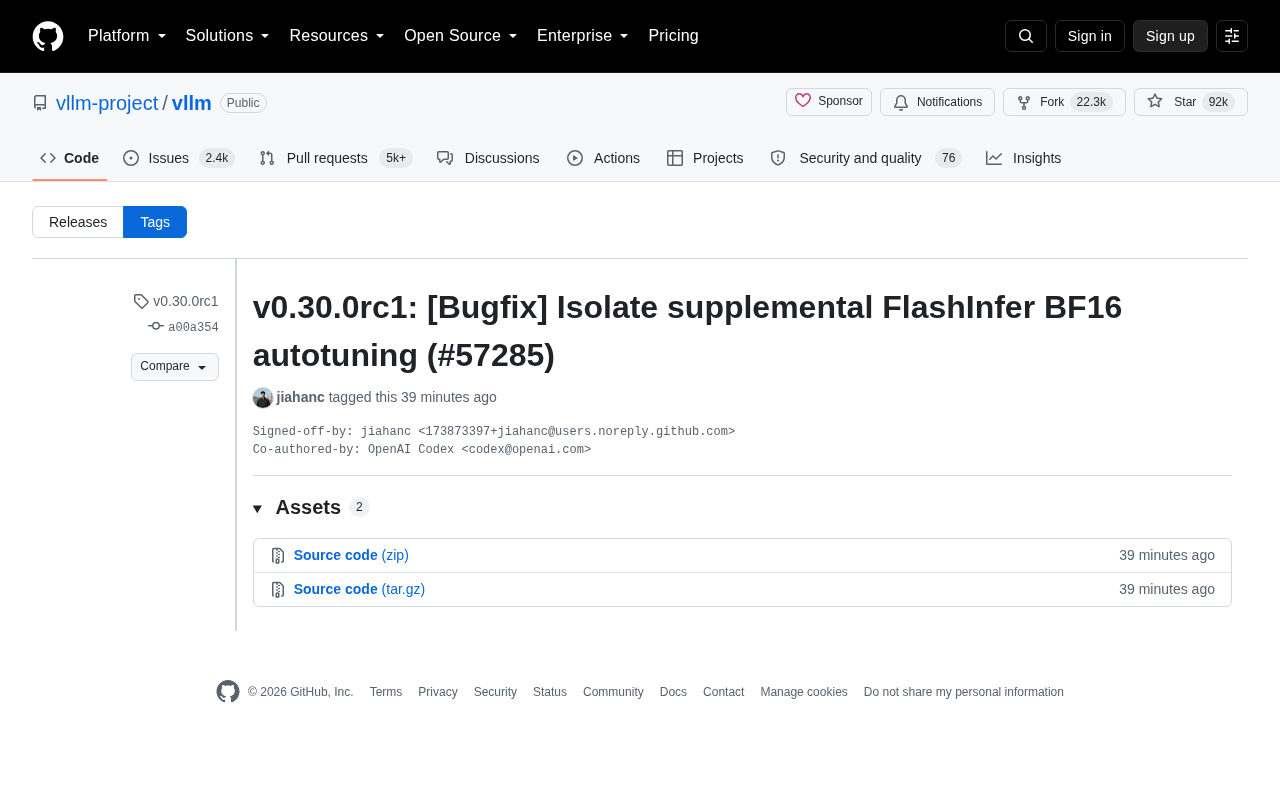
vLLM v0.30.0rc1 Released: Isolates FlashInfer BF16 Autotuning Logic
vLLM v0.30.0rc1 release candidate fixes FlashInfer BF16 autotuning isolation (PR #57285). Learn the technical background and its impact on inference deployment.

Comp AI Raises $34M Series A, Bets on Agentic Security Compliance
Comp AI raises $34M Series A led by Roo Capital and Grand Ventures, betting on "continuously agentic" AI to transform compliance from periodic audits into real-time monitoring.

MIT Technology Review's 35 Innovators Under 35: A Climate Tech Edition Explained
MIT Technology Review's latest 35 Innovators Under 35 list focuses on climate tech, spotlighting nine young global innovators. Here's what the list means and why it matters.