Explainable Agentic Retrieval: Making RAG More Than Just 'Guessing the Right Answer'
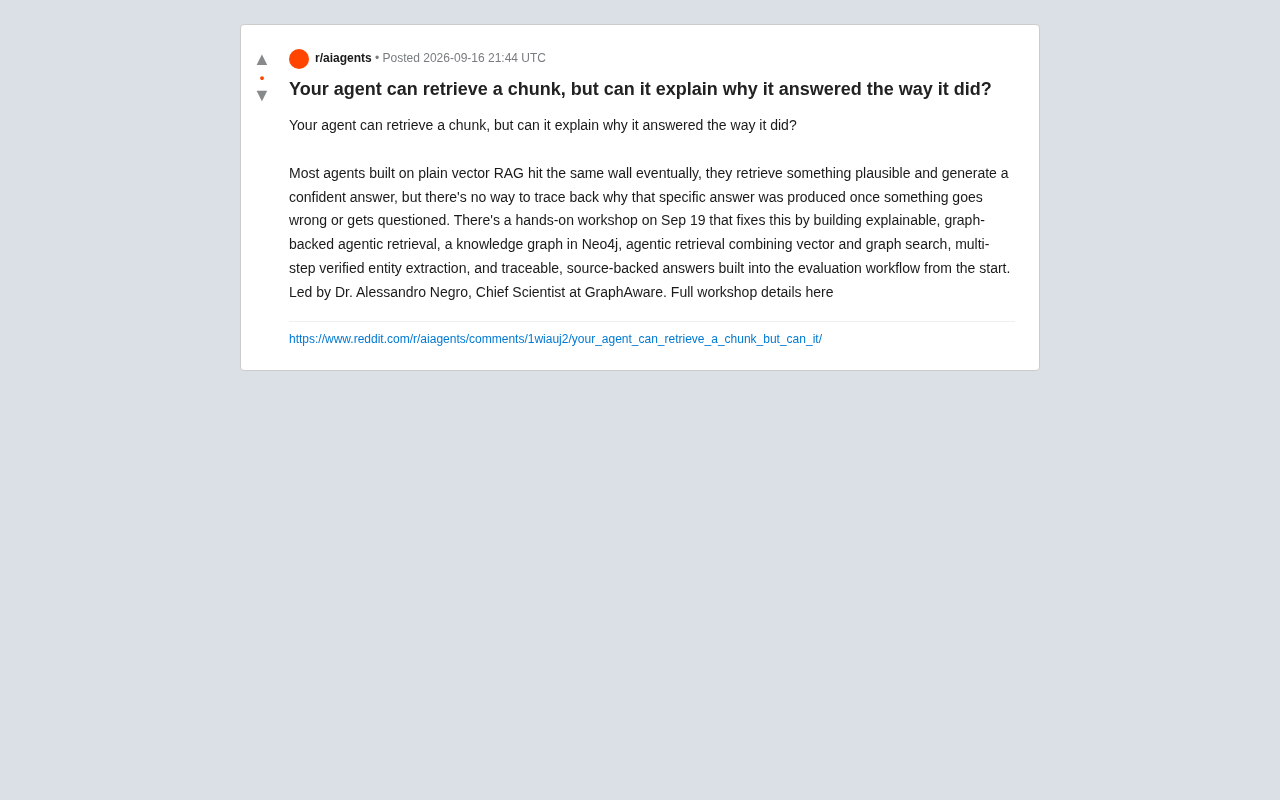
Graph-augmented hybrid retrieval makes AI Agent reasoning traceable — going beyond pure vector RAG.
Pure vector RAG faces a core limitation in production: systems can retrieve semantically similar content and generate fluent answers, but cannot trace their reasoning — making answers hard to audit in high-stakes domains. This article introduces a hybrid retrieval approach built on Neo4j knowledge graphs combined with vector and graph search, providing structured reasoning paths through explicit entity relationships. It also emphasizes multi-step verified entity extraction to reduce errors in graph construction, with traceability built into the evaluation pipeline from the start — representing a shift in AI Agent design from 'can answer' to 'can be trusted.'
The Explainability Problem with Vector RAG
Agents built on pure vector RAG (Retrieval-Augmented Generation) tend to hit the same wall: they retrieve a seemingly relevant passage, generate a confident answer — but the moment that answer is wrong or challenged, there's no way to trace back why that particular response was produced.
This is the core pain point facing a large number of AI Agents in production today. Retrieving a chunk that "looks right" is not the same as understanding the question, and it certainly doesn't mean the system can be held accountable for its own reasoning chain. When an agent can retrieve a chunk but cannot explain why it answered the way it did, credibility becomes a serious concern.
RAG (Retrieval-Augmented Generation) is one of the dominant architectures for deploying large language models. The basic idea: split external documents into text chunks, convert them into high-dimensional vectors via an embedding model, and store them in a vector database. When a user asks a question, the system vectorizes the query and retrieves the chunks with the highest cosine similarity, then appends those chunks to the prompt as context for the LLM to generate an answer. The strength of this approach is that it lets models access private or up-to-date knowledge beyond their training data. However, the retrieval logic relies entirely on semantic similarity — it has no awareness of entity relationships or causal chains within documents. This makes it prone to the "retrieved something but can't explain why" problem, especially in scenarios requiring multi-hop reasoning or precise attribution.
Why Traceability Matters So Much
In enterprise applications, an answer being trustworthy matters more than it being fluent. A system that can't explain its reasoning is nearly impossible to deploy in high-stakes domains like finance, healthcare, or law — because when results are audited or challenged, no one can say what the system actually based its answer on.
The fundamental issue with pure vector retrieval is that it's essentially a "similarity matching" exercise: the model finds the semantically closest passages, then generates a response from them. This process lacks structured entity relationships and lacks a traceable evidence chain. When multiple retrieved passages conflict, or when retrieval itself is biased, errors get packaged into confident-sounding answers — with no clear way to diagnose the root cause.
A Graph-Augmented Agentic Retrieval Approach
A hands-on workshop led by Dr. Alessandro Negro, Chief Scientist at GraphAware, proposed a solution to this problem: building an explainable, graph-backed agentic retrieval system.
The core technical stack involves several key components:
Knowledge Graph as a Structured Foundation
The approach uses Neo4j to build a knowledge graph, providing structured entity and relationship support for retrieval. Unlike a flat vector space, a graph explicitly represents "who is related to whom" and "in what way" — which lays the groundwork for explainable reasoning.
A knowledge graph organizes information as nodes (entities) and directed edges (relationships) — for example, "Alice" —[works at]→ "Some Company" —[located in]→ "New York". Neo4j is currently the most widely used native graph database, using a property graph model and supporting the Cypher query language for graph traversal. Compared to vector databases, the core advantage of graph databases lies in making relationships explicit and queryable: the connection paths between any two entities can be precisely enumerated, making the reasoning process fully replayable. In RAG scenarios, knowledge graphs typically coexist alongside vector indexes — vectors handle semantically fuzzy "what is" questions, while the graph structure handles multi-hop "why" and "how" questions. Combining both is the fundamental idea behind GraphRAG.
Hybrid Retrieval: Vector Search + Graph Search
Agentic retrieval here means combining vector search with graph search. Vector search handles semantic fuzzy matching; graph search handles precise relationship traversal. The two are complementary — preserving semantic understanding while introducing structured reasoning paths.
Multi-Step Verified Entity Extraction
The approach emphasizes multi-step verified entity extraction: extracting entities in a staged, verifiable manner to reduce error accumulation from single-pass extraction, making the raw material for building the graph more reliable.
Entity extraction is the first step in constructing a knowledge graph, typically using a large language model to identify named entities — people, organizations, events, concepts — and their relationships from unstructured text. However, single-pass extraction is prone to hallucination, resulting in fabricated nodes or incorrect edges in the graph. The core idea of multi-step verification is to decompose extraction into multiple sub-tasks, each with a validation step: for example, first extract candidate entities, then verify each one against the source text, and finally confirm the direction and type of each relationship. This approach borrows from Chain-of-Thought prompting by introducing intermediate, auditable steps — compressing the propagation of errors and increasing the confidence level of knowledge that ultimately enters the graph.
Traceability Built In from the Start
The most critical aspect: traceable, source-backed answers are built into the system from the very beginning of the evaluation pipeline — not retrofitted afterward. This means every answer can be traced back to a specific source and a specific reasoning step, with the evaluation workflow designed around explainability from day one.
The Shift from "Can Answer" to "Can Be Trusted"
This approach represents a shift in how agents are designed: no longer satisfied with getting the model to "answer correctly," but requiring the system to "explain why it answered that way."
For teams pushing AI Agents into production, this perspective deserves serious attention. Explainability isn't a nice-to-have feature — it's the foundational infrastructure that determines whether a system can be trusted, audited, and continuously improved in critical scenarios. When retrieval results and reasoning paths are fully traceable, debugging, error correction, and optimization become genuinely possible.
It's worth noting that this article is based on promotional materials from a workshop, and the specific technical details and outcomes still need to be validated in real-world practice. But the problem it identifies — the explainability gap in pure vector RAG — is a genuine and widespread challenge in agentic AI development today.
Related articles
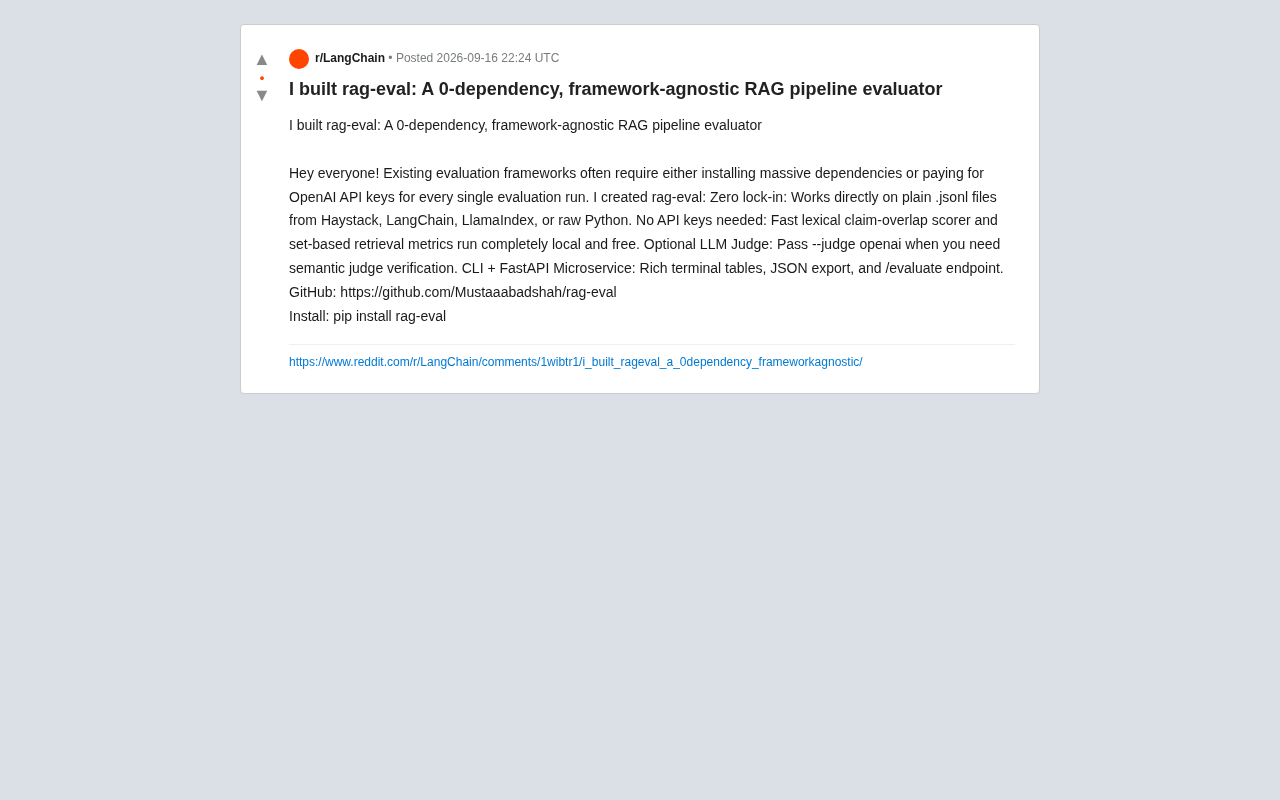
rag-eval: A Zero-Dependency, No-API-Key RAG Evaluation Tool
rag-eval is a zero-dependency, framework-agnostic open-source RAG pipeline evaluation tool. It supports free local lexical and retrieval metrics with no API keys required, and offers optional LLM Judge for semantic validation. Compatible with Haystack, LangChain, and LlamaIndex.
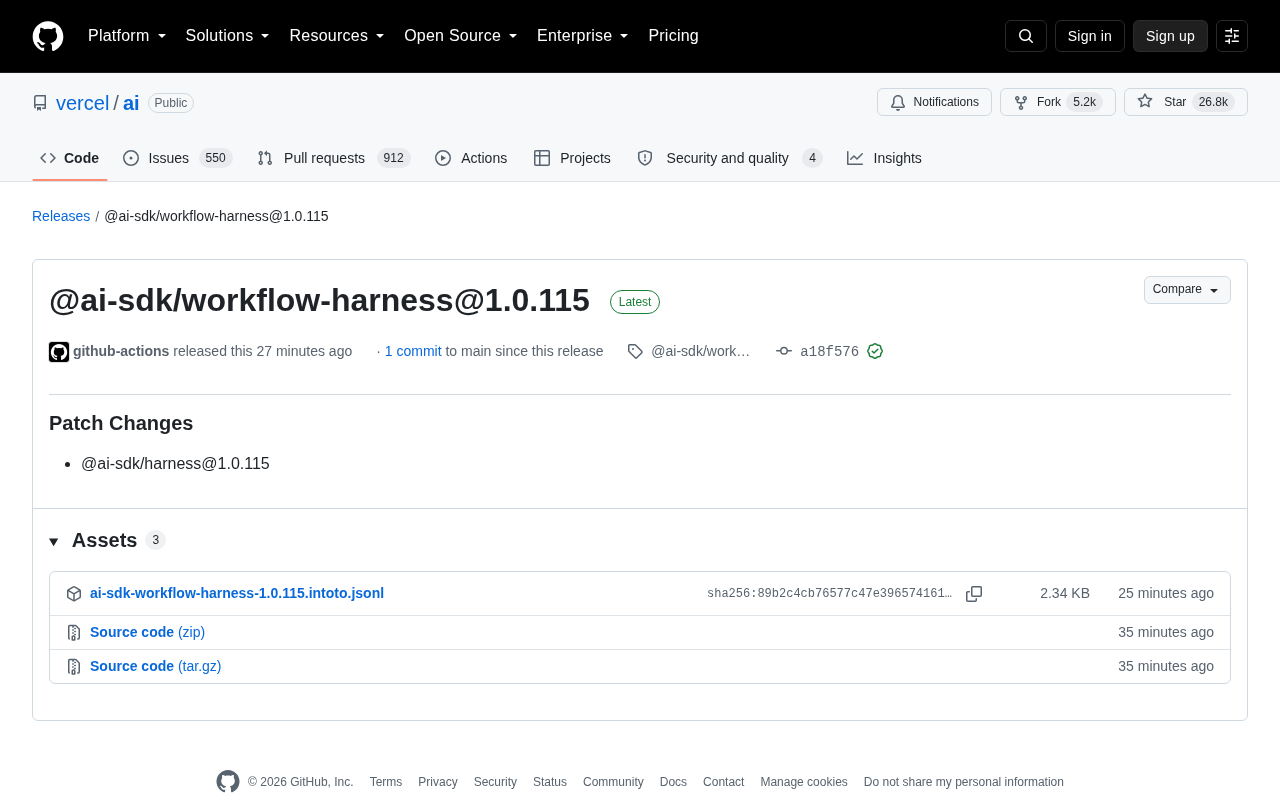
Vercel AI SDK Releases workflow-harness 1.0.115 Patch Update
Vercel AI SDK releases @ai-sdk/workflow-harness 1.0.115 patch update, syncing the @ai-sdk/harness dependency. Learn about the update, release mechanism, and what it means for developers.
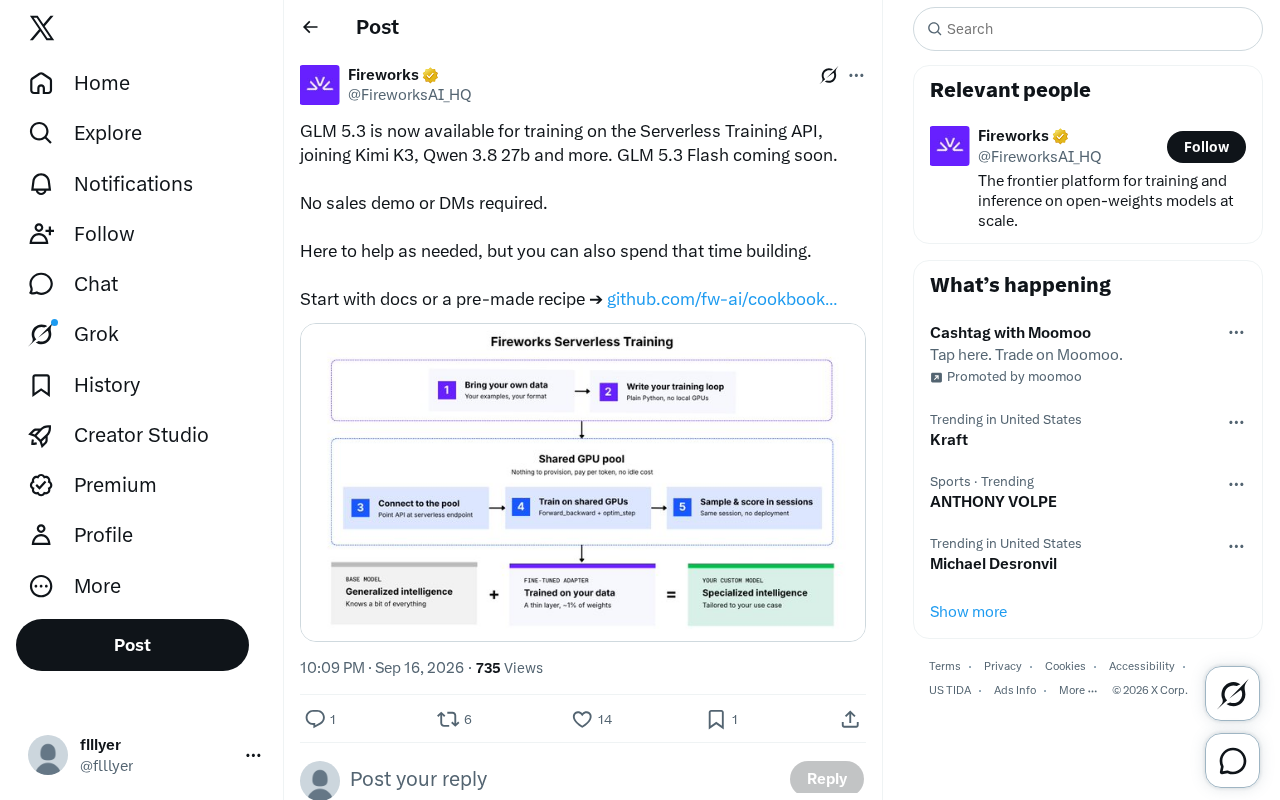
GLM 5.3 Now Available on Serverless Training API — No Sales Process Required
GLM 5.3 is now available on Serverless Training API alongside Kimi K3 and Qwen 3.8 27b. No sales process needed — start fine-tuning directly via docs or pre-made recipes.