From Chat to Agent: Automating Your Entire Business Workflow with AI Agents

How to move from chat models to AI agents and automate your entire business workflow.
Self-taught AI practitioner Remy explains the leap from Chat to Agent: how the observe-think-act loop works, the three pillars of context, tools, and skills, connecting tools via MCP, and a holding-company-style file architecture—showing how to become a 100x employee.
The Two Stages of AI Adoption: From Conversation to Agents
In this in-depth interview, self-taught AI practitioner Remy shares everything he has learned from immersing himself in the AI field over the past two years. He is not a technical engineer by background—he previously ran an advertising agency, and now manages an AI agent team for one of the fastest-growing e-commerce brands in the world. His core thesis cuts straight to the point: every company must put AI at the forefront of all its operations, or it will lose to competitors who do.
Remy divides AI adoption into two clear stages. Stage one is "Chat"—nearly every founder and practitioner is already using chat models like ChatGPT, Claude, or Gemini. Stage two is "Agent." He points out that founders and employees using agents are "5 to 10 times" more productive than those who only use chat. Even taking the midpoint of 7x, this means "one workday equals a week, and one week equals five to seven weeks."
To understand the divide between Chat and Agent, it helps to revisit the underlying technology that supports both. ChatGPT, Claude, and Gemini are all built on the Transformer architecture proposed by Google in 2017—an architecture that, through its "self-attention mechanism," allows models to process long text sequences in parallel and capture long-range dependencies between words, completely replacing the earlier recurrent neural networks (RNNs). OpenAI's GPT series, Anthropic's Claude series, and Google's Gemini are all "generative pre-trained" models: they first undergo unsupervised pre-training on massive text corpora, then are aligned with human preferences through "reinforcement learning from human feedback" (RLHF), making their outputs more consistent with human expectations. This also explains why chat models are so good at "question and answer"—they are essentially trained to be extremely powerful text-completion and dialogue engines. But by default, they lack the ability to proactively invoke external tools or continuously execute multi-step tasks.
This gap is creating a divide: on one side are those using agents, on the other are those stuck in chat. For employees, Remy sees this as a huge opportunity—those who proactively learn this methodology will become "hundred-x employees," with one person able to handle the workload of a ten-person team.
The Fundamental Difference Between Chat and Agent
Remy offers an extremely concise definition: Chat is "question to answer," while Agent is "goal to outcome." A chat model is like a smart consultant—it gives you answers, but you still have to do the work yourself. An agent, on the other hand, is more like hiring that smart person into your company to complete the entire task end-to-end for you.
He emphasizes that the word "Agent" comes from "agency"—the capacity to act and get things done—and is not some mysterious figure from a sci-fi film. For everyday little questions—"how many calories are in a banana," "can I use Apple Pay on the subway"—chat is more than enough; "using an agent would be like using a bazooka to swat a fly." But any meaningful real work should be handed to an agent.
How Agents Work: The Observe-Think-Act Loop
To understand how AI agents work, you must grasp the "loop" running inside them. Remy breaks it down into three continuously repeating steps: Observe → Think → Act. The agent repeatedly "sees the current state, decides the next step, and executes an action," until it judges the task complete and then outputs the final result.
This loop Remy describes did not come out of nowhere—it corresponds to the ReAct (Reasoning + Acting) paradigm proposed in academia in 2022. The core idea of this framework is to let language models alternate between reasoning (generating chains of thought) and acting (invoking tools, obtaining environmental feedback), thereby transforming a pure language model into an agent capable of interacting with the external world. Later, open-source projects like AutoGPT and BabyAGI brought this concept to the public eye, demonstrating the possibility of letting AI "autonomously break down goals and loop through execution until completion." The key reason agents can be several times more powerful than chat lies precisely in this closed loop—it's no longer a static "one question, one answer" interaction, but can dynamically adjust its strategy based on the results of each step, and can even spawn "sub-agents" to handle parallel subtasks.
He demonstrated live with Claude Code: he asked it to analyze his best-performing videos on Instagram and generate an HTML report. The agent first searched his computer to find the relevant files, then evaluated and read the data, discovered a missing field—"first 5-second hook of the voiceover"—and launched a sub-agent to retrieve it. Ultimately, after about 20-30 loops over 20 minutes, it produced a fully categorized report containing title hooks and root-cause analysis.
You may not have noticed, but when an agent stops looping depends on how clearly you define the goal. "If you're vague about the final output, the result will be more subjective." Therefore, clearly defining what "done" looks like is critical.
The "Agent Harness" That Carries the Loop
Remy clarified an overused concept. When people on the market say "I built an agent," most of the time they haven't actually built a loop—they've "tuned" an agent. The application that actually runs this loop is called the Agent Harness—Claude Code, Codex, Manus, Perplexity, and others are all just different harnesses.
He offered a brilliant analogy: these tools are like different cars. Codex is a Ferrari, Claude Code is a Land Rover, Manus is a Mercedes G-Wagon. And the underlying LLM model (like Opus or GPT-5) is like the engine. "As long as you know how to drive—master the core fundamentals of steering, braking, and acceleration—you can pick up any car in five minutes." Even more crucially: a Volvo with well-tuned context, skills, and tools can absolutely beat a poorly-tuned Lamborghini. This is a powerful rebuttal to "model supremacy."
The Three Pillars of Tuning an Agent: Treat It Like Hiring an Employee
The core methodology Remy proposes is: treat setting up an AI agent as if you were hiring a real employee. An out-of-the-box agent may be powerful, but if it doesn't understand you and your business, has no tools, and doesn't know your processes, it's useless. He describes an agent as an "extremely capable stranger"—for $100 a month you're bringing this smart person with unlimited bandwidth into your company, but you must complete "onboarding" across three things: Context, Tools, and Skills.
Context: Let the Agent Know Everything About You
Context is all the information the agent should know before receiving a task—about you, your business, brand tone, ideal customer profile, product catalog, and so on. All of this exists in the form of Markdown files (.md). Remy explains that Markdown has a layer of simple formatting beyond plain text (headings, bold, lists), which the agent can "read instantly," whereas a PDF requires laborious parsing—more costly and slower.
He has "hundreds" of md files on his computer. When building them, he'll tell Claude to "interview me and extract the information from my brain," and paired with the voice input tool Whisperflow, he'll sit for three hours "sucking" the answers into files. These files are company assets and must be reviewed line by line—if the ideal customer profile contains one incorrect description (for example, mistaking "redness" for a pain point), it will contaminate all marketing copy.
The most critical file is AGENTS.md (called CLAUDE.md in Claude), which automatically loads at the start of every new session—it's the "North Star" context file. Other context files go in a context folder, referenced within CLAUDE.md. You also need a memory.md to record corrections and preferences, building a self-improving memory system. He also cautions against "context rot"—the longer the session, the more prone the model is to forgetting and hallucinating, so files should remain lean and high-density.
The "context rot" phenomenon has a clear technical mechanism behind it. A large language model's ability to process information is limited by its "context window"—the maximum number of tokens the model can "see" at once. Current mainstream models have expanded their windows to hundreds of thousands or even over a million tokens, but research shows the model's use of information at different positions within the context is uneven—there's a so-called "lost in the middle" effect, where the model tends to pay more attention to the beginning and end of text while easily overlooking information in the middle. As a session grows longer and the context fills with large amounts of historical dialogue, the model not only incurs higher computational costs but also becomes more prone to forgetting and hallucinating (generating content that seems plausible but is actually wrong). This is precisely the deeper reason Remy emphasizes keeping files "lean and high-density," auto-loading core context via CLAUDE.md, and maintaining a memory system via memory.md—essentially performing fine-grained information management within limited attention resources.
Tools: Connecting Everything via MCP
To make an agent actually get work done, you must give it tools. This is achieved through MCP (Model Context Protocol). Remy uses an analogy from Ross Mike to explain: Claude speaks English, Gmail speaks French, Notion speaks Spanish, Slack speaks Chinese, and MCP is the "translator" sitting in the middle, letting Claude talk to all kinds of tools without having to learn every language.
MCP is an open standard officially launched and open-sourced by Anthropic in November 2024, designed to solve the problem of fragmented integration between AI applications and external data sources and tools. Before MCP, if an AI application wanted to connect to a new tool, it had to develop a custom interface individually, leading to a combinatorial explosion problem of "N models connecting to M tools." MCP borrows the idea of a "universal protocol" from software engineering—just as USB-C unified the physical interface of devices, MCP aims to become the "universal plug" between AI and tools. It defines a standardized client-server communication specification, so that any tool following the protocol can be invoked by any MCP-supporting AI harness. After this standard was released, it quickly gained industry adoption, with OpenAI, Google, and others successively expressing support. MCP is gradually becoming the de facto infrastructure for building AI agent ecosystems.
He revealed that he now barely uses the front-end interface of any application—Gmail, Slack, Stripe, and Cal.com are all connected to Claude, treating the AI harness as the "intelligent layer" above all tools. He even uses "whether it offers MCP" as a decisive criterion when purchasing software, which reflects the protocol's importance at the practical level. He recommended six must-have tools: Apify (a marketplace of thousands of web scrapers), Firecrawl (which can truly "read" web pages rather than just search), Composio (the "MCP of MCPs" connecting thousands of tools, portable across platforms), Chrome DevTools and Playwright (which let agents control browsers to execute actions), and Higgsfield (image and video generation, called "the Composio of image models").
Regarding security, Remy admits it's a trade-off: he gave Claude full access, including to Stripe, and had no incidents for eight months. For the cautious, he suggests starting with "read-only permissions" and gradually escalating.
Skills: Packaging Your IP into SOPs
Skills are the most important of the three pillars, essentially "standard operating procedures (SOPs) for the AI." They too are md files, containing three parts: name, description, and content. Remy uses a "bookshelf" analogy: next to the agent is a row of books, with each skill's name and description on the spine (always occupying a small amount of context). When a task requires it, the corresponding book is "pulled out" and its full content loaded—this is called "progressive disclosure."
There are two ways to build skills: goal-first (simply saying "help me build a brand guide skill") and process-first (which he uses for 90% of his skills: first walking Claude through the entire process, then, once satisfied, saying "save what we just did as a skill"). Skills are never one-and-done; most of his frequently used skills have iterated to V5 through V10 versions—he simply repeatedly tells Claude to "update this skill."
He demonstrated two impressive skills live: one is an ad analyst skill, where you input a competitor's ad library link and it automatically scrapes all ads and landing pages to generate a complete strategy report; the other is a product photography skill, where you just provide a single product reference image and it generates multiple editorial-grade product marketing shots. Skills can also be orchestrated together—his "YouTube publishing workflow" skill is an "orchestrator" that calls four sub-skills (title, thumbnail, etc.) in sequence.
Overall Architecture: Treat Your Personal Operating System as a Holding Company
Remy showed the file structure he refined over several months: everything runs from a top-level folder called OS (operating system). He once tried building highly specialized niche agents, but found that "the models are already smart enough," and specialization only adds management overhead.
He uses a holding company to analogize the overall architecture: OS is the holding company, and below it are various "subsidiary" folders (such as different business brands, personal affairs). Context, tools, and skills can each be divided into a global layer (like a global CLAUDE.md describing "I am a non-technical founder who is learning," applicable to all sessions) and a project layer (like skills used only in specific projects). While working, he keeps the OS folder open and uses the @ symbol to tag specific subfolders to guide the agent to the right location.
He candidly debunked the myths on social media: those who claim "my marketing agent team works through the night" actually "just have a marketing folder, a few skills, and a scheduled task"—like "make a Facebook ad report every night and send it to my email." The truth is far simpler than imagined.
The Path to Enterprise AI Adoption and Costs
Regarding how enterprises can become AI-native, Remy sees two paths: top-down (bringing in AI experts to build for employees) and bottom-up (training employees to become AI-literate and automate their own work). He leans toward the latter—the goal is not to lay off the team, but to retain the best people and train them into "hundred-x employees," enabling continued growth even with a hiring freeze. The host adds that the best practice is a mix of both: first use a unified questionnaire to understand every employee's current AI usage, then provide targeted training.
On cost, Remy revealed his monthly AI spend is about $1,000 (roughly $12,000 a year in exchange for the productivity of "hundreds of employees"). He also revealed an industry reality: companies like OpenAI and Anthropic are currently heavily subsidizing the true cost of compute to capture market share—a $300/month Claude plan actually corresponds to roughly $6,000 worth of token usage. As these companies push toward profitability (such as Anthropic preparing for an IPO), plan allowances are gradually being tightened, and open-source models and local deployment will see a larger market in the future.
This "compute subsidy" phenomenon reflects the capital logic of the current AI industry. Training and running large language models requires enormous GPU compute, especially NVIDIA's high-end chips, and the real cost of a single inference is quite substantial. Frontier labs like OpenAI and Anthropic, amid intense market competition, generally adopt a strategy of "pricing below cost in exchange for user growth and a data flywheel"—much like the subsidy wars of ride-hailing and food-delivery platforms in the internet era. However, as these companies face commercialization and profitability pressures (such as seeking to go public or maintaining the return expectations of massive funding), subsidies are hard to sustain long-term, and tightening plan allowances and rising unit prices are almost inevitable trends. This is precisely the backdrop against which the value of open-source models (like Meta's Llama series, DeepSeek, Mistral, etc.) and local deployment becomes prominent—when API costs are no longer cheap, open-source solutions that can run on your own hardware, keep data local, and offer cost control will gain greater strategic significance.
An Action Checklist for AI Agents from Scratch
Remy's advice for getting started is clear and practical:
- Step one: Create that "holding company" folder, OS.
- Step two: Open a brand-new Claude or ChatGPT session, have it "interview you," and build context md files like about me, ideal customer profile, products and services, and brand tone.
- Step three: Connect your tools (context and tools can be done in a few hours).
- Step four: Set a goal—try to complete an entire workday entirely within the agent harness. Along the way, whenever a task will recur in the future, turn it into a skill.
As the host put it: "If you can do 10% of what we covered today, you're already in the top 0.0001% of those who have graduated from Chat." The value of this methodology lies not in chasing any particular model or tool, but in mastering the timeless fundamentals of "how to drive"—and this is exactly the opportunity that no founder or employee today should miss.
Key Takeaways
Related articles
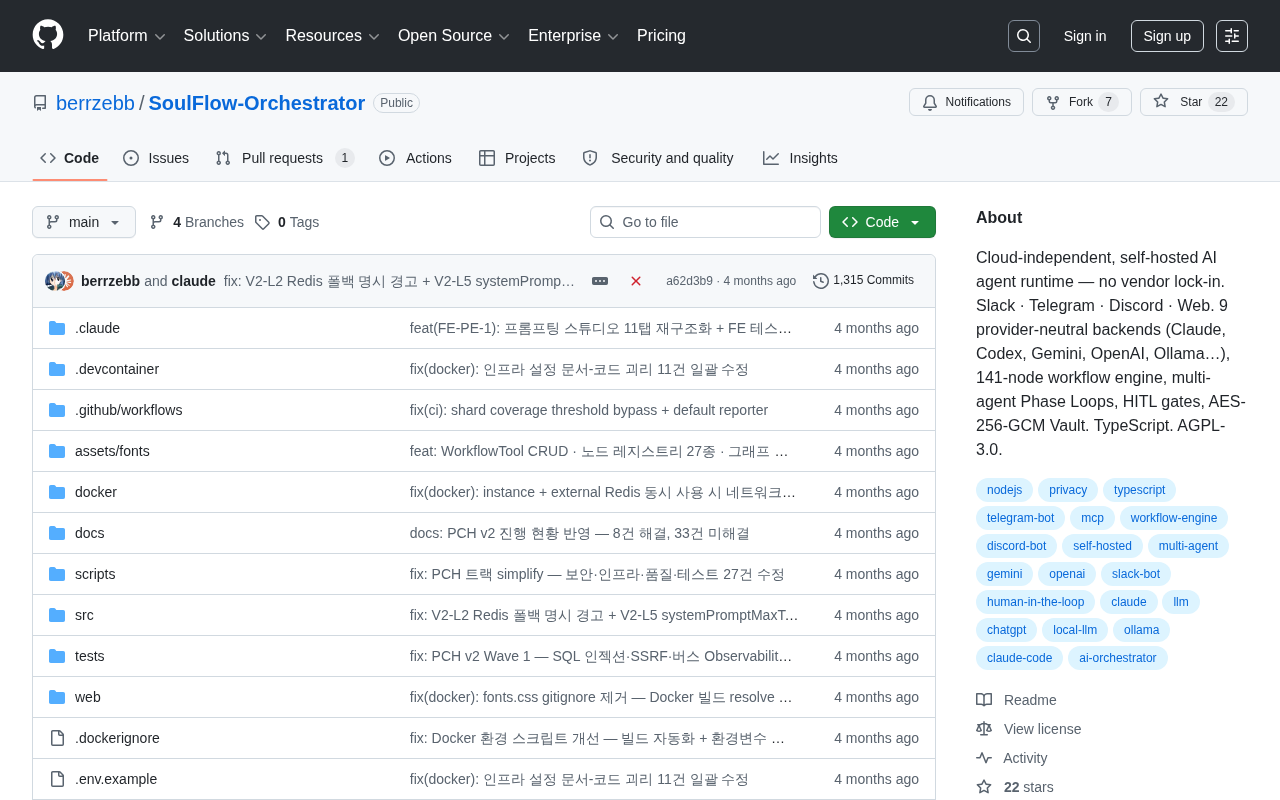
SoulFlow-Orchestrator: A Self-Hosted, Vendor-Lock-In-Free AI Agent Runtime
SoulFlow-Orchestrator is an open-source, self-hosted AI agent runtime with no vendor lock-in. Supports 9 neutral backends (Claude, OpenAI, Ollama), 141-node workflow engine, multi-agent loops, and HITL gates.
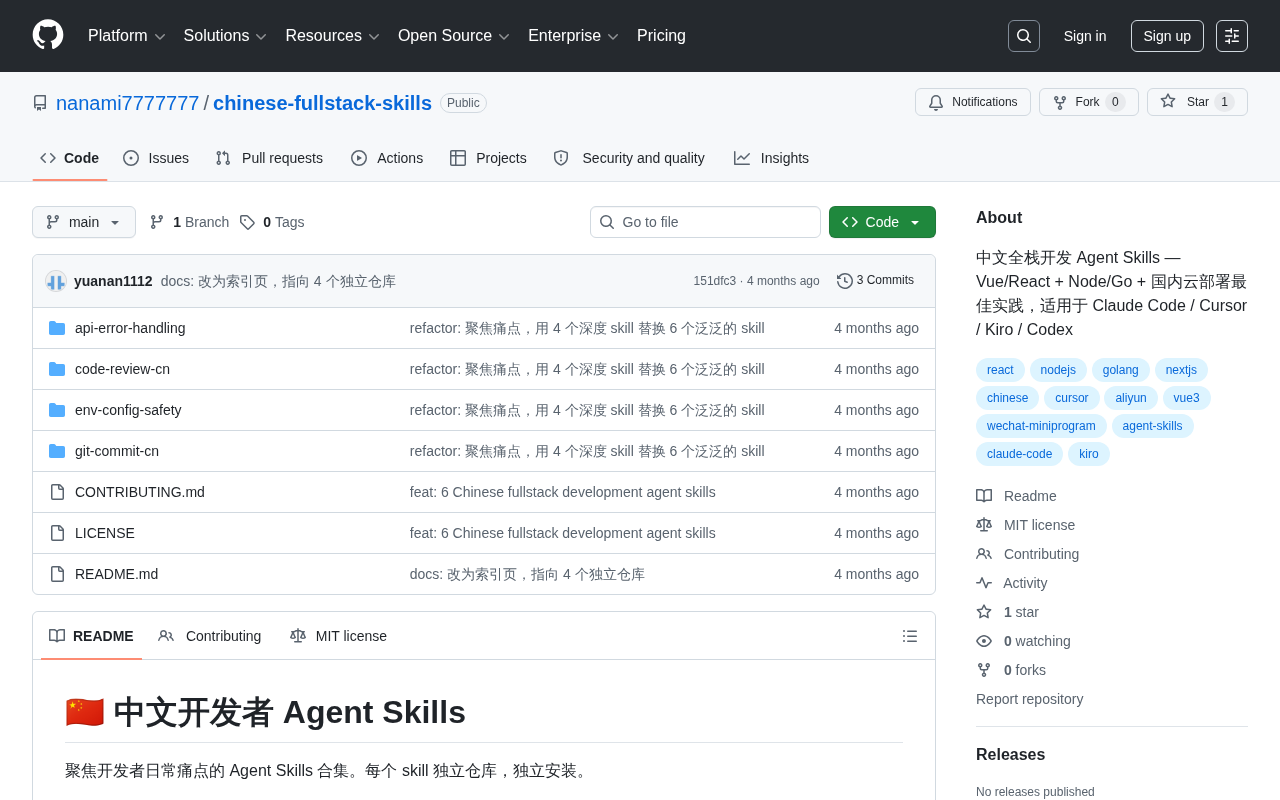
Chinese Full-Stack Agent Skills: A Skill Library Tailored for Domestic AI-Assisted Development
chinese-fullstack-skills is an Agent Skills library for Chinese full-stack development, covering Vue/React, Node/Go, and domestic cloud deployment best practices. Compatible with Claude Code, Cursor, Kiro, and Codex.
Paradigm Memory: A Local-First Memory System for AI Coding Assistants
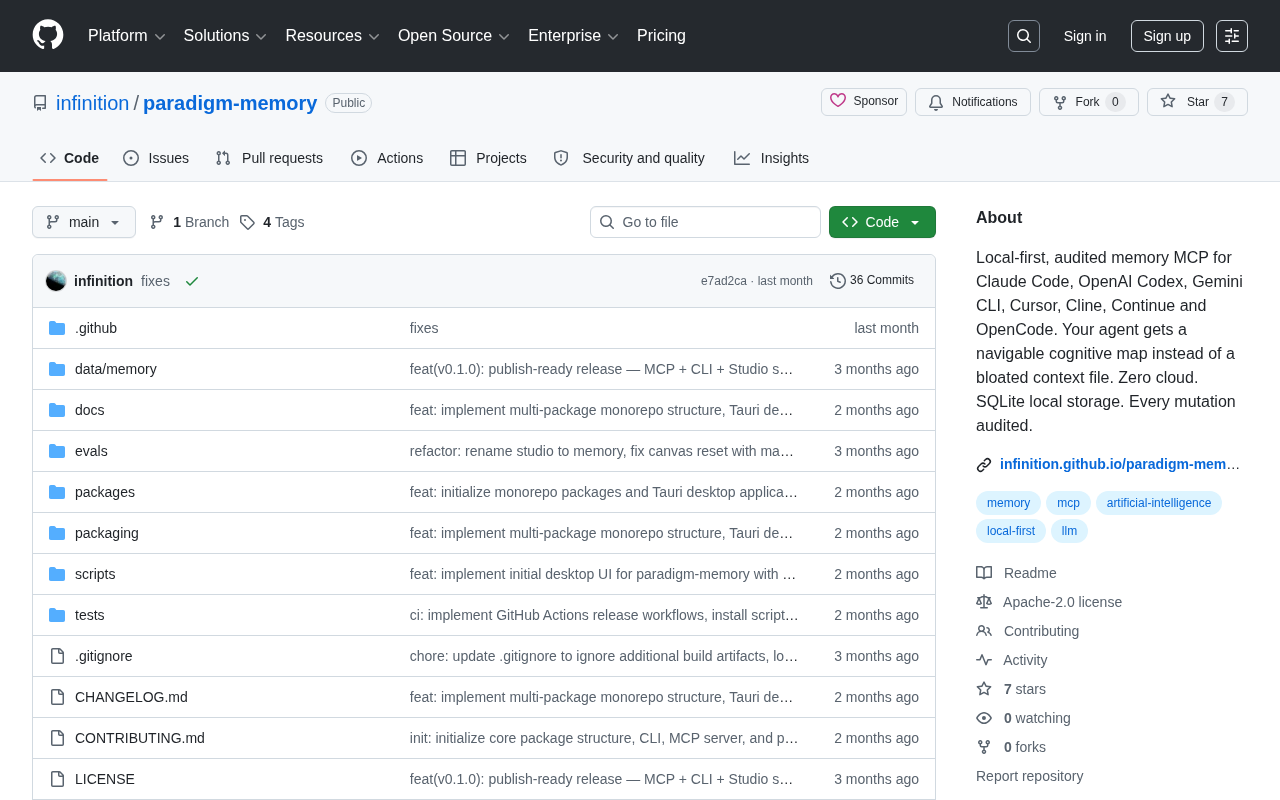
paradigm-memory is a local MCP memory tool for Claude Code, Cursor, and Cline. It uses SQLite local storage, zero cloud, full audit trails, and a navigable cognitive map instead of bloated context files.