From Raw LLMs to Agents: A Complete Guide to the Four Stages of AI Commercialization
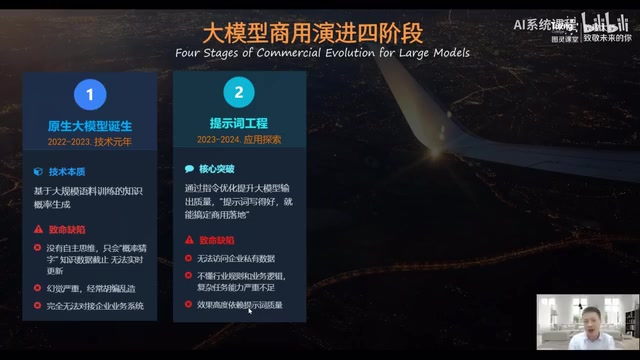
LLMs evolve through four stages, with Agents acting as autonomous digital employees that solve memory, tool use, and planning limitations.
The article traces LLM commercialization through four stages: raw LLMs lay the foundation but suffer from hallucinations and knowledge cutoffs; prompt engineering improves output quality but can't access private data; RAG enables enterprise knowledge base deployment via vector retrieval and powers most intelligent customer service today, but remains passive; and Agents add autonomous planning, tool calling, memory management, and task decomposition, transforming LLMs from talkers into doers. Products like Doubao, DeepSeek, and Cursor are all Agent applications. Understanding this full stack — from prompt engineering to Agents — is the key threshold for entering AI application development.
The Four Stages of LLM Commercialization
To understand the value of AI Agents, we first need to trace the evolution of how large language models have been deployed commercially. This journey can be broken down into four distinct stages, each one addressing the pain points left by the previous.
Stage one: Raw LLMs. This is where it all began. The technology itself isn't particularly complex — models are trained on massive amounts of publicly available internet data, then use what they've learned to generate content. When ChatGPT burst onto the scene, people experienced for the first time the jaw-dropping realization that an AI could write copy and generate code. But the novelty wore off quickly. Raw LLMs have several critical weaknesses: they lack autonomous reasoning, they can only answer questions within the scope of their training data, they have a knowledge cutoff date (ask them about events after their training and they'll confidently make things up — a phenomenon known as hallucination), and most critically, they can't integrate with enterprise business systems. All of this meant that raw LLMs were still a long way from real-world industrial deployment.
Stage two: Prompt Engineering. To improve the quality of LLM outputs, the industry began obsessing over prompt optimization. Techniques like Chain of Thought and Tree of Thought became all the rage. But prompt engineering could never overcome three fundamental limitations: it couldn't access private enterprise data, it couldn't handle complex business workflows, and output quality remained heavily dependent on manual tuning. Today, prompt engineering has been demoted from a "secret weapon" to a baseline skill for LLM application engineers — much like how using a computer requires knowing how to type, but knowing how to type doesn't make you an IT engineer. Whether you're applying for a role as an AI product manager, LLM application developer, or AI engineer, prompt engineering will be tested as a foundational skill in any interview.
RAG: What Retrieval-Augmented Generation Can and Can't Do
Stage three is RAG (Retrieval-Augmented Generation), which has become the go-to solution for many traditional enterprises undergoing digital transformation and LLM adoption.
The logic behind RAG isn't hard to grasp: companies in finance, law, e-commerce, and virtually every other industry have accumulated vast amounts of structured data — spreadsheets, documents, images, audio files. This data gets processed and stored in a vector database. Before the LLM generates a response, it first retrieves relevant content from that vector database and incorporates the retrieved results into its answer. The overwhelming majority of enterprise intelligent customer service systems and knowledge base Q&A tools you see today are built on RAG.
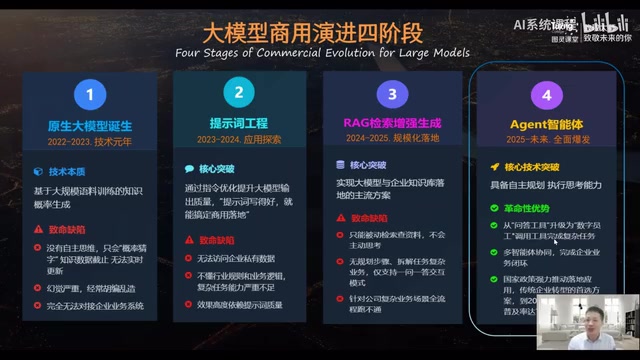
But RAG has inherent limitations that are equally obvious. At its core, it's passive retrieval and document stitching — it doesn't think proactively. If you don't ask, it will never volunteer an answer. It can't handle complex business workflows, and it only supports a simple one-question-one-answer interaction model. When faced with the messy complexity of real enterprise systems, pure RAG solutions often fall short. This sets the stage for the fourth chapter.
The technical heart of RAG lies in the "vectorization" step. Unstructured data like text and images must be converted into high-dimensional numerical vectors by an embedding model before being stored in the vector database. The distances between these vectors in mathematical space represent semantic similarity — sentences with similar meanings will have vectors that are close together. At query time, the user's question is also converted into a vector, and the system retrieves the most similar passages from the database, which are then injected into the prompt before the LLM generates its response. Because the entire process depends on vector similarity matching, RAG is highly sensitive to how questions are phrased — two questions that mean the same thing but are worded differently may retrieve completely different content. This is why enterprises need to repeatedly fine-tune their retrieval strategies when deploying RAG in production.
Agent: The "Proxy" of the LLM Era
Stage four is the full-scale emergence of intelligent agents (Agents). At this stage, LLMs gain the ability to autonomously plan, execute, and reason — evolving from a "simple Q&A tool" into a "digital employee" that can call on various tools and complete tasks independently.
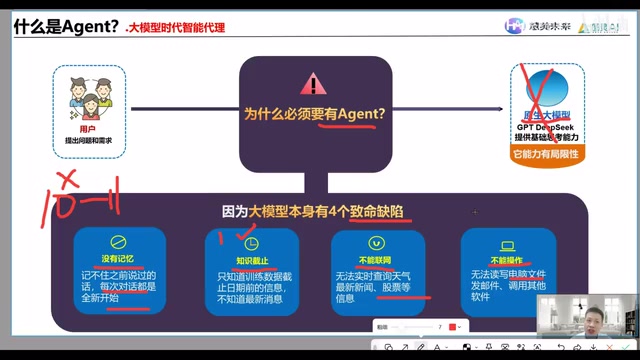
So what exactly is an Agent? Think of it as a "proxy" or "interpreter" for the LLM era. Just as a Chinese speaker and an English speaker need an interpreter in the middle to communicate, an Agent coordinates between the user and the LLM: the user states a need, the Agent interprets that need, calls on various tools to handle complex processing, and returns the final result to the user.

Why do we need Agents? The root cause lies in three core limitations of raw LLMs: no memory — they can't retain context across a multi-turn conversation and start fresh every time; knowledge cutoff — they can't answer questions about events after their training date; no internet access and no tool use — ask them about tomorrow's market policy or have them manipulate files on your computer, and they're helpless. Agents exist specifically to overcome these shortcomings.
The Four Core Problems Agents Solve
From a functional perspective, Agents address four key problems in the LLM ecosystem:
- The Interpreter: Translates human natural language requests into instructions the LLM can understand, then converts the LLM's output back into results the user can act on.
- The Tool Master: Empowers the LLM to call on external tools — APIs, web search, file operations, system integrations — transforming it from something that "knows how to talk" into something that "knows how to act."
- The Memory Keeper: Remembers context, users, and conversation history to enable coherent multi-turn interactions and prevent the LLM from "forgetting."
- The Task Planner: Breaks down complex problems into step one, step two, step three — planning, executing, and adapting when things go wrong, solving problems proactively like a real person.
An Agent's autonomous planning capability relies technically on two main paradigms: ReAct (Reasoning + Acting) and a plan-then-execute architecture. ReAct has the LLM alternate between "think → act → observe" cycles, where the result of each tool call is fed back to the model to drive the next round of reasoning. Plan-then-execute uses a "planner" LLM to decompose a task into sub-steps, which are then handed off to specialized modules for sequential execution. Multi-Agent systems are a natural evolution of this approach — different Agents each handle specialized tasks like search, writing, or code execution, coordinated by an orchestrator Agent to tackle complex workflows that no single Agent could manage alone. Protocols like MCP (Model Context Protocol) emerged to standardize the communication interface between Agents and external tools, reducing the engineering overhead of tool integration.
How Agents Look in Real Products
With the principles in mind, the products on the market become much easier to understand. Consumer-facing products like Doubao and DeepSeek are, at their core, Agents. Take Doubao as an example: when you type a question into the app, that question doesn't go directly to the underlying LLM. Instead, it's handed to Doubao's Agent layer, which calls the base model, processes the output iteratively, and returns the most accurate result to you.
In the developer world, coding tools like Cursor and Claude Code are equally classic examples of Agents. They can read an entire project's structure and invoke a compiler to debug code — a direct manifestation of the Agent's "Tool Master" and "Memory Keeper" capabilities.
From a technical evolution standpoint, concepts like Agents, RAG, Skills, MCP, and LangChain together form the complete technology stack for modern LLM application development. For practitioners looking to break into the AI industry, mastering this full chain — from prompt engineering all the way to Agents — is the critical step from "knowing how to use tools" to "being able to build applications."
Related articles
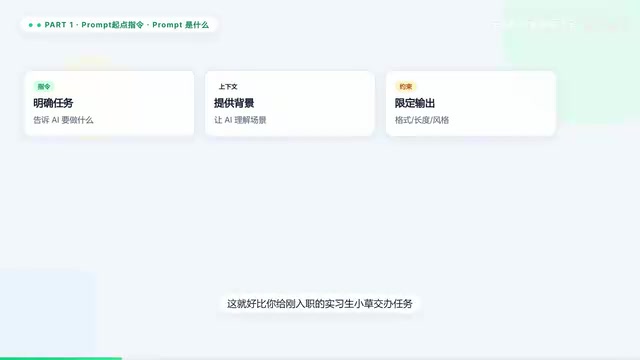
Prompt → MCP → Agent → Skill: The AI Terminology Evolution Chain Explained in 5 Minutes
A clear guide to five core AI concepts — Prompt, MCP, Agent, Skill, and Cowork — and how they connect in a layered evolution chain from simple instructions to multi-agent teamwork.
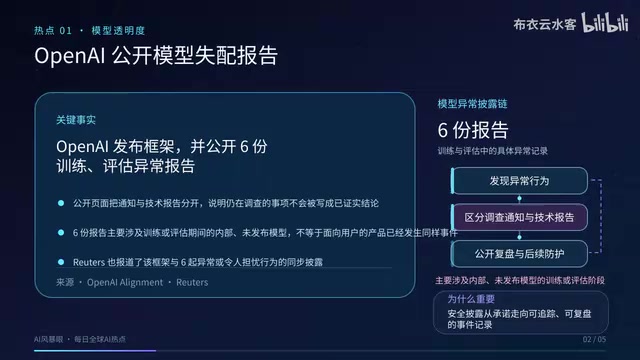
OpenAI Discloses Model Anomalies, DeepMind Launches AGI Forum, NVIDIA Partners on Grid Power Management
Sept 17 AI roundup: OpenAI publishes model anomaly disclosure framework with 6 reports, Google DeepMind launches AGI public forum, NVIDIA leads AI energy management alliance with 18 partners.
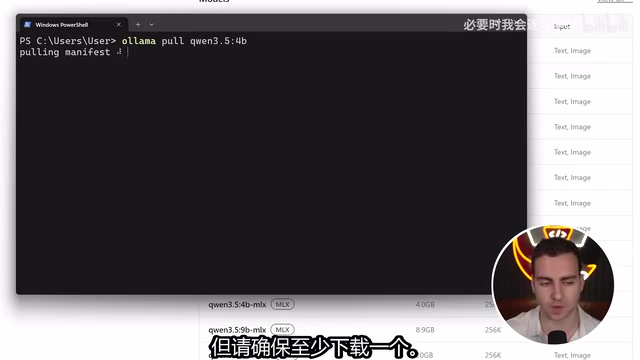
Build a Local AI Agent with Python in 10 Minutes: Ollama + PydanticAI in Action
A hands-on guide to building a fully local AI agent with Python, Ollama, and PydanticAI in 10 minutes — covering model selection, tool functions, and conversation loops.