Frontend Developers Transitioning to AI: A Complete Three-Phase Minimalist Roadmap

A clear 3-phase roadmap helping frontend developers transition into AI large model development.
This article outlines a structured three-phase learning path for frontend developers entering AI: Phase 1 covers Transformer and neural network fundamentals; Phase 2 focuses on RAG and Agent — the two most in-demand enterprise skills — using LangChain; Phase 3 advances into model fine-tuning with LoRA. The emphasis is on connected, progressive learning over scattered knowledge accumulation.
Why Now Is the Golden Window for Transitioning to AI
If the biggest tech dividend of the past decade was the mobile internet boom, the wave unfolding right now undeniably belongs to large AI models. A clear signal has already emerged from the job market: major tech companies are continuously posting AI application development roles, with salary packages noticeably higher than traditional development positions.
When a new wave arrives, opportunity windows open. For developers who missed the early mobile internet boom, large AI models represent a rare chance to get back in on the ground floor. Here's a thought worth sitting with: 90% of people who attempt to transition into AI fail — not because they can't learn it, but because they learn aimlessly and waste time on low-value knowledge.
This article lays out a structured, actionable learning path. The core logic isn't about learning more — it's about learning the right things in the right sequence.
Phase 1: Build a Solid Foundation
Master the Transformer Architecture and Neural Network Fundamentals
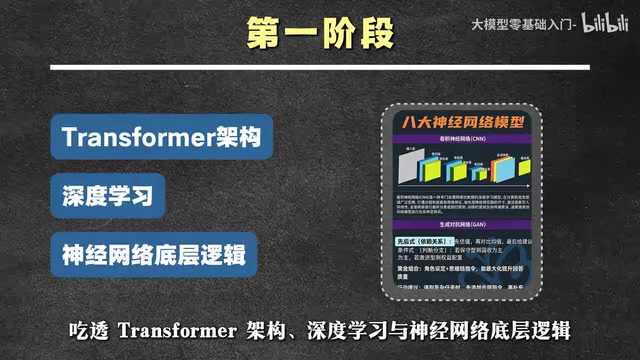
The foundation of every large model application is the underlying logic of deep learning and neural networks — and at the center of it all is the Transformer architecture. This step may seem tedious, but it's the dividing line that determines how far you can go.
The Transformer architecture was introduced by the Google Brain team in 2017 in the paper Attention Is All You Need, fundamentally overturning the RNN (Recurrent Neural Network)-dominated paradigm of sequence modeling. Its core innovation is the Self-Attention mechanism: when processing each token, the model can simultaneously consider the relevance of every other token in the input sequence, effectively capturing long-range semantic dependencies. This is what allows a model to understand that "Apple" in "Apple Inc. released a new iPhone" means something entirely different from "Apple" in "This apple tastes great." Nearly all mainstream large models — GPT, BERT, LLaMA — are built on the Transformer architecture. Understanding it is like getting the decoder ring for the entire AI model family.
Here's an apt analogy: without a solid foundation, no matter how many tools you pile on top, it's all building on sand. Many career-switchers rush ahead, skipping the fundamentals to stack tools, and then find themselves helpless when real problems arise — because they never understood why the model behaves the way it does.
For frontend developers, this phase is primarily about filling in the gaps in mathematical intuition and understanding how models actually work. You don't need to become an ML researcher, but you do need to understand what attention mechanisms, word embeddings, and context windows are actually doing. This is the critical leap from "knowing how to call an API" to "genuinely understanding AI."
Phase 2: Master the Two Must-Have Skills Employers Want
This is the highest ROI segment of the entire roadmap, and the practical capability that companies care most about when hiring. The focus is on two high-demand technologies: RAG and Agent.
RAG: Solving the Hallucination Problem
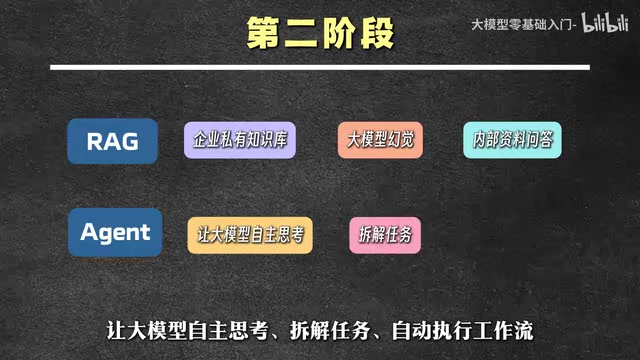
RAG (Retrieval-Augmented Generation) is used to build enterprise private knowledge bases, directly addressing the hallucination problem where large models confidently make things up — and meeting real business needs like internal document Q&A.
RAG was originally proposed by Meta AI Research in 2020. Its core idea is to retrieve relevant document chunks from an external knowledge base before the model generates a response, then inject the retrieved content into the prompt as context, guiding the model to answer based on actual source material. This effectively prevents the model from "fabricating" answers due to training data cutoff dates or knowledge blind spots. RAG implementations typically rely on vector databases (such as Pinecone, Milvus, or Chroma) — documents are chunked, converted into high-dimensional vectors via an embedding model, and stored for semantic similarity-based retrieval at query time. Enabling a large model to answer questions based on a company's own documents and data is one of the most in-demand real-world use cases today.
Agent: Giving LLMs the Ability to Execute Workflows Autonomously
Agents give large models the ability to think independently, decompose tasks, and automatically execute multi-step workflows — and this is currently one of the hottest areas of enterprise demand.
The concept of AI Agents originates from reinforcement learning's notion of "intelligent agents," and has been redefined in the LLM era as: using an LLM as the "brain," and applying paradigms like ReAct (Reasoning + Acting) to give models the ability to autonomously plan, call external tools (Tool Use), and iteratively execute multi-step tasks. In practice, an Agent can complete a sequence of actions in a single task — "search the web → read results → call a calculator → write to a file" — without human intervention at each step. Canonical frameworks like AutoGPT and LangGraph have engineered this capability, enabling developers to orchestrate complex multi-step, multi-tool workflows in a declarative style. Real-world applications range from automated report generation and intelligent customer service upgrades to automated code review.
Connecting It All with LangChain
Understanding RAG and Agents alone isn't enough — you also need a development framework to assemble them into complete applications. That framework is LangChain.
LangChain was open-sourced by Harrison Chase in October 2022 and quickly became one of the most widely used frameworks in AI application development. It uses "chained calls" as its core abstraction, standardizing components like prompt templates, LLM calls, conversation memory, tool use, and vector retrieval — letting developers combine them like building blocks to rapidly assemble complex AI applications. LangChain supports both Python and JavaScript, and comes with LangSmith (a chain tracing and debugging platform) and LangGraph (an Agent orchestration framework supporting loops and state management), forming a complete toolchain from development to deployment. Once you can use LangChain to connect RAG and Agents together, you'll be capable of independently building production-ready AI applications.
At this point, whether you're building an enterprise intelligent customer service system or delivering AI solutions to a traditional industry, you're fully equipped to do it. This means you've already developed the core competencies to land an AI application development role.
Phase 3: Level Up and Pull Ahead
Phases 1 and 2 are sufficient for a career transition. But if you want to separate yourself from the competition, Phase 3 is non-negotiable.
Dive Deep into Pre-training and Model Fine-Tuning
The focus here is on understanding the pre-training process and model fine-tuning methods — specifically getting a thorough grasp of mainstream lightweight fine-tuning techniques and their associated frameworks.
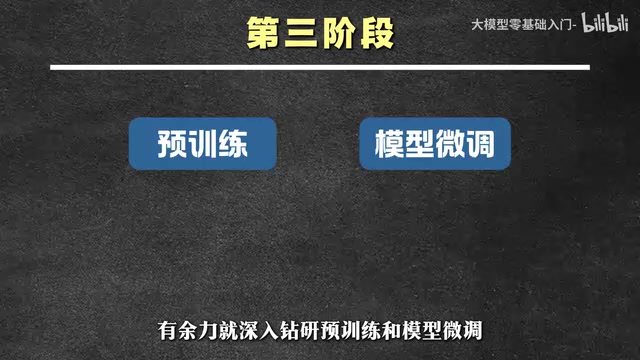
The leading lightweight fine-tuning approach is LoRA (Low-Rank Adaptation), proposed by Microsoft Research in 2021. The idea is to freeze the original weights of the pre-trained model and inject two low-rank matrices alongside the attention layers, training only these two extremely small parameter matrices to approximate the effect of full-parameter fine-tuning. Compared to full fine-tuning, LoRA can compress the number of trainable parameters to less than 1% of the original, dramatically reducing VRAM requirements — enabling consumer-grade GPUs (like an RTX 3090) to run customized training on models with 7B or even 13B parameters. Building on this, QLoRA further combines 4-bit quantization to lower the barrier even further, making it genuinely feasible to fine-tune a specialized business model on your own machine. This is the capability leap from "using someone else's model" to "building your own custom model."
Build Projects — Let Your Work Speak for Itself
Beyond theory, hands-on projects are what matter most. Hiring managers have never been most impressed by a list of knowledge points on a resume — they're looking for complete, demonstrable project experience. Finish this step and you'll have pulled well ahead of your fellow career-switchers.
The Key to a Successful Transition: Knowledge Must Connect
The goal of this entire roadmap is clear — directly addressing real enterprise business needs, with the ability to independently deliver complete AI solutions.
There's a core problem that's easy to overlook, but worth repeating: Many people learn a pile of concepts and still can't do anything with them. The root cause is that their knowledge is scattered and disconnected. When there's no coherent logic connecting the underlying principles, application frameworks, and hands-on projects, everything you learn evaporates — or can't be applied.
The three-phase path — "foundational principles → must-have skills → advanced fine-tuning" — is fundamentally designed to solve the "knowledge fragmentation" problem. It follows a progressive logic from principles to application to customization: understanding Transformer helps you see why RAG uses vector retrieval; mastering RAG and Agents helps you judge when a scenario calls for fine-tuning a custom model. Every step builds the foundation for the next.
A Final Note
It's worth being clear-eyed about one thing: claims like "transition careers in two months and land a high salary" are mostly motivational framing — actual timelines vary widely depending on your background. Frontend developers do have a relative advantage because they already have solid engineering skills. But the structured thinking behind this roadmap — staying focused rather than spreading thin, targeting the RAG, Agent, and real-world delivery skills that companies actually need — is something every developer looking to enter the AI space would do well to adopt.
In the midst of a tech wave, opportunity and competition coexist. Rather than anxiously watching from the sidelines, it's better to make steady progress along a clear path. For those who missed the mobile internet boom, this bet carries limited downside and considerable upside.
Key Takeaways
Related articles
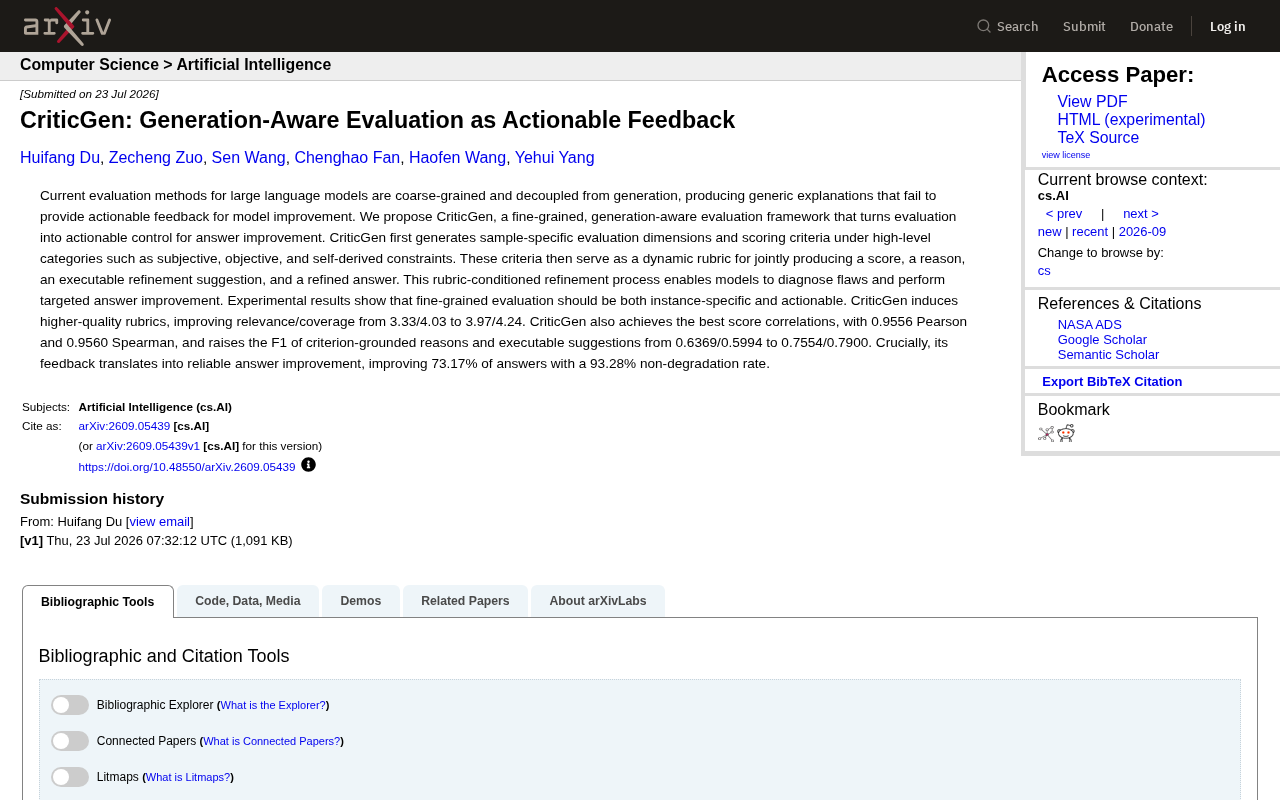
CriticGen: A New Framework That Transforms AI Evaluation into Actionable Improvement Feedback
CriticGen proposes a generation-aware evaluation framework that transforms AI assessment from passive scoring to an active optimization loop, achieving 73.17% answer improvement and 93.28% non-degradation rate.
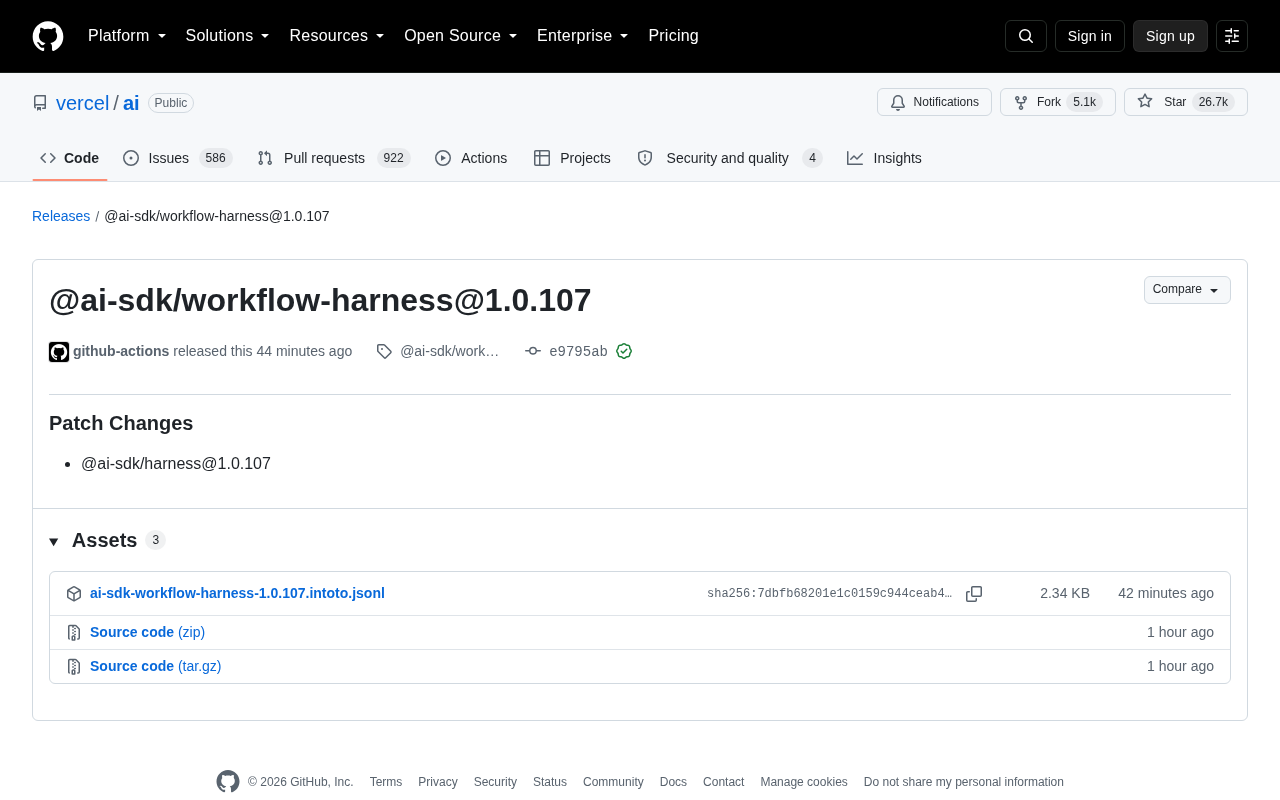
Vercel AI SDK workflow-harness Update Analysis
Deep analysis of Vercel AI SDK workflow-harness 1.0.107 update: architecture design, engineering practices, and developer value for building reliable AI apps.
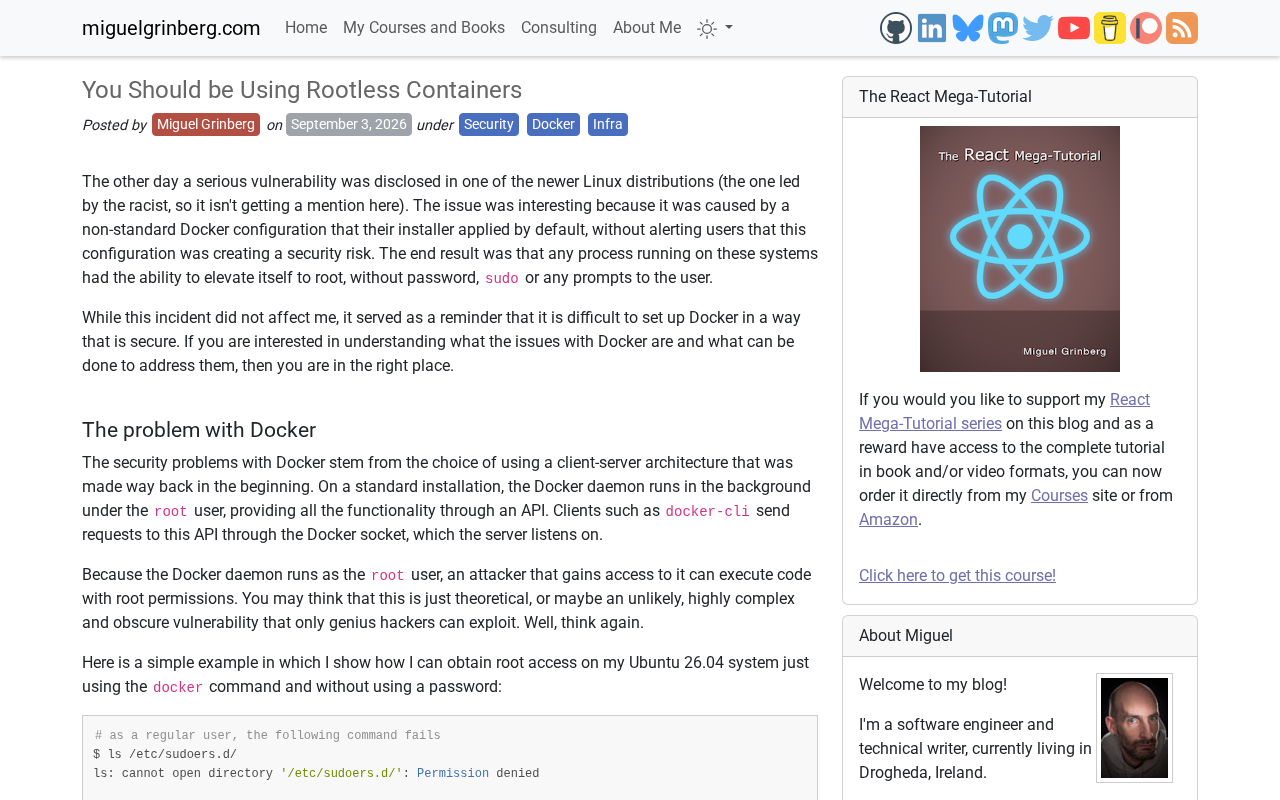
Rootless Containers Explained: Principles, Benefits, and Leading Implementation Approaches
A deep dive into rootless container principles and security benefits, comparing Podman, Docker Rootless mode, and Kubernetes integration with practical migration advice.