#frontend to AI transition
234 related articles

·3 min
Frontend Developers Transitioning to AI: A Complete Three-Phase Minimalist Roadmap
A structured 3-phase roadmap for frontend developers transitioning to AI: master Transformer fundamentals, build RAG & Agent skills, then advance to model fine-tuning.
Read more →

·3 min
Four Core Advantages Frontend Developers Have When Transitioning to AI Agent Development
Frontend developers have key advantages for AI Agent development: TypeScript ecosystem fit, low-barrier full-stack bridging, and state management isomorphism. Learn the transition path here.
Read more →

·3 min
NestJS + LangChain: A Practical Guide for Frontend Engineers Transitioning to AI Full-Stack Architecture
How can frontend engineers transition to AI full-stack? This guide covers NestJS + LangChain, TypeScript fundamentals, AI Agent development, local model deployment, and cross-language architecture skills.
Read more →

·2 min
AI-Driven Persistent RPG Engine: A Full-Stack Practice Guide with React + Supabase
Deep dive into an AI persistent RPG game engine built with React SPA and Supabase, exploring how LLMs combine with modern web stacks for cross-session memory, dynamic narrative, and game state management.
Read more →

·2 min
Instagram Head Reveals: Hiring Standards Have Quietly Shifted — Judgment Over Coding Ability
Instagram head Adam Mosseri admits being a mediocre engineer and reveals his team has abandoned full technical interviews. Judgment is replacing coding as the core hiring standard.
Read more →

·2 min
Instagram's Head Reveals: Hiring Standards Have Quietly Changed — Judgment Is Replacing Coding Ability
Instagram head Adam Mosseri admits he's a mediocre engineer, revealing his team abandoned full technical interviews. As AI reshapes engineering, judgment is replacing coding as the core hiring criterion.
Read more →

·2 min
Why Substack Authors Need an Independent Website: Platform Dependency Risks and Solutions
Analysis of platform dependency risks for Substack authors and why building an independent website is essential. Includes strategies for using Substack alongside your own site, plus alternatives like Ghost and static sites.
Read more →

·2 min
Why Substack Authors Need an Independent Website: Platform Dependency Risks and Solutions
Analysis of platform dependency risks for Substack authors and why an independent website is essential. Practical strategies for using Substack alongside your own site, with alternatives like Ghost and static sites.
Read more →
·3 min
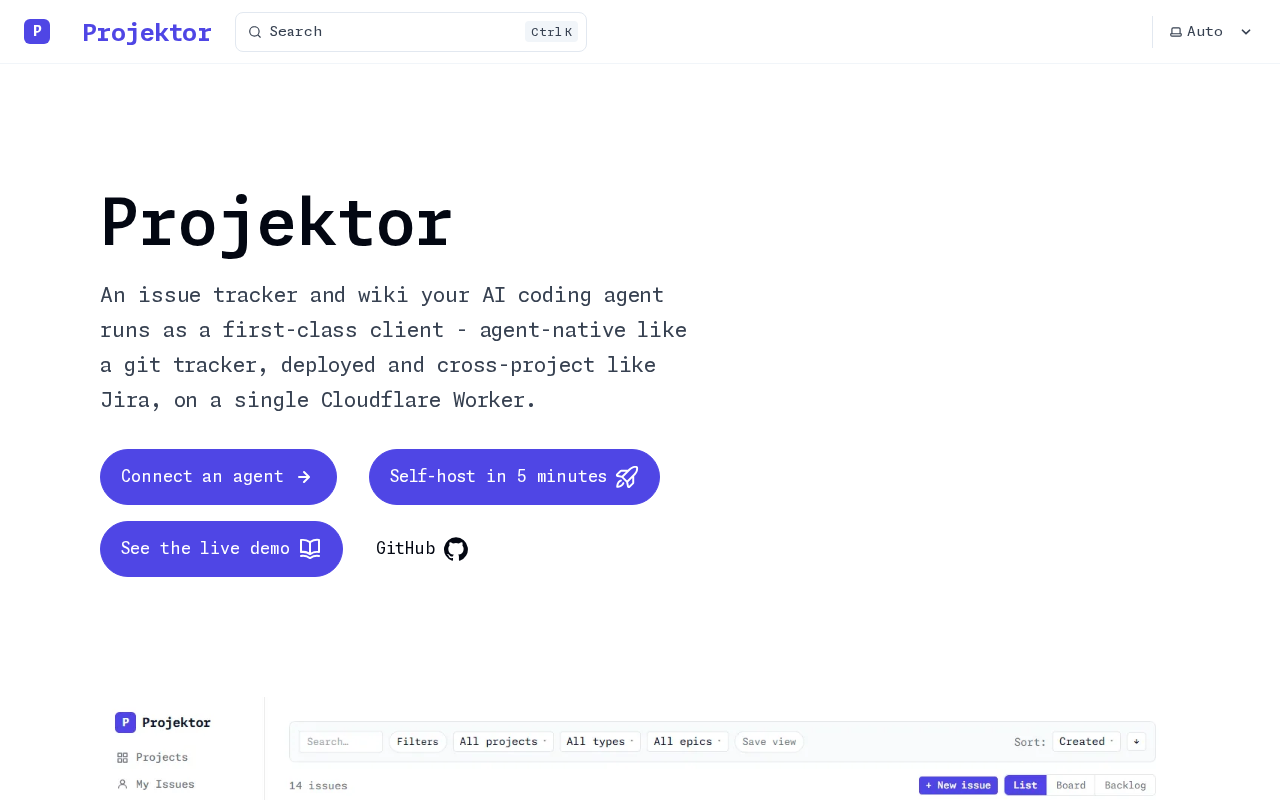
Open-Source Agent-Native Task Management: A Deep Dive into Cloudflare Edge Deployment
Deep dive into an open-source Agent Native task management and Wiki project deployed on Cloudflare, exploring Agent-native architecture, edge computing advantages, and serverless deployment for AI Agents.
Read more →

·3 min
GeoLibre: An Open-Source Cloud-Native GIS Platform and Lightweight Cross-Platform Geospatial Tool
GeoLibre is an open-source lightweight cloud-native GIS platform built with TypeScript, running across web browsers, desktop, mobile, and Jupyter Notebook environments.
Read more →

·3 min
GeoLibre: An Open-Source Cloud-Native GIS Platform and Lightweight Cross-Platform Geospatial Tool
GeoLibre is an open-source lightweight cloud-native GIS platform built with TypeScript, supporting Web browsers, desktop, mobile, and Jupyter Notebook environments. Explore its core features and advantages.
Read more →

·2 min
Google AI Studio Deep Dive: The Ecosystem Ambitions Behind Google's AI Developer Tools
A deep dive into Google AI Studio's core features and strategic positioning, exploring how it competes with OpenAI and Anthropic for the AI developer ecosystem.
Read more →

·2 min
GPT-5.6 Hands-On Review: Analyzing the Agent Capabilities Behind Its #1 Ranking on the Frontend Development Leaderboard
GPT-5.6 SoulX High tops the frontend dev leaderboard at 1636 points with Agent Arena rank #2. Hands-on tests of portfolio pages and mystery games reveal its task decomposition and self-correction capabilities.
Read more →

·2 min
A Beginner's Guide to Vibe Coding: Building Your Career Moat with AI Programming
A detailed guide to Vibe Coding with AI programming tools like Claude Code, Cursor, and Codex. Learn how to leverage AI-driven development to ship products independently and build lasting career value.
Read more →

·3 min
OpenAI Admin API Explained: How Enterprises Manage ChatGPT at Scale
Deep dive into how OpenAI Admin API and ChatGPT Work help IT admins manage enterprise ChatGPT at scale—covering access control, cost monitoring, usage insights, and smart quota recommendations.
Read more →

·4 min
WebMCP in Practice: How MakeMyTrip Is Reshaping the Travel Booking Experience
India's largest OTA platform MakeMyTrip uses WebMCP to standardize AI Agent interactions with web apps, replacing fragile DOM scraping with natural language-driven test automation and simplified complex booking scenarios.
Read more →

·4 min
WebMCP in Practice: How MakeMyTrip Is Reshaping the Travel Booking Experience
India's largest OTA platform MakeMyTrip uses WebMCP to standardize AI Agent interaction with web apps, solving DOM scraping fragility, enabling natural language test automation, and simplifying complex international flight bookings.
Read more →

·3 min
From Frontend to Agent Development: A Complete 6-Week Systematic Learning Path
A 6-week systematic learning path for frontend engineers transitioning to AI Agent development, covering core architecture, ReAct, multi-agent collaboration, RAG integration, and deployment.
Read more →

·3 min
Getting Started with Codex: The Right Way to Use AI Coding Agents
A detailed comparison of OpenAI Codex and Claude Code with hands-on testing. From AI agent concepts to account setup, helping developers quickly master AI coding agents.
Read more →

·2 min
ag-kit: A Deep Dive into the TypeScript-Based AI Agent Development Toolkit
An in-depth analysis of ag-kit, a TypeScript-based AI Agent development toolkit covering core architecture, modular design, use cases, and tech selection advice for full-stack developers.
Read more →