GeeksforGeeks Data Science 360 Course Review: 12 Sprints Covering the Full AI Stack
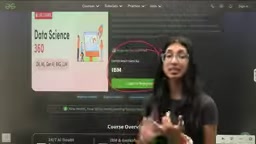
GFG's Data Science 360 spans 12 Sprints from Python to Agentic AI, with dual certificates and hands-on projects for beginners.
GeeksforGeeks' Data Science 360 is a broad-scope AI/data science bootcamp for beginners and career changers, structured across 12 Sprints covering Python, SQL, BI tools, machine learning, deep learning, RAG, LLM fine-tuning, and Agentic AI. The tech stack includes PyTorch, Scikit-learn, LangChain, CrewAI, and Ollama, with Capstone projects to build a portfolio. Graduates earn dual GFG and IBM certificates. The course promises a strong foundation rather than instant expertise — best treated as a systematic entry point into the AI field.
GeeksforGeeks (GFG) has launched a course called Data Science 360, marketed as a "360-degree" program that aims to cover the complete data science and AI skill chain — from Python fundamentals all the way to Agentic AI — in a single course. For beginners looking to transition into AI from other fields, this kind of "one-stop" program is naturally appealing, but it's worth taking a closer look at what it actually offers and who it's really designed for.
What the Course Covers
According to the official description, the Data Science 360 skill map is remarkably broad: Python, SQL, Excel, Power BI, and Tableau, followed by machine learning, deep learning, Generative AI (Gen AI), RAG (Retrieval-Augmented Generation), Agentic AI, LLM fine-tuning, and other cutting-edge topics — all broken down into 12 Sprints (learning phases) that progressively build on each other.
The first Sprint starts with Python and file management, the second moves into statistics, probability, and Python-based data analysis, and subsequent sprints layer on more advanced modeling and large language model content. This scaffolded, bottom-up design is a classic approach for learners starting from scratch.
In terms of breadth, the course covers nearly every capability required for today's data science roles: data analysis, hypothesis testing, database management and SQL optimization, data visualization, predictive modeling, NLP, neural network architectures, prompt engineering, LLMOps, retrieval augmentation, model fine-tuning, local LLM deployment, multimodal Gen AI, and multi-agent orchestration.
RAG (Retrieval-Augmented Generation) and Agentic AI are two of the more cutting-edge topics in the curriculum, and may be unfamiliar to beginners. RAG is a technical architecture that combines large language models with external knowledge bases: when a user asks a question, the system first retrieves relevant document chunks from a vector database, then feeds them as context to the LLM to generate a response — compensating for the model's knowledge cutoff date and reducing "hallucinations." Agentic AI refers to giving LLMs the ability to autonomously plan, call tools, and execute multi-step tasks — moving beyond simple Q&A to acting like an agent that can break down goals, invoke search engines or code interpreters, and dynamically adjust actions based on intermediate results. Both technologies are rapidly transitioning from research into industrial deployment and represent one of the fastest-growing areas of demand in AI engineering roles.
Tech Stack and Hands-On Projects
The tools the course claims to cover are equally extensive, largely reflecting current industry standards:
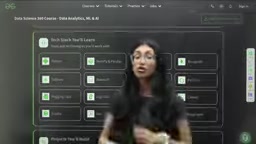
- Data processing and analysis: NumPy, Pandas, SQL, MongoDB
- Machine learning and deep learning: Scikit-learn, PyTorch
- Visualization and BI: Power BI, Tableau
- LLM and Agent ecosystem: Hugging Face, LangChain, Ollama, CrewAI, LangSmith, LangGraph, Chainlit
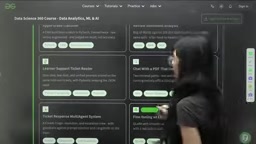
The course emphasizes "learning by doing" and includes multiple Capstone projects — such as an Automated Data Pipeline and a Forensic Log Analyzer — where students use tools like Selenium and Power BI to put their skills into practice. The official course page explains which technologies each project uses and what learners will gain from it.
The core logic behind this design is simple: use demonstrable projects to strengthen your resume. As instructors throughout the course repeatedly emphasize, in today's job market, theory alone isn't enough — you need to prove you've actually built something. Project experience is the source of credibility.
LangChain, LangGraph, and CrewAI are core frameworks in the current Agentic AI ecosystem and deserve a brief explanation. LangChain is an orchestration framework for building LLM applications, providing capabilities like chained calls, memory management, and tool integration. LangGraph is an extension of LangChain specifically designed for building stateful, cyclical multi-step Agent workflows — ideal for complex tasks that require repeated "think-act" loops. CrewAI is a multi-agent collaboration framework that lets developers define multiple agents with distinct roles, allowing them to divide work and cooperate toward a shared goal. LangSmith is an observability platform for debugging and monitoring LLM applications in production. Ollama enables developers to run open-source LLMs (such as Llama and Mistral) locally without relying on cloud APIs — particularly useful for privacy-sensitive use cases. Together, these tools form a complete engineering pipeline from single model calls to complex agent orchestration, and they appear frequently in current AI engineering job requirements.
Certificates, Instructors, and Enrollment
Upon completing the course, students receive dual certificates from GFG and IBM. The IBM certificate requires passing a corresponding certification exam. For career changers looking to add authoritative credentials to their resume, third-party certifications like IBM carry meaningful market recognition.
The course also offers 24/7 AI assistant support, a modern AI toolkit, and hands-on training throughout. The instructor lineup includes Sampoorn Rattan, GFG's Senior Director of Academics, along with Ashish, a senior instructor with a strong reputation in the data science field.
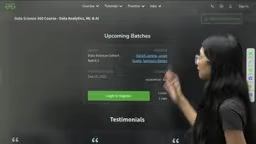
The next cohort begins on September 19, and the official page notes that a limited-time discount is currently available. The complete 12-Sprint syllabus, course brochure, enrollment link, and contact information are all available on the course page.
A Balanced View of "One-Stop" Courses
The most frequently asked question in the course FAQ is: "Can I become a data scientist or AI/ML engineer with just this one course?" The official answer: the course provides a "strong foundation" spanning data science, machine learning, deep learning, Gen AI, RAG, Agentic AI, and LLM fine-tuning, backed by hands-on projects.
That wording is worth noting: it promises a "strong foundation" — not "become an engineer overnight." This is realistic. Topics like large language models and agent orchestration require ongoing deep specialization even in professional roles. A course that spans beginner to intermediate content is best understood as a "systematic introduction + skill framework builder."
For beginners or career changers, the real value of this type of course lies in: providing a clear learning path, reducing the overhead of piecing together scattered resources, and producing demonstrable outputs through a unified project system. The limitations are equally apparent — the broader the coverage, the less depth any single topic typically receives. Before enrolling, students should assess whether the course's depth matches their target role, and treat the dual certificates and Capstone projects as resume boosters rather than sufficient qualifications on their own.
Summary
Data Science 360 is a broad-scope AI/data science bootcamp aimed at beginners. Its three main selling points are: a systematic 12-Sprint learning path, hands-on projects covering mainstream toolchains, and GFG + IBM dual certification. It's well-suited for career changers who want to build a complete skill framework in one go and polish their resume with real projects. As for whether "one course is enough to become an engineer" — a more realistic expectation is to treat it as a starting point for entering the AI field, not a finishing line. Interested readers can visit the course page for the full syllabus and enrollment details.
Related articles
vLLM v0.30.0rc1 Released: Isolates FlashInfer BF16 Autotuning Logic
vLLM v0.30.0rc1 release candidate fixes FlashInfer BF16 autotuning isolation (PR #57285). Learn the technical background and its impact on inference deployment.
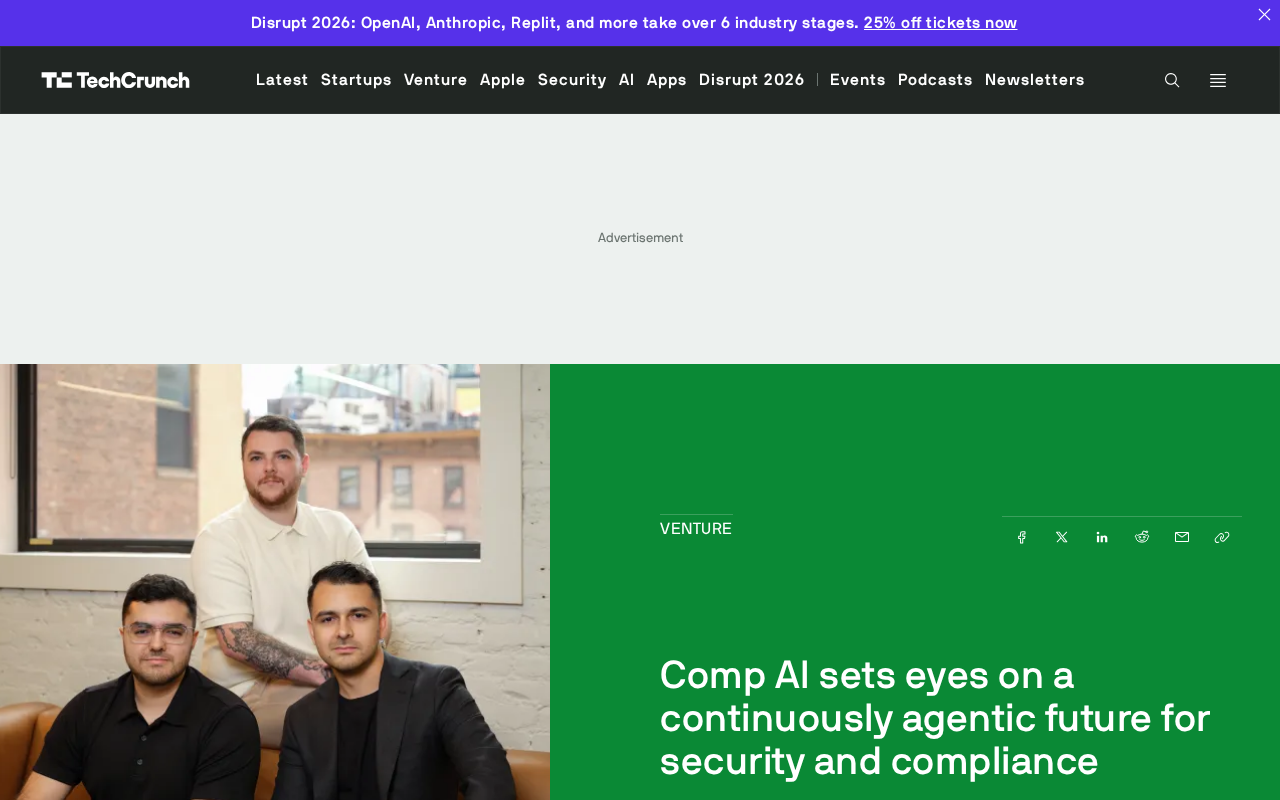
Comp AI Raises $34M Series A, Bets on Agentic Security Compliance
Comp AI raises $34M Series A led by Roo Capital and Grand Ventures, betting on "continuously agentic" AI to transform compliance from periodic audits into real-time monitoring.
MIT Technology Review's 35 Innovators Under 35: A Climate Tech Edition Explained
MIT Technology Review's latest 35 Innovators Under 35 list focuses on climate tech, spotlighting nine young global innovators. Here's what the list means and why it matters.