Getting Started with ChatGPT Codex: A Practical Guide to the AI Coding Assistant

A practical guide to OpenAI's Codex and why every programmer should master AI coding tools.
Codex is OpenAI's AI coding assistant that enables writing code through natural language. This article explains its evolution from code completion to autonomous agents, real-world use cases, why companies now treat AI coding experience as a must-have, and how to get started.
What Is Codex: OpenAI's AI Coding Assistant
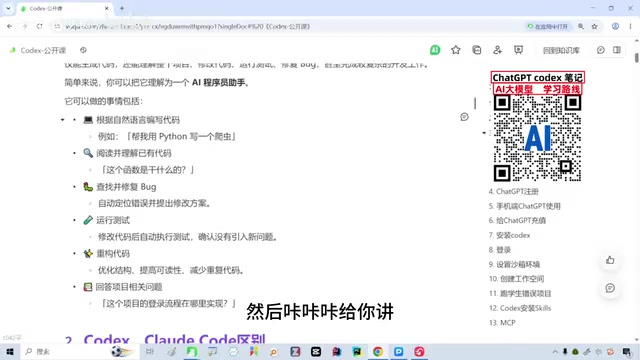
In today's world where AI coding tools keep emerging one after another, Codex is gradually becoming a term that programmers simply can't avoid. If you've previously used tools like Cursor, Claude Code, or similar AI-assisted programming tools, then understanding Codex won't be difficult—it's essentially an AI coding assistant released by OpenAI. You can simply think of it as a "smart programmer" that can do work for you.
It's worth noting that OpenAI's Codex didn't appear out of nowhere. Back in 2021, OpenAI released the first-generation Codex model, which served as the technical foundation behind GitHub Copilot, primarily providing code auto-completion functionality. As the capabilities of GPT-4 and subsequent models advanced, AI coding tools evolved from "completion" to "agents," giving rise to a series of products like Cursor, Claude Code, and Devin. Their common characteristic is deep integration into developers' workflows, allowing them to understand the entire project context rather than isolated lines of code. Understanding this evolution helps grasp Codex's positioning within the broader industry landscape.
More precisely, Codex belongs to a category of agent tools. Its working model is straightforward: you give it instructions, and it can complete a series of specific tasks for you. This shift from "humans writing code" to "humans giving commands and AI writing code" is precisely the core of the current revolution in AI programming paradigms.
It's worth understanding the technical essence of agents here. The AI Agent is one of the most important concepts in the current AI field, and it fundamentally differs from traditional chatbots. Traditional conversational models can only passively answer questions, whereas agents possess the ability to autonomously plan, invoke tools, execute multi-step tasks, and self-correct. In programming scenarios, this means Codex can not only generate code snippets but also autonomously read codebases, run terminal commands, execute tests, and iteratively make changes based on error messages until a complete functional goal is achieved. Behind this lies the reasoning capabilities of large language models (LLMs) and technical frameworks like ReAct (Reasoning + Acting), which allow the AI to cycle back and forth between "thinking" and "acting." It is precisely the maturation of this capability that makes the "humans give commands, AI writes code" paradigm possible.

Writing Code with Natural Language
Codex's greatest appeal lies in lowering the barrier to programming. You can issue instructions directly in natural language, for example, "Help me write a feature in Java" or "Help me build a page in HTML." Even if you're not proficient in a particular programming language, the AI can generate the corresponding code based on your description.
Behind this lies the deep fusion of natural language processing technology and code generation capabilities. Large language models have been trained on massive amounts of open-source code (such as public repositories on GitHub), thereby establishing a mapping between natural language intent and programming language syntax. When you describe your requirements in Chinese or English, the model can transform vague human intentions into structured, executable code. This has also given rise to the emerging concept of "Vibe Coding"—developers no longer type code line by line, but instead collaborate with AI through natural language, focusing their energy on describing requirements and validating results.
This also explains why more and more non-programmers are starting to use tools like Codex or Claude. On platforms like Douyin, you can already see quite a few content creators demonstrating how to use Codex in their livestreams, with even application scenarios like digital humans being included. In terms of improving work-level efficiency, these tools have indeed demonstrated genuine value.
Why You Must Learn AI Coding Tools Now
From an industry observation standpoint, a somewhat awkward reality is this: many senior programmers with eight or nine years of experience have never actually used tools like Codex or Claude Code to this day. If you're in this situation too, then you may have already fallen somewhat out of touch with the current technological era.
A Hard Threshold in Interviews
This disconnect is particularly evident during the job-hunting process. Nowadays, many companies get straight to the point during interviews, asking: "Have you used Claude Code? Have you used Codex?" If the answer is no, you're likely to be eliminated immediately. Experience with AI coding tools is transforming from a "bonus point" into a "must-have."

Companies' Quantitative Requirements for AI Code Generation Rate
Going further, some companies have already begun setting hard metrics for the "AI code generation rate." According to shared accounts, some students have reported that their companies require the AI code generation rate to reach 90% or above, and failing to meet this can even affect performance evaluations.
Companies implementing an "AI code generation rate" metric reflects the software industry's urgent demand for improving R&D efficiency. Against the backdrop of cost reduction and efficiency enhancement, managers hope to measure the effectiveness of AI tool adoption through quantitative means. However, using lines of code as a single metric has methodological flaws, which is consistent with the long-standing critique in software engineering circles of the "LOC as a metric" problem. Decades ago, Bill Gates famously mocked that "measuring programming progress by lines of code is like measuring aircraft building progress by weight." A truly reasonable efficiency evaluation should focus on comprehensive metrics such as delivered value, defect rates, and requirement response speed, rather than merely output quantity.
That said, this evaluation method also has obvious controversy and unreasonable aspects. Some company managers themselves aren't technically proficient, yet they adopt an approach of judging by "lines of code generated," which is actually quite unfair. Because the volume of code varies enormously across different roles—frontend development typically involves far more code than backend development. Using a uniform line-count standard to measure them clearly cannot reflect the true value of the work.

How Much Productivity Can Codex Replace
Setting aside the controversy over evaluation methods, the capabilities of tools like Codex in actual production are undeniable. Once you master it, the range of work it can cover is quite extensive:
- Writing code: Generating code in various languages based on natural language descriptions
- Testing assistance: Assisting with code testing work
- Operations support: Providing help in operations and maintenance tasks
In other words, a Codex used skillfully enough can indeed replace a considerable portion of traditional productivity. This is precisely why it deserves serious attention from every practitioner and warrants getting started with it as soon as possible.
Advice for Practitioners
For readers who haven't yet touched these tools, the best strategy is to start practicing immediately. Theoretical understanding is far from enough—only through repeated use in actual projects can you truly appreciate the value of AI coding assistants in boosting efficiency. In this era of rapid AI iteration, actively embracing tools and improving your AI collaboration abilities has become a required course for tech professionals to maintain their competitiveness.
Whether you want to improve efficiency at work or prepare for your next job switch, mastering an AI coding assistant like Codex is an investment with an extremely high return.
Key Takeaways
Related articles
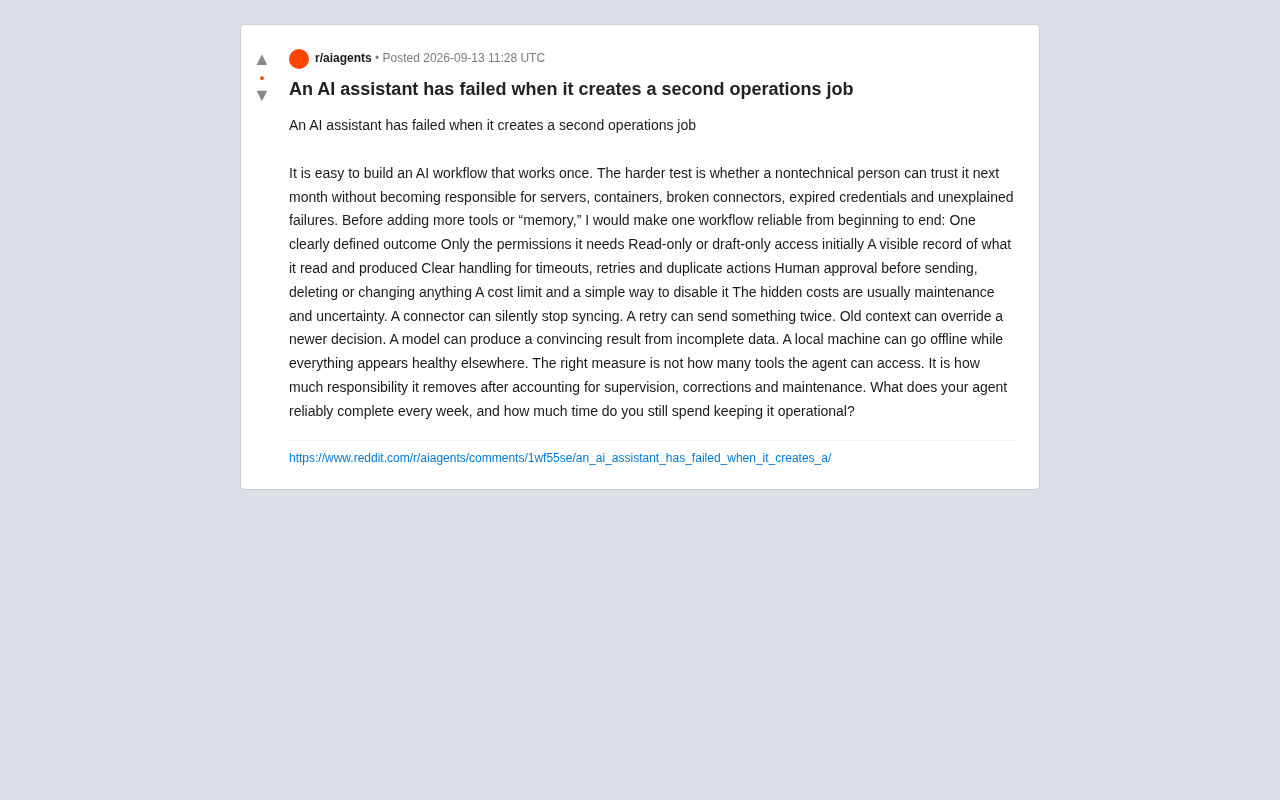
The True Failure of an AI Assistant: When It Creates a Second Operations Job
A Reddit user reframes how to judge AI assistants: they fail when they create a second ops job. Learn how to build end-to-end reliable workflows and measure Agent value by net benefit, not tool count.
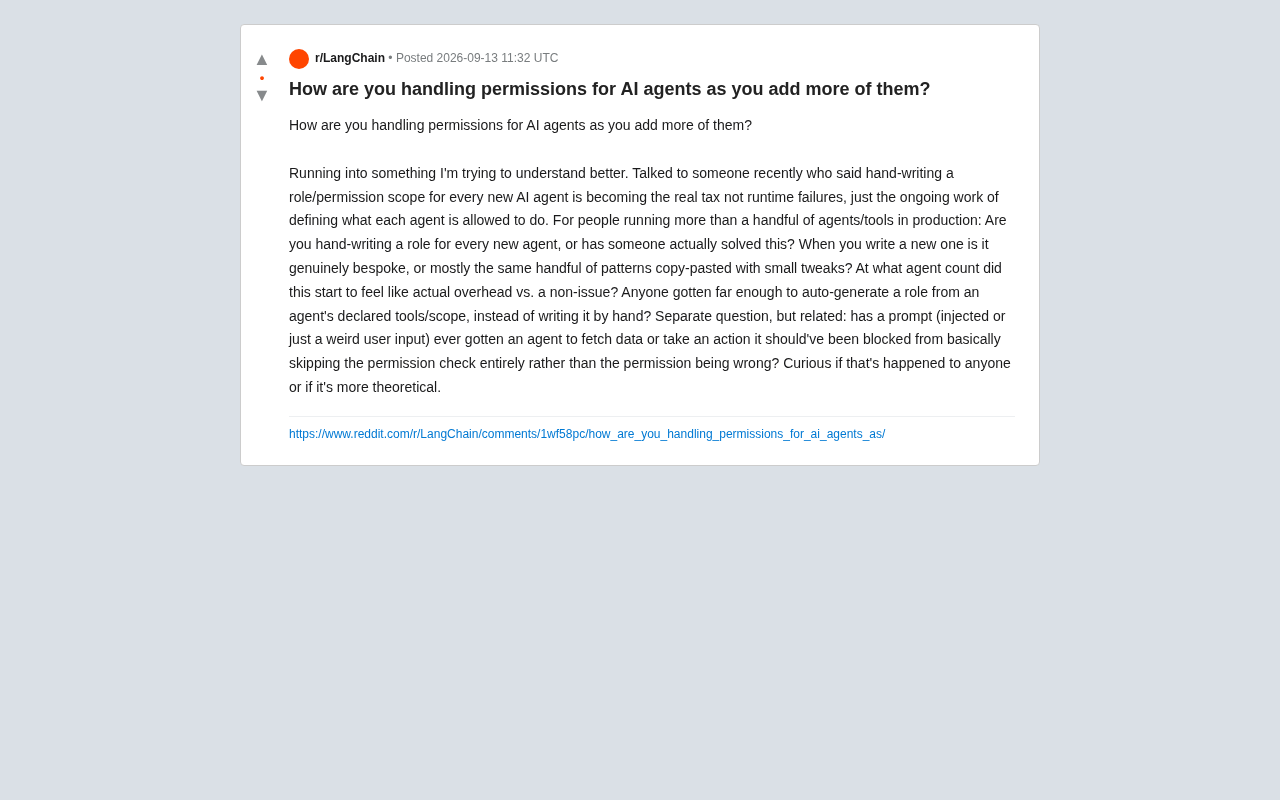
AI Agent Permission Management: Is Writing Roles Manually the New Hidden Tax?
As AI Agent counts grow, manually defining permission roles is becoming a hidden operational burden. This article explores scalability challenges, auto-generated roles, and the security risk of prompt injection bypassing permission checks.
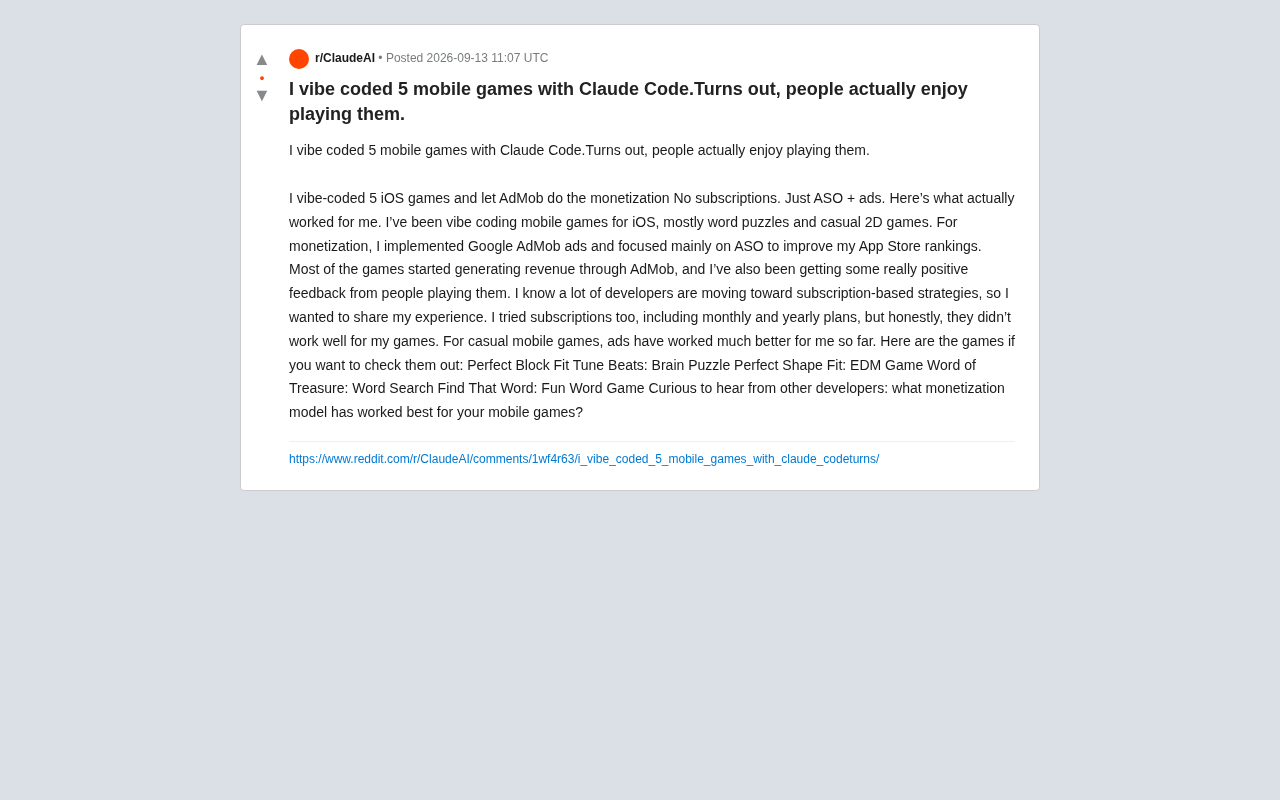
Vibe Coding 5 Mobile Games with Claude Code: Ad Monetization Beats Subscriptions
An indie dev built 5 iOS casual games with Claude Code vibe coding. His verdict: AdMob ads plus ASO optimization outperform subscriptions for casual games.