GPT-6 Astra Hands-On: Major Leaps in 3D, Agent Autonomy, and Aesthetic Design

GPT-6 Astra hands-on: 3D scene rebuilding, Blender control, and smarter Agent autonomy impress.
Bilibili creator Duan Feng ran a comprehensive stress test on GPT-6 (Astra), highlighting three standout capabilities: reconstructing a single image into an interactive 3D webpage in two iterations, autonomously operating Blender via Computer Use to build a full scene with thousands of elements, and proactively sourcing GitHub assets during an Agent task — a behavior no other tested model exhibited. Five stylistically distinct webpages showcased noticeably bolder aesthetic choices, and a Minecraft horror scene delivered strong interactivity. The full test consumed ~47% of his quota, underscoring the real cost of complex multi-step tasks.
From a Single Image to a 3D Scene: A Visual Understanding Breakthrough
Bilibili creator Duan Feng spent the night putting GPT-6 (codenamed Astra) through its paces, starting with a demanding first task — sending the model a single image and asking it to reconstruct the scene in full 3D. The process took two rounds of iteration: the first version took 24 minutes and delivered solid lighting and texture, though it still fell short of the source image; after a simple follow-up prompt of "figure something out," the second version was completed in 27 minutes, faithfully reproducing the water surface, leaves, furniture, and even the rooftop grass.
Throughout the demo, Duan Feng repeatedly described the results as having "just the right feel" and "impressively polished." The ability to infer 3D spatial structure, material properties, and lighting from a 2D image has historically been a weak point for most models. The fact that GPT-6 could advance the scene to an interactive webpage — walkable through glass, freely explorable, with fabric-textured maps on the walls — within just two iterations suggests its understanding of spatial relationships and material rendering has crossed into genuinely practical territory.

Computer Use: Letting the Model Do the Modeling Itself
The more technically demanding test was Computer Use — GPT-6 directly controlling Blender to build a full scene for the creator, complete with terrain, grass, a small cabin, and flowing water, totaling one to two thousand individual elements. The entire process took over two hours. Duan Feng candidly admitted the bottleneck was his own hardware: the machine lacked the power to render higher-quality lighting — a classic case of the tool outpacing the toolbox.
The significance of this test is that the model is no longer just generating code or images — it can operate professional software to complete an entire modeling pipeline end to end. For working 3D artists, as long as the hardware can keep up, this kind of "describe what you want, let AI execute" workflow could dramatically cut down early-stage production time.
Computer Use refers to an AI model's ability to directly control a computer's graphical user interface (GUI) — not generating code for a human to run, but interacting like a real user: clicking menus, dragging objects, and invoking toolbars. This capability was first publicly demonstrated by Anthropic with Claude 3.5 Sonnet. The core technique involves the model "observing" the current screen state via screenshots and deciding what mouse or keyboard action to take next. For a professional 3D tool like Blender, the model must understand viewport navigation, object transforms, material node graphs, and more — far more complex than running command-line instructions. GPT-6 completing a scene with over a thousand elements here means it can sustain long multi-step operation chains in a software environment without breaking or erroring out, placing extremely high demands on the agent's context management and fault tolerance.
Agent Tasks: Honest Capabilities and a Little Resourcefulness
The Agent-related tests surfaced some interesting nuances. When Duan Feng asked GPT-6 to convert an image into SVG, the initial result was impressive — until he dug deeper and discovered it had called a public script rather than drawing purely from visual reasoning. When explicitly asked to "draw using vision," the output was noticeably more rudimentary.
Another test involved having the model take over the browser and draw a sketch from a reference image. It finished in 13 minutes, prompting the creator's comment: "Never mind whether it looks like the original — just think about how fast that was" — speed was the standout.
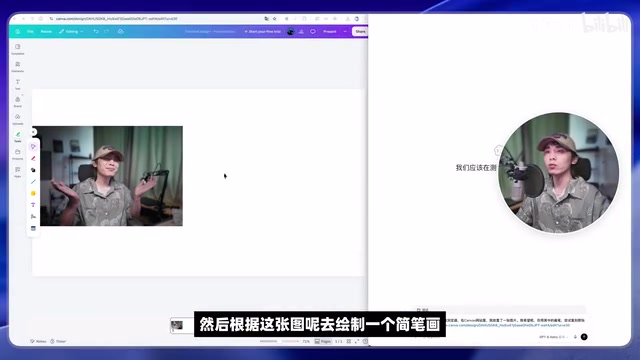
The most telling example was recreating Super Mario. GPT-6 downloaded assets for Mario, enemies, bricks, pipes, and clouds from a GitHub project and included proper attribution. Duan Feng jokingly called it "a clever workaround," but then reconsidered: "When people tackle tasks like this, they look things up and borrow from others too — it's totally reasonable." He specifically noted this was the only model he had tested that, given just a one-sentence instruction, proactively went out and sourced its own assets. In a way, this kind of "autonomous resource-finding" behavior actually mirrors how real developers work.
SVG (Scalable Vector Graphics) is an XML-based vector image format that describes graphics using coordinates and paths rather than pixel grids, allowing lossless scaling at any size. Having an AI "draw" SVG from vision means the model must translate the shapes, colors, and layering of an input image into a series of <path>, <circle>, <polygon>, and other tag-based code. This tests the model's ability to directly convert visual perception into structured language. The gap in quality between calling a script versus drawing from scratch reveals a real limitation in current models' perception-to-generation pipeline: abstracting complex images into geometric structures remains genuinely hard. Leaning on tools is a pragmatic choice, but it also obscures the true ceiling of the underlying capability.
Aesthetic Upgrade: Five Distinct Web Design Styles
Duan Feng had GPT-6 generate five webpages in different visual styles and noticed a clear improvement in aesthetic sensibility:
- Interstellar Voyage: Features Saturn with orbiting dots and supports interaction, though he teased that the planet was just a recolor — "a lazy shortcut"
- The Shape of Sound: Comes with 3D speakers and floating spheres, praised for its tactile feel
- Another Spatial Possibility: A 3D floor plan that expands and collapses, highly interactive
- Inspiration Playground: Bold color palette with collage-and-download functionality — the creator noted it's "not as conservative as before"
- The Other Side of Light: A downloadable light-effect art piece
Duan Feng gave the 3D work a glowing endorsement: "It actually has something to say." Compared to the more conservative design aesthetic of previous versions, the color choices and layouts here are noticeably bolder, suggesting a meaningful shift in the model's aesthetic sensibility.
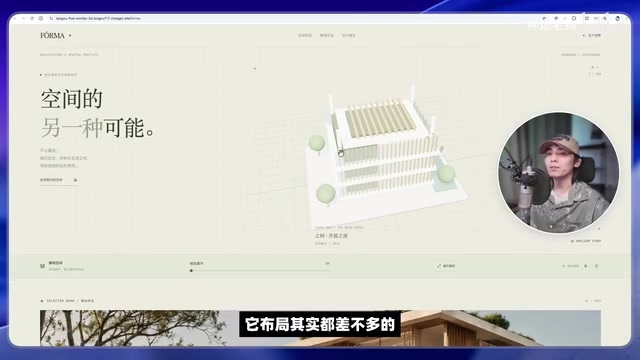
Minecraft Horror Scene and a Self-Promotional Video
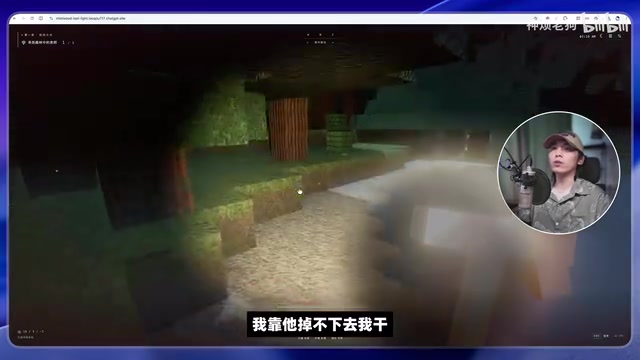
The grand finale was a "high-fidelity but horror-atmosphere Minecraft" build, calling for realistic lighting and materials. It was completed in 26 minutes. The final product supports brick-breaking, jumping, and item pickup, with moving NPCs and a glowing moon. Duan Feng had a blast exploring it — trying to dig a pit for the NPC, helping a stuck character move, and lighting up a shelter. The overall interactivity was impressively complete.
As a final flourish, Duan Feng asked GPT-6 to produce a promotional video for itself. After two rounds of iteration, the video was exported. He poked fun at the slow export speed — "in the export department, it can't beat me" — but praised the final product as "genuinely cool."
Cost and Overall Impressions
One notable data point is cost: the entire test run consumed roughly 47% of his quota, prompting Duan Feng to exclaim "I feel like it just burned through my tokens." This serves as a reminder that in real-world use, complex multi-step Agent tasks and extended modeling sessions carry significant resource overhead.
Taken together, GPT-6 Astra shows meaningful progress across 3D scene generation, spatial understanding, autonomous software operation via Computer Use, web design aesthetics, and game scene reconstruction. Duan Feng's final verdict was refreshingly direct: "It's seriously impressive" — and he encouraged anyone curious to go try it themselves. That said, all of these tests come from a single creator's one-time evaluation, and the results warrant broader independent verification.
Token quota consumption in multimodal Agent tasks tends to run far higher than in pure text conversations, for several compounding reasons: image inputs require encoding pixels into visual tokens (as with GPT-4o's image tiling mechanism), each screenshot feedback cycle in Computer Use introduces new visual input, and multi-step reasoning chains lasting tens of minutes accumulate large volumes of intermediate inference tokens. Completing this full test suite at 47% quota suggests that similar workflows in production environments could carry substantial monthly costs. For enterprises and power users, key engineering challenges will include breaking tasks into smaller pieces, reducing redundant screenshot cycles, and compressing intermediate output length to keep costs manageable.
Related articles

Cursor AI Programming in Practice: Build a Student Management System from Scratch in 30 Minutes
A Bilibili creator demonstrates Cursor AI programming: generating a student management system in 30 minutes with natural language. Details on Agent mode, Claude selection, prompt techniques, and thresholds.

Top 20 AI Coding Tools Ranking: From Rock-Solid to Lackluster, a Scored Matrix
Bilibili creator releases top 20 AI coding tools ranking, tiered T0–T4 from rock-solid to lackluster, with Claude Code and Codex tied at T0. This article details the scoring dimensions (capability, reliability, robustness, durability, cost, domestic availability) and tool performances to help developers choose the right AI coding assistant.

Vibe Coding Systematic Tutorial: Master AI-Assisted Programming from Zero
A three-month Vibe Coding tutorial from a Bilibili creator covering Codex, ClaudeCode, and Cursor, from core logic to commercial project practice for beginners.