How to Choose a Practical LLM/RAG/AI Agent Course: Four Key Criteria

Four practical criteria to help developers choose the best LLM, RAG, and AI Agent courses.
With so many AI courses flooding the market, finding one that balances theory with real-world practice is tough. This article breaks down four key criteria for evaluating LLM, RAG, and AI Agent courses — from project-based learning and toolchain coverage to theory depth and content freshness — and recommends the best resources to get started.
Starting from a Real Need
Recently, a developer posted a question in a Reddit AI learning community asking for help finding a course that covers RAG (Retrieval-Augmented Generation), Large Language Models (LLMs), and AI Agents — paid options welcome. The ask was straightforward: the course should have theoretical grounding, but focus heavily on hands-on practice, ideally walking through how to actually build usable tools with these technologies.
This question may seem ordinary, but it hits on a widespread pain point in AI education today: courses on the market either pile on theory with formulas flying everywhere — leaving you unable to run even a basic demo — or they're shallow "copy-paste" API tutorial walkthroughs that fall apart the moment you face a real project. How to find the balance between these two extremes is a shared struggle for many AI beginners and developers looking to transition.

Why RAG and AI Agents Have Become Hot Learning Topics
RAG: Giving Large Models "Something to Stand On"
RAG technology has quickly become a focal point because it directly addresses two persistent problems with large language models: knowledge cutoffs and hallucinations. By retrieving relevant content from an external knowledge base before generating an answer, RAG allows models to respond based on the latest and most accurate private data — rather than fabricating answers from memory.
RAG (Retrieval-Augmented Generation) was formally introduced by the Meta AI research team in 2020 in the paper Retrieval-Augmented Generation for Knowledge-Intensive NLP Tasks, originally aimed at solving the problem of stale model knowledge in open-domain question answering. Over the years, RAG has evolved from an academic concept into a standard paradigm for enterprise AI deployment, spawning multiple generations of technical progress: Naive RAG, Advanced RAG (incorporating reranking and query rewriting), and Modular RAG (a modular, plug-and-play architecture). Its core architecture has two stages: first, the Retriever converts the user's query into a vector embedding and performs a semantic similarity search in a pre-built vector database to find the most relevant document chunks; second, the Generator feeds the retrieved context along with the original question into a large language model, which synthesizes the information to produce the final answer. This "retrieve first, then generate" paradigm means the model doesn't need to compress all knowledge into its parameters, which fundamentally reduces hallucinations and allows the knowledge base to be updated independently without retraining the model.
One key technical detail worth highlighting: vector databases and embedding technology are the core infrastructure of any RAG system. Embeddings convert text into high-dimensional numerical vectors (typically 768 to 3,072 dimensions), so that semantically similar content sits closer together in vector space. This builds on early word vector research like Word2Vec and GloVe, which later evolved into sentence-level semantic representations via BERT and the Transformer architecture. Commonly used embedding models include OpenAI's text-embedding-3-large, open-source BGE series models, and Sentence-BERT. Vector databases (such as Pinecone, Weaviate, Chroma, and FAISS) are specially optimized for Approximate Nearest Neighbor (ANN) search algorithms — such as HNSW (Hierarchical Navigable Small World) and IVF (Inverted File Index) — enabling retrieval of the most semantically relevant chunks from millions of documents in milliseconds. Document chunking strategy is equally critical: chunks that are too large introduce noise, while chunks that are too small lose context. Fixed-size chunking, recursive character chunking, and semantic chunking are the three most common strategies, and they directly impact retrieval quality. For more advanced use cases, hybrid retrieval (combining dense vector search with BM25 sparse retrieval) and reranking models (Cross-Encoders) can further improve recall precision.
For enterprises, RAG is almost a mandatory step on the path to deploying AI applications — whether for enterprise knowledge Q&A systems, intelligent customer service, or document analysis tools, it remains one of the most practical and grounded technical approaches. This explains why learners consistently rank it alongside LLMs and Agents as a core learning objective.
AI Agents: From Conversation to Actually Getting Things Done
If RAG helps models "know more," AI Agents help models "do more." Agents give large language models the ability to plan tasks, call external tools, and execute multi-step operations — representing the critical leap from "chat assistant" to "automated executor."
The concept of AI Agents isn't new; its roots trace back to autonomous agent research in the 1990s. But it wasn't until large language models emerged that agents finally had a sufficiently powerful "brain." Since 2023, Stanford's Generative Agents paper demonstrated multi-agent social simulation, and open-source projects like AutoGPT and BabyAGI ignited community enthusiasm, rapidly moving agent development from academic frontier to engineering practice. Modern LLM-based agents typically consist of four core modules: a perception module (receiving user instructions or environmental states), a memory module (short-term context window + long-term vector storage), a planning module (task decomposition via Chain-of-Thought or the ReAct framework), and an action module (calling external tools, APIs, or sub-agents). The ReAct (Reasoning + Acting) framework — jointly proposed by Google and Princeton University in 2022 — is currently the most mainstream agent planning paradigm. It has the model alternate through a "Thought–Action–Observation" loop, tightly coupling reasoning with external tool calls, which significantly reduces error rates in complex tasks. On the tool-calling side, OpenAI's Function Calling and Tool Use API provide a structured interface standard for agents, greatly simplifying development complexity. Multi-agent systems like AutoGen and CrewAI go further by enabling multiple specialized agents to divide and collaborate on tasks (e.g., a planning agent, an execution agent, and a verification agent), coordinating through message passing to complete more complex workflows. From workflow automation to multi-agent collaboration, Agents are redefining the boundaries of software.
For this reason, the RAG + LLM + Agent stack has become the widely recognized standard skill set for AI application developers.
Four Key Criteria for Choosing a Practical Course
With "hands-on practice" as the core requirement, the following four dimensions are the most important to evaluate when selecting a course.
1. Does It Have a Complete Project Running Throughout?
High-quality practical courses are typically anchored by one or more end-to-end projects — for example, "build an enterprise document Q&A system from scratch" or "create an Agent that can autonomously complete tasks." By the end of the course, you should have runnable, presentable code, not just a pile of scattered notes.
2. Does It Cover the Mainstream Toolchain?
Practical training means working with real development ecosystems. A solid course should cover mainstream frameworks like LangChain and LlamaIndex, vector databases (such as Pinecone, Chroma, and FAISS), and how to call leading model APIs (OpenAI, Anthropic) or open-source models (the Llama series).
It's worth noting that LangChain and LlamaIndex have slightly different positioning — something beginners often confuse. LangChain (open-sourced in late 2022, founded by Harrison Chase) functions more like a general-purpose AI application development framework, providing a full abstraction layer including chain calls, agent tool use, and memory management. It's well-suited for building complex multi-step AI workflows and agent systems, with an extremely rich ecosystem supporting hundreds of tool and data source integrations. Its newer LangGraph extension introduces graph structures to represent more complex agent state machines. LlamaIndex (formerly GPT Index, founded by Jerry Liu), on the other hand, focuses more specifically on data indexing and retrieval, offering finer-grained index structures (such as knowledge graph indexes and tree indexes) and retrieval optimization strategies for RAG scenarios, with stronger support for structured data processing. It has also launched LlamaCloud, a cloud service for production-grade RAG pipeline management. In real projects, the two can be used together: use LlamaIndex to build a high-quality retrieval pipeline, and LangChain to orchestrate agent logic. Additionally, as major cloud vendors (AWS Bedrock, Azure AI, Google Vertex AI) continue to launch their own agent orchestration services, familiarity with cloud-native solutions is increasingly important.
3. Is the Theory Depth "Just Right"?
"Emphasizing practice" doesn't mean "zero theory." Understanding foundational concepts like embeddings, vector retrieval, prompt engineering, and chunking strategies is a prerequisite for being able to debug and tune a project when things go wrong. A good course explains why things are done a certain way at the right moments — not just how.
4. Is the Content Continuously Updated?
The AI field evolves extremely fast, and tutorials from six months ago may already be partially outdated. When choosing a course, pay close attention to the most recent update date and the author's activity level. Community reviews and the quality of Q&A responses are also important reference indicators.
Learning Resources Worth Exploring
Based on what the developer community broadly recommends, here are a few resource categories to start with:
- Official Docs and Examples: The official documentation for LangChain and LlamaIndex contains a wealth of practical examples — free, up-to-date, and the most cost-effective starting point.
- Major Online Course Platforms: Short courses from Andrew Ng's team on Coursera and DeepLearning.AI strike a solid balance between theory and hands-on practice with reliable quality.
- Open-Source Project Practice: Reading and reproducing strong RAG/Agent open-source projects on GitHub is one of the fastest ways to build real-world skills.
- Paid Practical Bootcamps: If you're short on time and want a structured learning path, paid bootcamps focused on project delivery are worth considering — but vet their reputation and course syllabus carefully.
A Note for Learners
One final thought: AI application development is fundamentally a craft learned by doing. Rather than spending a lot of time agonizing over which course is perfect, pick a reliable resource, get up to speed quickly, and then immediately build a small project of your own — even something as simple as getting a model to answer questions from your own documents.
Running into real problems in an actual project — poor retrieval quality, prompts that won't cooperate, an Agent stuck in a loop — will actually force you to actively fill in your theoretical gaps. This problem-driven learning path is far more efficient than passively watching lectures. The tech stack will keep evolving, but the learning methodology of "understand the principles + practice hands-on" is the core competitive edge that will truly take you far.
Related articles
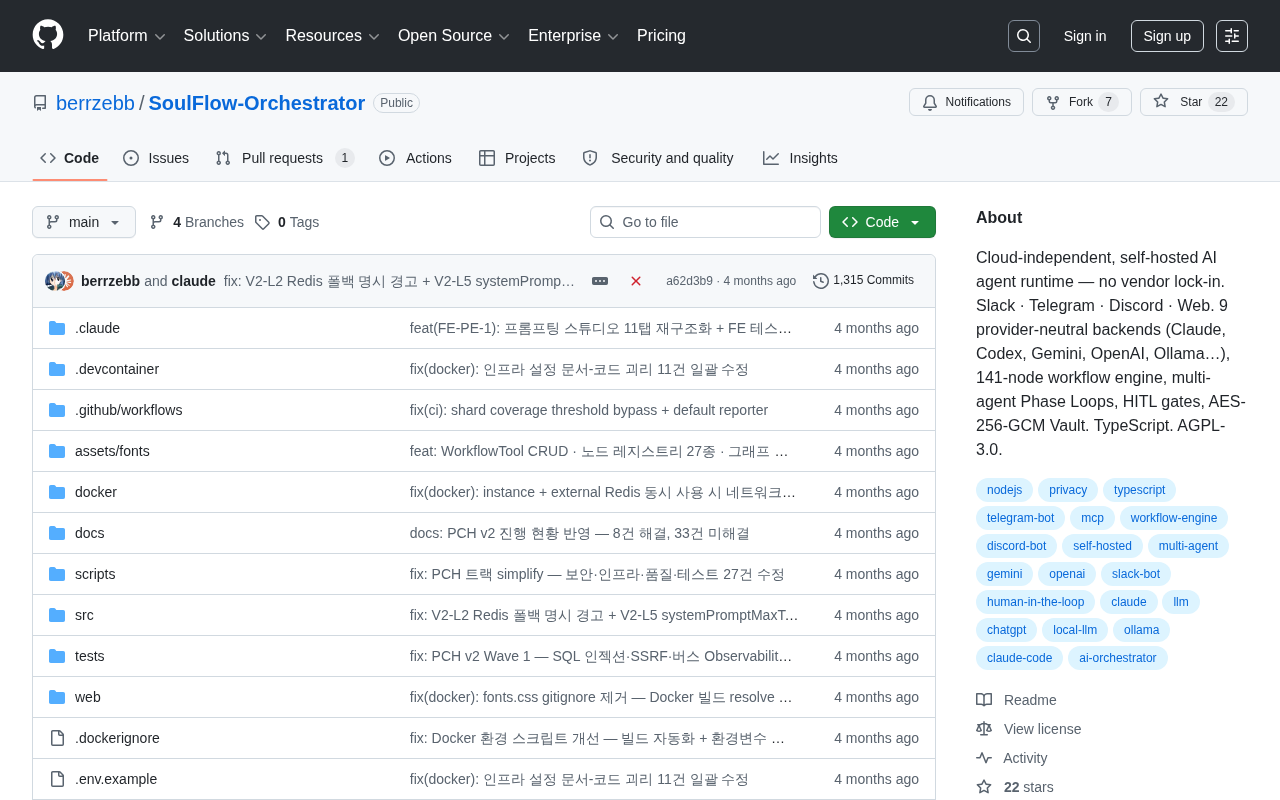
SoulFlow-Orchestrator: A Self-Hosted, Vendor-Lock-In-Free AI Agent Runtime
SoulFlow-Orchestrator is an open-source, self-hosted AI agent runtime with no vendor lock-in. Supports 9 neutral backends (Claude, OpenAI, Ollama), 141-node workflow engine, multi-agent loops, and HITL gates.
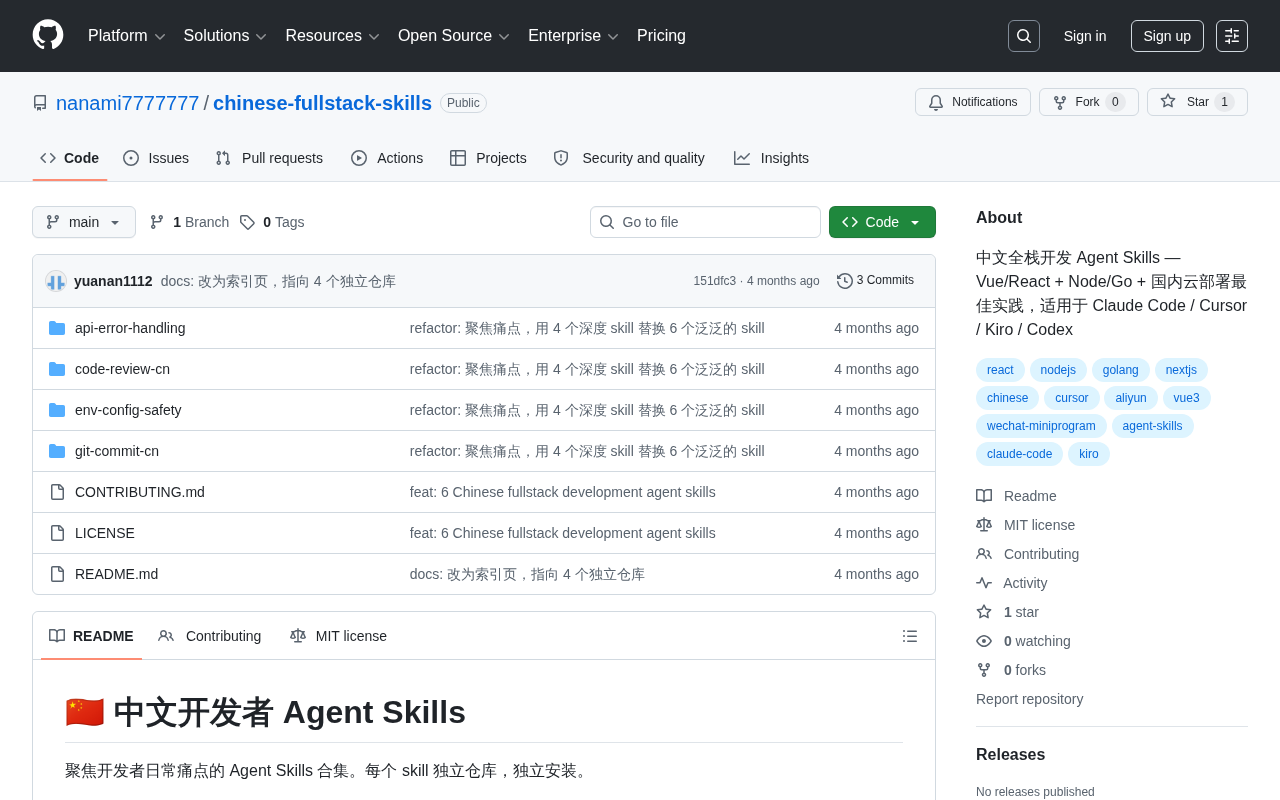
Chinese Full-Stack Agent Skills: A Skill Library Tailored for Domestic AI-Assisted Development
chinese-fullstack-skills is an Agent Skills library for Chinese full-stack development, covering Vue/React, Node/Go, and domestic cloud deployment best practices. Compatible with Claude Code, Cursor, Kiro, and Codex.
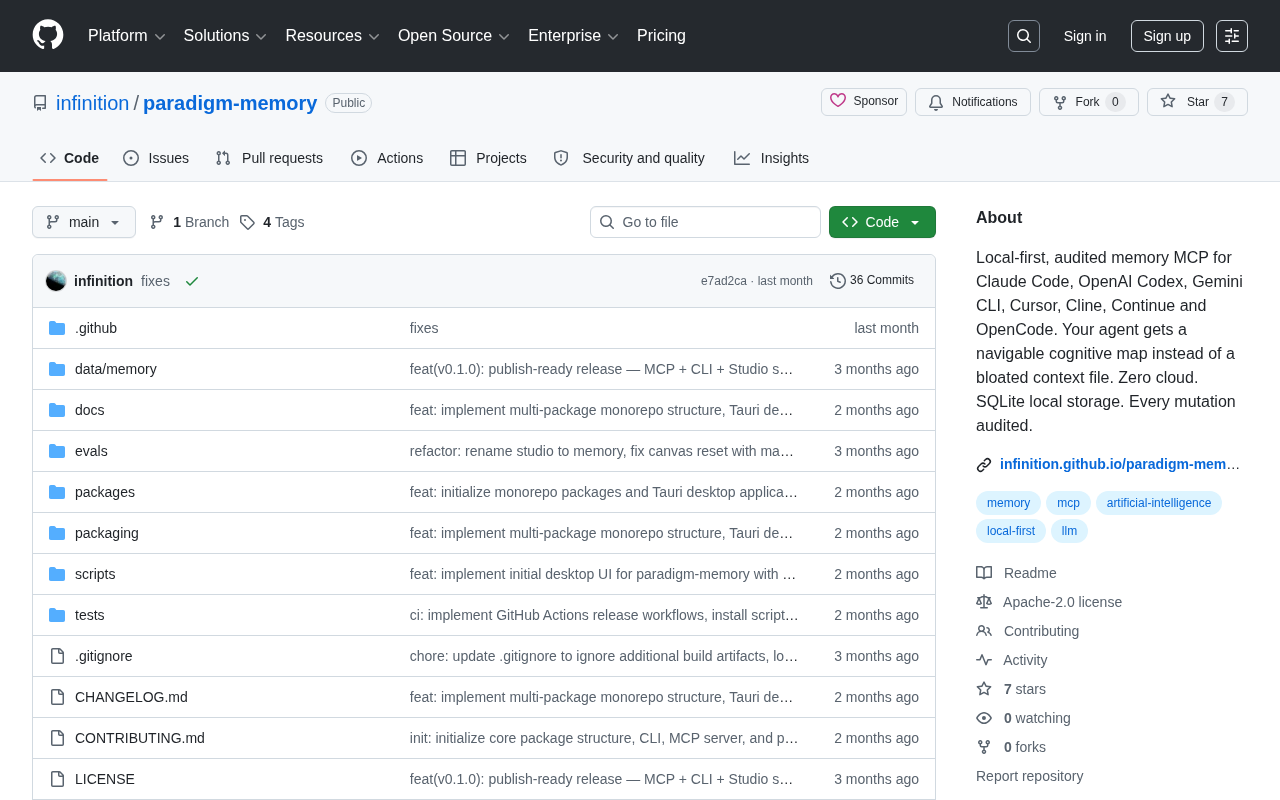
Paradigm Memory: A Local-First Memory System for AI Coding Assistants
paradigm-memory is a local MCP memory tool for Claude Code, Cursor, and Cline. It uses SQLite local storage, zero cloud, full audit trails, and a navigable cognitive map instead of bloated context files.