Java Developer's Transition to AI Large Models: Building Your First Java AI Application from Scratch

For Java developers, large models have shifted from a bonus to a job standard — without AI skills, you may not even pass resume screening.
The article notes that Java job requirements are changing, with large models and LangChain appearing frequently in job descriptions — candidates without AI skills may be eliminated at resume screening. It defines "traditional Java programmers" as those with microservices stacks like Spring Cloud and middleware, whose skill boundaries are being redefined by AI. Good news: the transition threshold is low, requiring only one to two months to master entry-level Java AI development. Core topics include Spring AI/LangChain4j, streaming output, memory caching, prompt engineering, vector databases, RAG, MCP, and Tool Calling. The article suggests integrating large model capabilities into existing Java projects for a "Java + Large Model" resume highlight, and reminds that the transition window is limited.
The New Normal for Java Developers: Why You Must Embrace AI Large Models
If you open a job-hunting app right now and search for Java development positions, you'll notice a clear shift: more and more job descriptions now include keywords like "large models," "AI application development," and "LangChain." This is no coincidence. According to an analysis by a Bilibili creator, traditional Java developers are facing a forced upgrade of their tech stack — moving from pure Spring Cloud, middleware, and databases toward being hybrid developers with "Java business logic + large model capabilities."
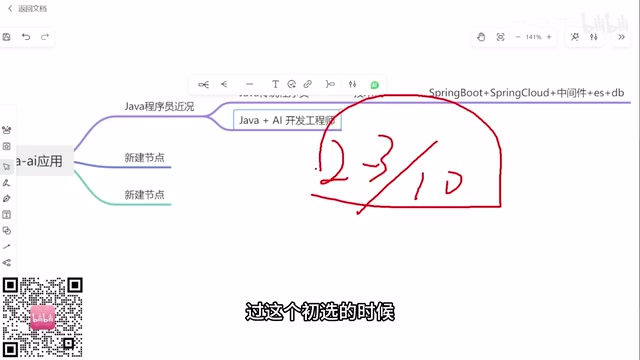
The creator shared a real group interview case in a video: a graduate student from Beijing University of Posts and Telecommunications (BUPT) with a combined bachelor's and master's degree went to interview for a Java position. During the group interview, he discovered that nearly all the other candidates had prepared large-model-related projects — only he had none. When two or three out of ten people can talk about large models, it shifts from being a "bonus point" to a "standard requirement." The interviewer thinks: if everyone else knows it, and our company adds this business someday, I'll definitely hire someone who knows it. As a result, candidates who don't know large models may be eliminated right at the resume screening stage.
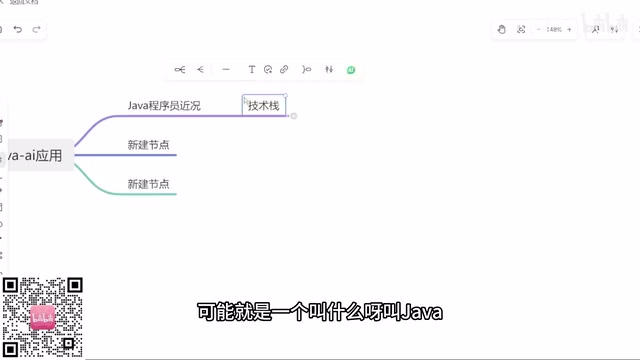
This analysis reveals a harsh but realistic trend: for Java developers, transitioning toward large models is no longer a multiple-choice question — it's a mandatory one.
The Boundaries and Limitations of the Traditional Java Tech Stack
What is a "traditional Java programmer"? According to the creator's definition, it's a developer who has mastered the full microservices tech stack: Spring Cloud, gateways, Nacos, distributed tracing, clustering, middleware, databases, and so on. 
This skill set was enough to land you a good job in past years — and if you also knew containerized deployment and cloud-native technologies, you'd be even more competitive. But the problem is that the boundaries of this tech stack are being redefined by AI capabilities.
Searching on Boss Zhipin (a Chinese recruiting platform), the creator found that many Java positions now list bonus qualifications such as "familiar with mainstream large model development platforms" and "experience in large model application development." Interviewers might ask you: What is multimodality? How do you mount a knowledge base with MCP? What is a vector database? For traditional Java programmers, these questions often expose knowledge blind spots. 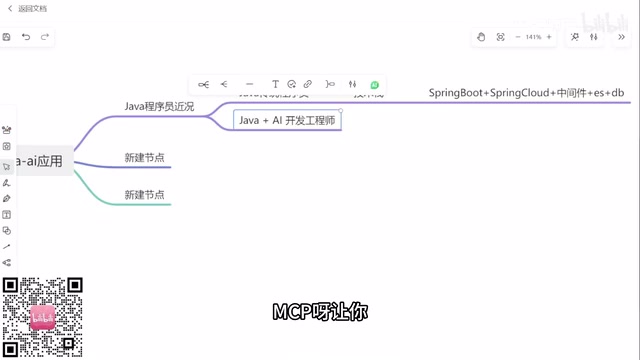
Starting from Scratch: What You Need to Learn to Build Your First Java AI Application
The good news is that for developers whose primary language is Java, extending into AI isn't particularly difficult. The creator believes that if you can sit down and study for one to two months, you can fully master entry-level Java AI development.
Specifically, the knowledge points you need to acquire include:
- Large model invocation frameworks: Spring AI or LangChain4j, used to call and configure large models in Java applications
- Streaming output: Implementing a ChatGPT-like character-by-character output experience
- Memory caching: Giving AI applications multi-turn conversation capabilities
- Prompt engineering: Designing effective prompts to guide model output
- Vector databases: Storing and retrieving vectorized data to support semantic search and RAG
- RAG (Retrieval-Augmented Generation): Combining knowledge bases to improve answer accuracy
- MCP (Model Context Protocol): Mounting external knowledge bases and tools
- Tool Calling: Enabling models to call external functions and APIs
These concepts sound like a lot, but they're really just layering AI capabilities on top of traditional Java microservices. The creator's course alone includes nearly 20 projects — pick any two, combine them with large model capabilities on top of business middleware, and you can write a resume for a "Java + Large Model Development Engineer."
RAG (Retrieval-Augmented Generation) is currently one of the most core implementation paradigms in enterprise AI applications, and it's worth elaborating on. Its basic process is: after a user asks a question, the system first retrieves several document fragments most semantically relevant to the question from a vector database, then concatenates these fragments as context into the prompt, and sends them together to the large model — enabling the model to answer based on real materials rather than relying solely on training memory. The value of RAG lies in three aspects: first, it solves the problem of outdated model knowledge — enterprises only need to update the knowledge base to keep answers current; second, it significantly reduces "hallucinations" by giving the model evidence to rely on; third, it avoids expensive fine-tuning costs by achieving customization through external knowledge. For Java developers, RAG's engineering implementation happens to fall in familiar territory — data ingestion, document splitting, vector storage, interface orchestration, performance optimization. These are essentially the daily work of backend engineers, just switching the retrieval object from relational databases to vector databases.
MCP (Model Context Protocol) is an open standard proposed by Anthropic to standardize communication between large models and external tools and data sources. You can think of it as the "USB interface" of the AI world: in the past, every time you connected to an external system, you had to write a custom integration. With MCP, as long as both the model side and the tool side follow the same protocol, they can be plug-and-play. MCP typically uses a client-server architecture, where the model acts as the client initiating requests, and external services act as servers exposing their capabilities (such as querying databases, calling APIs, reading files). For Java developers, MCP's significance is that it standardizes "letting AI call your business systems" — you don't need to repeatedly adapt for each model vendor; write an MCP Server once and it can be reused by multiple AI applications.
How to Showcase Large Model Capabilities on Your Resume
The creator provides specific resume optimization ideas. If you've learned to deploy large models with Ollama, can use Spring AI or LangChain4j to call and configure models, and understand streaming output, memory caching, prompts, vector databases, RAG, MCP, and Tool Calling, then you can absolutely add a "Java + Large Model" project experience to your resume.
The key is: this project isn't fabricated from thin air — it's built on your existing Java business lines, integrating large model capabilities on top of middleware. For example, your original e-commerce project can add AI features like intelligent customer service and semantic search for product recommendations. This demonstrates both your Java foundation and your large model application capabilities.
The creator also mentioned a noteworthy detail: one student replaced four days a week of gym time with learning large model knowledge, and ultimately added a very impressive highlight to their resume. The time investment doesn't need to be much — what matters is direction and persistence.
Tool Calling is the key mechanism that upgrades large models from "chatbots" to "agents." A large model itself can only generate text and cannot directly operate on the external world. Tool Calling allows developers to register functions or APIs with the model in the form of structured descriptions. When a user's request requires external capabilities, the model doesn't fabricate an answer out of thin air — instead, it returns a structured invocation intent specifying which function to call and what parameters to pass. After the application executes the function, it sends the result back to the model, which integrates it into a natural language response. For example, if a user asks "Help me check the logistics for order 12345," the model will identify that it needs to call the order query API. After the program executes it and passes the data to the model, the model organizes it into a fluent answer. In the Java ecosystem, Spring AI and LangChain4j both provide annotation-based or declarative Tool Calling support. Developers only need to define ordinary methods with annotations, and the framework automatically handles protocol interaction with the model. Mastering this capability means you can build AI applications that truly "get work done," not just a Q&A window.
Who This Course Is For: Zero-Base Introduction and Awareness Building
The creator explicitly states that this course is positioned as an "awareness course," specifically designed for complete beginners. If you already have some experience with large models, you may find the content relatively simple. But for most Java programmers, this is the first step from traditional development toward AI application development.
From an industry demand perspective, enterprises' need for Java+AI hybrid talent is growing rapidly. The creator mentioned during a livestream that when searching for Java positions, many job listings add AI tech stack requirements. This means Java programmers who master large model skills will have a clear differentiated advantage in the job market.
The window for transition won't stay open for long. When large model capabilities become standard for Java positions, those who enter now can still enjoy a first-mover advantage, while those who hesitate and wait may face even fiercer competition.
One-line Summary
For Java developers, transitioning to large models has shifted from a bonus to a job standard — not learning AI means you might not even pass resume screening.
Paragraph Summary
The article points out that recruitment requirements for Java development positions are undergoing significant changes, with keywords like large models and LangChain appearing frequently in job descriptions. Candidates who don't know AI may be eliminated at the resume screening stage. The author defines "traditional Java programmers" as developers who master microservices tech stacks like Spring Cloud, middleware, and databases, and emphasizes that the boundaries of this skill set are being redefined by AI. The good news is that the transition threshold isn't high — Java programmers only need one to two months to master entry-level Java AI development. Core knowledge points include Spring AI/LangChain4j, streaming output, memory caching, prompt engineering, vector databases, RAG, MCP, and Tool Calling. The article recommends incorporating large model capabilities into existing Java business projects to create a "Java + Large Model" resume highlight, and reminds readers that the transition window is limited — those who enter first gain a first-mover advantage.
Related articles

RAG Getting Started in Practice: From Principles to Building an Enterprise Knowledge Base
Bilibili RAG course highlights: from retrieval-augmented generation principles, document chunking and vectorization, to five accuracy factors and enterprise knowledge base boundaries, with fine-tuning vs RAG selection advice.

AI Model Selection Guide: DeepSeek vs. Qwen3 in Practice
How should AI developers choose models? Based on a Bilibili tutorial, this article breaks down the Function Calling differences between DeepSeek V3 and R1, Qwen3's programmatic thinking mode switching and agent capabilities, and outlines a multi-model learning path and practical selection logic.

Anchoring, Loss Aversion, and Nudges: 5 Psychological Tactics Retailers Use to Make You Spend
Behavioral economics reveals how retailers use anchoring, framing, loss aversion, and nudge theory to manipulate your spending decisions. This article breaks down 5 common psychological tactics and offers counterstrategies like slowing down decisions and setting your own anchors to see through the pricing design behind discounts.