Kimi K3 Open-Source Release: 2.8 Trillion Parameters Tops Global Programming Leaderboard

Kimi K3's 2.8T-parameter MoE model tops global coding benchmarks at one-third the cost of competitors.
Moonshot AI released Kimi K3, a 2.8 trillion parameter MoE model that topped the LMArena frontend coding leaderboard with a historic 1679 ELO score. Using sparse activation (16 of 896 experts per inference), K3 achieves 2.5x the capability of its predecessor while costing just $0.94 per enterprise coding task versus $2.75 for Claude 3.5. Fully open-source and free for commercial use, K3 demonstrates how China's chip constraints drove architectural innovation.
A Comeback Won Through Efficiency
At the Davos Forum in January 2025, Moonshot AI President Zhang Yutong made a claim that outsiders dismissed as fantasy: Chinese startups don't have the luxury of throwing unlimited compute at problems, and it's precisely this resource constraint that forces teams to pursue breakthrough efficiency through fundamental research innovation. He even claimed that Kimi achieved comparable models using only about 1% of the compute of top American labs. His overseas peers on stage responded with polite smiles.
Half a year later, on July 17th, Kimi K3 was officially released, and all skepticism came to an abrupt halt. This is a model with 2.8 trillion parameters, open-source and free for commercial use, that claimed the #1 spot on the global frontend programming leaderboard on its release day. This isn't just a case of catching up technologically—it's more like a redefinition of the entire industry's rules of the game.
This article will break down this event from three dimensions: how Chinese AI achieved a comeback while being "strangled" by restrictions, what makes K3's core technology truly strong, and the real-world hurdles that still need to be cleared behind this feel-good narrative.
The Weight of Kimi K3's #1 Ranking: Hard Skills Under Double-Blind Testing
The leaderboard K3 topped is called the "Frontend Code Arena" (LMArena Frontend track), regarded by programmers worldwide as the most hardcore "programming entrance exam." LMArena (formerly Chatbot Arena) is maintained by UC Berkeley's LMSYS team and uses an ELO rating system derived from chess rankings—dynamically calculating player strength through win/loss records. Its evaluation mechanism is extremely rigorous—employing double-blind matchups: the same programming problem is answered by two anonymous models, and thousands of real developers serve as judges voting for the better implementation, with model identities only revealed after voting concludes. No brand bias, no vote manipulation, just pure equality before code. This crowdsourced human preference evaluation is considered by academia to be more reflective of real-world application capability than traditional automated benchmarks.

The results were stunning: Kimi K3 ranked #1 globally with 1679 points, becoming the first model in history to break the 1600-point barrier. According to the ELO formula, the 48-point gap between K3 and second place translates to an approximately 57% expected win rate in random matchups. Previously, all top models including GPT-4o and Claude 3.5 Sonnet had long hovered in the 1500-1600 range, forming a de facto "capability ceiling"—K3 raised this ceiling by nearly 80 points in one stroke, indicating a qualitative leap in frontend code generation capability rather than incremental improvement. Second place Claude Fable 5 scored 1631, and third place GPT 5.66 scored 1618. Across 7 programming sub-categories, K3 claimed first in 6, falling slightly short only in game development. Even Elon Musk commented "Impressive" under related news.
What's Really Keeping Silicon Valley Up at Night Is the Cost Sheet
If the #1 ranking is about glory, then cost is the blade that truly wounds competitors. Third-party organization Artificial Analysis did the math: completing the same real-world enterprise-level coding task costs only $0.94 with K3 (roughly 6-7 RMB—not even enough to buy a bubble tea); while the latest GPT costs $1.04, and Claude 3.5 costs a whopping $2.75—nearly three times K3's price.
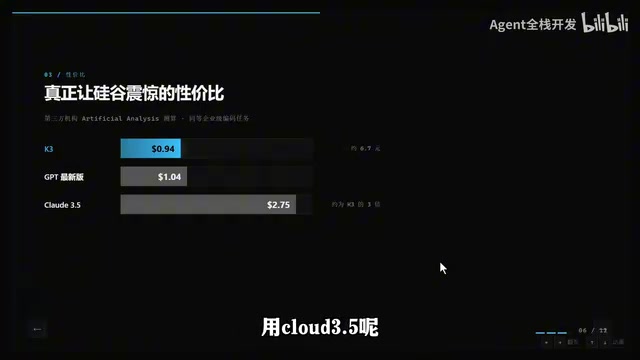
Meanwhile, on comprehensive intelligence scores, K3 earned 57 points, in the same tier as the top two at 59 and 60 points. In other words, others spent three times the money to score 59, while K3 scored 57 for the price of a milk tea. The logic here isn't that "overseas models are unaffordable," but that "Kimi offers better value." For enterprise customers, this kind of cost-efficiency ratio is nearly impossible to refuse.
K3's Technical Core: MoE Architecture Squeezes Every Drop of Compute
Many people wonder: aren't we lacking high-end chips? How can we still train such a massive model? The answer lies precisely in K3's technical philosophy of "living frugally and making every resource count." Starting in 2022, the U.S. Department of Commerce rolled out chip export control policies targeting China, restricting the export of high-end GPUs essential for training large models—such as NVIDIA A100 and H100—to China, with 2023 and 2024 rule updates further tightening restrictions. Training a hundred-billion-parameter model typically requires thousands of such GPUs running for weeks, and the reality Chinese companies face is: limited chip inventory, with domestic alternatives (like Huawei's Ascend 910B) still catching up. It was precisely this hard constraint that gave birth to K3's technical approach of "extracting compute from algorithms."
Mixture of Experts (MoE): The Efficient Way of Sparse Activation
2.8 trillion parameters sounds terrifying, but K3 uses a Mixture of Experts (MoE) framework. This architecture was first proposed by Hinton et al. in 1991, but it wasn't until Google's Switch Transformer in 2017 that it was successfully applied to large-scale language models. MoE's core idea is "conditional computation": the model contains numerous "expert" sub-networks, but during each inference, a "Gating Network" routes computation to only a few relevant experts.
Specifically for K3, while the model internally contains 896 expert modules, each inference only activates 16 relevant modules. It's like visiting a top hospital—you wouldn't have all 896 doctors consult on your case; instead, you're precisely matched with the specialists in the relevant department. This means that while K3 has 2.8 trillion total parameters (enhancing model capacity and knowledge reserves), each inference actually uses only about 2% of parameters for computation, with actual computational overhead proportional only to the number of activated experts. This sparse activation mechanism maximizes computational efficiency. Well-known models like DeepSeek-V2 and Mixtral have adopted similar approaches, but K3 pushes expert count and gating precision to new heights.
Long Memory and Deep Information Propagation
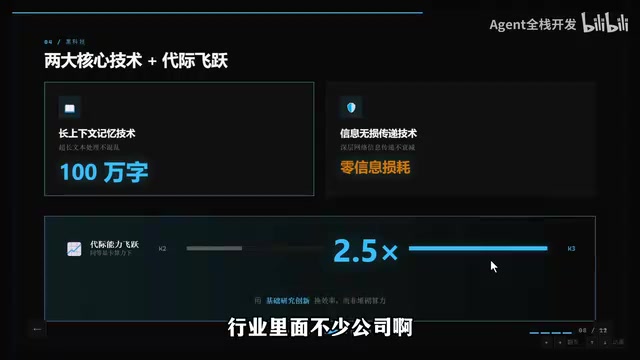
Beyond MoE, K3 has two other key capabilities: first, "long memory"—the ability to read through 1 million characters of long text in one go without getting confused; second, an efficient information propagation mechanism that keeps information intact even after passing through hundreds of neural network layers.
The 1-million-token long context window is an extremely challenging engineering feat. The self-attention mechanism in traditional Transformer architecture has O(n²) computational complexity—doubling context length quadruples computation. Achieving million-level context requires conquering three major challenges: first, the memory bottleneck—KV Cache grows linearly with sequence length, and million-level context can consume hundreds of gigabytes of memory; second, attention dilution, known as the "Lost in the Middle" problem—models tend to "forget" information in the middle portions of ultra-long texts; third, positional encoding extrapolation—models need to accurately understand relative relationships between tokens at positions beyond training length. Common solutions in the field include NTK-aware scaling of RoPE positional encoding, Grouped Query Attention (GQA), and distributed computing methods like Ring Attention—K3 clearly achieved breakthrough progress in these technical directions.
All together, with the same GPU compute, K3's capability reaches 2.5 times that of the previous generation K2.
This is the realization of Zhang Yutong's philosophy of "trading innovation for efficiency." While many companies in the industry are singularly focused on expanding compute clusters, Kimi chose to deeply refine architecture, maximizing the value of every unit of compute.
The Most Decisive Move: Fully Open-Source and Free for Commercial Use
Before July 27th, K3 achieved full weight open-source release. "Open source" for large models exists on multiple levels: the shallowest is opening only API access (like the GPT series), where users can only pay to call it; the middle level opens model weights but restricts commercial use (like early Meta LLaMA); the deepest level is full weight open-source with permission for commercial modification (typically under Apache 2.0 or MIT license). K3 chose the most thorough approach—meaning that whether you're a large corporation, a small startup, or an individual developer, you can "take home" this globally top-3 model, run it on your own servers, fine-tune it, or even modify the architecture—without answering to anyone or paying a single cent in licensing fees.
When the news broke, overseas developer forums exploded. AI capabilities that previously cost millions to build can now potentially run on a consumer-grade GPU (thanks to MoE architecture's sparse activation, actual inference compute requirements are far less than a full-parameter model). Of course, full open-source is also a double-edged sword: it greatly promotes technological accessibility and security auditing, but also introduces potential risks of malicious model use—an ongoing debate in the open-source AI community.
Beyond the Feel-Good Story: Three Hurdles Kimi K3 Must Clear
Honors aside, we must clearly see the challenges ahead.
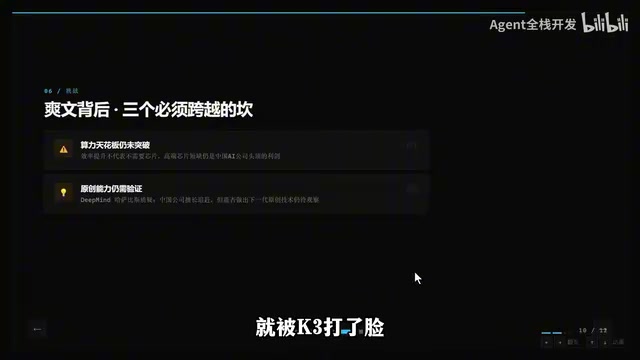
The first hurdle: The compute ceiling has been delayed, not removed. No matter how efficient you are, you still need GPUs. You can't cook without ingredients. The high-end chip supply issue remains a sword hanging over every Chinese AI company's head. While MoE architecture dramatically reduces inference costs, the model training phase still requires massive compute—even with a sparse structure, all 2.8 trillion parameters need to be updated during training. As next-generation models march toward ten trillion or even hundred trillion parameters, the compute bottleneck will only become more pronounced.
The second hurdle: Doubts about original innovation aren't entirely unfounded. Google DeepMind CEO Demis Hassabis stated at Davos that Chinese companies are excellent at catching up, but whether they can produce next-generation original technology still requires time to verify. While K3 has refuted this claim to some degree, it's also a reminder—no matter how efficient a follower is, there comes a day when they need to be the trailblazer themselves. Core paradigms like MoE, Transformer, and RLHF all originated in overseas labs; Chinese teams currently excel more at extreme optimization within existing frameworks. True "zero-to-one" innovation—such as inventing the next-generation attention mechanism or an entirely new learning paradigm—is the ultimate test of original capability.
The third hurdle: The reality test of commercialization. Selling API access cheaply is great, but too cheap means you can't make money. Zhang Yutong himself admitted that Chinese AI can't forever compete on cost-effectiveness alone; in the long run, it must achieve pricing power and rule-setting authority. The strategy of open-source free commercial use can rapidly expand the user base and ecosystem influence in the short term, but model training and iteration require sustained investment. Finding the balance between "free user acquisition" and "sustainable profitability" is a common challenge for all open-source AI companies—Meta's LLaMA and Stability AI's Stable Diffusion are all navigating this same path.
From BeiDou to Kimi K3: Another Way of Living Born from Blockades
Looking back at history, the script of "being blocked → being forced to develop breakthrough technology → ending up with a better solution" is not something we're seeing for the first time. Android once seized the majority of the market from Apple through free open-source; when we were squeezed out of Europe's Galileo navigation program, we quietly built the BeiDou system, which now serves over 100 countries worldwide.
Blockades have always been a double-edged sword: they can strangle you, but they can also force you to learn a way of living that depends on no one—and when squeezed hard enough, they might even create an entirely new market landscape. From DeepSeek to Moonshot AI, this generation of Chinese AI companies is demonstrating what it means to "find life in a desperate situation."
Now the question stands before us: on one side is the "brute force aesthetics" of throwing money at compute, and on the other is the "efficiency revolution" of squeezing every last drop of performance. Who will be first to break through the door to AGI? The answer may need to be left to time, but K3's battle has already proven the enormous potential of the efficiency path.
Key Takeaways
Related articles
Altman: Taking OpenAI Public This Year Would Be 'Ill-Advised'
OpenAI CEO Sam Altman says going public this year would be 'ill-advised,' even as the company has confidentially filed IPO paperwork. Here's what it means for AI.

An Open Letter to Dario: If AI Safety Is Real, Open the Model Weights
Developer Jacob's open letter to Anthropic CEO Dario Amodei went viral on Hacker News, challenging the contradiction between AI safety rhetoric and closed-source models: if safety truly matters, why not open the weights?
Ludwig: Building Custom LLMs and Neural Networks with Declarative Low-Code Configuration
Ludwig is an open-source low-code ML framework that builds custom LLMs and neural networks via declarative YAML config — no boilerplate training code required.