Kronos Financial Foundation Model: Using AI to Read the Market Language of Candlesticks
Kronos Financial Foundation Model: Usi…
Kronos: an open-source foundation model that treats candlestick data as the language of financial markets.
Kronos is the first open-source foundation model to treat candlestick (OHLCV) data as the "language of financial markets," using a two-stage tokenizer + autoregressive Transformer design. This article analyzes its technical principles, application scenarios, and real limitations—non-stationarity, low signal-to-noise ratio, and no-arbitrage—to help quant researchers rationally assess this new financial AI paradigm.
Has the Era of Financial Market "Language Models" Arrived?
After large language models (LLMs) swept through the field of natural language processing, the wave of "foundation models" began to spread into finance. A so-called Foundation Model is a concept formally introduced by Stanford's HAI Institute in 2021, referring to general-purpose models that are pretrained on ultra-large-scale data and can be transferred to various downstream tasks using only a small amount of labeled data. The revolutionary nature of this paradigm lies in breaking the traditional "one model per task" development logic, enabling knowledge to be reused across tasks.
The background behind the introduction of this concept is worth examining closely. The landmark report published by Stanford's HAI Institute in 2021, On the Opportunities and Risks of Foundation Models, was co-authored by over 100 researchers and systematically elaborated on the opportunities and risks of this new paradigm of "pretraining on large-scale data and transferring to diverse downstream tasks." Traditional machine learning requires collecting labeled data and training dedicated models independently for each task, whereas foundation models acquire "world knowledge" through massive unsupervised pretraining, and downstream tasks only need a small number of samples for fine-tuning to activate this knowledge.
Even more noteworthy is the phenomenon of "Emergent Abilities" documented in GPT-3 research: when the model's parameter scale exceeds a certain critical threshold, its performance exhibits a nonlinear leap—this emergence is not a gradual improvement but a sudden, discontinuous jump at specific scale nodes. Researchers believe the fundamental reason is that once a model reaches sufficient capacity, it begins to acquire cross-task compositional reasoning abilities, rather than merely memorizing training samples. It is worth delving deeper: Anthropic's interpretability research team, through the "Mechanistic Interpretability" approach, discovered that when a model's scale crosses the emergence threshold, its internal attention heads begin to spontaneously differentiate into function-specific "Circuits"—these dedicated circuits can perform complex cognitive operations such as inductive reasoning and analogical mapping, rather than mere pattern matching. This finding means that emergent abilities are not black-box magic but have traceable internal mechanisms, and it also provides an important theoretical reference for understanding whether similar scale effects might appear in the financial domain.
This "Scaling Laws" phenomenon was quantified through systematic experiments by OpenAI researchers Kaplan et al. in 2020, who found a power-law relationship between model performance and parameter count, data volume, and compute. Specifically, the power-law exponent between test loss and compute is about 0.05, meaning that for every 10x increase in compute, model performance improves by about 12%. This relationship holds with remarkable stability across more than six orders of magnitude of compute. Scaling laws profoundly changed AI researchers' understanding of the upper limits of model capability, and they are one of the core drivers of the entire foundation model wave—shifting AI research partly from an "architecture-innovation-driven" paradigm to a "scale-driven" paradigm, and directly triggering a strategic investment race in ultra-large-scale compute infrastructure.
Since Google laid the foundation with the Transformer architecture in 2017 and the GPT and BERT series of models successively established the mainstream "pretraining + fine-tuning" paradigm, this wave has been accelerating its penetration into the financial domain. It is worth noting that the Transformer architecture itself has undergone multiple specialized optimizations for time-series data—from the original global self-attention to variants such as Informer and Autoformer designed specifically for long-sequence time-series forecasting. This work laid a solid engineering foundation for transferring Transformers to financial time-series modeling. The self-attention mechanism of the original Transformer has a computational complexity of O(n²), which creates a significant computational bottleneck for long financial time series (such as several years of daily data). Informer reduces the complexity to O(n log n) via ProbSparse sparse attention, while Autoformer introduces an auto-correlation mechanism based on the Fast Fourier Transform, which not only reduces complexity but also naturally aligns with the periodic structures in financial time series (such as monthly seasonality and annual cycles). These architecture-level iterations are an important prerequisite for making financial foundation models like Kronos engineeringly feasible.
An open-source project on GitHub named Kronos has recently attracted widespread attention—rapidly garnering over 32,000 Stars, with 134 new stars in a single day, making it one of the most closely watched projects at the intersection of quantitative finance and AI.
Kronos's positioning is clear and bold: A Foundation Model for the Language of Financial Markets. It learns and predicts candlestick charts—the "universal language" of financial markets—using a GPT-like autoregressive modeling approach, representing a significant shift in the paradigm of financial time-series modeling.
What Is Kronos? Core Philosophy and Technical Architecture
Modeling Candlesticks as a "Language"
Traditional quantitative models rely on manual feature engineering, or train dedicated models separately for specific assets. Kronos borrows the core logic of large language models: first pretrain on massive data, then fine-tune for downstream tasks.
The project treats OHLCV data (Open, High, Low, Close, Volume prices) as a kind of "language sequence." OHLCV corresponds to Open, High, Low, Close, and Volume—the most fundamental price data format in financial markets. Candlestick charts were invented by Homma Munehisa, an 18th-century rice trader at the Osaka rice market in Japan, to record intraday fluctuations in rice futures prices. They were later introduced to Western markets by Western technical analyst Steve Nison in 1991, becoming the most universal price chart format worldwide. Each candlestick has an extremely high information density: the body color (bullish/bearish) reflects the balance of bulls and bears, the upper and lower shadows reveal the boundaries of price discovery, and volume measures the strength of market consensus. From an information-theoretic perspective, the five-dimensional OHLCV data compresses a continuous trading process into a statistical summary of discrete time slices. This lossy compression retains the most critical price-discovery information in the market microstructure while filtering out tick-level high-frequency noise, achieving a balance between information density and modelability that has been validated by two centuries of market practice.
It is worth pointing out that this "lossy compression" is not a flaw but wisdom refined by practice: while tick-level data is complete, it contains large amounts of high-frequency components dominated by microstructure noise such as market maker quoting behavior and latency arbitrage. These components carry almost no transferable predictive information at the daily or even hourly scale; the aggregation process of OHLCV precisely smooths out this noise while retaining the statistical signals reflecting real supply-and-demand forces. It is worth adding that, from the perspective of Shannon Information Theory, a candlestick can be regarded as an approximation of a "Sufficient Statistic" of all tick data within that time window—it is not fully sufficient (because it loses path information such as the order in which prices were reached), but in most low- and medium-frequency prediction tasks, this approximate information loss is negligible, while the noise-filtering benefit it brings is quite significant. Each candlestick condenses the collective behavior of market participants within a specific time period, and this structural uniformity across markets and assets is precisely the theoretical basis for building a general-purpose financial foundation model.
Just as text is composed of tokens, Kronos uses a specialized quantization Tokenizer to discretize continuous price and volume data into tokens, then uses a Transformer architecture to learn the intrinsic patterns of these sequences. The key insight of this design is that candlestick data is a universal form of expression across all financial markets worldwide—whether stocks, cryptocurrencies, or foreign exchange, they all follow the same "grammar." This provides a theoretical basis for building a general-purpose foundation model across markets and assets.
Two-Stage Technical Architecture
Kronos adopts a two-stage design of "tokenization + autoregressive prediction":
-
Quantization Tokenizer: Converts continuous financial time-series data into discrete token representations. Its technical roots lie in the fusion of two mature approaches: BPE (Byte Pair Encoding) in NLP, which compresses text into a fixed vocabulary by iteratively merging high-frequency byte pairs—its core advantage being the ability to adaptively discover high-frequency substructures in language without manually defining word boundaries; and VQ-VAE (Vector Quantized Variational Autoencoder, proposed by DeepMind in 2017), which quantizes and maps continuous latent representations to a finite discrete Codebook. The core innovation of VQ-VAE lies in achieving vector quantization through "nearest-neighbor lookup": the continuous vector output by the encoder is replaced by the discrete vector in the codebook with the closest Euclidean distance, and gradients are backpropagated through a "Straight-Through Estimator." This estimator is needed because the nearest-neighbor lookup operation itself is non-differentiable; the straight-through estimator circumvents this non-differentiable obstacle by using the quantized vector during forward propagation while directly copying the gradient to the encoder output during backpropagation. This mechanism was later borrowed by models such as OpenAI's DALL-E, becoming an important infrastructure in the field of image generation, and it has also been widely applied in the field of time-series forecasting (such as work like TimeVQVAE).
When applied to financial time series, each discrete vector in the codebook can be understood as a typical "market microstate pattern"—continuous changes in price and volume are quantized into a transition sequence within a finite set of states, enabling the Transformer's attention mechanism to efficiently capture sequence dependencies. There is a subtle but important design choice here: the setting of the Codebook Size directly determines the model's "resolution" of market states. From an information-theoretic perspective, the codebook size determines the upper limit of channel capacity after discretization: too small a codebook leads to excessive quantization error, and the fine-grained market-state information needed for prediction is irreversibly discarded at the tokenization stage; too large a codebook triggers Codebook Collapse—a large number of code words are never activated, and the effective codebook is far smaller than the nominal size, equivalent to wasting model capacity. In practice, updating codebook vectors with EMA (Exponential Moving Average), introducing a codebook entropy regularization term to encourage uniform utilization, and periodically resetting low-activation-frequency code words to perturbed versions of high-activation code words (known as the codebook reset trick) are common engineering means to mitigate codebook collapse. Financial practice usually requires finding the optimal codebook size for specific asset classes and time granularities by trading off reconstruction error against codebook utilization, which is also one of the most critical hyperparameter tuning steps when deploying quantization tokenizers in financial scenarios.
-
Autoregressive Transformer Backbone: Pretrained on large-scale financial data to learn to predict the market state at the next time step. The core goal of autoregressive modeling is to maximize the sequence conditional log-likelihood: log P(x) = Σ log P(x_t | x_{t-1}, ..., x_1). The Transformer's Causal Attention Mask sets the upper-triangular part of the attention matrix to negative infinity, ensuring that the prediction at each position depends only on historical information, which naturally aligns with the fundamental principle in financial prediction that "future data cannot be used." It is worth mentioning that Look-Ahead Bias is one of the most common and most fatal sources of error in quantitative backtesting—even inadvertently introduced minute leakage of future information can cause backtest results to be severely inflated. Common look-ahead bias pitfalls include: failing to adjust prices in chronological order when using adjusted prices, using global statistics (rather than historical rolling statistics) during feature normalization, and sample contamination during data batching in machine learning frameworks. The Transformer's causal-mask architecture fundamentally avoids look-ahead bias at the model-structure level, but bias in the feature engineering stage still requires strict prevention at the engineering level. Essentially, this is statistical modeling of the dynamic transition patterns of market microstructure.
This architecture is a direct mapping of the current mainstream generative AI paradigm onto the financial domain, with a clear and traceable technical path.
Why Is It Worth Paying Attention To?
From Specialized Models to General-Purpose Financial Foundation Models
In the past, quantitative researchers had to build separate models for each trading strategy and each asset class, resulting in high development costs and poor transferability. Kronos's foundation-model approach means: pretrain once, fine-tune and reuse in many places. Researchers can quickly adapt the pretrained model to specific tasks such as short-term direction prediction and volatility forecasting, significantly lowering the development threshold. This "transfer learning" paradigm has been thoroughly validated in the field of computer vision: ImageNet-pretrained ResNet, when transferred to fields such as medical imaging and satellite remote sensing, often outperforms dedicated models trained from scratch, even when the source and target domains differ significantly.
Whether this success can be replicated in the financial domain largely depends on whether there are sufficiently universal "cross-domain common features" among different markets and asset classes—and the uniformity of the OHLCV structure is precisely the core basis on which Kronos bets that this assumption holds. From existing research, cross-asset transfer learning does exhibit several documented positive signals: stocks, futures, and cryptocurrencies all display similar momentum effects and mean-reversion characteristics at the daily level; the Volatility Clustering phenomenon is prevalent in almost all liquid assets, and the underlying GARCH-type statistical structure has cross-asset universality. The existence of these common features provides some empirical support for the effectiveness of cross-market pretraining, but its transfer performance ultimately awaits quantitative validation through rigorous out-of-sample experiments.
Open-Source Ecosystem Accelerates Validation
As a Python open-source project, Kronos has accumulated over 5,500 Forks, and the community's enthusiasm for reproducing and further developing it is quite high. The open-source nature allows both academia and industry to test its effectiveness, avoiding the "black box" pain point of commercial quantitative models. For quant enthusiasts, this is a financial foundation model starting point that can be used directly without training from scratch. From a more macro perspective, open source is also a necessary condition for establishing a credible Benchmark in the current field of financial AI—without a reproducible baseline, academia finds it difficult to objectively evaluate the true incremental value of new methods, and Kronos's open-sourcing provides important public infrastructure for this direction.
It is worth mentioning that the field of financial AI has long suffered from a "Reproducibility Crisis"—due to the high cost of data acquisition, inadequate disclosure of backtesting details, and the prevalence of selective reporting (Reporting Bias, i.e., only publishing positive results), a large number of published quantitative models are difficult to independently reproduce. Kronos's open-sourcing, along with its clear data-processing pipeline and evaluation protocol, provides a reference template for alleviating this problem, and its community value is perhaps no less than the model's own predictive performance.
A Rational View: Opportunities and Real Limitations
Financial Markets Are Not a Corpus
Despite Kronos's advanced philosophy and considerable hype, rational evaluation is equally important. Financial markets have extremely strong non-stationarity and low signal-to-noise ratio characteristics, and historical patterns do not necessarily continue into the future.
So-called Non-stationarity refers to the fact that the statistical properties of financial time series (mean, variance, autocorrelation structure) continuously drift with changes in macroeconomic cycles, regulatory policies, and the structure of market participants, rather than being relatively stable like linguistic patterns. Its underlying causes are multidimensional: at the macro level, monetary policy shifts (such as the Fed's rate-hike cycle) change the overall level of risk premium; at the meso level, industry regulatory policies can completely change the sector correlation structure within a few days; at the micro level, the continuous rise in the proportion of algorithmic trading (currently about 70% of US stock trading volume is algorithm-driven) changes the dynamic characteristics of the market microstructure. Statistically, the ADF test (Augmented Dickey-Fuller Test) shows that raw price series generally contain a unit root, which means that directly feeding price series into a model leads to "spurious regression"—the statistical relationships the model learns may be entirely spurious correlations driven by common trends, rather than genuine causal links.
It is worth adding that the KPSS test (Kwiatkowski–Phillips–Schmidt–Shin) provides a complementary perspective on stationarity judgment to ADF: the null hypothesis of ADF is the existence of a unit root (non-stationarity), while the null hypothesis of KPSS is stationarity, and using the two together allows more reliable diagnosis of series properties, avoiding misjudgment caused by insufficient power of a single test. In addition, the Hurst Exponent can be used to measure the long-memory property of a series—a Hurst exponent significantly higher than 0.5 implies trend persistence, while below 0.5 implies a mean-reversion tendency. This information has direct guiding value for choosing an appropriate modeling paradigm (trend-following vs. mean-reversion). In practice, performing segmented stationarity tests on return series (such as the Chow test for structural break points), combined with rolling computation of the Hurst exponent, is a standard preprocessing procedure for building robust financial prediction models.
Common engineering means for handling non-stationarity include: Rolling Window Retraining (periodically refitting the model by replacing the oldest data with the newest), Online Learning (allowing model parameters to update in real time as new data arrives), and using returns rather than absolute price values as input features (return series satisfy the weak stationarity condition in most cases).
Low signal-to-noise ratio means that the exploitable predictive signal is extremely weak—the explainable variance of daily stock returns is usually below 5%, and a large number of statistical relationships are merely the accidental emergence of historical noise. These two characteristics together constitute a fundamental obstacle to model generalization, and are why large models that perform excellently in the NLP domain often require an extremely careful out-of-sample validation system after being transferred to the financial domain.
A frequently overlooked but crucial issue is that the "effective sample size" of financial data is far smaller than the surface numbers suggest. Because return series of adjacent trading days exhibit autocorrelation (though usually weak), and returns of different assets in the same market exhibit Cross-sectional Correlation, the nominally "massive data" of decades and thousands of stocks often has only a few hundred to a few thousand statistically independent samples. This creates a severe imbalance between the millions of parameters typical of deep neural networks and the actual effective sample size, greatly increasing the risk of overfitting. This also explains why the scaling laws that "achieve miracles through brute force" in the NLP domain may face fundamental challenges in the financial domain—the pretraining datasets of language models contain hundreds of billions of tokens, whereas the ceiling of effective independent samples in financial data is limited by how long the market has existed, and cannot be broken through by piling on compute.
Transferring the LLM paradigm to the financial domain also faces several unique challenges:
- Data distribution drift: Market structure evolves with the macro environment and policy changes, and pretrained knowledge may quickly become obsolete.
- Overfitting risk: On limited historical data, complex models are highly prone to learning noise rather than genuine signals. The "effective sample size" of financial data is far smaller than it appears on the surface—because the return series of adjacent trading days are highly autocorrelated, nominally decades of daily data often have only a few hundred statistically independent samples, causing a severe imbalance between the parameter count of deep neural networks and the effective sample size.
- No-arbitrage constraint: The "Adaptive Market Hypothesis (AMH)" proposed by MIT finance professor Andrew Lo fuses evolutionary biology with behavioral finance, providing a dynamic revision of the classic Efficient Market Hypothesis (EMH). AMH points out that market efficiency is not a static constant but dynamically evolves with participants' adaptive learning: when a certain profitable statistical pattern is discovered by a few participants, the excess return (Alpha) is rich; as more capital follows suit in arbitrage, competition compresses the profit space; if the pattern is widely disseminated (such as through open-source release), capital will exhaust the signal in a very short time, and the pattern will thereafter become ineffective. This process can be likened to "invader dynamics" in Evolutionary Game Theory: the faster an effective strategy spreads through a population, the more quickly its equilibrium advantage disappears. Historical data shows that factors published in academic papers decay by an average of about 32% after publication (Harvey & Liu, 2020); and since open-source code spreads far faster than academic publication, the signal decay period will be even shorter. This also explains why top quantitative institutions tend to strictly keep effective factors secret rather than open-source and share them—effective trading signals are essentially scarce information assets, whose value exists because of secrecy and dies upon disclosure. Even if Kronos identifies genuine statistical patterns, once the open-source model is widely deployed by the community, signal decay will be inevitable.
A More Pragmatic Application Positioning
Rather than viewing Kronos as a direct trading-decision system, it is better positioned as a feature extractor or auxiliary signal source. The market representations it learns can serve as a supplement to traditional quantitative factors, or be used in scenarios such as market-state identification and risk warning—this is perhaps the most robust deployment path at present. Specifically, the intermediate-layer hidden vectors of the pretrained model can serve as a "Market State Embedding," fused with traditional alpha factors such as value factors and momentum factors, introducing the nonlinear modeling capability of deep learning while retaining interpretability. This "hybrid architecture" is often more robust in practice than a pure end-to-end neural network approach, because the economic logic of traditional factors provides implicit regularization constraints, helping prevent the model from catastrophic failure when the market structure changes abruptly.
In addition, foundation models like Kronos may have unique value in risk management scenarios: by learning the OHLCV sequence patterns before and after various historical market stress events (such as the 2008 financial crisis, the 2020 COVID crash, and the 2022 rate-hike shock), the model may acquire a sensitivity to "market state anomalies," thereby providing early warning signals when similar patterns appear. Such applications do not rely on precise directional prediction, but rather leverage the model's ability to distinguish between "normal" and "abnormal" market states—this goal, compared to directly predicting price movements, poses a smaller theoretical challenge to market efficiency and is engineeringly easier to achieve robust out-of-sample generalization. It is worth noting that the model evaluation metrics under an anomaly detection framework are entirely different from those under a prediction framework: the former focuses on the trade-off between recall (the cost of missing a stress event) and precision (the opportunity cost of false alarms), requiring the optimal decision threshold to be defined in combination with the loss function of the specific risk-control scenario, rather than simply maximizing prediction accuracy.
Conclusion
Kronos is a valuable exploration of extending the idea of AI foundation models into the financial domain. Treating candlesticks as "the language of financial markets" and modeling them with the mature paradigm of generative AI is a clear and forward-looking approach. The community response of over 32,000 Stars also confirms the industry's high expectations for the direction of "financial foundation models."
However, the complexity of financial markets dictates that no model should be deified. Non-stationarity, low signal-to-noise ratio, and no-arbitrage mechanisms constitute the unique "anti-prediction barrier" of this field, meaning that even the most architecturally advanced models must undergo rigorous out-of-sample backtesting and live-trading validation before conclusions can be drawn. The true value of Kronos lies in providing quantitative research with an open, reproducible general-purpose starting point, driving the "finance + AI" community to continue in-depth cultivation. For developers, rather than expecting a "money-printing machine," it is better to regard it as a powerful tool framework worthy of in-depth study.
Related articles
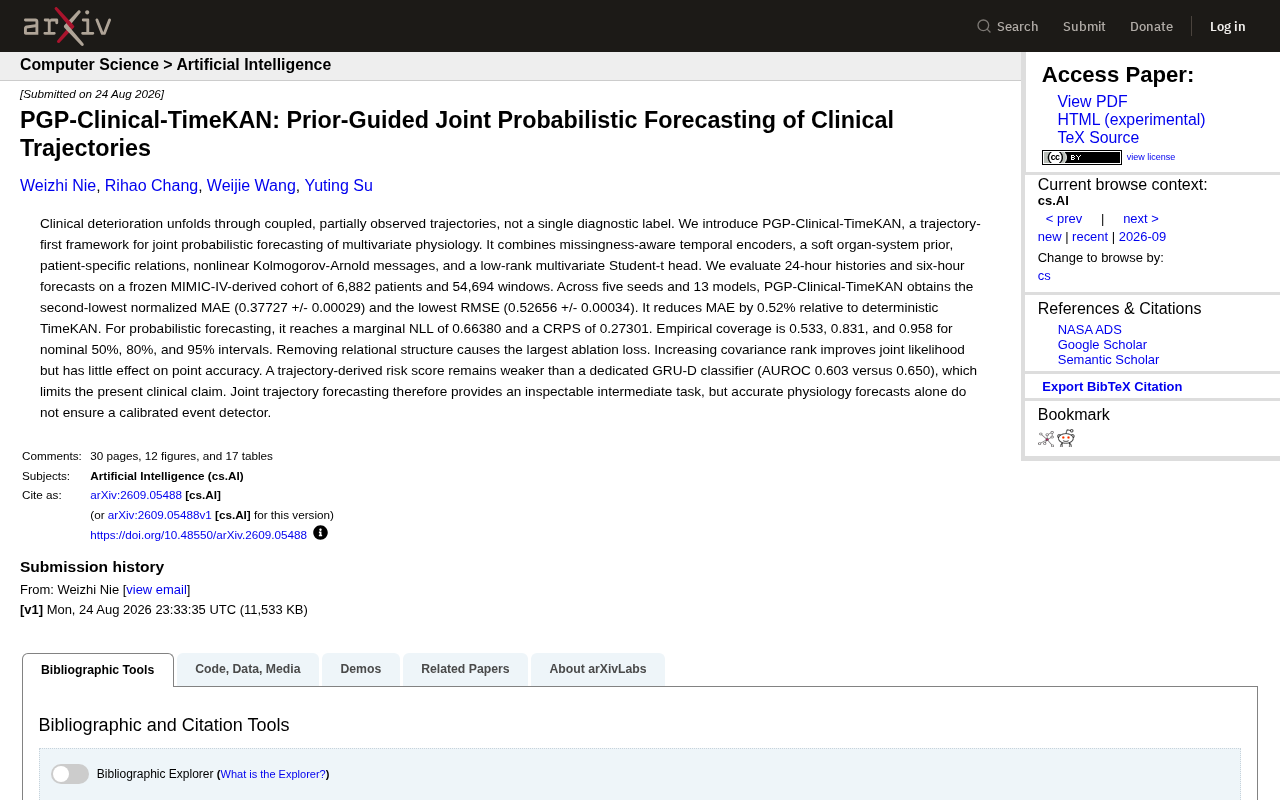
PGP-Clinical-TimeKAN: A Detailed Guide to the Multivariate Physiological Indicator Joint Prediction Framework
An in-depth analysis of the PGP-Clinical-TimeKAN framework for joint probabilistic prediction of multivariate physiological indicators, covering trajectory-first paradigm, KAN message passing, MIMIC-IV validation, and ablation studies.
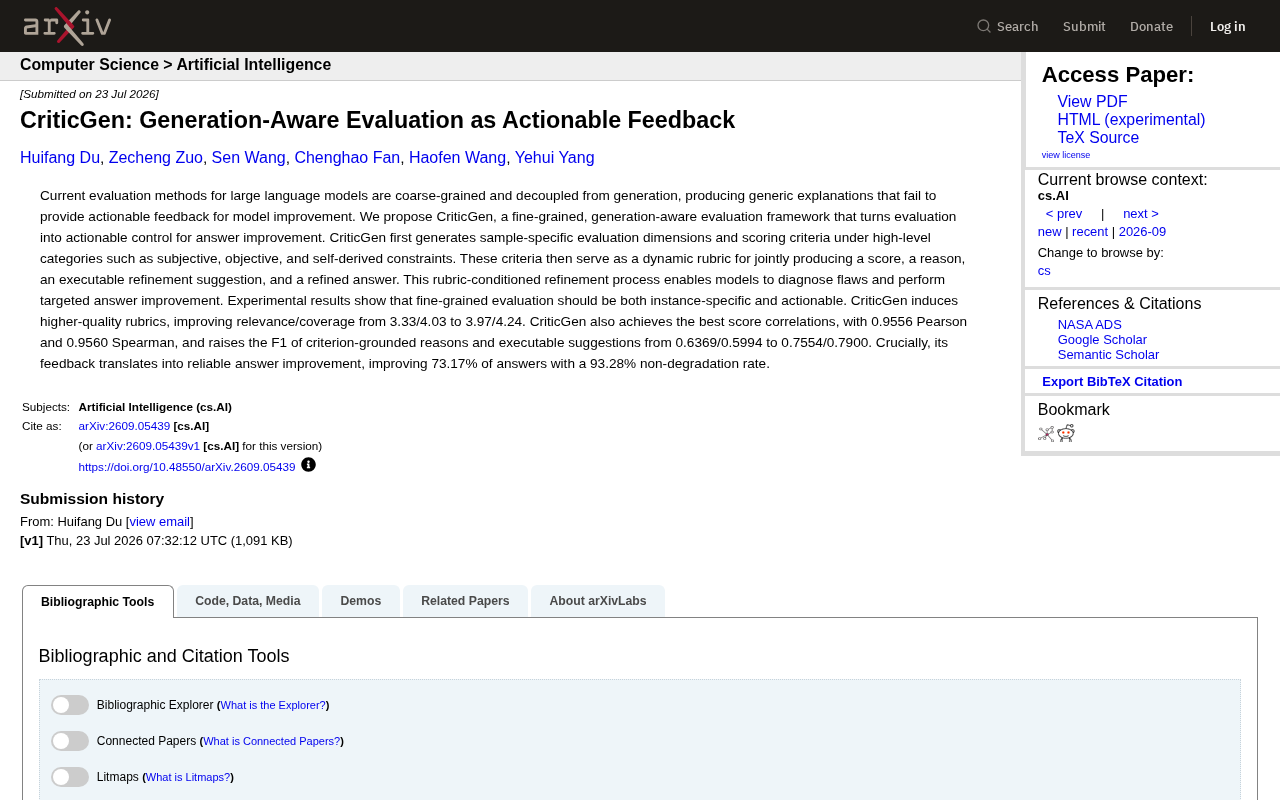
CriticGen: A New Framework That Transforms AI Evaluation into Actionable Improvement Feedback
CriticGen proposes a generation-aware evaluation framework that transforms AI assessment from passive scoring to an active optimization loop, achieving 73.17% answer improvement and 93.28% non-degradation rate.
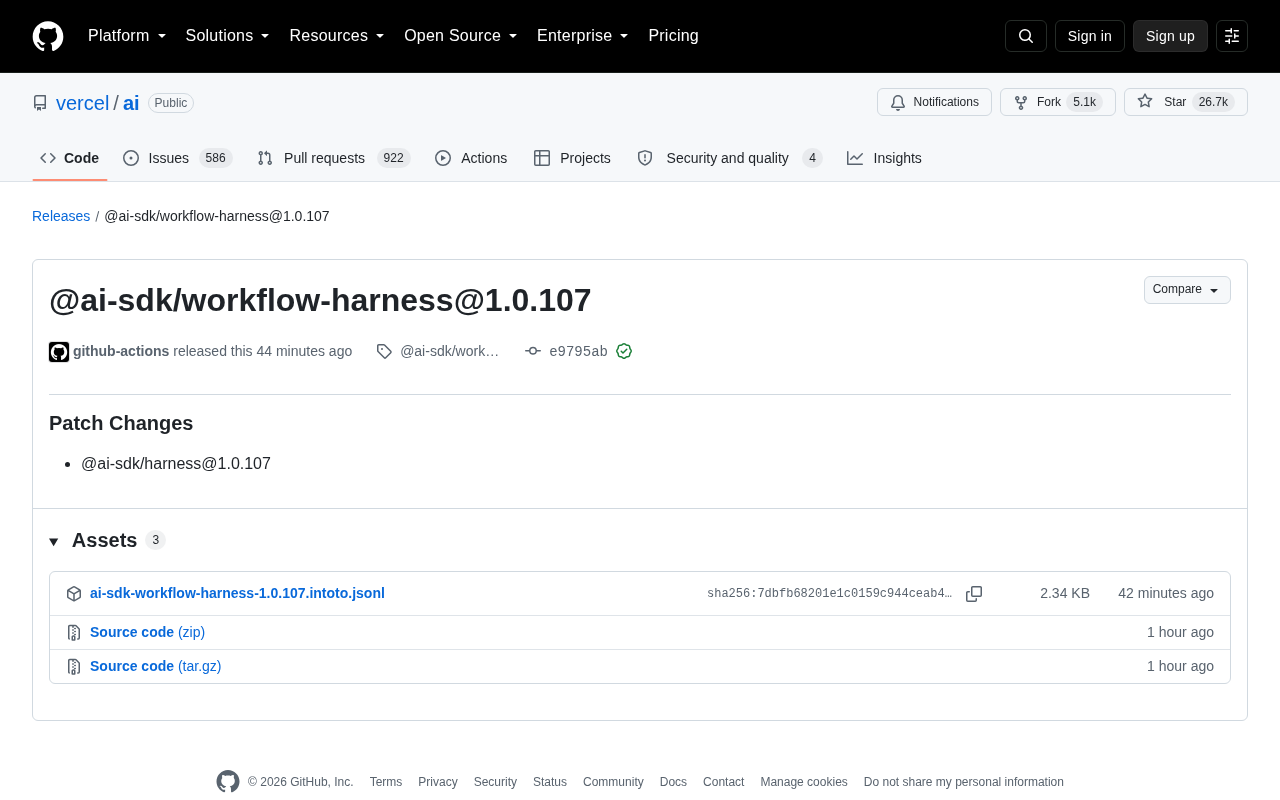
Vercel AI SDK workflow-harness Update Analysis
Deep analysis of Vercel AI SDK workflow-harness 1.0.107 update: architecture design, engineering practices, and developer value for building reliable AI apps.