LangChain V1.3 in Practice: Master AI Engineering Thinking and Break Free from Tool Dependency

Master AI engineering thinking with LangChain V1.3 — move beyond tool dependency and take control.
This article explores why chasing AI tools is less valuable than mastering engineering thinking. Using a LangChain V1.3 course as the lens, it covers real pain points: the limits of natural language requirements, the myth of RAG accuracy metrics, and the hidden cost of unconstrained Token usage. It introduces LangChain's three-module system (LangChain, LangGraph, Deep Agent) and explains how concepts like Checkpoints and LangSmith observability help developers build smarter, more cost-efficient AI applications.
Why Engineering Thinking Beats Chasing Tools
Now that ChatGPT, DeepSeek, and other large language models have deeply penetrated everyday work, a clear divide has emerged: some people use AI to "do the work of an entire team on their own," while others are stuck in a perpetual anxiety of "will AI take my job?" In his latest LangChain V1.3 course on Bilibili, creator Turing Loulan points to a fundamental reason behind this split: how deeply you understand the engineering principles behind large models.
Many beginners fall into a common trap: equating "learning AI" with "learning tools." Tools are indeed the most direct and visible gateway to real-world applications — but tools are ultimately just products built by developers. When Cursor blows up, you rush to learn Cursor. When OpenClaude gets hot, you pivot to that. Then Claude Code and Codex come along, and you're chasing again. It's an exhausting, never-ending pursuit.
The author poses a pointed question: Are you using the tools, or are the tools using you? If your entire workflow is locked to a single tool and you're helpless the moment it changes, you'll always be the one getting dragged along by AI — not the one driving it.
The Real-World Pain Points Behind the Tools
The course surfaces several painfully realistic challenges that every AI practitioner should stop and consider.
The Ceiling of Requirement Descriptions
Today's large model Agents are genuinely powerful — give them a clear description of what you need, and they'll deliver impressive results. But the hardest part is exactly that: clearly articulating what you need.
The author offers a brilliant example: could you get a large model to recreate the Spring framework? In theory, all of Spring's code is publicly available online. The model has almost certainly trained on it — and likely understands it better than most developers. But when you actually try, you hit a wall: you have no idea how to frame the request. Do you ask it to write a Spring from scratch? Do you describe each feature individually? The logic becomes so tangled that describing it clearly becomes an impossible task in itself.
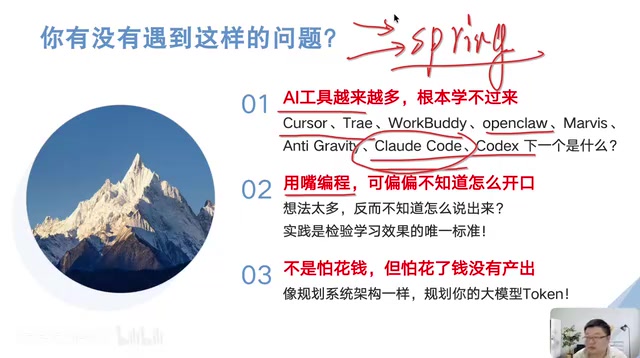
And that's before you get to real enterprise business logic. E-commerce platforms like Taobao or JD.com may seem like "solved problems" on the surface, but the internal business complexity at any company is staggering — often incomprehensible to anyone who isn't a seasoned project manager. Describing those requirements clearly is harder than cloning Spring.
The Myth of RAG Accuracy Improvements
The internet is full of content claiming "RAG system accuracy improved from 60% to 90%." The author calls out two core problems with these claims:
First, where do those numbers — 60%, 90% — even come from? Natural language is notoriously hard to measure. Unlike numbers where 1 is 1 and 2 is 2, the same question can be phrased in countless ways, and scoring criteria are inherently fuzzy.
Second, what makes you think that preparing a good prompt guarantees the model will behave as expected? Large models are a black box to everyone — even researchers struggle to trace their internal reasoning. Ultimately, the only way to know how a model will perform is through hands-on experimentation.
RAG Background: RAG (Retrieval-Augmented Generation) is the dominant approach for connecting enterprise knowledge bases to AI applications. The core idea: private documents are chunked and converted into vectors via an embedding model, then stored in a vector database. When a user asks a question, it's also converted to a vector, and similarity search retrieves the most relevant document chunks. Those chunks are injected into the prompt as context, guiding the model to generate grounded answers. RAG accuracy is shaped by multiple factors: chunking strategy, embedding model quality, retrieval algorithm (dense vs. sparse), reranking modules, and prompt engineering. Instability in any of these layers leads to unpredictable end-to-end performance. This is exactly why "accuracy improvement" claims resist rigorous quantification: when the evaluation pipeline itself is fuzzy, percentages are directional references at best — not precise engineering metrics.
The Cost of Burning Tokens — and Why Engineering Discipline Matters
Hands-on experimentation introduces an immediate problem: cost.
Tokens are the basic unit of billing and computation for large models — roughly 3/4 of an English word or 1–2 Chinese characters per token. To give a sense of scale: Claude 3.5 Sonnet costs approximately $3 per million input tokens and $15 per million output tokens; GPT-4o is around $2.50 and $10. When an Agent performs multi-step reasoning, context accumulates at each step, causing token consumption to grow exponentially. A complex Agent task with 10 planning steps can consume 20–50× the tokens of a single conversation.
If you're using tools like Claude Code or Codex just to validate an idea, the token burn can be shocking — and most of the better features require payment anyway. The problem: you might just be testing whether a concept works, but by the time you realize the approach is wrong and want to stop, the money is already gone.
The author highlights a telling shift in Big Tech: in the early days, Microsoft, Google, and Amazon were all pushing "AI for everyone." Over the past year or so, that narrative has flipped — they've started restricting token usage. Even these giants discovered that unlimited token burn doesn't justify the output. This is the economic reality of large models: at scale, unconstrained token consumption can produce wildly unpredictable bills. Fine-grained engineering control has become a critical capability for enterprise AI deployment. If the big players can't sustain it, the rest of us certainly can't treat tokens like they're free.
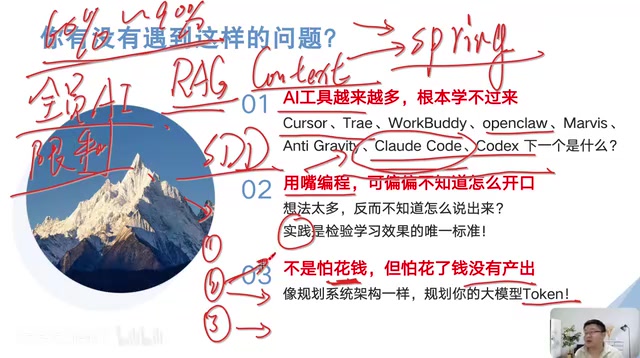
This is precisely where engineering thinking pays off. Consider how a complex Agent handles a hard problem: instead of answering directly, it first plans — step one, break down the task; step two, dispatch sub-Agents to gather information and consolidate data; finally, generate a report.
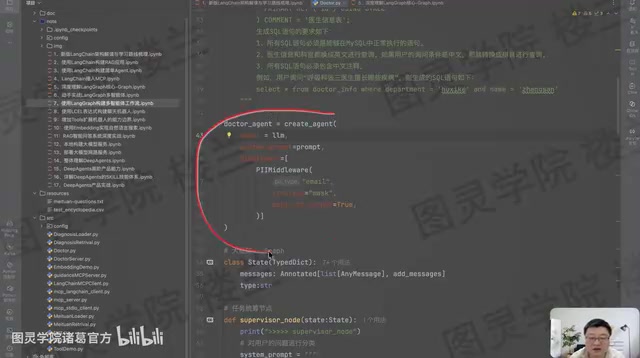
If something breaks mid-way — say the network drops during retrieval, or the wrong keyword is used — someone without engineering knowledge has no choice but to restart from scratch, wasting all the tokens already burned. In LangChain, there's a foundational feature called Time Travel: you can preserve the results of correct earlier steps and resume from exactly where things went wrong. In LangGraph, this is implemented via a Checkpoint mechanism — the system persists the complete state after each node executes, letting developers load any historical checkpoint and precisely control where a retry begins, without re-running the entire task chain.
With this kind of thinking, your control over token spend becomes much more precise: keep the good results, re-run only what failed, introduce human-in-the-loop supervision where needed, and reject trivial tasks outright to get results faster. This is why AI engineering thinking matters — master the ideas behind the tools, and you become the one in control.
Why LangChain
At its core, LangChain is a programming framework for building Agents — the underlying foundation behind higher-level products like Cursor and Codex. Released in October 2022 by Harrison Chase, LangChain is one of the most widely used frameworks for large model application development. Its core value lies in providing a standardized abstraction layer that lets developers compose LLMs, vector databases, external tools, and memory modules like LEGO bricks. LangChain's timing — arriving in sync with ChatGPT's explosion onto the scene — helped it accumulate a massive community ecosystem and documentation base, with GitHub stars consistently placing it among the top AI tooling repositories. The author explains the choice along two dimensions.
Battle-Tested and Flexible
Among the available frameworks (Spring AI, LlamaIndex, etc.), LangChain is the oldest — it existed before the concept of "Agents" was even formalized, making it unusually seasoned.
It's also highly flexible, with an ecosystem that evolves at remarkable speed. Capabilities like Skills and MCP, first introduced by other Agent products, have been rapidly adopted and supported by LangChain. Worth noting: MCP (Model Context Protocol) is a standardized protocol proposed and open-sourced by Anthropic in late 2024 to address the fragmented integration problem between large models and external tools. Tool providers implement an MCP Server once; any MCP-compatible framework can call it directly, dramatically lowering the cost of ecosystem integration. The new Deep Agent framework supports Skills particularly well: download a tool locally, make one API call, and you're using it.
Three Modules, Three Ways to Build
The LangChain ecosystem contains three major modules — not just three sets of APIs, but three distinct philosophies for building Agents:
- LangChain module: Chain-based construction, well-suited for tasks with fixed workflows and clearly defined steps
- LangGraph module: Graph-based construction, modeling Agent execution as a state graph of Nodes and Edges, with native support for conditional branching, loops, and multi-agent collaboration
- Deep Agent module: Emphasis on autonomous planning capabilities
You might not have realized this, but the author points out that LangGraph sees the most enterprise adoption today, because it handles the vast majority of scenarios more cleanly and with a gentler learning curve than plain LangChain. Once you've truly internalized the LangChain ecosystem, picking up Spring AI or LlamaIndex becomes a quick exercise.
Three Core Design Principles of the Course
Compared to the earlier 0.3 version, this 1.3 edition incorporates extensive student feedback. The author distilled three elevated design principles.
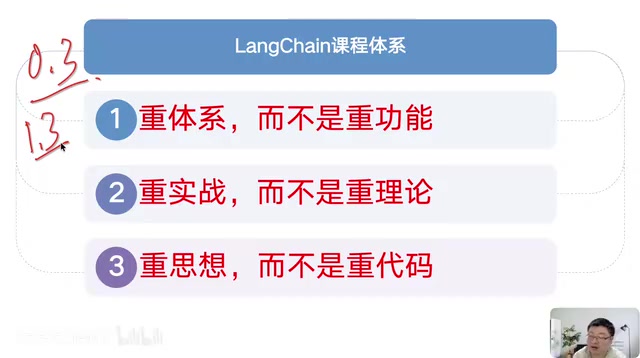
First: system over features. Previous courses taught LangChain and LangGraph as separate topics. This time, they're presented as one cohesive system. The first module builds a solid foundation: how to interact with large models, how to use tool mechanisms, how to connect MCP — capabilities that are unavoidable no matter which construction approach you take.
Second: practice over theory. Code starts in chapter one. You see results and feel the experience firsthand before any theory is unpacked. The course contains extensive hands-on content for building multi-agent systems from scratch — "play your way to understanding, and everything else follows."
Third: ideas over code. The author is candid: the model can write the specific code. What matters is how to combine the model's tools to solve real problems. What is a Graph? What is a Chain? How does autonomous planning work? These foundational ideas are worth more than memorizing how many parameters a given API accepts.
The course also addresses common student concerns: worried your LLM fundamentals aren't deep enough? The framework already filters down to the core knowledge you need for real-world work. Worried your Python is too weak? Follow along and type it out twice — you'll get there. No GPU? The course includes extensive local deployment content, including integrating LangSmith for API call monitoring.
LangSmith is the official observability platform from LangChain, designed specifically for debugging, testing, and monitoring LLM applications. Its core features include: full-chain tracing — recording inputs, outputs, latency, and token consumption for every LLM call; dataset management — collecting real conversation data to build evaluation sets; and prompt version control. For developers, LangSmith solves the core pain point of debugging LLM "black boxes": when a multi-step Agent fails, LangSmith lets you pinpoint exactly which step and which model call went wrong, instead of sifting through logs. On the cost control side, LangSmith's token usage statistics give developers a clear view of resource consumption by feature module — a clean closing of the loop with the engineering discipline principles discussed earlier.
Conclusion: Become the Driver in the Age of AI
The core message of this course extends well beyond LangChain itself. In a world where tools change by the month and token costs run high, the real moat isn't which tools you know — it's whether you've internalized the engineering thinking behind them.
As the author puts it: "AI is the future. You must be the driver." AI is undeniably the future. But what matters more is whether you can keep pace and become someone who commands this AI era — rather than someone perpetually chased by the next tool.
Key Takeaways
Related articles
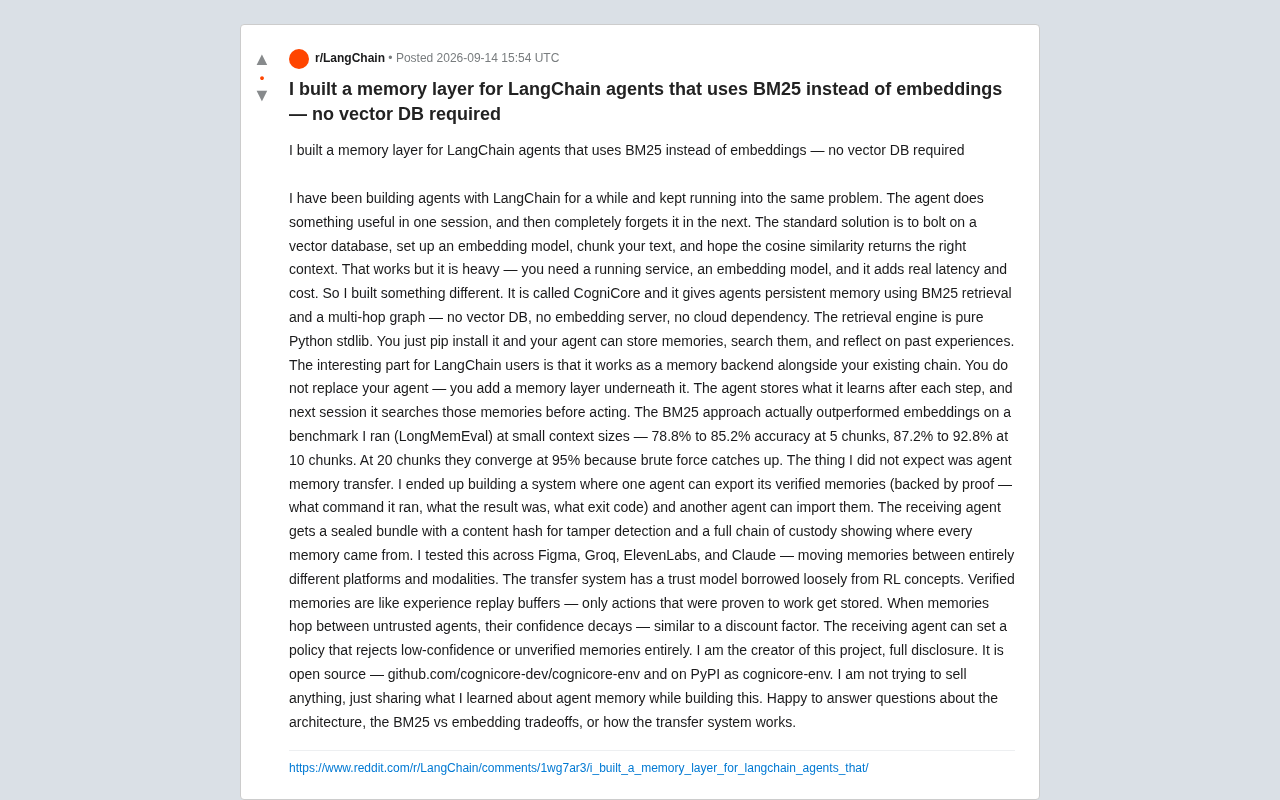
Ditch the Vector Database: Building a Memory Layer for LangChain Agents with BM25
CogniCore replaces vector databases with BM25 retrieval for LangChain agent memory, outperforming embeddings in small-context benchmarks with zero external dependencies.
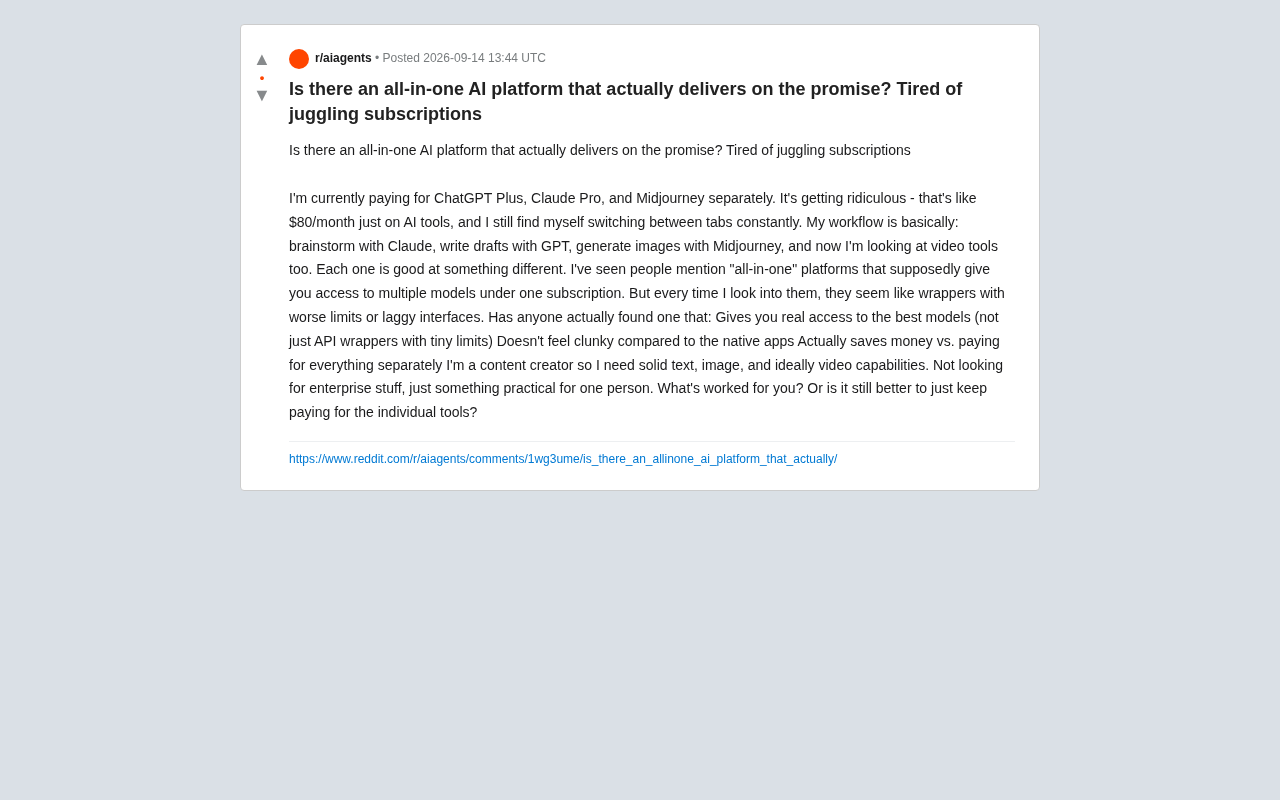
Are All-in-One AI Platforms Actually Worth It? A Practical Guide to Escaping Subscription Overload
Tired of paying for ChatGPT, Claude, and Midjourney separately? We break down whether all-in-one AI platforms are actually worth it — and what a smarter subscription stack looks like.
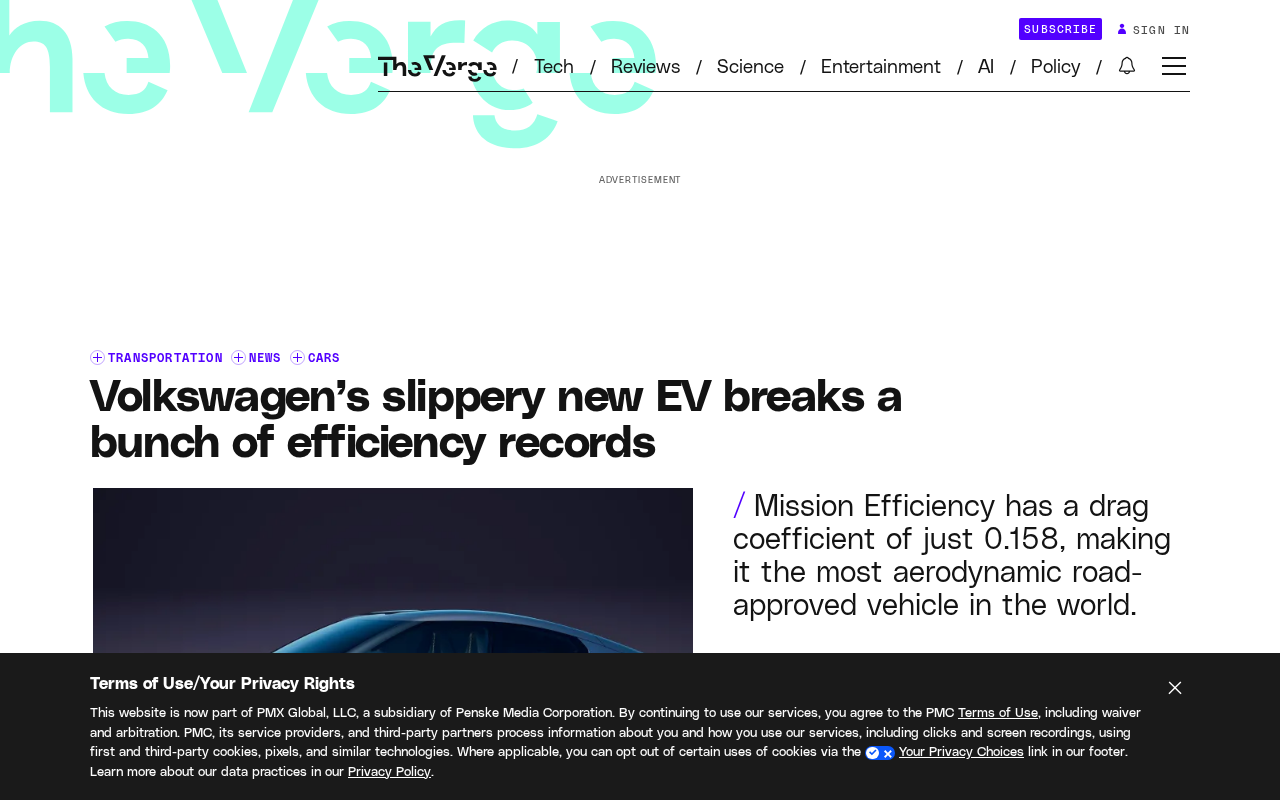
Volkswagen Mission Efficiency: The World's Lowest-Drag EV Breaks Multiple Efficiency Records
Volkswagen's Mission Efficiency prototype claims the world's lowest drag coefficient, built on MEB+ platform with ID. Polo and ID. Cross components. Here's what it means for EV efficiency.