Loving LLMs, Hating the Hype: How Engineers Rationally Evaluate Large Language Models
Loving LLMs, Hating the Hype: How Engi…
Why engineers love LLMs for real utility while rejecting the AGI hype, hallucination downplaying, and valuation bubbles surrounding them.
A viral article titled 'I Love LLMs, I Hate Hype' captured a sentiment common among engineers: genuine appreciation for LLMs as practical tools for coding, documentation, and knowledge access, paired with strong skepticism toward inflated AGI narratives, downplayed hallucination risks, and speculative AI startup valuations. The key is pragmatic balance — leveraging real capabilities while maintaining critical judgment.
When Technical Passion Meets Overhype
Few topics in artificial intelligence simultaneously generate as much fervent praise and deep skepticism as large language models (LLMs). An article titled I Love LLMs, I Hate Hype sparked a heated discussion on Hacker News, racking up over a hundred upvotes and dozens of comments.
Hacker News (HN) is a tech community forum run by Y Combinator, known for attracting a high concentration of engineers, founders, and researchers. Unlike typical social media, HN's voting system and community culture naturally filter out pure marketing content, favoring substantive technical discussion. The community has long maintained a critical stance toward AI hype, cultivating a distinctive culture of "technical rationalism" — which is precisely why this slightly contradictory title so accurately captures the complex feelings many frontline practitioners carry.
This attitude isn't a rejection of LLMs' value — quite the opposite. It stems from a genuine appreciation for the technology's real potential. When an engineer says they "love" LLMs, it typically means they've experienced tangible productivity gains in their actual work. When they say they "hate the hype," it's a strong reaction against marketing buzzwords, inflated claims, and unrealistic expectations.
Why LLMs Are Worth Loving
A Productivity Tool That Actually Works
The core reason LLMs have won over the engineering community is simple: they genuinely solve real problems. To understand this, it helps to grasp the underlying technology. Large language models are neural networks built on the Transformer architecture, trained through self-supervised learning on massive text datasets to capture the statistical patterns of language. Their core mechanism is next-token prediction — using tens or hundreds of billions of parameters, the model learns extraordinarily complex conditional probability distributions over sequences of words. This technical breakthrough traces back to the Transformer architecture proposed by Google in 2017, followed by the discovery of Scaling Laws — the principle that model performance improves predictably as parameters, data, and compute scale up.
This ability to highly compress and reproduce human language patterns gives LLMs powerful practical value as an augmentation tool. Unlike some technologies that remain stuck in demo mode, LLMs have already been deeply integrated into developers' daily workflows. Whether it's code completion, documentation writing, or brainstorming through complex problems, LLMs can quickly generate boilerplate code, explain unfamiliar codebases, assist with debugging, and even serve as a patient tutor when learning a new framework. These capabilities genuinely save time and reduce cognitive load. This "can't go back" experience is the foundation of the love.
A More Democratic Way to Access Knowledge
Another underappreciated value of LLMs is that they dramatically lower the barrier to accessing knowledge. Questions that once required digging through extensive documentation or repeatedly searching Stack Overflow can now often be answered directionally through a single conversation. This interactive, context-aware Q&A fundamentally changes how people engage with information.
The AI Hype That Deserves Contempt
The Overinflation of the AGI Narrative
The central problem with hype is framing LLMs as a necessary step toward Artificial General Intelligence (AGI) — or even implying that AGI is just around the corner. AGI refers to an AI system capable of performing cognitive tasks across any domain at or beyond human level, which is fundamentally different from the "narrow AI" that current LLMs represent. The AGI narrative is commercially compelling precisely because it creates limitless imagination and a sense of urgency.
A useful reference here is the Gartner Hype Cycle: any emerging technology passes through five stages — Technology Trigger, Peak of Inflated Expectations, Trough of Disillusionment, Slope of Enlightenment, and Plateau of Productivity. Historically, expert systems in the 1980s and the first wave of neural networks in the early 1990s both experienced similar narrative inflation followed by "AI winters." Some voices today are trying to map LLM progress directly onto AGI imminence — a textbook case of Peak Inflated Expectations. This narrative creates two extremes: blind worship of the technology on one end, and excessive panic about "AI replacing all jobs" on the other.
In reality, LLMs are fundamentally text prediction systems based on statistical patterns. Their power and their limitations are equally real. Deifying them as "intelligent agents" with genuine understanding and reasoning not only misrepresents the technology, it misleads investment decisions, policy-making, and public perception.
Glossing Over the Hallucination Problem
Another widely discussed issue in the technical community is LLM "hallucinations" — where models confidently generate plausible-sounding but factually incorrect content. From a technical standpoint, this isn't an occasional engineering defect; it's deeply coupled to the model's generative mechanism. When generating each token, LLMs sample from a probability distribution, optimized to produce text that is "fluent and consistent with language patterns" rather than "absolutely accurate" factual statements. Hallucinations become significantly more frequent when training data contains conflicting information, or when models are queried about domains with sparse training coverage.
Current mitigation approaches in academia and industry include Retrieval-Augmented Generation (RAG), Reinforcement Learning from Human Feedback (RLHF), and Chain-of-Thought Prompting. However, these methods reduce hallucination frequency — they cannot eliminate it at the root. Hype merchants tend to wave this away, calling it a "temporary technical flaw" that will soon be resolved, which is exactly the core technical truth they're avoiding. In high-reliability domains like medicine, law, and finance, hallucinations mean human review and verification remain indispensable. Any claim that LLMs can handle critical tasks completely unsupervised deserves serious skepticism.
Valuation Bubbles and Misallocated Resources
Hype has also created distortions at the capital level. Enormous amounts of funding have flowed into AI startups, many of which are essentially thin wrappers around existing foundation model APIs — what the industry calls "API wrappers" — with no real technical moat or durable business value. These companies face a structural vulnerability: the moment a foundation model provider ships a similar capability (the so-called "platformization risk"), their competitive advantage vanishes overnight. The dozens of image-understanding startups that found themselves in trouble after OpenAI launched GPT-4V's multimodal capabilities in 2023 is a prime example. AI companies with genuine long-term value typically need to build defensibility through proprietary data, deep vertical integration, or foundational model research. This bubble doesn't just waste resources — it drowns out genuinely valuable innovation in a sea of marketing noise.
Finding the Balance Between Love and Rationality
A Pragmatic Engineering Mindset
The healthiest attitude is to treat LLMs as a powerful but bounded tool — not an all-knowing magic system. Understanding what they're good at (pattern matching, text generation, information synthesis) and what they're not (precise calculation, fact verification, reliable logical reasoning) is the key to maximizing their utility.
In practice, this means building sensible validation mechanisms when adopting LLMs, defining clear boundaries for human-machine collaboration, and not blindly handing over decision-making authority to the model. Pragmatic engineers use LLMs to accelerate their work while maintaining critical thinking about their outputs.
Cutting Through the Noise, Getting Back to Fundamentals
Faced with an overwhelming flood of AI marketing, practitioners need to develop the ability to distinguish genuine technical progress from inflated market claims. Focus on actual benchmark data, real-world use cases, and technical papers — not sensationalist headlines on social media. Understanding the patterns revealed by the Gartner Hype Cycle helps maintain clear judgment across different hype cycles and avoid irrational decisions at the peak of inflated expectations.
As the article's title reveals, loving a technology and hating the hype surrounding it are not only compatible — this balance is exactly the kind of clarity that healthy technological development requires. What actually drives technology forward is never blind enthusiasm, but practitioners who bring both genuine passion and rigorous rationality to their work.
Closing Thoughts
The wide resonance that I Love LLMs, I Hate Hype generated reflects the technical community's hunger for rational AI discourse. Large language models are a genuinely valuable technological achievement — the language capabilities unlocked through the Transformer architecture and Scaling Laws represent a real milestone in human engineering history. But their true value only becomes visible once the hype filter is removed: they are neither an inevitable path to AGI, nor an omniscient system that can be trusted with critical tasks unsupervised. They are a powerful tool with clear capability boundaries that needs to work in concert with human judgment.
Only when we can strip away the marketing language and confront the technology's actual capabilities and limitations can we make better use of this tool — and avoid repeating the same mistakes in the next technology cycle. For every technical practitioner, maintaining that clarity of "love without blind faith" may be the most valuable professional quality the AI era demands.
Related articles
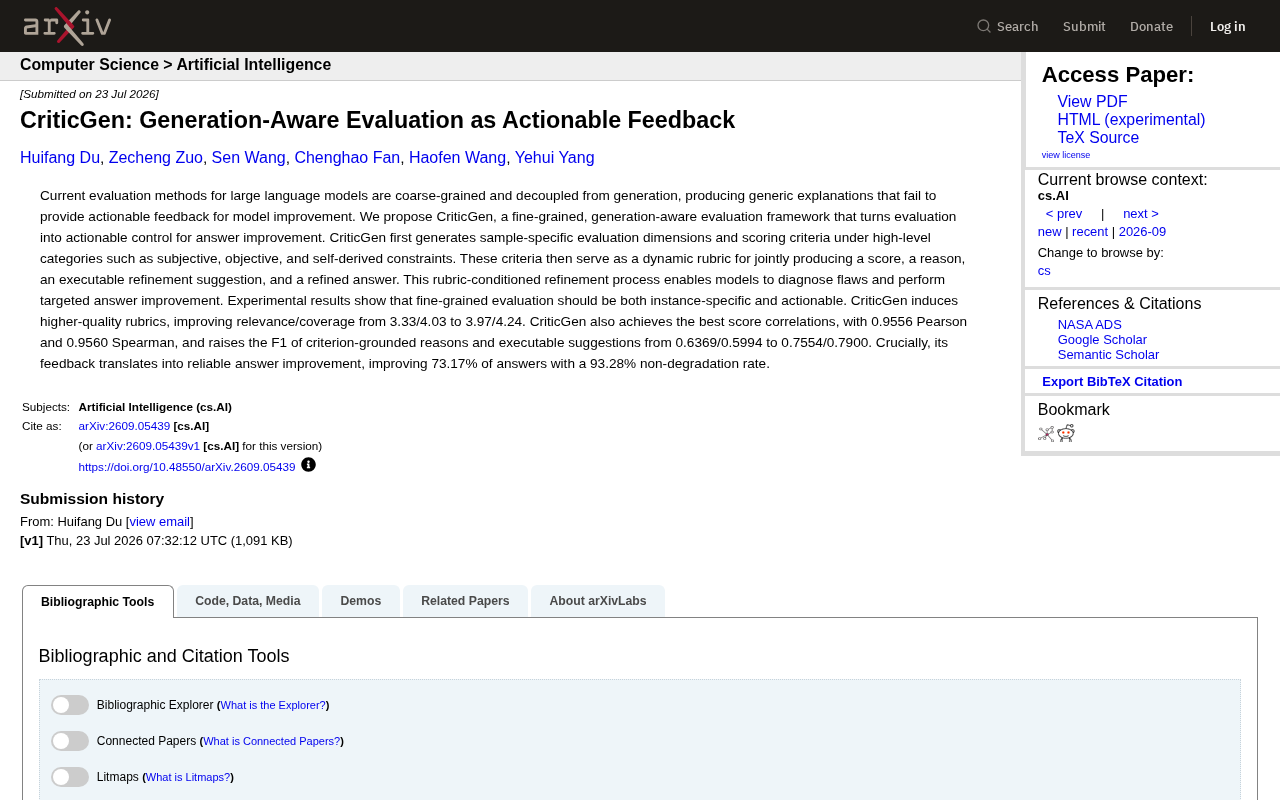
CriticGen: A New Framework That Transforms AI Evaluation into Actionable Improvement Feedback
CriticGen proposes a generation-aware evaluation framework that transforms AI assessment from passive scoring to an active optimization loop, achieving 73.17% answer improvement and 93.28% non-degradation rate.

Vercel AI SDK workflow-harness Update Analysis
Deep analysis of Vercel AI SDK workflow-harness 1.0.107 update: architecture design, engineering practices, and developer value for building reliable AI apps.
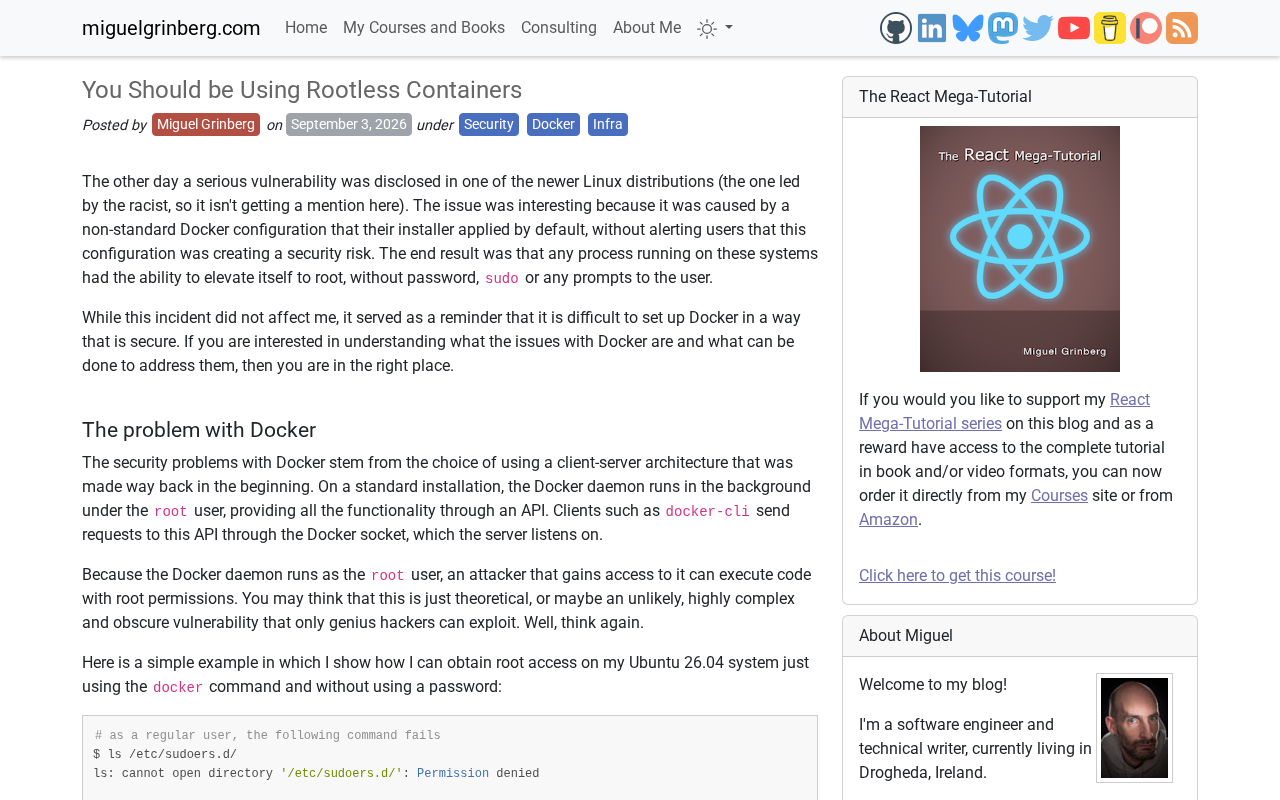
Rootless Containers Explained: Principles, Benefits, and Leading Implementation Approaches
A deep dive into rootless container principles and security benefits, comparing Podman, Docker Rootless mode, and Kubernetes integration with practical migration advice.