n8n Automation: Publish Content to YouTube, Facebook, and Instagram Automatically with a Single AI Agent Command

Creator Joey built a content pipeline using n8n and AI Agent that goes from a Google Sheets trigger to multi-platform auto-publishing.
The article introduces a multi-platform content automation solution built by a creator named Joey based on n8n and AI Agent. The entire system uses Google Sheets as the scheduling center—users add a record with a "run" command to trigger the workflow: AI models generate prompts, the Replicate platform handles image and video generation, Google Drive completes storage, and finally content is automatically distributed to YouTube, Facebook, and Instagram. The demonstration uses a "cat and brown dog" short video as an example, showing the complete process from trigger to generation to multi-platform publishing, and notes that Instagram takes longer due to its container creation mechanism. The solution supports daily scheduled unattended operation and can significantly reduce operational costs for small teams, but generation quality depends on paid model selection, automated copy cannot fully replace human review, and there are ongoing API call costs.
In social media operations, multi-platform content distribution has always been a time-consuming and labor-intensive task. A creator named Joey demonstrated an AI Agent automation solution based on n8n, where triggering a single command in Google Sheets completes the entire workflow from content generation to multi-platform publishing.
The Core Architecture of the Automation Workflow
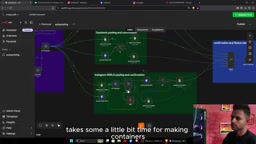
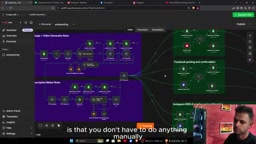
The hub of this system is a Google Sheets database that serves as the content scheduling center. Users simply add a row with a "run" command, and the n8n workflow starts automatically. The entire process involves chaining together multiple steps: AI models generate prompts, the Replicate platform generates images and videos, Google Drive handles file storage, and finally the content is distributed to YouTube, Facebook, and Instagram.
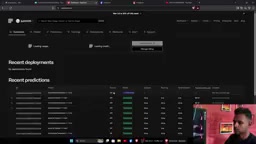
In the video, Joey demonstrated a short video generation process with a "cat and brown dog" theme. After triggering the command, the workflow immediately enters execution mode, with real-time feedback visible through a progress bar. The AI generation of images and videos is completed on the Replicate platform, with processing time taking approximately one to two minutes.
n8n is an open-source workflow automation tool, often described as a self-hosted version of Zapier or Make. It connects different applications, APIs, and services through visual node orchestration, supporting complex logic such as conditional branching, loops, and error handling. Compared to pure SaaS automation platforms, n8n can be deployed on your own server, keeping data local and making it easy to integrate custom code.
AI Agent here does not refer to a single conversational bot, but rather an execution entity driven by a large language model that can call external tools and make autonomous decisions toward a goal. In this solution, the Agent is responsible for breaking down a single "run" command into a series of actions such as generating prompts, calling image/video APIs, and generating platform-specific copy—essentially using the LLM as the orchestration brain of the workflow.
Replicate is a cloud platform that hosts various open-source and commercial AI models. Users pay per call or duration via API without needing to configure GPUs themselves. The paid models mentioned in the article typically refer to Runway, Stable Diffusion derivatives, or video generation models, whose generation quality, speed, and price are proportional.
Actual Performance of Content Generation and Publishing
After generation is complete, the video file is automatically uploaded to Google Drive, and the system returns an upload status confirmation. The Agent then generates adapted titles and descriptions for each platform—this is worth noting because different social platforms have different copy style and length requirements.
YouTube upload completes first, Facebook updates its status shortly after, while Instagram requires an additional container creation step, taking relatively longer.
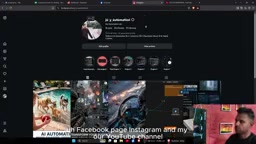
Finally, on the Instagram and YouTube channels, you can see that the Agent-generated content has been successfully published, with content containing descriptive terms like "golden hour" and "sunlight grass" appearing on the pages, along with tags automatically generated by the Agent.
Instagram's container creation mechanism is a two-step publishing process unique to its Graph API: the first step calls the interface to create a "media container," submitting parameters such as the image or video URL and copy; the second step calls the publishing interface to make the container publicly visible. Video content also requires waiting for the platform to complete transcoding, during which the container status must be polled until FINISHED before publishing. This extra step is precisely why Instagram takes longer, and it is also where many automation workflows tend to fail—if polling times out or the container status is abnormal, the entire publishing chain breaks down.
Platform-differentiated copy is necessary because each platform has different recommendation logic and user habits: YouTube titles prioritize search keywords, Instagram relies on hashtags and first-line hooks, while Facebook emphasizes readability and interaction prompts. Having the Agent generate separately is more aligned with platform tone than simply reusing the same text.
Scheduled Dispatch: True "Unattended" Operation
The greatest value of this solution lies in eliminating manual intervention. Joey emphasized that users can set the Agent to run automatically at specific times each day, with the system generating and publishing content to various social media platforms on schedule. For small teams or individual creators who need to maintain multi-platform activity but lack manpower, this model can significantly reduce operational costs.
However, it should be noted that the quality of images and videos depends heavily on the capabilities of the selected models. Joey uses paid models on the Replicate platform, and he explicitly stated in the video: "More capable models can help you achieve better content quality," meaning that generation results are directly related to model selection and parameter configuration.
The Applicable Boundaries of This Solution
From the demonstration, the entire process is quite complete, flowing seamlessly from trigger to multi-platform publishing. However, in practical use, several factors need to be considered: paid models on Replicate incur ongoing API call costs; automatically generated copy may not fully replace human review in terms of brand tone and accuracy; and Instagram's container creation mechanism means publishing delays may be longer than other platforms.
For teams looking to quickly build a multi-platform content pipeline, this n8n + AI Agent solution provides a reusable framework. At the end of the video, Joey mentioned that if you need to deploy this system in your own cloud account, you can contact him for support.
One-line Summary
Creator Joey built a content pipeline using n8n and AI Agent that goes from a Google Sheets trigger to multi-platform auto-publishing.
Paragraph Summary
The article introduces a multi-platform content automation solution built by a creator named Joey based on n8n and AI Agent. The entire system uses Google Sheets as the scheduling center—users add a record with a "run" command to trigger the workflow: AI models generate prompts, the Replicate platform handles image and video generation, Google Drive completes storage, and finally content is automatically distributed to YouTube, Facebook, and Instagram. The demonstration uses a "cat and brown dog" short video as an example, showing the complete process from trigger to generation to multi-platform publishing, and notes that Instagram takes longer due to its container creation mechanism. The solution supports daily scheduled unattended operation and can significantly reduce operational costs for small teams, but generation quality depends on paid model selection, automated copy cannot fully replace human review, and there are ongoing API call costs.
Related articles

Apple HomeView Hands-On Review: Is the $300 Smart Home Hub Worth It?
Apple HomeView hands-on: a $300 smart home hub with facial recognition for quick account switching, but no App Store or voice recognition. Is the wall-mounted version worth it? Should you buy the first generation?

Meta Muse Wonder Launch: What It Means for Meta's Return to the Frontier AI Race
Meta releases Muse Wonder and WonderFull, benchmarks reach the frontier, community feedback is polarized. An in-depth look at Meta's return to the frontier AI race, its personal agent strategy, and Zuckerberg's different path.

Apple Home Smart Home Lineup Leaked: LG and Schneider Team Up, UWB Door Lock on Board
Apple Home ecosystem gains new LG and Schneider devices: UWB smart lock with proximity unlock, 2.5K dual-camera doorbell, privacy indoor camera, and AirPods-like seamless pairing.