Ollama vs. OpenAI Decision Models: Real-World Local Inference Speed Test
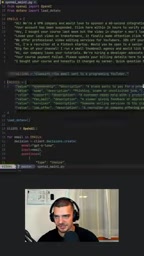
Real-world test shows local Ollama models classify emails in 1.1s, beating the cloud API's 2.5s.
The article compares timing for the same email classification task across OpenAI Decisions API, Ollama local model, and Jeff. Results: OpenAI API ~2.5s, Jeff ~2.9s, and Ollama local model just ~1.1s after first load—more than twice as fast as the cloud. The only cost of local inference is cold start loading the model into memory; afterward latency is stable and completely free. The tester used a Dell Pro Max with GB10 and judged a single GPU or even an ordinary PC could suffice. The author notes email classification is a decision-type task with short input and limited categories—exactly where local small models excel—while naturally protecting data privacy, and recommends localizing high-frequency lightweight tasks while leaving complex reasoning to the cloud.
Same Task, Three Approaches
How much does speed differ when the same email classification task is run through the OpenAI Decisions API, a local Ollama model, and Jeff? A YouTube creator put together this comparison using a real need from their own content management tool, and the results point to an increasingly clear trend: for specific tasks, local small models can now beat cloud APIs on response speed.
Same Task, Three Approaches
The test task itself is simple: given a few emails and an instruction, have the model determine whether each email is a sponsorship offer, spam promotion, fan mail, service inquiry, or job offer. This classification logic comes from the creator's own management tool, so the requirement is very specific—not a benchmark, but a function they actually use day to day.
The code structure for all three versions is nearly identical, differing only in the backend: one version calls the OpenAI Decisions API, one calls a local Ollama model, and one runs on Jeff. The instructions and candidate categories are exactly the same, ensuring a fair comparison.
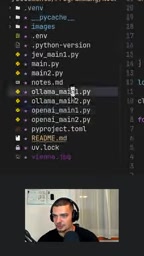
The "OpenAI Decisions API" mentioned in the article is not an official, publicly available general product name from OpenAI, but more likely refers to a class of API wrappers designed for structured decision tasks: the developer passes in an instruction and candidate options, and the model directly returns one of the discrete categories (similar to classification or routing) rather than freely generating text. The typical feature of such interfaces is that output is constrained to a limited label set, reducing post-processing parsing costs. Note that naming and implementation of "Decisions" varies considerably across platforms—some are based on function calling, others on JSON schema constrained decoding. Understanding this helps assess the fairness of the comparison: if all three parties use the same candidate categories and instruction format, the timing differences come mainly from the inference backend rather than prompt engineering.
Measured Timing: Local Inference Beats the Cloud
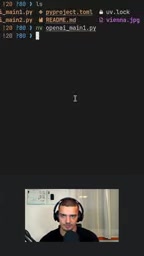
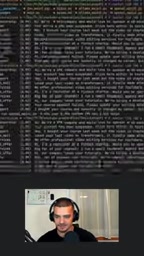
After timing with the time command, the gap between the three is quite intuitive:
- OpenAI Decisions API: about 2.5 seconds
- Jeff: about 2.9 seconds
- Ollama local model: slower on first run (needs to load the model into memory), about 1.1 seconds after loading completes
In other words, once the model is resident in memory, local Ollama responds more than twice as fast as the cloud API. For scenarios requiring continuous processing of multiple emails, this gap is amplified further—saving over a second per classification adds up to an order-of-magnitude difference in experience during batch processing.
First Load Is the Only Cost
The only weakness of local inference appears at cold start. On the first call, the model needs to be loaded from disk into memory, which noticeably slows the first response. But afterward, all requests hit the already-loaded model directly, keeping latency stable and low. This characteristic means local solutions are particularly suited to always-on service forms: once the service is running, marginal cost is nearly zero.
Cold start refers to the first inference when the model process has not yet loaded its weights, requiring several GB of model files to be read from disk into memory/VRAM, typically taking anywhere from a few seconds to tens of seconds depending on disk speed and model size. In contrast, warm start directly reuses already-loaded weights, dramatically reducing latency. Common engineering mitigations include: keeping the service running without exiting, using the keep_alive parameter to extend model residency time, warm-up requests, and proactively loading the model during service startup. For batch scenarios, multiple emails can also be merged into a single request to amortize per-call overhead. Understanding the difference between cold and warm starts is a key prerequisite for evaluating whether a local solution suits your business.
Completely Different Cost Structure
Another advantage of the Ollama approach is cost. The tester explicitly mentions that the Ollama model is free, runs on their own Dell Pro Max (equipped with GB10), and judges that a single GPU is sufficient to support this load—an ordinary PC can run it too. By comparison, the cloud API charges per call, and Jeff falls somewhere in between. For high-frequency, fixed-task classification scenarios, the cost advantage of local deployment accumulates over time.
Ollama is an open-source local large model runtime framework that provides a Docker-like command line and REST API, allowing one-click pulling and running of open-weight models such as Llama, Mistral, and Qwen. Its core value lies in encapsulating underlying details like model quantization, GPU/CPU scheduling, and VRAM management, so developers can start the service with just ollama run. The article's "loading the model into memory" corresponds exactly to Ollama's model residency mechanism: the first request triggers loading weights from disk into VRAM or memory, and subsequent requests reuse the same process. This is also the fundamental reason why local inference is slow on cold start and fast on warm start. Ollama listens on a local port by default, so data never leaves the machine, naturally providing privacy advantages.
What This Comparison Shows
Interestingly, it's the task type that matters. Email classification is a typical "decision model" scenario: short input, limited categories, discrete output—it doesn't demand much general reasoning capability from the model, but it is latency-sensitive. This type of task happens to be the home turf of local small models—parameter size can be kept very low, inference is fast, and there's no need to send email content to a third-party server at all, so data privacy is naturally protected.
This doesn't mean local models can fully replace cloud APIs. Tasks like complex reasoning, long context, and multimodal understanding still rely on stronger models. But this real-world test offers a practical selection principle: break tasks apart first—assign high-frequency, lightweight tasks like classification, extraction, and routing to local models, and leave complex tasks to the cloud. Both overall latency and cost can be significantly optimized.
The tester revealed that a dedicated Ollama decision model video is already in production, indicating that task-level deployment practices around local models are moving from experimentation to routine. For developers, the barrier to running decision-type models with Ollama is now low enough to verify casually—one script and one GPU, and you can achieve faster responses than a cloud API.
Decision-making tasks in an engineering context usually refer to tasks with a limited and discrete output space, such as classification, intent recognition, routing, and entity extraction. The fundamental difference between these tasks and open-ended generation is that the model doesn't need long-chain reasoning or creative expression—it only needs to make a judgment within a given label set. Therefore, small-parameter models (e.g., 1B–8B range) can often achieve acceptable accuracy, with latency and cost far lower than large models. This also explains why local small models can beat cloud APIs in such scenarios—network round-trips, queue scheduling, and the inference overhead of general large models become the main bottlenecks for short-input tasks in cloud calls. When selecting, base your choice on task complexity rather than model reputation.
One-line Summary
Real-world testing shows local Ollama models classify emails in just 1.1 seconds, beating the cloud API's 2.5 seconds.
Paragraph Summary
The article documents a timing comparison of the same email classification task across three backends: OpenAI Decisions API, local Ollama model, and Jeff. Results show OpenAI API at about 2.5 seconds, Jeff at about 2.9 seconds, and the local Ollama model at just about 1.1 seconds after first load—more than twice as fast as the cloud. The only cost of local inference is the cold start requiring the model to be loaded into memory; afterward, latency is stable and completely free. The tester ran it on a Dell Pro Max with GB10 and judged that a single GPU, or even an ordinary PC, could support it. The author notes that email classification is a decision-type task with short input and limited categories—exactly where local small models have a speed advantage—while naturally protecting data privacy, and offers the selection principle of localizing high-frequency lightweight tasks while leaving complex reasoning to the cloud.
Related articles

Gemini 4 Carbon Tops Global Rankings as AI Productivity and Open-Source Ecosystems Surge
Google DeepMind's Gemini 4 Carbon tops global benchmarks, built for complex agents and system security. ByteDance launches Doubao Work integrated with Feishu, Anthropic's AI autonomously breaches 5 system-level attack chains, and ModelBest and Fudan open-source on-device multimodal and image generation models.

Overseas Creator Breaks Down N8n AI Agent Business Playbook: From Tooling to Monetization
An overseas creator breaks down the N8n AI agent business playbook: comparing Zapier, Make, and N8n, detailing four monetizable automation categories—lead capture, WhatsApp follow-up, booking, and content pipelines—plus agency pricing and a sales playbook.

Empacer: The Voice-First AI Assistant for Small Business Owners That Topped Product Hunt
Empacer is a voice-first AI assistant for small business owners: three-question setup, voice requests turned into customer replies, social posts, and invoices—all owner-approved. It won #1 Product of the Day on Product Hunt with 231 upvotes and 47 comments.