Post-Quantum Cryptography in Python: A Deep Dive into the ML-KEM Key Encapsulation Mechanism

A comprehensive guide to implementing NIST's ML-KEM post-quantum key encapsulation in Python.
With NIST's official standardization of ML-KEM (formerly CRYSTALS-Kyber), post-quantum cryptography is moving from theory to practice. This article explains the ML-KEM key encapsulation mechanism, its lattice-based security foundations, Python ecosystem integration by Trail of Bits, hybrid deployment strategies combining classical and post-quantum algorithms, and critical implementation challenges including constant-time execution and memory safety.
Why Post-Quantum Cryptography Is Urgently Needed
As quantum computing continues to evolve, traditional public-key cryptography systems face an unprecedented threat. Mainstream algorithms like RSA and ECC rely on the computational complexity of integer factorization and discrete logarithm problems—problems that a sufficiently powerful quantum computer could solve in polynomial time using Shor's algorithm.
Shor's algorithm, proposed by mathematician Peter Shor in 1994, is the fundamental reason quantum computing poses an existential threat to modern cryptography. The algorithm leverages the Quantum Fourier Transform to solve integer factorization in polynomial time complexity O((log N)³), whereas the best classical algorithm—the General Number Field Sieve (GNFS)—requires sub-exponential time. This means a quantum computer with enough stable qubits could break a 2048-bit RSA key protecting internet communications in a matter of hours. Notably, Shor's algorithm also applies to the discrete logarithm problem, meaning elliptic curve cryptography (ECC) algorithms like ECDSA and ECDH are equally threatened.
Currently, organizations like IBM and Google have achieved processors with hundreds to thousands of qubits, but noise and error rates remain the primary obstacles on the path to a "Cryptographically Relevant Quantum Computer" (CRQC). A qubit is the fundamental unit of quantum information—unlike classical bits that can only be 0 or 1, qubits exploit superposition to exist in probabilistic combinations of 0 and 1 simultaneously, enabling parallel computation through quantum entanglement. However, the core challenge in achieving CRQC lies in quantum error correction: real-world qubits are extremely susceptible to environmental noise causing decoherence, requiring hundreds or even thousands of physical qubits to error-correct and maintain a single logical qubit. Breaking 2048-bit RSA requires approximately 4,000 logical qubits, corresponding to millions of physical qubits—still several orders of magnitude beyond current state-of-the-art systems. But this does not mean the threat is distant.
The Engineering Challenge of Quantum Error Correction: Quantum error correction is the most critical engineering barrier on the path to CRQC. The coherence time of physical qubits is extremely short—typically on the order of microseconds to milliseconds—while a complete cryptographic attack computation requires hours or even days of stable operation. To address this, researchers have developed topological quantum error correction schemes such as Surface Codes and Color Codes, encoding multiple physical qubits into a single logical qubit to combat errors. Surface Codes, with their relatively high fault-tolerance threshold (approximately 1% physical error rate) and regular 2D lattice topology, have become the most industrially favored error correction scheme—Google and IBM's mainstream quantum hardware roadmaps both center on Surface Codes. Google's 2023 experimental results demonstrated that scaling logical qubits from distance-3 to distance-5 did reduce logical error rates—an important milestone for fault-tolerant quantum computing—but practical utility still requires improvements of several orders of magnitude. Notably, Microsoft has bet on the topological qubit route, attempting to fundamentally reduce error correction overhead by constructing intrinsically noise-resistant Majorana fermions, though the engineering feasibility of this approach remains debated.
While no quantum computer capable of actually breaking existing encryption systems exists yet, the industry's widespread concern centers on the "Harvest Now, Decrypt Later" attack model: adversaries can intercept and store large volumes of encrypted traffic now, then decrypt it once quantum computing matures. This is not a purely hypothetical scenario—the NSA and intelligence agencies of multiple nations have long possessed the capability to intercept internet encrypted traffic at scale, as evidenced by the PRISM program revealed by Snowden. For data requiring long-term confidentiality—such as medical records, state secrets, and financial archives—this threat is particularly real. For this reason, the NSA's 2022 "Commercial National Security Algorithm Suite 2.0" (CNSA 2.0) explicitly requires federal systems to complete migration to post-quantum algorithms by 2030.
It is against this backdrop that security research firm Trail of Bits has driven the effort to bring Post-Quantum Cryptography (PQC) into the Python ecosystem, enabling developers to more conveniently adopt quantum-resistant encryption schemes.
NIST Standardization and ML-KEM
NIST's (National Institute of Standards and Technology) post-quantum cryptography standardization project began in 2016 and, after more than six years of open selection rounds and rigorous analysis, officially published three Federal Information Processing Standards (FIPS) in August 2024.
The design philosophy behind this standardization process itself deserves deeper understanding. The 2016 call for proposals received 82 candidate submissions covering five major mathematical directions: lattice-based, code-based, hash-based, multivariate-based, and isogeny-based cryptography. NIST intentionally maintained algorithmic diversity, avoiding placing all security bets on a single mathematical assumption—a strategy thoroughly vindicated when SIKE was broken. The three types of algorithms ultimately standardized are based on lattices (ML-KEM, ML-DSA) and hash functions (SLH-DSA), the latter requiring no dependence on any structured mathematical hardness assumption and relying solely on the one-wayness of hash functions—the most conservative and robust choice, albeit at the cost of larger signature sizes (SLH-DSA signatures can reach tens of thousands of bytes, far exceeding ML-DSA's approximately 3.3KB). It's worth noting that NIST additionally selected code-based HQC as a backup scheme to further diversify away from lattice cryptography dependence, demonstrating their far-sighted approach to algorithmic diversity.
During this process, a profoundly cautionary event occurred: SIKE (Supersingular Isogeny Key Encapsulation), which had advanced to the finals, had its security based on the supersingular elliptic curve isogeny problem. In July 2022, Belgian researchers Wouter Castryck and Thomas Decru published a paper using the "glue-and-split" technique to completely break SIKE parameter sets on an ordinary laptop in approximately one hour—one of the most dramatic public breaks in cryptographic history. This event serves as a stark warning: even algorithms that pass years of review may harbor fundamental flaws, and maintaining algorithmic diversity across multiple mathematical foundations (lattice, hash, code) is key to preventing single points of failure. It also demonstrates the critical importance of independent cryptanalysis and parallel multi-algorithm standardization strategies.
Following NIST's official release of the first batch of post-quantum cryptography standards, the most closely watched is ML-KEM (Module-Lattice-Based Key-Encapsulation Mechanism, FIPS 203)—formerly known as the CRYSTALS-Kyber algorithm. The standard suite also includes ML-DSA (FIPS 204, derived from CRYSTALS-Dilithium) and SLH-DSA (FIPS 205, derived from SPHINCS+) for digital signatures.
What Is a Key Encapsulation Mechanism (KEM)
ML-KEM is a Key Encapsulation Mechanism, slightly different from traditional public-key encryption. Its core purpose is to securely establish a shared key between communicating parties, rather than directly encrypting arbitrary messages. The typical workflow is:
- The receiver generates a public-private key pair and publishes the public key;
- The sender uses the public key to "encapsulate" a shared key and generates the corresponding ciphertext;
- The receiver uses the private key to "decapsulate" the ciphertext, recovering the same shared key.
This shared key can then be used for symmetric encryption (e.g., AES) to achieve efficient data protection. The KEM design paradigm is actually a re-abstraction of the traditional "public-key encryption" concept: by decoupling "establishing a shared key" from "encrypting actual data," the KEM + symmetric encryption combination (the KEM-DEM hybrid encryption framework) offers better performance and clearer security properties in practice. Compared to the RSA-OAEP mode of directly encrypting messages with a public key, this hybrid approach naturally supports Forward Secrecy—generating ephemeral key pairs for each session means that even if the long-term private key is compromised, historical communication records cannot be decrypted.
ML-KEM defines three parameter sets for different security requirements: ML-KEM-512 (NIST Security Level 1, corresponding to AES-128 security strength), ML-KEM-768 (Security Level 3, corresponding to AES-192), and ML-KEM-1024 (Security Level 5, corresponding to AES-256). The choice of parameter set requires balancing security, performance, and bandwidth: ML-KEM-768 is currently the most widely deployed parameter set (Google Chrome's X25519Kyber768 is based on it), with its 1184-byte public key and 1088-byte ciphertext achieving a reasonable balance between security and practicality. For high-security scenarios (such as long-term confidential government communications), ML-KEM-1024 provides additional security margin, but the public key increases to 1568 bytes and ciphertext to 1568 bytes.
ML-KEM's security is based on the Module Learning With Errors (Module-LWE) problem. A lattice is a discrete set of points in high-dimensional Euclidean space formed by integer linear combinations of a set of basis vectors, with core hard problems including the Shortest Vector Problem (SVP) and Closest Vector Problem (CVP). The LWE problem was introduced by Oded Regev in 2005, with its security proven equivalent to these lattice hard problems through rigorous worst-case to average-case reductions—given a set of linear equations with small random errors, recovering the original secret vector is computationally extremely difficult. This difficulty is believed to hold under both classical and quantum computational models, providing a solid theoretical foundation for its security. The "Module" structure introduces a matrix structure over polynomial rings, significantly improving computational efficiency while maintaining security—compared to RSA, ML-KEM has smaller key and ciphertext sizes at comparable security levels with faster operations.
The Uniqueness of Lattice Cryptography Security Reductions: The core security promise of lattice cryptography comes from a key property: the Shortest Vector Problem (SVP) and Closest Vector Problem (CVP) are proven to be NP-Hard, and currently known quantum algorithms (such as quantum annealing, Grover's algorithm) provide extremely limited speedup for lattice problems—the best quantum algorithms offer only polynomial speedup over classical algorithms, not the exponential speedup Shor's algorithm provides for factorization. Regev's foundational 2005 work established a quantum reduction between the LWE problem and worst-case lattice problems, meaning that breaking average-case LWE instances is computationally equivalent to solving the hardest instances among all lattices—this "worst-case to average-case" reduction is extremely rare in cryptography, granting lattice cryptographic schemes an exceptionally solid theoretical security guarantee. It's worth adding that ML-KEM further introduces Module structure (Module-LWE) and polynomial ring structure (Ring-LWE) on top of LWE. This layered design maintains theoretical security reductions while leveraging the Number Theoretic Transform (NTT) to dramatically accelerate polynomial multiplication—this is the key engineering reason ML-KEM outperforms earlier lattice cryptographic schemes (such as NTRU) in performance.
Bringing Post-Quantum Cryptography to the Python Ecosystem
The Python cryptography ecosystem has evolved through several important phases: the early PyCrypto library was gradually phased out due to stalled maintenance and security vulnerabilities, with its fork PyCryptodome filling part of the gap; the cryptography library, co-founded by several cryptography experts in 2013, became the cornerstone of modern Python cryptography. Maintained by the PyCA (Python Cryptographic Authority) organization with OpenSSL/BoringSSL as the underlying implementation, it provides a dual-layer API design philosophy of high-level "Recipes" and low-level "Hazmat"—the former preventing misuse, the latter providing expert-level flexibility.
However, support for post-quantum algorithms in these mainstream libraries has been relatively slow—developers wanting to experiment with PQC often needed to wrap C libraries themselves or use experimental bindings, creating high barriers and error-prone situations. Trail of Bits' work aims to fill this gap, enabling Python developers to use NIST-standardized algorithms in accordance with security best practices. This goes beyond simply exposing a set of APIs—it encompasses security audits of underlying implementations, memory safety handling, and protection against side-channel attacks.
Core Challenges of Secure Implementation
Cryptographic deployment is far from "call it and it's secure." Side-Channel Attacks infer keys by observing physical information leakage from cryptographic systems—including execution time (timing attacks), power consumption variations (power analysis), and even electromagnetic radiation—without needing to directly break the mathematical hard problem. The 2020 Minerva attack and multiple studies targeting Kyber implementations demonstrate that even mathematically secure algorithms can be broken through side-channel means if improperly implemented. Deploying ML-KEM in production requires focused attention on several aspects:
- Constant-time execution: Preventing information leakage through execution time variations correlated with key material, defending against timing side-channel attacks. This is particularly difficult in Python, as interpreter optimizations and garbage collection mechanisms can introduce hard-to-control timing differences;
- High-quality random number sources: Key generation and encapsulation processes critically depend on randomness; any deficiency could lead to catastrophic consequences;
- Memory safety: Python's memory management characteristics make secure erasure of sensitive data (such as private keys) complex, with the risk of data lingering in memory indefinitely;
- Misuse-resistant API design: Excellent cryptographic libraries should make it difficult for developers to "use them wrong" through thoughtful interface design.
The Deep Dilemma of Constant-Time Implementation in Python: Implementing constant-time cryptography in Python is a deep engineering challenge. Unlike C/C++, the CPython interpreter's bytecode execution exhibits unpredictable timing variations: reference counting, garbage collection (GC), just-in-time compilation (JIT, as in PyPy), and CPU branch prediction optimizations can all introduce data-dependent timing differences in cryptographically sensitive code paths. This is why industrial-grade cryptographic libraries (such as OpenSSL, BoringSSL, libsodium) prefer to implement security-critical paths in C with strict compiler flags (such as
-fno-tree-vectorize, locally disabling optimization with-O0), then provide Python bindings through CFFI or ctypes. When Trail of Bits brought ML-KEM into the Python ecosystem, one of its core engineering contributions was wrapping the underlying constant-time C implementation into safely usable Python interfaces, while verifying the underlying implementation through static analysis and formal verification tools (such as CBMC, Valgrind)—Python-level security primarily manifests in API design to prevent misuse, rather than relying on the Python interpreter to achieve cryptographically meaningful constant-time execution. Notably, multiple papers have been published on side-channel research targeting ML-KEM's internal Barrett reduction and message compression operations, further highlighting the necessity of maintaining a rigorously verified C core implementation beneath the Python binding layer.
As an organization renowned for security auditing, Trail of Bits' professional expertise in these details is the core value driving their PQC efforts in Python.
Hybrid Mode: The Most Prudent Transition Strategy
When deploying post-quantum cryptography, the industry widely adopts Hybrid Mode—simultaneously combining traditional algorithms (such as ECDH) with post-quantum algorithms (such as ML-KEM) to establish shared keys.
The logic behind this strategy: while ML-KEM has undergone rigorous NIST review, its relatively short development history means its theoretical security still needs time to be fully validated (SIKE's demise serves as a cautionary tale); traditional algorithms, while facing quantum threats, have been battle-tested for decades in the classical computing domain. Combining both means an attacker must simultaneously break both mechanisms to succeed, providing practical "double insurance" during the transition period.
In technical implementation, hybrid mode typically uses both algorithms to each generate a shared secret independently, then combines them into the final session key through a Key Derivation Function (KDF). The standard tool HKDF (HMAC-based Key Derivation Function, RFC 5869) is central to this process, consisting of two phases—Extract and Expand: the Extract phase concatenates and compresses the shared secrets from both algorithms into a pseudorandom key, and the Expand phase stretches it to the required length. This design satisfies the "composable security" principle in cryptography: as long as any one component remains unbroken, the overall system stays secure.
Hybrid mode implementation also involves engineering details such as key material concatenation order and domain separation—improper handling in different implementations could introduce security vulnerabilities. IETF RFC 9180 (HPKE, Hybrid Public Key Encryption) provides a modern framework for this, orthogonally combining KEM, KDF, and AEAD components with explicit domain separation through algorithm identifiers. Trail of Bits follows similar design principles in their Python implementation, ensuring key material from different algorithm combinations doesn't cross domains—a detail crucial for preventing "protocol downgrade attacks" and "cross-protocol attacks."
The Cryptographic Design Principles of HKDF: HKDF was designed by Hugo Krawczyk in 2010, with deep cryptographic considerations behind its two-phase design. The Extract phase aims to transform input material that may have distributional bias or partial predictability into a uniformly distributed pseudorandom key, implemented using HMAC with a fixed salt value. The Expand phase, based on the security of a pseudorandom function (PRF), safely stretches the key material to any required length. In hybrid PQC scenarios, the key security property of feeding both ECDH and ML-KEM shared keys into HKDF is: HKDF's output security depends only on the stronger of the two inputs—as long as either ECDH or ML-KEM remains unbroken, the final derived session key cannot be compromised. This is the engineering realization of the "composable security" principle. It must be particularly emphasized that when concatenating two shared keys in a hybrid KEM, the concatenation order and context binding information (such as algorithm identifiers, protocol versions) must be explicitly fixed—if an attacker can influence these parameters, they might construct a "key confusion attack." The IETF draft draft-ounsworth-cfrg-kem-combiners provides detailed security analysis and recommended practices for this.
Google Chrome and Cloudflare have both deployed hybrid key exchange schemes like X25519Kyber768 in production environments. The primary cost of hybrid mode is increased handshake data volume—ML-KEM-768's public key is 1184 bytes and ciphertext is 1088 bytes, larger than X25519's 32 bytes, but generally acceptable under modern network conditions.
Protocol Evolution of TLS Post-Quantum Extensions: TLS 1.3 (RFC 8446, published in 2018) significantly simplified the handshake process and deprecated numerous weak algorithms compared to its predecessors, laying a good foundation for post-quantum extensions. The IETF is advancing the draft-ietf-tls-hybrid-design draft to define a standard framework for hybrid key exchange in TLS. Google Chrome enabled X25519Kyber768 hybrid key exchange by default starting from version 117 (September 2023), and upgraded to X25519MLKEM768 (based on the official FIPS 203 standard) in Chrome 131 (late 2024). Notably, ML-KEM's larger key and ciphertext sizes cause the ClientHello message to exceed a single TCP packet's MTU (typically around 1400 bytes), potentially causing additional network round trips—Cloudflare's real-world measurements show this impact can add approximately 10-20ms of additional latency on high-latency networks (such as satellite links), while being virtually negligible in low-latency data center environments. The QUIC protocol, with its 0-RTT design and multiplexing features, faces different engineering trade-offs when integrating post-quantum extensions, and related standardization work is still ongoing.
This pragmatic strategy has been widely adopted by TLS 1.3 post-quantum extensions and major technology companies, and Python ecosystem implementations follow this same approach.
Practical Implications for Python Developers
The landing of post-quantum cryptography in the Python ecosystem brings several tangible impacts:
Forward-Looking Compliance Preparation: As government agencies and regulatory environments gradually require critical systems to migrate to quantum-resistant encryption (such as the 2030 migration deadline in the US CNSA 2.0), introducing PQC support early helps teams calmly address future compliance requirements.
Significantly Lower Adoption Barriers: Previously, developers needed deep mastery of low-level cryptographic details to securely deploy PQC. Now, through audited high-level libraries, they can focus more on business logic.
Advancing Industry Ecosystem Maturity: Python holds significant weight in data science, web backends, and automation. Its native PQC support will significantly accelerate the entire industry's migration toward post-quantum security. It's worth noting that historical experience with cryptographic migrations shows that ecosystem toolchain readiness is often the key bottleneck for migration speed—the lengthy progression of SSH protocol from MD5 to SHA-1 to SHA-2, and the push to deprecate TLS 1.0/1.1, both confirm this pattern. Early PQC support in the Python ecosystem can help avoid a future scenario of "forced rapid migration under high pressure."
Conclusion
Post-quantum cryptography is no longer a distant academic topic—it's a real engineering concern gradually entering production environments. Trail of Bits' efforts to bring ML-KEM and other NIST-standardized algorithms into the Python ecosystem mark an important step from specification to usability for quantum-resistant security.
For teams concerned with long-term data security, now is the ideal time to learn about, evaluate, and experiment with post-quantum cryptographic schemes. The actual threat from quantum computing may not have arrived yet, but cryptographic system migration is a lengthy process—as proven by past migrations from MD5 to SHA-2 and from TLS 1.0 to TLS 1.3, the earlier you act, the more gracefully you can meet future challenges.
Key Takeaways
Related articles
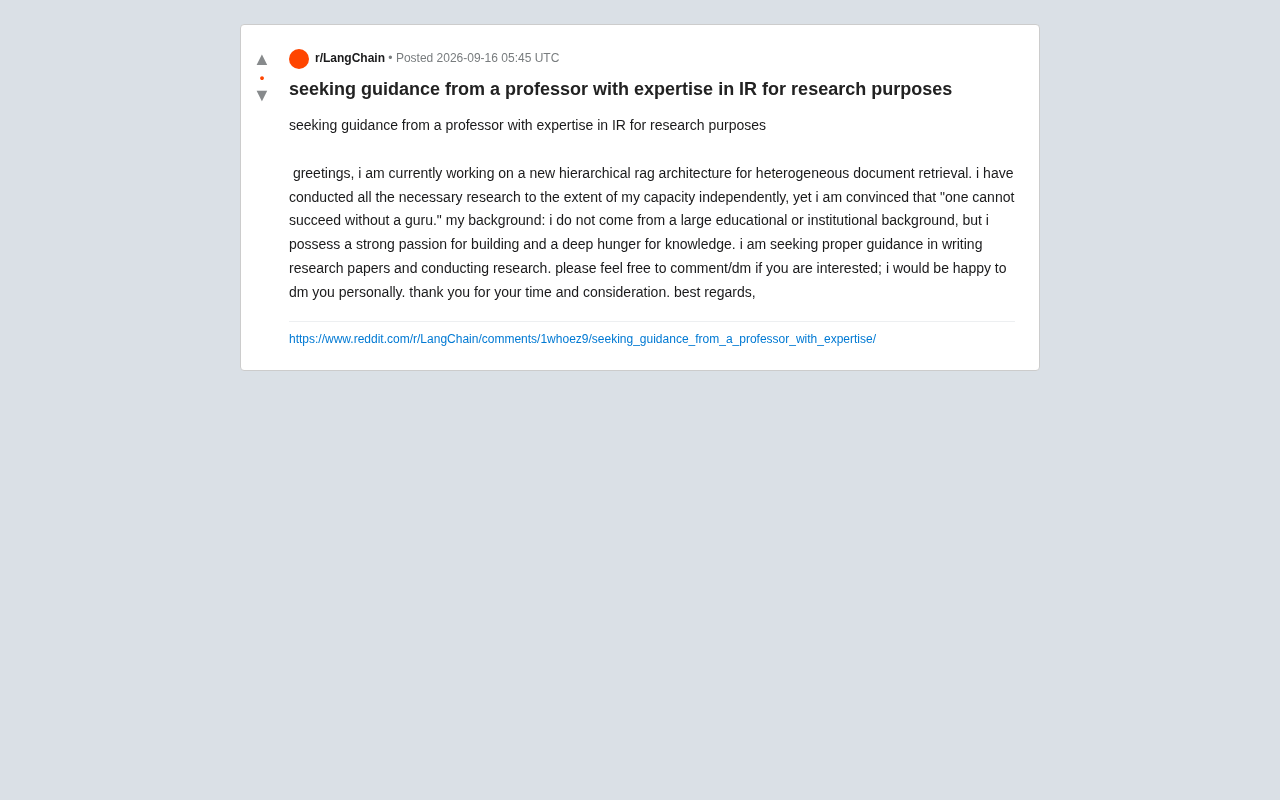
Hierarchical RAG Architecture Research: How Independent Developers Can Break Into Academic Research
An indie developer on Reddit seeks IR professor guidance for hierarchical RAG research. This article explores the technical background and practical advice for independent AI researchers facing academic barriers.

Blind Entrepreneur Uses Claude to Build Accessible Product, Sells It for $1,700
A blind entrepreneur used Claude to build an accessible tool for a blind client and sold it for $1,700 — revealing why domain knowledge, not just AI, makes products truly usable.
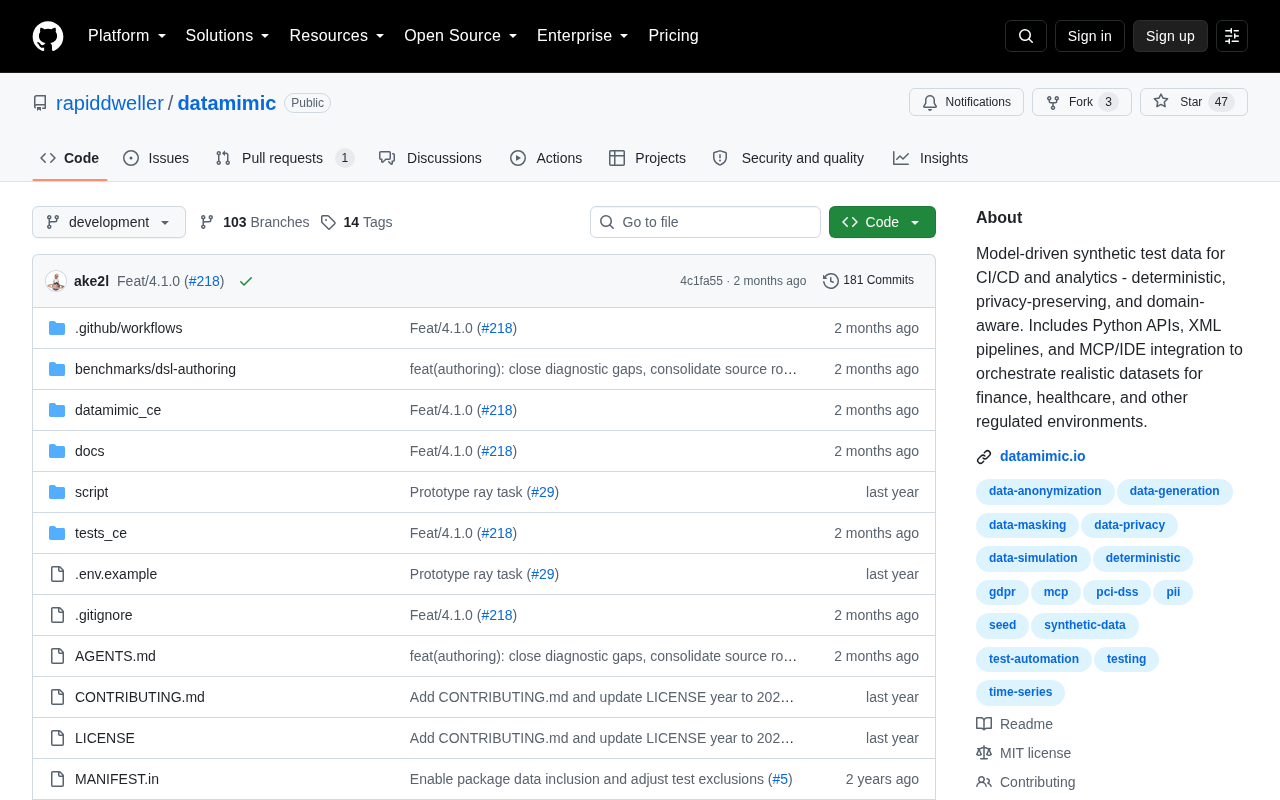
Datamimic: Giving AI Coding Assistants a Controlled Test Data World
Datamimic is an open-source tool arguing against letting AI coding agents fabricate test data. This article examines the reliability risks of AI-generated test data and the value of controlled test data for development quality.