#key encapsulation mechanism
215 related articles

·6 min
Post-Quantum Cryptography in Python: A Deep Dive into the ML-KEM Key Encapsulation Mechanism
NIST has officially standardized the ML-KEM (CRYSTALS-Kyber) post-quantum algorithm. This article covers ML-KEM principles, Python ecosystem implementation, hybrid deployment strategies, and critical challenges like constant-time execution and memory safety.
Read more →

·2 min
ComfyUI Subgraphs Update Goes Wrong: Broken Image Upload and Sampler Preview Sparks Community Outrage
ComfyUI's Subgraphs update breaks image upload and sampler preview, paralyzing user workflows. Analysis of the community backlash and lessons for open-source AI tools.
Read more →

·3 min
Building an AI Agent from Scratch: A Full Development Process Retrospective and Pitfall Guide
A complete guide to building AI Agents from scratch based on real developer experiences: task selection, tool comparison (no-code vs frameworks vs hand-written), stability challenges, and evaluation criteria.
Read more →

·3 min
Cloud GPU Platform Selection: A Practical Guide from HuggingFace to Cloud Reproduction
In-depth analysis of five key dimensions for cloud GPU platform selection, covering RunPod, Lambda, Paperspace, Vast.ai, and more to solve environment setup challenges for open-source model reproduction.
Read more →

·2 min
LangChain or LangGraph? Choosing the Right Framework for Production-Grade AI Applications
In-depth analysis of core differences between LangChain and LangGraph, exploring why more teams are migrating to LangGraph for production AI apps, with framework selection guidance.
Read more →

·2 min
LangChain or LangGraph? Framework Choices for Production-Grade AI Applications
In-depth analysis of LangChain vs LangGraph differences, why teams are migrating to LangGraph for production AI apps, and framework selection guidance based on project complexity.
Read more →

·3 min
DropDesk: Build a Branded Two-Sided Marketplace Booking Platform with No Code
DropDesk is a white-label no-code two-sided marketplace builder with built-in search, booking, payments, and payouts, helping non-technical teams quickly launch branded booking platforms.
Read more →

·3 min
DropDesk: Build a Branded Two-Sided Marketplace Booking Platform with No Code
DropDesk is a white-label no-code marketplace builder with built-in search, booking, payments, and payouts, enabling non-technical teams to launch branded Airbnb-like booking platforms.
Read more →

·2 min
Webhound: An Agent Engine That Controls AI Research Depth with Dollar Budgets
Webhound is a research engine for AI agents that controls research depth via dollar budgets, delivering cited traceable reports with MCP protocol and API integration.
Read more →

·2 min
Webhound: An Agent Engine That Controls AI Research Depth with Dollar Budgets
Webhound is a research engine for AI agents that controls research depth via dollar budgets, outputting cited traceable reports with MCP protocol and API integration.
Read more →

·3 min
Interpreting Anthropic's Cryptanalysis Research: A Litmus Test for AI Reasoning Capabilities
Deep analysis of Anthropic's cryptanalysis research, examining LLM capabilities in code-breaking tasks, dual implications for AI safety, and methodological value as a reasoning ability benchmark.
Read more →

·3 min
Verification Browser for AI Agents: How 13ms Ultra-Fast Validation Solves the Trust Problem in Automation
Deep dive into the verification browser for AI agents: how 13ms verification windows and one-call checks solve hallucination problems in browser automation, enabling the leap from capability to trustworthiness.
Read more →

·2 min
Claude Mythos Cryptographic Algorithm Cracking Incident: The Reality and Boundaries of AI Cryptanalysis
Anthropic's Claude Mythos Preview model reportedly discovered improved cryptographic attack methods. This article analyzes the realistic boundaries of AI cryptanalysis capabilities and implications.
Read more →

·2 min
Claude Mythos Codebreaking Incident Explained: The Reality and Limits of AI Cryptanalysis
Anthropic's Claude Mythos Preview model reportedly discovered improved cryptographic attack methods. This article analyzes the real capability boundaries of AI cryptanalysis and its implications.
Read more →

·3 min
Anthropic Breaks HAWK-256: A Security Wake-Up Call for Post-Quantum Signature Schemes
Anthropic publishes a practical key-recovery attack on HAWK-256, exposing vulnerabilities in post-quantum signature schemes and implications for PQC standardization.
Read more →

·4 min
LangChain Guardrails Explained: Building Safe and Controllable AI Agents
A detailed guide to LangChain Guardrails covering layered ecosystem architecture, middleware implementation, deterministic and model-driven protection for building production-grade secure AI Agents.
Read more →

·3 min
Spring AI Explained: Unified API, RAG, and Enterprise AI Development Guide
Deep dive into Spring AI framework's core features including provider-agnostic unified API abstraction, RAG retrieval-augmented generation, and structured output to help Java developers build enterprise AI apps.
Read more →

·3 min
Spring AI Explained: Unified API, RAG, and Enterprise AI Development Practical Guide
Deep dive into Spring AI framework's core features including provider-agnostic unified API abstraction, RAG retrieval-augmented generation, and structured output to help Java developers build enterprise AI apps.
Read more →
·3 min
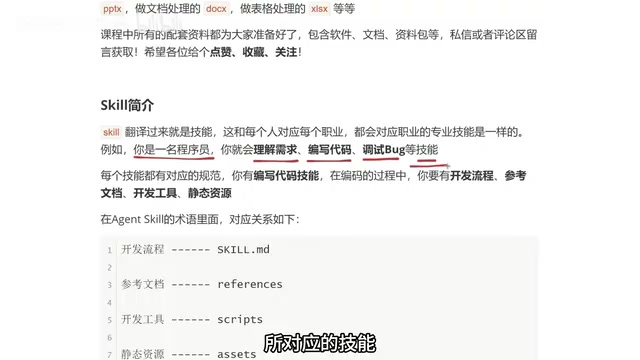
What Are Agent Skills? A Detailed Guide to AI Agent Skill System Architecture and Principles
A deep dive into AI Agent Skills: understand the core concepts and technical implementation through the four key elements — SKILL.md, references, scripts, and assets — and learn how Skills differ from prompts.
Read more →

·3 min
What Are Agent Skills? A Complete Guide to AI Agent Skill System Architecture and Principles
A deep dive into AI Agent Skills: their core concepts, technical implementation, the four key elements (SKILL.md, references, scripts, assets), and how Skills differ from prompts.
Read more →