PostgreSQL 19 Officially Lands on Lakebase

PostgreSQL 19 officially GA and simultaneously launched on Databricks' Lakebase managed service.
PostgreSQL 19 is officially GA today and completed Lakebase adaptation and rollout the same day, achieving "available on release." Lakebase is Databricks' managed PostgreSQL service for data and AI workloads. The article notes that managed databases typically suffer from version lag, and Lakebase's quick follow-through shows a mature internal adaptation process, allowing developers to assess upgrade impacts directly. However, specific new features aren't disclosed, so validate ORM/driver compatibility, extension availability, and execution plan changes before upgrading.
PostgreSQL 19 is now officially GA (generally available) and has already gone live on Lakebase. The news comes from the official Databricks blog, and for teams using Lakebase's managed PostgreSQL, it means the core features of the new version can immediately be validated in production environments.
Release and Platform Sync
According to the official blog, PostgreSQL 19 completed Lakebase adaptation and went live on the same day GA was announced—a "available on release" sync cadence. The original post calls it a "new major" version, but the source material does not detail which specific features were added. For users relying on managed services, this zero-delay version follow-through means they no longer have to wait weeks or even months for cloud providers' adaptation windows.
Lakebase is Databricks' managed PostgreSQL service, positioned as a database platform for data and AI workloads. Bringing PostgreSQL 19 quickly into its product line shows that Lakebase maintains a relatively tight follow-up strategy on version iterations.
GA (General Availability) is the formal availability stage in the software release process. Before this, versions typically go through Alpha (internal testing), Beta (public testing), RC (Release Candidate), and other stages. Entering GA means the version is considered feature-complete and thoroughly tested, with full official technical support and long-term maintenance, and is ready for production use. This contrasts with Preview, Beta, and other stages where incompatible changes may still occur. For relational databases like PostgreSQL, a major version's GA usually comes with feature freeze and subsequent patch updates in minor versions.
Managed PostgreSQL services refer to fully managed databases offered by cloud providers or data platforms, where users don't need to install, configure, patch, or back up themselves—the platform handles high availability, monitoring, scaling, and other operational tasks. Common products include Amazon RDS for PostgreSQL, Google Cloud SQL, Azure Database for PostgreSQL, and others. Lakebase falls into this category, with a positioning more oriented toward data and AI workloads. Managed services typically go through an adaptation period after a major version's GA before upgrades are opened, which is why this article emphasizes "available on release day."
Why Platform Sync Matters
Version lag in managed database services has long been a real pain point for users. New versions often bring query optimization, extension capabilities, and operational improvements, but cloud platforms need to complete compatibility testing, backup and restore validation, extension plugin adaptation, and a series of other work—causing users to remain on old versions for extended periods.
Lakebase completing the rollout on GA day at least shows it has a relatively mature internal version adaptation process. For developers, this means they can directly experience PostgreSQL 19's behavioral differences on Lakebase and assess the impact of upgrading on existing applications, without first building their own instances for preliminary research.
Practical Usage Recommendations
If you're using Lakebase-managed PostgreSQL, it's recommended to first use the new version in a test environment, focusing on validating three things: compatibility of existing ORMs and drivers with the new version's protocol, availability of dependent extension plugins, and whether execution plans for critical queries have changed. PostgreSQL major versions typically include optimizer adjustments, and execution plan changes can sometimes bring unexpected performance impacts.
For teams currently evaluating options, Lakebase's quick follow-through on PostgreSQL 19 is a positive signal, but a new version doesn't mean it's suitable for direct production use. It's recommended to make a comprehensive judgment based on your own stability requirements, as well as Lakebase's support lifecycle and upgrade path documentation for this version.
Information Boundaries and Follow-up
It should be noted that current public information only confirms the fact that "PostgreSQL 19 is GA and has gone live on Lakebase." The specific feature list, Lakebase-side compatibility notes, and official upgrade migration guidance all require consulting the complete release notes and Lakebase documentation. It's recommended to follow Databricks' official channels for subsequent detailed technical interpretations.
One-line Summary
PostgreSQL 19 is officially GA and has simultaneously gone live on Databricks' Lakebase managed service.
Paragraph Summary
PostgreSQL 19 is officially GA today and completed Lakebase adaptation and rollout the same day, achieving "available on release." Lakebase is Databricks' managed PostgreSQL service, positioned for data and AI workloads. The article notes that managed databases typically suffer from version lag, and Lakebase's quick follow-through indicates a mature internal version adaptation process, allowing developers to assess upgrade impacts directly in the managed environment. However, official materials don't disclose specific new features, so it's recommended to focus on validating ORM and driver compatibility, extension plugin availability, and execution plan changes before upgrading, and to make comprehensive judgments based on stability requirements and support lifecycle.
Related articles
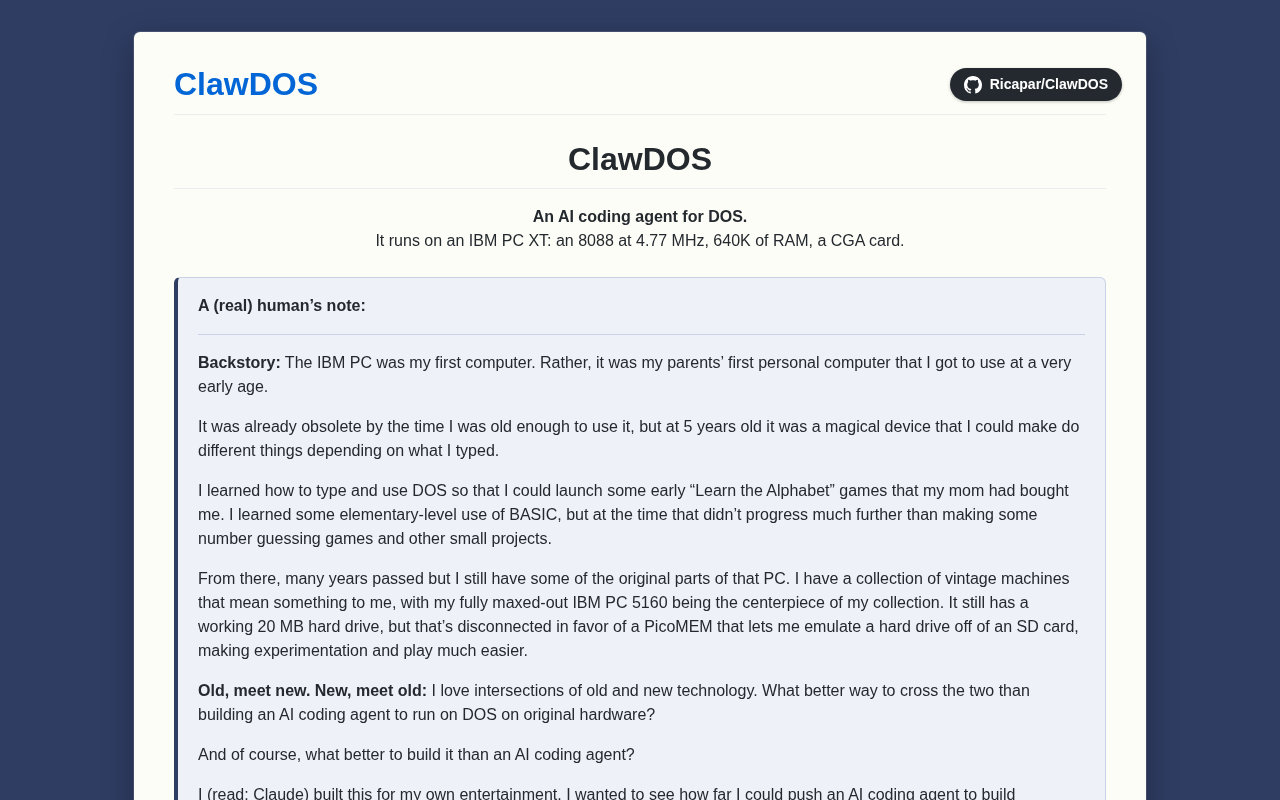
ClawDOS: Bringing AI Coding Capabilities to DOS
ClawDOS is an AI coding agent project for DOS, exploring the possibility of bringing AI coding assistance into resource-constrained retro computing environments. This article analyzes its positioning, use cases, and community response.

Baseten Releases Bison-1 and Groundhog-1, Topping the Decision Model Leaderboard
Baseten releases open-weight decision models bison-1 and groundhog-1 built on Gemma 4; bison-1 scores 76 on the AA Decision Index v2.1 to top the leaderboard. Both support 128k context and image input—here we analyze their capability combination, benchmark significance, and selection advice for developers.

Cline CLI v3.0.75 Released: Yolo Mode Now Default for One-Shot Runs
Cline CLI v3.0.75: one-shot runs now default to yolo mode, --timeout and Ctrl+C can interrupt the first round, read_files is no longer truncated to 8k chars, plus reasoning parameter fixes and 94 new providers.