Postiz Open Source Review: A Social Media Publishing Layer Built for AI Agents

Postiz gives AI Agents a social media publishing layer — subscription is easy but pricey; self-hosting is free but complex.
Postiz is a social media publishing tool whose core value lies in serving as a "publishing capability layer" for AI Agents, letting them post across platforms via API without simulating browser actions. It offers two paths: a subscription model that works out of the box but charges per account (costly at scale), and open-source self-hosting with no subscription fees but requiring per-platform developer app setup, OAuth review, and VPS resource overhead. The author — managing hundreds of accounts — concludes that self-hosting suits individual creators with few accounts, while large-scale operators are better off subscribing. Postiz reflects a broader trend toward modular, orchestratable agent infrastructure.
Why AI Agents Need a Social Media Publishing Layer
Automating social media posts is nothing new, but handing publishing capabilities directly to AI Agents is a direction worth paying attention to. What makes Postiz interesting is that it offers both a paid subscription service and a fully open-source module — you can think of it as a "publishing middleware layer" that lets agents automatically post across different platforms via API keys or account credentials.
In other words, developers don't need agents to simulate human clicks or control a browser. Instead, they establish a connection to the tool directly in the code editor, and content gets published automatically. This "code-as-publishing" approach turns social media management into an orchestratable step within a workflow.
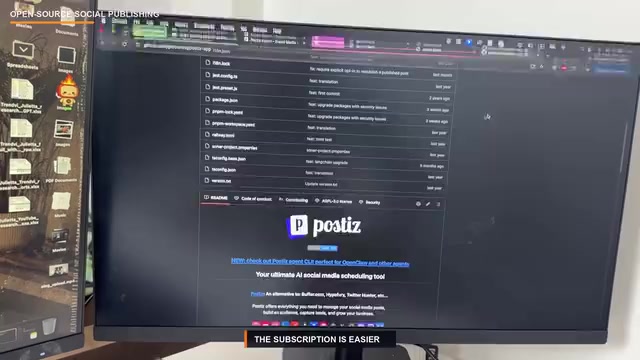
"AI Agent calling a tool" refers to an autonomous program driven by a large language model (LLM) that directly invokes external services through predefined interfaces — typically REST APIs or the MCP protocol — rather than having a human operate things manually. Compared to traditional RPA (Robotic Process Automation), which simulates mouse clicks and screen captures to control UIs, API-based calling is more stable, easier to audit, and better suited for orchestratable workflows. Postiz provides structured API endpoints so agents can abstract actions like "post a tweet" or "schedule an Instagram image post" into a single function call. This is precisely the core idea behind building agent infrastructure today: use a reliable tool layer to abstract away platform differences, letting the model focus on content decisions.
Two Approaches: Subscription vs. Self-Hosting
Postiz essentially offers two paths, each suited to different scenarios.
Subscription Mode: Convenient, but Per-Account Pricing
The subscription model is straightforward: you connect your social media accounts within the Postiz platform, and from there — whether operated manually or by an agent — publishing is fast and easy. The author admits they usually opt for the paid subscription because it's "simpler for the task" — no environment setup required, just out-of-the-box functionality.
The trade-off is cost. The author notes that each account runs around $100, which is manageable for someone handling one or two accounts. But if you're running hundreds of accounts like they are, subscription costs pile up quickly.
Self-Hosted Mode: No Subscription Fees, but Higher Setup Cost
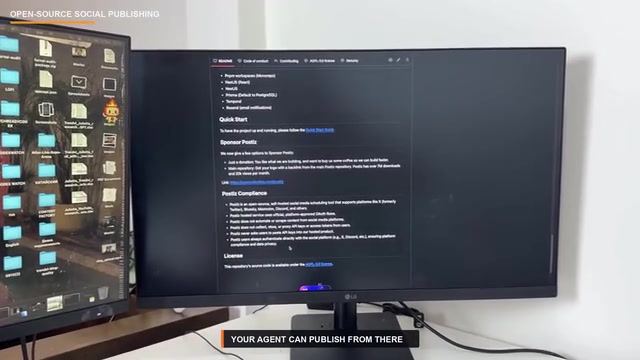
Open-source self-hosting is the other route. Its biggest appeal is no subscription fee — you run it on a local machine or VPS, grant account access to your local environment, and let agents publish directly from your laptop. For budget-conscious indie developers or content creators, this is a genuinely attractive option.
What Self-Hosting Actually Costs You
The author offers an honest warning: self-hosting sounds great in theory, but setup is far from easy in practice.
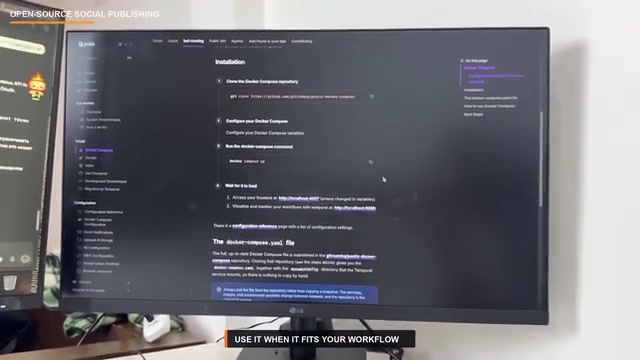
The challenge lies in the authorization flow for each platform. Connecting an account isn't just a matter of logging in — you also need to create an app in the corresponding platform's developer dashboard. For Meta platforms, for example, you need to go to the Meta Developer Platform, create an App, get an App ID, and fill those credentials into environment variables. For YouTube, you need to apply for account access through Google Cloud. Postiz claims support for over 40 platforms, but you have to go through this process for each one.

For someone with just one or two accounts, this setup cost is a one-time investment. But the author manages hundreds of accounts — creating individual connectors and environments for each one becomes an overwhelming amount of work, which is ultimately the core reason they lean toward the subscription model.
OAuth app review by major platforms is one of the most common bottlenecks in self-hosting. With Meta, for instance, after creating an app, accessing posting permissions for Instagram or Facebook Pages typically requires submitting an "Advanced Access" application — a review process that can take weeks and requires a privacy policy page and usage description. Google (YouTube) similarly requires completing OAuth consent screen verification, and certain permission scopes must pass a security assessment. This means the initial self-hosted setup isn't just about filling in a few environment variables — it may involve waiting for platform reviews and submitting supplementary app materials. For personal projects just getting started, understanding each platform's developer review policies in advance can save you from getting stuck at critical points.
Resource Consumption: Don't Underestimate the VPS Load
Another easily overlooked cost is compute. Running self-hosted Postiz on a VPS consumes CPU, and in some cases even GPU resources. The author is candid about not wanting to spin up yet another "posting worker" because their VPS is already handling a large number of other tasks.
This is a good reminder: what self-hosting saves in subscription fees, it costs in operations and resource overhead. Whether it's worth it depends on your account volume, existing infrastructure, and familiarity with workflow integration.
Who Should Use Postiz
Based on the author's experience, here's a rough profile of who this tool works for:
- Indie developers / solo creators: With a small number of accounts, a one-time self-hosted setup makes sense and the subscription savings are real.
- Embedding publishing into a project: If you're building an agent app that needs automated posting, the open-source module can integrate directly into your workflow.
- Large-scale account operators: Configuring individual connectors for hundreds of accounts is prohibitively expensive in terms of time — the subscription model is actually more practical.
The core decision criterion is simple: are you more constrained by budget, or by time and operational capacity?
Going Further: Giving Agents a "Tool Discovery" Layer
The author also mentions a related project they and their team are working on — a tool that helps agents discover open-source repositories. The idea is to let agents search for existing open-source solutions and repos via API before executing a task, saving tokens and time while surfacing new solutions.
This reflects a larger trend: as agents tackle increasingly complex tasks, "capability layers" like Postiz become more and more important. Publishing is just one piece of the puzzle. In the future, agents may dynamically assemble large numbers of open-source modules like this to build their own toolchains.
The concept of an "agent toolchain" is giving rise to a new software layering architecture. In this model, LLMs handle reasoning and decision-making, while specific capabilities — file I/O, network requests, content publishing, data retrieval — are handled by dedicated tool modules. Tool Discovery is one of the fastest-evolving pieces of this puzzle. Current mainstream approaches include OpenAI's Function Calling spec, Anthropic's MCP (Model Context Protocol), and various tool registries. The "help agents search open-source repos" project the author mentions is essentially building a lightweight tool registration and retrieval layer — letting agents search for existing solutions before executing a task, avoiding reinventing the wheel. This direction aligns directly with Postiz's positioning as a publishing capability layer, and both point toward the same larger technical trend: modular agent infrastructure.
Related articles

Free Unlimited Claude Code Solution: Agnes AI + CC Switch Setup Guide
No paid subscription needed — pair the free AI platform Agnes AI with the open-source tool CC Switch to provide a backend for Claude Code, enabling unlimited free calls to text, image, and video models. This guide covers the full setup, test results, and usage boundaries.

A Complete Zero-Cost Guide to Getting Started with Claude Code for Beginners in China
A beginner's guide to Claude Code for users in China: two installation methods (command line and IDE plugin), full configuration steps for replacing the official API with the free domestic LongCat model, and a hands-on demo of building a small tool with natural language, plus tips.

When the NSA Gets Involved: The AI Supply Chain Crisis Behind Open-Source CVEs and API Key Hijacking
Multiple open-source projects disclosed severe CVEs in one day, PHP flaws alarmed the FBI, and Railway and OpenCode were breached with API keys stolen. This article breaks down the vulnerability window, AI-accelerated exploitation, and the AI supply chain crisis behind the API key black market, with a developer defense checklist.