Prompt Failures? The Truth About Why AI Agents Struggle in Production—and How to Fix It

Agents misbehave mostly because of prompts and engineering support, not the model itself.
Starting from a developer's Reddit plea: he built an Agent using Copilot and Gemini to extract insights from customer feedback emails but could never get it to run stably. The author points out that an Agent's ceiling often depends on how you "command" it, not on model capability. The problems center on three gaps: the leap from single-turn Q&A to multi-turn guidance, context fragmentation caused by discrete data sources, and the lack of evaluation standards. Three paths are proposed: write prompts like product requirements documents, start with workflows before moving to autonomous Agents, and establish a small-scale evaluation loop. The core conclusion is that Agent deployment requires engineering thinking—clear instructions, reliable data pipelines, and a measurable evaluation system.
Why Is Your AI Agent Always Misbehaving?
A developer posted on Reddit admitting that he eagerly built a basic Agent using Copilot and Gemini, hoping his team would use it regularly, but he could never get the Agent to work stably and reliably. His requirements were clear—extract insights from a curated set of customer feedback emails and notes, and let leadership get the results they want through the Agent's guided questioning. He used SharePoint and Copilot as the platform, but the results were still unsatisfactory.

This scenario is not an isolated case. It precisely hits on an overlooked reality: The ceiling of an Agent often doesn't depend on the model itself, but on how you "command" it. When prompt design can't keep up with business complexity, even the most powerful model will behave like a disobedient intern.
Three Gaps in Prompt Engineering for Agent Scenarios
1. The Leap from "Single-Turn Q&A" to "Multi-Turn Guidance"
In ordinary conversations, a clear instruction can yield a satisfactory answer. But an Agent needs to actively guide users, ask follow-up questions, and gradually converge on goals. This means prompts can't just describe "what to do"—they must also define "how to ask." The "guided questioning" the Reddit user wanted essentially requires the Agent to have conversation state management capabilities—which demands a structured prompt framework, not just a natural language description.
2. Discreteness of Data Sources and Context Fragmentation
The materials he used were a batch of "one-off" feedback emails and notes scattered across SharePoint. Each time the Agent is invoked, the retrieved context may be incomplete or inconsistently formatted, causing output fluctuations. The stability of prompts is built on the stability of the data pipeline. If the chunking strategy and metadata tagging for Retrieval-Augmented Generation (RAG) aren't done well, no amount of fine-tuning on prompts can save fragmented context.
Retrieval-Augmented Generation (RAG) refers to a technical paradigm where a large model, before generating an answer, first retrieves relevant snippets from an external knowledge base and then stitches these snippets into the prompt as context. It decouples "model memory" from "source of facts," enabling the Agent to cite enterprise private data. RAG's effectiveness depends heavily on three stages: document chunking determines retrieval granularity—too large dilutes relevance, too small loses semantics; metadata tagging (such as source, time, department) supports filtering and traceability; reranking selects the most relevant snippets after initial screening. If any stage is rough, the context the Agent receives will be incomplete or misaligned, manifesting as irrelevant answers or contradictions. Therefore, the article emphasizes that prompt stability must be built on the foundation of data pipeline stability.
3. Lack of Evaluation Standards
"Inconsistent behavior" is a vague complaint. Is it answering when it shouldn't, or failing to ask follow-up questions when it should? Without clear success criteria, prompts cannot be iterated. Mature Agent teams build test sets and use fixed inputs to verify whether outputs meet expectations, rather than adjusting based on gut feeling.
Three Practical Paths to Make Agents Reliable
Path 1: Write Prompts Like Product Requirements Documents
Don't write "help me summarize customer feedback." Instead, specify: what format the input is in, which fields the output must contain, which three questions to ask when encountering ambiguous information, and under what circumstances to refuse to answer. Making implicit expectations explicit is the first step to improving Agent determinism.
Path 2: Start with Workflows, Then Move to Autonomous Agents
The Agent capabilities of Copilot and Gemini are still evolving. For relatively fixed tasks like "extracting insights from emails," building a workflow with branching logic in Copilot Studio is more reliable than letting the Agent freestyle. Breaking complex tasks into verifiable small steps, each with clear input/output constraints, will significantly improve stability.
Autonomous Agents vs. Workflows are two different orchestration paradigms. An autonomous Agent lets the model decide which tools to call and in what order to proceed—flexible but unpredictable in behavior; a workflow (such as a branching flow in Copilot Studio) has steps and conditional branches pre-defined by humans, with the model completing limited tasks only at fixed nodes. For scenarios like "extracting insights from emails" where inputs and outputs are relatively fixed, workflows constrain uncertainty to a controllable range, and each step can be individually verified and rolled back. A common industry practice is to first run workflows and accumulate evaluation data, then introduce Agent autonomous decision-making in genuinely necessary open-ended stages, forming a hybrid architecture of "workflow-first, Agent-assisted."
Path 3: Establish a Small-Scale Evaluation Loop
Select 10 to 20 typical feedback emails as a test set and define "good answer" criteria—for example, it must cite the original email ID, must distinguish facts from suggestions, and leadership must be able to reach a conclusion within two rounds of follow-up. Run the test set after each prompt adjustment and observe changes in pass rate. No measurement, no optimization.
You're Not Alone in This Struggle
The discussion atmosphere under the original Reddit post speaks for itself: many teams get stuck in the gap between "impressive demo, poor production" during the Agent deployment phase. The progress in model capabilities is evident, but turning capabilities into stable output requires engineering thinking—clear instruction design, reliable data pipelines, and a measurable evaluation system.
The poster asked "has anyone else encountered the same problem," and the answer is clearly yes. What's really worth asking is: beyond prompts, how much effort are you willing to invest in building the infrastructure that makes Agents run reliably?
One-line Summary
Agents misbehave mostly because of prompts and engineering support, not the model itself.
Paragraph Summary
Starting from a developer's Reddit plea: he built an Agent using Copilot and Gemini to extract insights from customer feedback emails but could never get it to run stably. The author points out that an Agent's ceiling often depends on how you "command" it, not on model capability. The problems center on three gaps: the leap from single-turn Q&A to multi-turn guidance, context fragmentation caused by discrete data sources, and the lack of evaluation standards. Three paths are proposed: write prompts like product requirements documents, start with workflows before moving to autonomous Agents, and establish a small-scale evaluation loop. The core conclusion is that Agent deployment requires engineering thinking—clear instructions, reliable data pipelines, and a measurable evaluation system.
Related articles
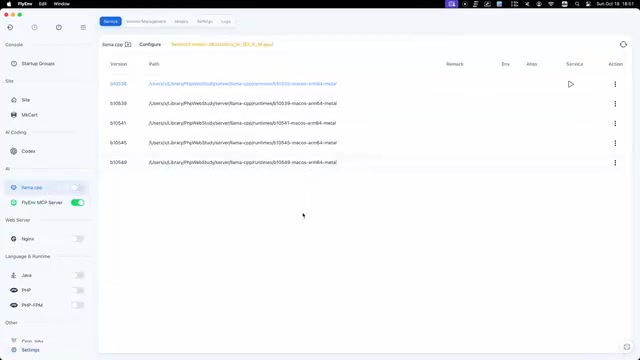
FlyEnv Plugin Review: Visually Running llama.cpp and Managing GGUF Models
FlyEnv launches the official llama.cpp plugin with side-by-side Metal runtime management, public GGUF repository indexing with file type labels, and visual configuration of context, threads, and GPU layers—saving templates and speculative decoding with each model for one-click local LLM inference.
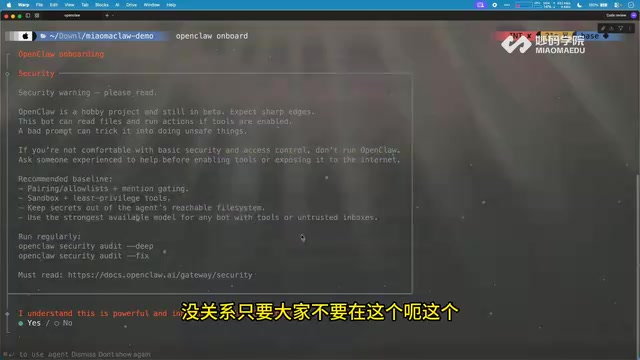
How Can Frontend Developers Advance into AI Agent Development? Deconstructing System-Level Agent Architecture from OpenClaw
Starting from the OpenClaw demo in a Bilibili open class, this article breaks down the three-layer architecture and universal formula of system-level AI agents, and analyzes the path for frontend developers to enter agent development based on TypeScript, including plugin-based design and security/memory layer challenges, with an interview answer framework.
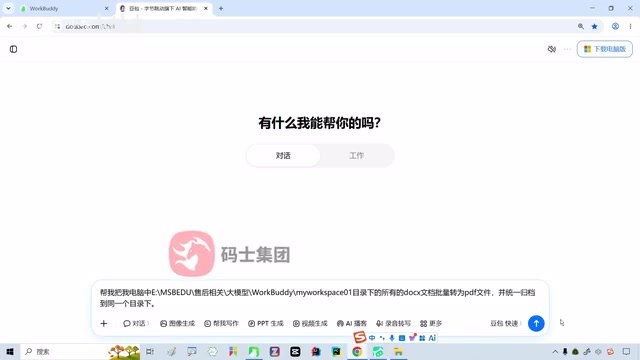
WorkBuddy in Action: How AI Agents Automate Batch File Conversion and Archiving
Bilibili creator Teacher Shanyao tests WorkBuddy vs. Doubao on batch file conversion, showing how AI Agents move from "giving solutions" to "direct execution," with a full workflow and credit cost reference.