Qoder vs Cursor: A Hands-On Comparison of AI Coding Tools

A hands-on comparison of Qoder and Cursor to help you pick the right AI coding tool.
This article compares two AI coding tools, Qoder and Cursor, through hands-on testing in real development scenarios. It examines differences in context understanding, code quality, and Agent autonomy, and offers four practical tips for choosing the AI coding tool that best fits your needs.
Introduction: The Wave of Hands-On Testing for AI Coding Tools
As the capabilities of large language models continue to evolve, AI-assisted coding tools have gradually shifted from being a "nice-to-have" to an indispensable part of developers' daily workflows. From early code completion to today's agent-based autonomous development, the pace of iteration in this field is dazzling.
From the perspective of technological evolution, AI-assisted coding has roughly gone through three distinct phases. The first phase was code completion based on statistics and simple pattern matching, such as the smart suggestions found in early IDEs. The second phase, represented by GitHub Copilot in 2021, leveraged the OpenAI Codex model to generate entire lines or even blocks of code, marking the formal entry of large language models into the coding assistance domain. The third phase is the currently emerging agent paradigm, where AI is no longer a passive completion tool but a "digital developer" capable of understanding task intent, autonomously planning steps, executing modifications across files, and verifying results. Behind this evolution lies the support of the Transformer architecture and large-scale pretraining on code corpora, enabling models to understand not just syntax but also the semantics and engineering logic of code. In this article, we focus on two much-discussed AI coding tools—Qoder and Cursor—and explore the differences in their performance in real development scenarios from a hands-on testing perspective.
It should be noted that this article is compiled based on publicly shared hands-on testing content. Since the original material is limited in information, we will combine industry-wide consensus to organize and analyze the positioning, capability boundaries, and applicable scenarios of these two tools, helping readers make more rational decisions when choosing.

Cursor: The Mature Performance of an Established AI Coding IDE
Cursor's Positioning and Core Capabilities
As an AI-native editor deeply customized on top of VS Code, Cursor has already built up a solid reputation within the developer community. Its core strength lies in seamlessly embedding AI capabilities into the coding workflow. Whether it's inline completion, multi-file refactoring, or completing complex feature development through conversational interaction, it achieves a high degree of completeness.
It's worth mentioning that Cursor chose to deeply customize on top of VS Code rather than building from scratch. This strategy naturally allowed it to inherit VS Code's vast plugin ecosystem, rich language support, and mature editing experience, greatly reducing the migration cost for developers. Users can almost seamlessly import their existing configurations, keyboard shortcuts, and extensions. This is also an important engineering foundation behind Cursor's rapid accumulation of a strong reputation.
Cursor's Agent mode is especially noteworthy. It can understand the context of an entire codebase, autonomously plan tasks, modify multiple files, and perform validation. This "let the AI do it itself" experience is precisely the direction that current AI coding tools are pursuing.

Cursor's Experience in Practical Use
During hands-on testing, Cursor demonstrated stable performance in understanding context. For small to medium-sized projects, it can fairly accurately locate the code sections that need modification. However, when the project scale is large and dependency relationships are complex, the AI sometimes exhibits comprehension errors, requiring developers to step in and guide it manually. This is also a challenge faced by all current AI coding tools—the tension between the context window and codebase scale.
Here it's necessary to explain a key concept: the context window refers to the maximum number of tokens a large language model can process in a single pass, which directly determines how much code information the AI can "see." Although the context windows of mainstream models have expanded from the early 4K to today's 128K or even 2 million tokens, real enterprise-level codebases often contain hundreds of thousands of lines, far exceeding the model's direct processing capacity. To resolve this tension, AI coding tools commonly adopt RAG (Retrieval-Augmented Generation) technology: by building a vector index of the codebase, only the most relevant code snippets are recalled and injected into the context when processing a task. However, the accuracy of retrieval, the implicit dependencies between code, and cross-module call chains can all lead to AI comprehension errors. This is precisely the fundamental technical reason for the AI's unstable performance in large projects.
Qoder: A Differentiated Attempt by an Emerging Challenger
Qoder's Product Philosophy
As a relatively new entrant, Qoder is attempting to find differentiated space in a market already dominated by Cursor. From a hands-on testing perspective, such new tools often optimize specific aspects—such as a more aggressive degree of automation, support more tailored to specific language ecosystems, or a more competitive pricing model.

Core Comparison Between Qoder and Cursor
Comparing the two AI coding tools under the same tasks reveals differences across several key dimensions:
- Response speed: Different tools connect to different underlying models and optimization strategies, directly affecting interaction fluidity.
- Code quality: The usability of generated code and whether it requires secondary modification are core metrics for measuring a tool's practicality.
- Boundaries of autonomy: To what extent can the Agent complete tasks independently without frequent human intervention.
Hands-on testing shows that Qoder and Cursor each have their own strengths, and it's difficult to simply judge which is better. The key depends on the developer's specific needs and usage habits.
How to Choose the AI Coding Tool That Suits You
Focus on Real Scenarios Rather Than Marketing Rhetoric
Faced with the endless stream of AI coding tools, the most rational approach is to conduct small-scale trials based on your own real development scenarios, rather than being swayed by feature lists or promotional data. A tool that dazzles in a demo may not perform equally well in your actual projects.

Four Practical Tips for Choosing an AI Coding Tool
- Clarify your core needs: Do you value precise code completion more, or the Agent's autonomous development capability?
- Consider ecosystem compatibility: Does the tool support the languages, frameworks, and workflows you commonly use?
- Evaluate the cost structure: The value-for-money ratio of subscription fees, token consumption, and actual output.
- Stay tool-neutral: AI coding tools iterate extremely fast, so there's no need to lock in to a single one—keep an open mind toward trying new tools.
Regarding cost structure, some further explanation is warranted. A token is the smallest unit a model uses to process text. One English word corresponds to roughly 1.3 tokens, while a Chinese character usually corresponds to 1–2 tokens. When a tool calls the underlying large model, both the input (Prompt) and output (Completion) consume tokens and incur costs. In Agent mode, because it needs to repeatedly read code and perform multi-round reasoning, token consumption is often far higher than for simple completion. Currently, tools on the market mainly have three billing models: a fixed monthly subscription model, a pay-as-you-go model based on actual token usage, and a hybrid model combining both. Therefore, when evaluating value for money, you shouldn't just look at the subscription price—you must also consider the actual token consumption during high-frequency Agent use. This is also a key entry point through which emerging tools attempt to capture market share via differentiated pricing.
Conclusion: The Best Tool Is the One That Suits You
The competition among AI coding tools has only just entered its fever pitch. Cursor, with its first-mover advantage and maturity, remains the top choice for many developers, while the emergence of new tools like Qoder injects more vitality and options into the market. For developers, this is undoubtedly a good thing—the richer the tools and the more thorough the competition, the more the users themselves ultimately benefit.
The real key has never been "which tool is the strongest," but rather "which tool best suits you right now." Continuous hands-on testing and rational decision-making are what will truly enhance your productivity in this AI coding revolution.
Key Takeaways
Related articles

PGP-Clinical-TimeKAN: A Detailed Guide to the Multivariate Physiological Indicator Joint Prediction Framework
An in-depth analysis of the PGP-Clinical-TimeKAN framework for joint probabilistic prediction of multivariate physiological indicators, covering trajectory-first paradigm, KAN message passing, MIMIC-IV validation, and ablation studies.
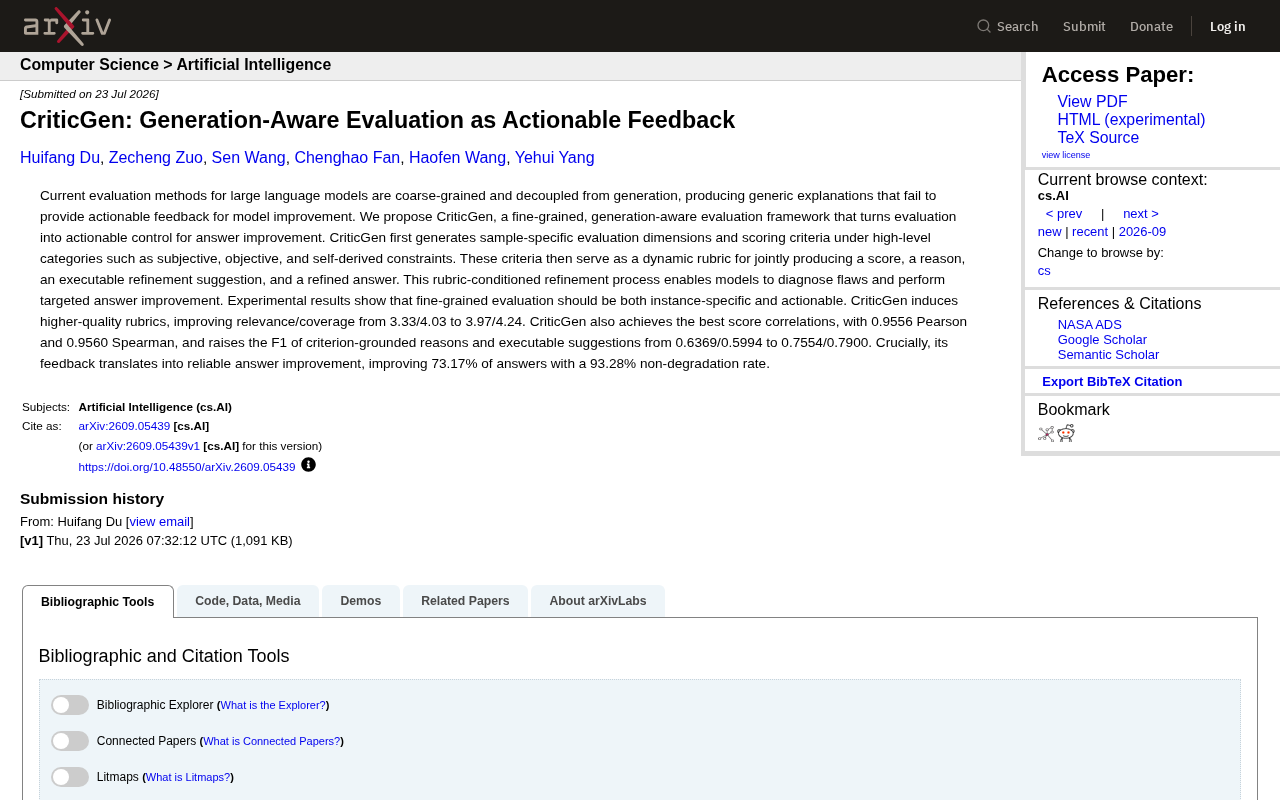
CriticGen: A New Framework That Transforms AI Evaluation into Actionable Improvement Feedback
CriticGen proposes a generation-aware evaluation framework that transforms AI assessment from passive scoring to an active optimization loop, achieving 73.17% answer improvement and 93.28% non-degradation rate.
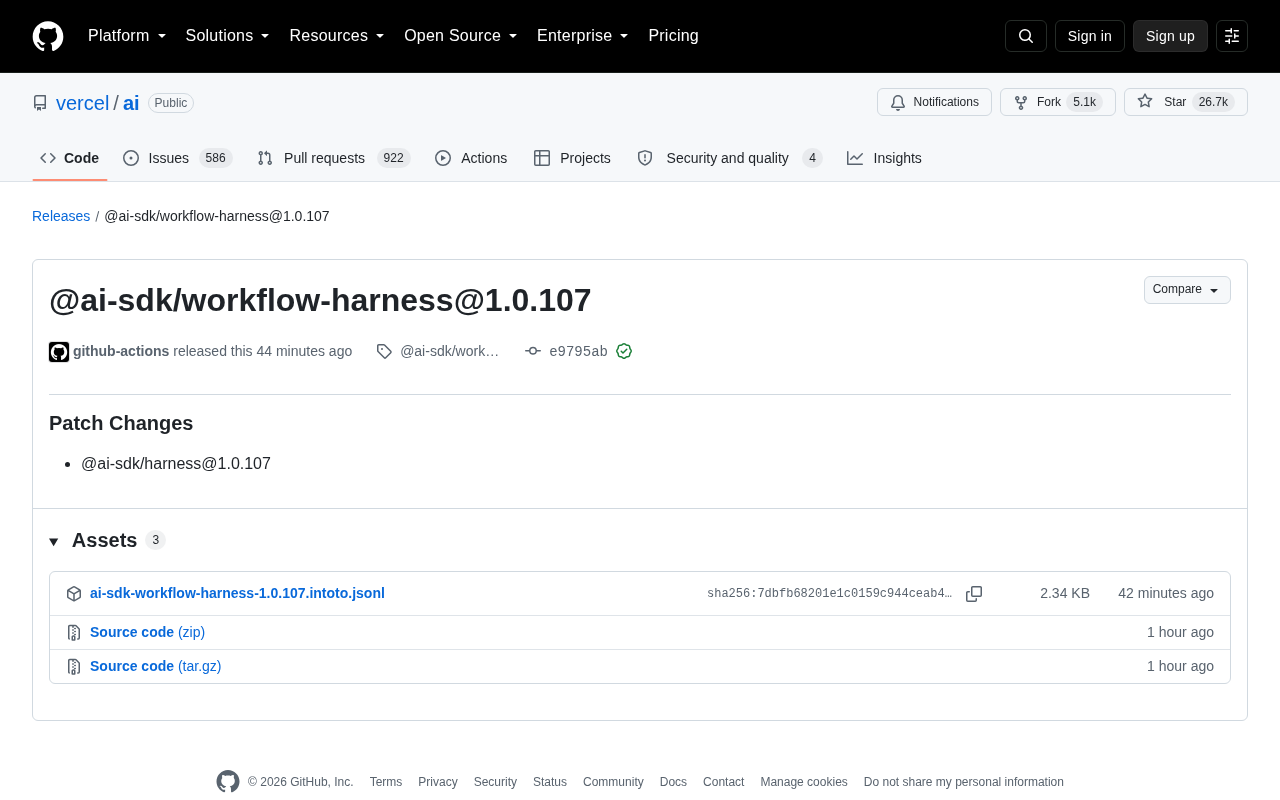
Vercel AI SDK workflow-harness Update Analysis
Deep analysis of Vercel AI SDK workflow-harness 1.0.107 update: architecture design, engineering practices, and developer value for building reliable AI apps.