Replit Desktop Launches: Cloud Models, Local Execution, Agent Reaches Browser Blind Spots
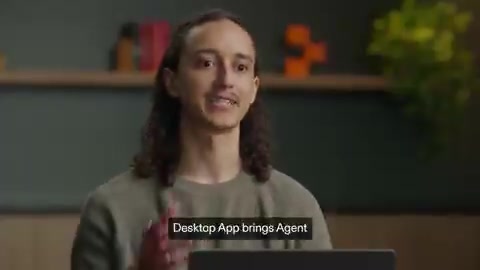
Replit launches a desktop version, keeping models in the cloud and executing code in a local sandbox.
Replit announced Replit Desktop, extending AI Agent capabilities from the browser to the local desktop. Its core design keeps model reasoning in the cloud while moving code execution to the user's computer, isolated via a Microsoft Execution Containers sandbox. Users choose which folders the Agent can access, creating explicit authorization rather than default full-disk access. This hybrid architecture fills the gap left by pure browser solutions that cannot reach local files and native toolchains, at the cost of deployment complexity, while details like tool invocation scope and cross-platform support remain undisclosed. The move also reflects the trend of AI coding tools moving from chat windows into developers' real workplaces.
Replit announced the launch of Replit Desktop on social media, extending the AI Agent's capabilities from the browser to the local desktop environment. The core message is clear: the model still runs in the cloud, but code execution is moved onto the user's own computer and isolated through a sandbox mechanism provided by Microsoft Execution Containers. Users can also choose for themselves which folders the Agent is allowed to access.



From Browser to Desktop: Extending the Agent's Reach
Over the past year, the dominant form of cloud-based AI coding tools has been the in-browser Agent—it can read and write cloud repositories and execute commands, but it is often powerless when it comes to files on the user's local disk and locally installed toolchains. Replit's official post pointed out this pain point: local files and tools are "out of reach for cloud Agents in the browser."
Replit Desktop's approach is not to move the model to the local machine, but to move the execution environment back to the local machine. The model stays in the cloud to handle reasoning and decision-making, while the generated code runs in a sandbox on the user's computer. This split preserves the compute power and iteration speed of cloud models while enabling the Agent to operate resources that exist only locally.
Local Sandbox and Permission Control: The Role of Microsoft Execution Containers
Security is the key to whether this design can hold up. Replit chose Microsoft's Execution Containers as the sandbox foundation, so code executes inside controlled containers rather than running freely on the host machine.
More noteworthy is the permission model: users decide for themselves which folders the Agent can access. This is an explicit authorization step rather than default full-disk access. For enterprise users and individual developers, this "per-folder authorization" granularity means the Agent can be confined to the project directory, preventing it from touching sensitive data.
Execution Containers is a class of lightweight isolated execution environments proposed by Microsoft, designed to avoid the startup overhead and resource burden of traditional virtual machines or full containers while maintaining a security boundary. Unlike containers such as Docker that are oriented toward service deployment, Execution Containers place more emphasis on providing fine-grained runtime constraints for untrusted code: limiting the scope of file system access, constraining system calls, and isolating network and process visibility. Replit placing Agent-generated code into such a sandbox means that even if the model produces destructive instructions, their impact is confined to authorized directories and controlled resources and will not affect other files or system configurations on the host machine. This "distrust by default, authorize on demand" approach is precisely the prerequisite for local-execution Agents to be accepted by enterprises.
What the Hybrid Architecture of Cloud Reasoning + Local Execution Means
This architecture decouples "intelligence" from "execution." The direct benefit is that the Agent can invoke locally installed tools and dependencies without having to rebuild an environment in the cloud. For workflows that depend on specific local configurations, private data, or intranet resources, this fills the capability gap of pure browser-based solutions.
The cost is deployment complexity: users need to install a desktop client, and coordination and state synchronization between the local environment and the cloud model require additional handling. The information Replit has disclosed so far focuses on architecture and permissions; details such as the specific scope of tool invocation and cross-platform support have not yet been elaborated in the post.
In the context of AI Agents, hybrid architecture usually refers to separating the cognitive layer from the execution layer: reasoning, planning, and code generation are handled by cloud-based large models, while file reading and writing, command execution, and tool invocation occur on the user's device side. The key to this split is that a stable communication and control channel is needed between the two, and action instructions issued by the cloud must pass local permission checks before taking effect. Compared with pure cloud solutions, it solves the problem of local resources being invisible; compared with pure local solutions, it avoids dependence on local compute. But the separation also introduces new engineering challenges, including how to keep session state consistent across both ends, how to recover tasks when the network is interrupted, and how to pass local execution results back to the model for the next decision step.
Competitive Signals in the Desktop Agent Race
Replit's move also reflects a common direction for AI coding tools: Agents are no longer satisfied with generating code snippets in a chat window; they want to enter the developer's real workplace. The local file system and native toolchain are the main battleground of developers' daily work. Whoever enables Agents to work there safely will be one step closer to "usable automation."
Replit's official statement says more details can be found through the link it provided. For developers who follow how AI coding tools are implemented in practice, Replit Desktop's permission design and sandbox approach are worth continued observation.
One-line Summary
Replit launches a desktop version, with the model staying in the cloud and code executing in a local sandbox.
Paragraph Summary
Replit announced the launch of Replit Desktop, extending the AI Agent's capabilities from the browser to the local desktop environment. Its core design keeps model reasoning in the cloud while moving code execution onto the user's own computer, isolated through a sandbox mechanism provided by Microsoft Execution Containers. Users can choose which folders the Agent is allowed to access, forming a permission model of explicit authorization rather than default full-disk openness. This hybrid architecture fills the capability gap of pure browser-based solutions, which cannot reach local files and native toolchains, at the cost of increased deployment complexity, while details such as the scope of tool invocation and cross-platform support have not yet been disclosed. The move also reflects the competitive trend of AI coding tools moving from chat windows into developers' real workplaces.
Related articles
GLM-5.4 Coding Test 4.6x Slower? Unpacking the Loop Transformer Architecture
GLM-5.4 coding test took 431 minutes vs. competitor's 109, 4.6x more steps. We analyze its Loop Transformer architecture, KingBench4 score of 55.3, Max tier's 1.04M token cost, and tier selection advice.

Zhipu GLM-5.4 Quietly Released: A Debut for Loop Transformer Architecture
Zhipu GLM-5.4 quietly lands in coding plans: first Loop Transformer flagship with 750B params, 1M token context, AIM math up from 19.2 to 30.4, and native vision for coding from screenshots.
GLM-5.4 Releases 750B Model: Recurrent Transformer Architecture and the 30B Benchmark Controversy
GLM-5.4 releases a 750B model with a recurrent Transformer architecture that runs the same layers twice, claimed to match 2T–3T scale. But the benchmark table tests a 30B small model, not the main model. We break down the architecture changes, benchmark data, four demos, and open-source timeline.