The Local AI Inflection Point: Edge Deployment, Multi-Model Collaboration, and the Open-Source Ecosystem

Local AI reaches its inflection point: edge deployment, multi-model collaboration, and open-source ecosystems are converging.
At the AI Engineer Summit's Local AI Summit, pioneers from ExoLabs, RoboFlow, OsmanTech, and NVIDIA declared local AI has hit a true inflection point, driven by privacy needs and soaring cloud costs. Key themes included multi-model collaboration replacing single-model dominance, a 10x performance breakthrough from NVIDIA and ExoLabs in three weeks, and the critical gap between technical capability and ease of use for mainstream adoption.
The Local AI Inflection Point
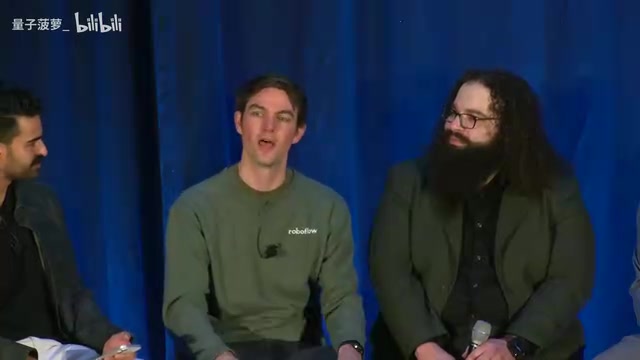
At the Local AI Summit opening session of the AI Engineer conference, industry pioneers from ExoLabs, RoboFlow, OsmanTech, and NVIDIA gathered and reached a shared conclusion: Local AI is hitting a genuine inflection point.
The moderator cited two tweets from Andrej Karpathy that form a striking contrast — just months ago, Karpathy warned that "you can't fully trust coding agents and have to watch them like a hawk"; only three months later, he marveled that he "couldn't keep up with the pace of capability improvements." Both statements were correct at the time, which perfectly illustrates how fast this field is evolving.
The inflection point isn't just about stronger models — it's about the tooling and harness maturing in parallel. As models evolved from simple chatbots to reasoning models and now to always-on agents that never shut down, usage paradigms have fundamentally shifted. This has two direct consequences: businesses and consumers want to hand sensitive data (medical records, home camera footage, intellectual property) to AI, but don't want it to leak; meanwhile, continuously generating tokens means cloud costs are skyrocketing. Local deployment addresses both privacy and cost pain points simultaneously.
From Llama to the Edge: Pioneers' "Aha Moments"
The panelists each shared the pivotal moment when they sensed the potential of local AI.
Ahmed Osman, founder of OsmanTech and moderator of the Reddit community LocalLlama, recalled the moment he first ran Llama 2 on an RTX 4090 — that feeling of "understanding the black box, being able to tune it, controlling it like a wizard" made everything click into place. Alex, CEO of ExoLabs, highlighted several milestones: while Llama 45B narrowed the gap between open-source and closed-source models, it ran at only 2 tokens per second, making it barely practical. It wasn't until DeepSeek V3 and R1 arrived that the MoE (Mixture of Experts) architecture unlocked real performance, enabling devices like a Mac Studio or DGX Spark to run large models at usable speeds. The recent GLM-4.6 has reached Opus-level quality and can run on a DGX Station that fits under a desk.
Technical Background: Why Does MoE Architecture Matter? MoE (Mixture of Experts) is a design paradigm that breaks a large neural network into multiple "expert" sub-networks. The key idea: for each input token, a lightweight "gating network" dynamically selects a small subset of experts to participate in computation, rather than activating all parameters. This means a MoE model with hundreds of billions of parameters may only activate 10–20% of its total parameters during inference, dramatically reducing per-inference compute and memory usage. DeepSeek V3 and R1 leveraged MoE to compress inference costs to a fraction of traditional dense models while maintaining top-tier performance — making them viable on consumer-grade or workstation-class hardware. This is one of the key technical breakthroughs enabling practical local AI.
RoboFlow CEO Joseph shared a moving story about a flight: he once sat next to a visually impaired passenger who used Apple's accessibility features to photograph and identify their seat, only to have it described as a "printer." But Lava, a multimodal model just released at the time, accurately identified: "you're on a plane, and this is a tray table." This made him realize — even trillion-dollar giants don't hold a monopoly on intelligence at the frontier. Making frontier intelligence truly accessible is key to understanding the full impact of this technology.
Multi-Model Collaboration: The New AI Engineering Paradigm
A strong consensus emerged from the panel: the future is a multi-model world, not "one giant model to rule them all."
Alex noted that the market has clearly expressed this need: enterprises don't want to be "told what they can do" by a handful of vendors, don't want to pay top-tier model prices (up to $50 per million tokens) for every workload, and don't want to face a "rug pull" when some safety policy changes. What they actually need is control, sovereignty, and the ability to switch.
The panelists described an efficient emerging paradigm: let the most intelligent frontier models handle top-level planning (architecture design, overall strategy), while delegating concrete subtasks like code execution to cheaper, smaller, or local models. Coinbase was cited as an example — by mixing models, the company achieved explosive growth in token consumption while keeping costs flat.
Joseph offered a unique perspective from computer vision: the vision domain has always been "compute-constrained" (models need to run on robots and edge devices), so it naturally gravitated toward specialized small models early on. Language models are now experiencing the same "pendulum swinging back" — from chasing general-purpose large models back toward "last-mile fine-tuning" for vertical domains like tax, legal, and more.
NVIDIA + ExoLabs: 10x Performance Improvement in Three Weeks
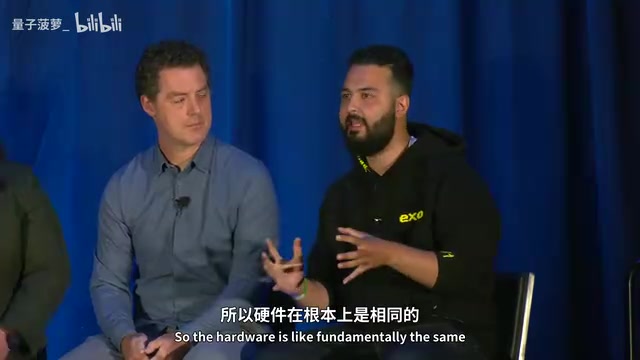
The most engineering-rich story of the session came from a real collaboration between ExoLabs and NVIDIA.
Alex revealed that over dinner, he mentioned wanting to squeeze every ounce of performance from the DGX Spark. NVIDIA immediately opened a conference room at headquarters and assembled teams across the org — the Nemotron team, the data center team, the vLLM team, and even a dedicated "vLLM for Spark" group — to attack the problem together. This is exactly the "swarming" culture Jensen Huang talks about: like playing soccer, the whole company charges toward the same goal at once.
The results were remarkable: in roughly three weeks, the team achieved a 10x performance improvement over NVIDIA's existing Harmony Agent solution through vLLM inference backend tuning and model quantization.
Technical Background: The Engineering Behind vLLM and Quantization vLLM is a high-performance LLM inference engine developed at UC Berkeley. Its core innovation is "PagedAttention" — borrowing the virtual memory paging concept from operating systems to manage KV Cache (key-value cache) in non-contiguous memory blocks, dramatically improving GPU memory utilization and concurrent throughput. Quantization compresses model weights from high-precision floats (FP16, BF16) to low-bit integers (INT8, INT4), shrinking model size by 2–4x and boosting inference speed by 1.5–3x with minimal accuracy loss. Combining both is the technical foundation of the three-week 10x improvement — not by inventing new algorithms, but by precisely adapting mature industry optimization tools to the Grace Blackwell hardware architecture.
In his email update to Jensen Huang, Alex wrote: "We didn't solve any new computer science problems" — they simply reassembled existing breakthroughs NVIDIA's engineers had already achieved into "a nice bouquet of flowers."
The key insight is that DGX Spark and data centers share the same Grace Blackwell architecture — an architecture that connects an ARM-based Grace CPU and Blackwell GPU via high-bandwidth NVLink-C2C chip interconnect, enabling up to 900 GB/s of memory bandwidth between CPU and GPU with a unified memory pool, so large model weights don't need to be shuffled between different memory spaces. The underlying kernels were already excellent, and many optimizations were "low-hanging fruit" that just needed targeted tuning. They can now run 550B-parameter Nemotron 3.0 at 30 tokens per second across 4 Sparks. This validates a long-held belief: the hardware is already good enough, models are improving rapidly — what's missing is more people investing in this space to unlock it.
The Real Adoption Barrier: Ease of Use, Not Performance
Content creator Matt offered a sobering reality check from a mainstream user perspective: what's limiting local AI adoption isn't capability — it's ease of use.
He was blunt: for local AI to truly go mainstream, the experience needs to be as simple as "opening Cursor" — maybe just a tiny bit more complex. But the gap is still enormous. What these pioneers are doing is impressive, but it's essentially a full-time job. Ordinary users and enterprises have no interest in learning about quantization, scaling, or configuration parameters — those "weird things." They just want to "click, send a message, use an agent, done."
Ahmed introduced ODS, OsmanTech's open-source deployment system, which automatically configures end-to-end agent infrastructure for different hardware setups. NVIDIA's Carter praised it after trying it: it immediately downloads a 2B-parameter model for users to get started, while quietly downloading the most suitable model for their device in the background — exactly the right onboarding experience, abstracting away all the complexity.
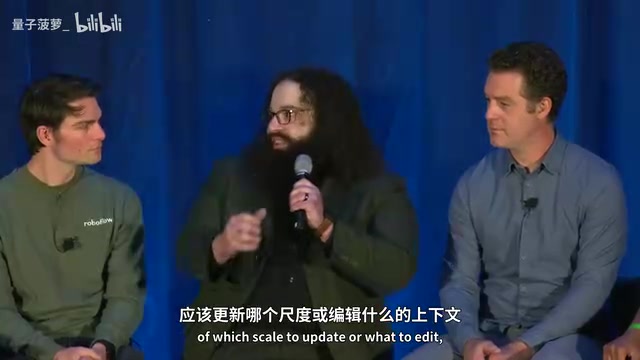
On continual learning, Ahmed offered a forward-looking perspective: current agent memory paradigms are just "save to a markdown file," which becomes inefficient as context grows. The next paradigm should be directly updating model weights — and that has to happen on local hardware.
Technical Background: Continual Learning and Weight Updates Continual Learning is one of the core challenges in machine learning — enabling models to learn from new data without forgetting existing knowledge. Current mainstream agent systems use essentially bolt-on memory: conversation history and user preferences are saved as text files or vector databases, retrieved at inference time, while model weights remain frozen. The next-generation paradigm Ahmed points toward — directly updating model weights — uses techniques like LoRA (Low-Rank Adaptation) or continual pre-training, allowing models to truly "remember" new knowledge rather than relying on retrieval each time. This must happen on local hardware: both for privacy (personalized data can't be uploaded to the cloud) and because continuous small-batch gradient updates are latency-sensitive, making cloud round-trips too costly. This represents an important direction for local AI evolving from an "inference terminal" to a "training terminal."
Distillation and Specialization: The Real Path to Local AI Deployment
Joseph used a vivid case study to illustrate the logic behind specialized models. The Monterey Bay Aquarium Research Institute (MBARI) recently discovered new fish species using RoboFlow to process underwater footage from deep-sea submersibles: first using large models like Segment Anything 3 combined with "LLM as Judge" to build an automated annotation pipeline, producing a specialized dataset, then training smaller models that run in real time on the submersible.
Technical Background: Segment Anything and Knowledge Distillation Segment Anything Model (SAM), released by Meta AI in 2023, is a general-purpose image segmentation foundation model. Its core capability is "open-vocabulary" segmentation — able to segment any object via point, box, or text prompts without predefined categories. SAM 3 is its latest iteration, extending to video understanding. Open-vocabulary capability is valuable precisely because it relies on vast visual-semantic knowledge learned during pre-training. Fine-tuning end-to-end on specific categories often causes "catastrophic forgetting," stripping the model of its ability to generalize beyond the training set. The more engineering-friendly approach: use SAM as a data annotation engine to generate specialized datasets, then train lighter, specialized detection models without SAM's expensive autoencoder — a classic application of Knowledge Distillation in computer vision engineering practice.
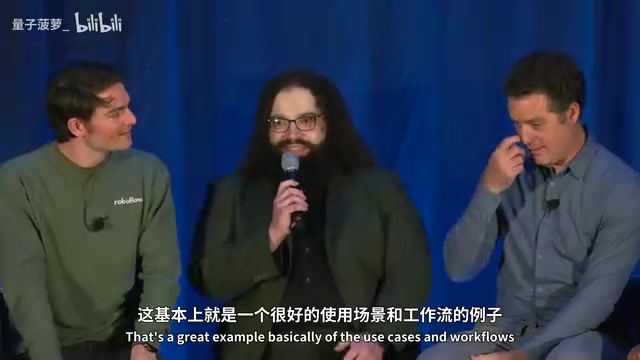
Joseph highlighted a common misconception: many people want to directly fine-tune SAM 3, but this destroys its most powerful open-vocabulary capability. The smarter approach — if you need to distill down to a fixed category list — is to strip out SAM's expensive autoencoder and use a more specialized model architecture, gaining both speed and accuracy while preserving general knowledge.
This pattern reflects a paradigm shift in AI engineering: the old approach was "train a model first, then find use cases"; the new approach is "discover use cases first, bring in ML when needed." The industry broadly predicts we'll soon see a wave of efficient solutions bootstrapped from "monster" frontier models and deployed in open-source, local environments.
The Open-Source Battle: The Foundation of Local AI's Future
The panel closed with a collective call to action for the open-source ecosystem.
Ahmed compared today's moment to "Linux in the 1990s" — infrastructure is far from mature, everything is just beginning, and "there's room for far more players and contributors." His core argument over the years: open-source AI must win, and the way to win is to make these models easy and efficient to use for individuals, SMBs, and large enterprises alike.
Joseph raised a deeper concern: the importance of open-source models is increasingly being questioned. "If you think local matters, then you should think open-source matters" — advocating for the right to use, modify, adapt, and tinker with models is every practitioner's responsibility. Panelists reflected on Silicon Valley history: computing originated on the East Coast, but Silicon Valley rose on the West Coast precisely because "hippies realized they could share ideas freely." The tension between capital and idealism is what created the most creatively fertile environment — consumer use and commercial monetization can absolutely coexist.
On the biggest open question for local AI, the attendees reached consensus: inference optimization, lowering the barrier to entry, and squeezing maximum performance within budget and hardware constraints. And as the rapid growth of this summit itself over the years demonstrates — local AI becoming the default is only a matter of time.
Key Takeaways
Related articles
Understanding GitHub's Availability Report: Platform Stability and Developer Response Strategies
Deep dive into GitHub's monthly availability report: analyzing service degradation impacts, CI/CD fault tolerance, and platform dependency risk strategies for resilient development.
OpenAI's Claim of Solving a Millennium Prize Problem Sparks Academic Controversy
OpenAI claims its AI solved a Millennium Prize Problem, sparking debates over attribution, verification, and AI's role in reshaping mathematical research.
Ledoit-Wolf Covariance Shrinkage in Practice: 57% Lower Turnover + 10x GPU Acceleration
Learn how Ledoit-Wolf covariance shrinkage reduces portfolio turnover by up to 57% and how cuML GPU acceleration cuts backtest time from 1.5 hours to 9 minutes.