Top 10 Open-Source Coding AI Models: Can They Replace Claude and Codex?
Ranking the top 10 open-source coding AIs and the key concepts that determine their real-world effectiveness.
This article systematically reviews the top 10 open-source coding AI models, from GLM-5 and DeepSeek V4 to Qwen3. Beyond rankings, it deep-dives into critical concepts like reasoning capabilities, agentic coding, quantization for local deployment, MoE architecture, model routing, and context management — helping developers find the right open-source alternative to Claude and Codex.
The $200/month subscriptions for Claude and Codex are causing more and more developers to wince. But when we turn to the open-source community, we find an encouraging reality: the capability gap is being rapidly closed by open-source models. Before we dive into these ten important open-source coding models, though, there's one key insight to establish — choosing the right coding AI is far more than just picking the smartest model.
This article is based on a curated technical review from Bilibili, systematically covering open-source coding AIs from number ten to number one. More importantly, it explains what each excels at and the critical concepts behind them that truly determine real-world effectiveness.
Reasoning and Agents: Two Paradigm Shifts in Coding AI
Many people still think of coding AI as simply "input a question, output code." But in real-world work, writing code is often not the hardest part — understanding the problem is.
Imagine you're debugging a production system failure: logs from various services, database queries, error messages, plus several possible causes intertwined. Before you can fix anything, you need to figure out what actually happened. This is exactly where reasoning capabilities prove their worth.
Reasoning in the AI context refers to a model's ability to perform multi-step logical deduction, decompose complex problems, and arrive at conclusions step by step — as opposed to simple pattern matching or text completion. Early code generation models were essentially advanced autocomplete tools that relied on code patterns from training data. Models with reasoning capabilities, however, can understand causal chains — for example, when debugging a race condition in a distributed system, the model needs to understand timing relationships across multiple services, locking mechanisms, and state transitions. This goes far beyond mere code generation. OpenAI's o1 series first brought "Chain-of-Thought" reasoning into the mainstream, and the open-source community soon followed with projects like DeepSeek-R1.
Ranked number ten, GPTGO represents this class of reasoning-focused models — they're not about writing more code, but about helping you solve harder problems. A model can generate perfectly valid code yet solve the wrong problem. The core value of reasoning is that it upgrades a model from "a tool that can write code" to "a partner that can understand problems."
Ranked number nine, DestroSmall introduces another key concept: Agentic Coding. Traditional coding AI is straightforward — you ask, it answers, and the interaction ends. Agentic coding changes this: the workflow doesn't stop after generating code. The system can search files, inspect the codebase, make modifications, run commands, check results, and continue.
The underlying architecture of agentic coding typically consists of several key components: a large language model serving as the "brain" for decision-making, a set of callable tools (such as file system operations, terminal command execution, code search, browser access, etc.), and an orchestration loop to manage interactions between the model and tools. This paradigm is heavily influenced by the ReAct (Reasoning + Acting) framework — at each step, the model first reasons, then decides which tool to call, observes the tool's output, and enters the next round of reasoning. Anthropic's Claude Code, OpenAI's Codex agent, and open-source projects like SWE-agent and Aider are all typical implementations of this paradigm.
This forms a closed loop: investigate, modify, test, observe, adjust. What if the code doesn't compile? What if tests fail? What if the model edits the wrong file? A truly useful coding agent needs to take this feedback and decide what to do next. Agentic coding represents a major shift because it moves AI from "single-turn Q&A" to "autonomous task execution" — the model is no longer just an advisor but a genuine executor. This is a significant paradigm shift currently underway in coding AI.
Multimodality and Local Deployment: Matching Capabilities to Scenarios
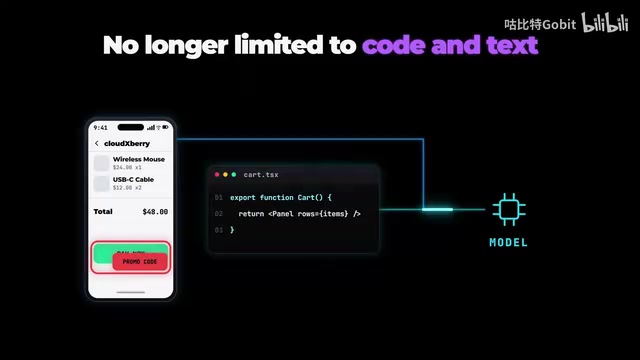
Ranked number eight, MiniMax M3 breaks beyond the limitations of code and text. Consider this scenario: a UI screenshot shows a button overlapping another component, and the layout is broken on mobile — this kind of problem is hard to describe clearly in words. With multimodal capabilities, you can feed screenshots, design mockups, diagrams, and code to the model together.
Multimodal refers to a model's ability to simultaneously process multiple information types such as text, images, and audio. In software development, this capability is becoming increasingly important. In modern frontend development, designers typically complete UI designs in tools like Figma, and developers need to precisely translate visual designs into code — a process that traditionally requires developers to visually compare design mockups against actual rendered output, repeatedly fine-tuning CSS. A multimodal coding AI can directly "see" the differences between a design mockup and the current page screenshot and generate the corresponding fix. Additionally, in scenarios like data visualization, mobile adaptation testing, and generating prototype code from whiteboard sketches, image understanding can significantly boost development efficiency.
Of course, multimodality isn't necessary for every task. If you're just fixing a SQL query or refactoring a function, you probably don't need image understanding at all. But modern software development involves a wealth of information beyond source code — interfaces, charts, visual bugs — and multimodal models let AI handle a broader context.
Ranked number seven, QuantSanCoder Next highlights the significance of local deployment. Cloud models are very convenient, but they're not always the right choice: maybe you're working with sensitive source code, maybe company policy prohibits sending code to external services, or maybe you need to make thousands of requests with predictable costs. Running models locally gives you more control — data stays within your infrastructure, and you don't pay per API request.
The trade-off is real: you need hardware, and you're responsible for deployment and operations. But this illustrates precisely why benchmark rankings alone can't determine the best model — the one that fits your environment best is the best one.
Quantization and MoE Architecture: Can You Actually Run the Model?
Ranked number six, Qwen3 32B raises one of the most practical questions in open-source AI: can you actually run this model yourself?
A model with billions of parameters requires substantial memory, but exact requirements depend on how the parameters are stored. This is where Quantization comes in: AI models store massive numbers of learned values, and quantization represents these values with fewer bits, significantly reducing memory requirements and making models that would otherwise require expensive hardware actually runnable.
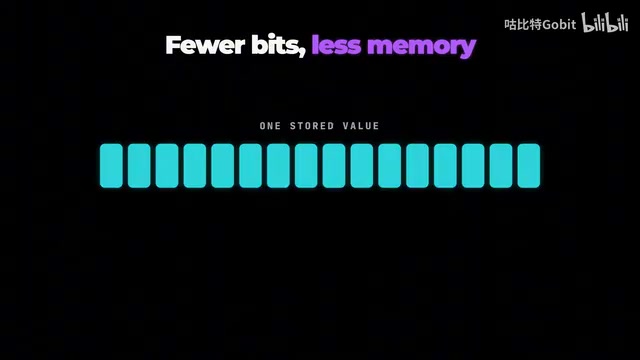
Specifically, LLM parameters are typically stored in 32-bit floating point (FP32) or 16-bit floating point (FP16/BF16), with each parameter consuming 4 bytes or 2 bytes of memory respectively. Take Qwen3 32B as an example — at FP16 precision, it requires approximately 64GB of VRAM, which already exceeds the capacity of most consumer-grade GPUs. Quantization compresses model size by reducing parameter precision to 8-bit (INT8), 4-bit (INT4), or even lower — 4-bit quantization can compress this model to approximately 16GB, making it runnable on a single RTX 4090 (24GB VRAM). Current mainstream quantization methods include GPTQ (post-training quantization based on layer-wise calibration), AWQ (Activation-aware Weight Quantization), and GGUF (the quantization format for the llama.cpp ecosystem, supporting hybrid CPU+GPU inference).
But quantization involves trade-offs: if you reduce precision too aggressively, model quality suffers. 4-bit quantization typically shows manageable performance degradation on most tasks (usually 1-3%), but for tasks requiring precise numerical reasoning or handling rare programming languages, low precision can lead to noticeable quality loss. So the right question isn't "can I run this model?" but rather "can my hardware run it fast enough while still producing useful results?"
Ranked number five, Qwen3 Coder 480B teaches us the opposite lesson: being downloadable doesn't mean it'll run easily on your laptop. Large models may require enormous memory, and long contexts further inflate resource demands during inference. Some of these models use Mixture of Experts (MoE) architecture — the core idea is that instead of activating all parameters for every computation, only a subset of specialized components are activated, controlling computational overhead while maintaining scale.
In traditional dense Transformer models, every input token passes through all of the model's parameters; in MoE architecture, the model contains multiple "expert" sub-networks (typically feed-forward network layers), and a "router" module dynamically selects a small number of experts for each inference step based on the input. For example, a model with a nominal 480B parameters that activates only about 1/8 of its experts per inference may have actual computational requirements equivalent to a 60B dense model. This explains why some "huge" models can match much smaller dense models in inference speed. Mixtral 8x7B, DeepSeek-V2/V3, and GPT-4 (reportedly) all use MoE architecture. However, the challenge with MoE is that while computation is controllable, all experts' parameters still need to be loaded into memory, so VRAM requirements remain high.
Model Routing: Not Every Task Needs the Strongest Model
Ranked number four, DeepSeek V3 Flash embodies a lesson applicable to nearly every AI system: you don't need to use the most powerful model for every task.
Generating documentation, analyzing logs, creating plans, writing tests, or answering simple questions about a codebase — deploying the largest and most expensive model for all these requests is unnecessary. A faster model can provide good-enough answers with lower latency and lower cost.
This introduces the concept of Model Routing: instead of building your entire system on a single model, use different models for different tasks — route simple requests to fast models and difficult architectural questions to more capable ones. In practice, model routing typically takes several forms: rule-based routing (distributing based on predefined conditions like task type and input length), classifier-based routing (training a lightweight model to assess request complexity and route to the corresponding model), and cascading routing (trying a small model first, then escalating to a larger model if confidence is insufficient). Platforms like OpenRouter and Martian are already providing similar model routing services.
In coding scenarios, a typical routing strategy might look like this: code completion and simple refactoring go to a 7B-class fast model (response time <1 second), complex bug fixes and architectural analysis go to a 70B+ reasoning model, and routine documentation and code commenting go to a mid-sized general-purpose model. This layered strategy can reduce overall API costs by 50-80% while maintaining output quality for critical tasks. What handles "everything" in the future may not be a single model, but a system of models each handling different complexity levels.
Ranked number three, DeepSeek V4 Pro represents the other side of this equation. Sometimes using a stronger model is absolutely worth it: when investigating complex production incidents, understanding an unfamiliar codebase with hundreds of files, or making architectural decisions that affect the entire system, the cost of getting the wrong answer far exceeds the cost of using a stronger model.
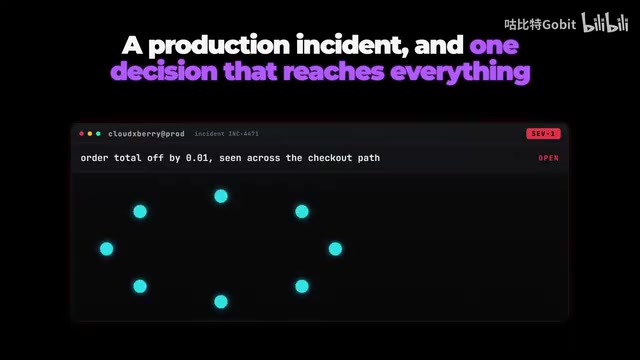
A stronger model might be slower and more expensive, but it can save time by reducing rework. So the goal isn't to always use the cheapest model, but to match model capability to the difficulty and importance of the task.
From Writing Code to Software Engineering: Lessons from GLM-5 Taking the Top Spot
Ranked number two, Kimi K2.7 Code represents the shift from "AI-assisted code writing" to "AI participating in the software engineering process." Give a traditional assistant a bug report, and it might just read the description and suggest a fix. A more advanced system will examine the codebase, locate relevant files, understand the existing implementation, make changes, run tests, and use the results as feedback. The interaction evolves from "help me write this function" to "here's the problem, go investigate it."
The current open-source ecosystem has developed a rich layer of agent frameworks to support this transformation: OpenHands (formerly OpenDevin) and SWE-agent focus on autonomous execution of software engineering tasks; Aider provides a lightweight in-terminal coding assistant experience; and IDE plugins like Cursor and Continue deeply embed AI capabilities into developers' daily workflows. These frameworks define the interaction boundary between models and the external world — which files the model can read, which commands it can execute, how to recover from failures, and how to manage context across multiple conversation turns.
Ranked number one, GLM-5 focuses on the most critical challenge — context management. Complex software issues rarely stay within a single function: a bug might involve an API, a database, a backend service, configuration files, or even another application. Large-context models can process more information, but there's a common misconception here: more context does not equal better results. Stuffing the entire codebase into the AI only increases cost and latency while drowning the context in irrelevant information.
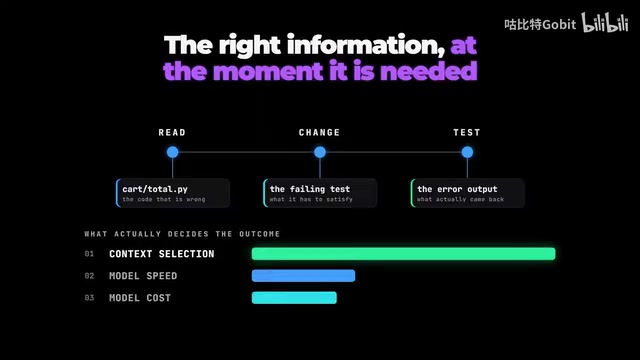
Modern LLMs have expanded their context windows from the early 4K tokens to 128K or even 1M tokens, but "being able to process" and "being able to effectively utilize" are two different things. Research shows that most models exhibit a "Lost in the Middle" phenomenon — models pay more attention to information at the beginning and end of the context window while information in the middle tends to be overlooked. Therefore, blindly stuffing in large amounts of code can actually reduce output quality.
The real challenge is context selection: Can the system search the codebase to find important files? Can it retrieve relevant functions? Can it provide the model with exactly the information it needs at that moment? Current mainstream context selection techniques primarily rely on RAG (Retrieval-Augmented Generation): the codebase is pre-chunked and converted into vectors via an embedding model, stored in a vector database. When a user asks a question, the system first retrieves the most relevant code snippets, then provides them as context to the model. More advanced approaches also combine AST (Abstract Syntax Tree) structure for semantic-level retrieval, or use code graphs to trace function call chains and dependency relationships, ensuring the context provided to the model is logically complete. The goal isn't to give the model everything, but to give it the right context.
Key Takeaway: The Model Itself Is Not the Entire System
After reviewing these ten open-source coding AI models, the most important insight is: the model itself is not the entire system.
Put the exact same model in two environments. In the first, you provide a prompt, it gives an answer, and the interaction ends. In the second, the same model can search the codebase, read files, modify code, run commands, execute tests, and check error messages. Same model, completely different capabilities.
The difference lies in the framework built around the model — it determines what context the model receives, what tools it can use, and what happens after it takes an action. When an AI fixes a failing authentication test only for it to fail again, without a framework the process stops; with a good framework, the failure becomes feedback, and the model adjusts and continues. The same base model can complete an entire workflow from requirements analysis to code commit within a well-designed framework, while without framework support it can only do single-turn Q&A. This also explains why Anthropic and OpenAI are heavily building their own agent frameworks (Claude Code and Codex CLI) alongside their powerful models — a model's ceiling is often determined by its framework.
So, returning to the original question — "Can the $200/month Claude and Codex be replaced?" The answer is: yes, but only if you not only choose the right model, but also pair it with the right tasks, the right hardware, and the right system framework. The smartest model doesn't automatically make the best coding system.
Related articles
AI Agent Cost Optimization in Practice: Engineering Wisdom That Saved $1 Million in One Hour
Databricks eliminated $1M/year in wasted AI Agent spend in just one hour. Learn the root causes of Agent cost overruns and key strategies like model tiering, context pruning, and caching.
How the FDA Is Building an AI-Ready Data Foundation on Databricks
Explore how the FDA leverages Databricks for Government to build a unified Lakehouse architecture and AI-ready data foundation while meeting federal security and compliance standards.
The Power of Security Collaboration: Why Vulnerability Discovery Cannot Do Without Human Intelligence
Explore how security collaboration outperforms tool dependency, the value of vulnerability stories, cross-team knowledge sharing practices, and building stronger defenses by investing in people and collaboration.