vLLM Full-Stack Optimization in Practice: Handling the Serving Pressure of Real-World Agent Traffic
vLLM releases a full-stack optimization plan for agent traffic, co-designing across architecture, framework, and runtime layers.
As AI agent applications scale to production, inference services face entirely new pressures from multi-turn interactions, tool calls, and high-concurrency orchestration — making point optimizations insufficient. The vLLM team published a technical blog proposing co-optimization across three layers: architectural scheduling, framework orchestration (PagedAttention + continuous batching), and runtime execution. Results are validated on SemiAnalysis's public AgentX benchmark for reproducibility and cross-framework comparability, reflecting a broader industry shift from single-request tuning toward systems-level optimization for agentic workloads.
Why Agent Traffic Poses an Entirely New Challenge for Inference Serving
As AI agents move from concept to large-scale production, the load patterns facing model inference services are undergoing a fundamental shift. The vLLM team's latest technical blog, vLLM x AgentX: Optimizing for Real-World Agentic Serving, cuts straight to the heart of the issue: agent traffic simultaneously stresses every layer of the inference serving stack.
Unlike traditional single-turn Q&A, agentic workloads involve extensive multi-turn interactions, tool calls, context accumulation, and concurrent request orchestration. This traffic profile means that optimizing any single component in isolation — say, GPU compute alone — is no longer sufficient. Bottlenecks can surface at any layer: architectural scheduling, framework orchestration, or the runtime itself.
This is precisely why the vLLM team chose a "full-stack" lens to analyze the problem. Only by co-optimizing across architecture, framework, and runtime can you meaningfully improve serving efficiency in agentic scenarios.
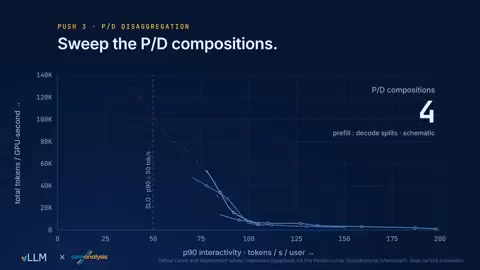

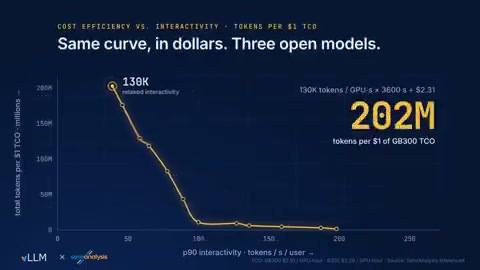
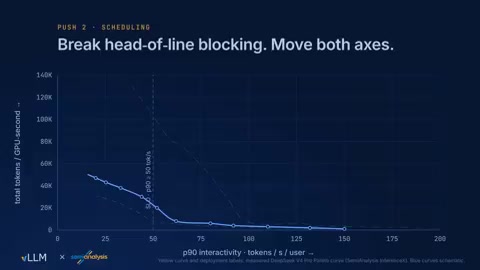
Three Layers of Full-Stack Optimization
According to the vLLM team, this optimization effort spans three critical layers that together form a complete serving stack solution.
Architecture Layer
Optimizations at the architecture layer focus on holistic request scheduling and resource allocation strategies. Agent traffic tends to be bursty and highly concurrent — large numbers of requests can arrive simultaneously, and the lifetime of each request varies considerably. A well-designed architecture must maintain high throughput while keeping tail latency in check, preventing requests from waiting indefinitely due to resource contention.
Framework Layer
Framework-layer optimizations center on request orchestration and scheduling logic. vLLM is well known for PagedAttention and continuous batching, but in agentic scenarios — with frequent context reuse and multi-turn conversations — the framework must go further, improving KV cache management and reuse efficiency to reduce the overhead of redundant computation.
A closer look at the key technologies: PagedAttention is vLLM's core innovation, inspired by the virtual memory paging mechanism in operating systems. Traditional inference frameworks pre-allocate contiguous KV cache memory blocks for each request, leading to significant memory fragmentation and waste. PagedAttention divides the KV cache into fixed-size "pages" that are dynamically allocated and reclaimed on demand, dramatically improving memory utilization and allowing a single GPU to serve far more concurrent requests. Continuous batching solves a different problem: traditional static batching requires waiting for an entire batch to finish before admitting new requests, whereas continuous batching allows new requests to be inserted dynamically at the iteration level — as soon as one request finishes generating, its compute slot is immediately filled by the next waiting request. In agentic scenarios where output lengths vary enormously (some tool calls return very short responses, while some reasoning chains are very long), continuous batching is especially critical and can substantially reduce GPU idle time.
Runtime Layer
Runtime-layer optimizations drill down into actual execution details, including memory management, kernel execution efficiency, and hardware resource utilization. Under real agent workloads, every incremental gain at the runtime level translates directly into end-to-end response speed and overall throughput.
Validating with the AgentX Benchmark on Real-World Scenarios
One noteworthy aspect of this work is that the vLLM team did not test under synthetic or idealized loads. Instead, they chose AgentX — a public agentic benchmark released by SemiAnalysis — as their measurement framework.
AgentX is significant because it attempts to reproduce the traffic patterns of real-world agent applications rather than testing a single performance dimension. The benefits of using a public benchmark are clear: it ensures reproducibility and credibility, and it provides a consistent reference point for comparing different inference frameworks.
For engineering teams focused on inference performance, optimization data derived from a public benchmark is more actionable than vendor-defined tests, because it more closely reflects the kinds of loads encountered in actual deployments.
About SemiAnalysis and AgentX: SemiAnalysis is an independent research firm specializing in AI infrastructure and chip technology, known for deep technical analysis reports. The core value of the AgentX benchmark lies in how its traffic is constructed: it simulates typical patterns found in real agent applications — multi-tool calls, multi-turn context accumulation, concurrent task orchestration — and can surface shortcomings in inference frameworks around scheduling latency, KV cache hit rates, and head-of-line blocking far more comprehensively than synthetic benchmarks that simply measure tokens/second. The industry has long lacked a standardized evaluation framework for agentic workloads; vendor performance numbers are typically based on custom test scenarios that are difficult to compare across providers. AgentX fills this gap, offering a more compelling public reference for selecting and tuning inference engines.
Implications for AI Engineering Practice
This full-stack optimization effort from vLLM reflects a clear industry trend: inference serving optimization is evolving from "point optimizations" toward "systems optimization."
As agent applications become increasingly prevalent, the marginal returns from single-component improvements are diminishing. Real performance breakthroughs require co-design that spans architecture, framework, and runtime. This raises the bar for open-source inference engines and also means that teams deploying agent applications need to holistically evaluate a framework's behavior under multi-turn, high-concurrency conditions — not just look at single-request inference speed.
As a mainstream open-source inference engine, vLLM's continued optimization for agentic workloads provides an important technical reference for building efficient, scalable agent serving infrastructure. Developers interested in the full details can read the complete blog for specific optimization insights and benchmark results.
Note: This article is based on a preview of the technical blog published by the vLLM team. For complete architectural details and performance data, please refer to the official original post.
Related articles
A Reading Guide to Distributed Systems Classic Papers: From Beginner to Expert
A viral Hacker News list of distributed systems classic papers covering consensus algorithms, logical clocks, and the CAP theorem — a structured learning path for engineers.

Valve Is Still Weighing When and How to Launch Steam Deck 2
Valve has completed its 2026 hardware lineup with Steam Controller, Steam Machine, and Steam Frame, but Steam Deck 2 still has no set timeline. Valve says it's still weighing "how and when" to launch.
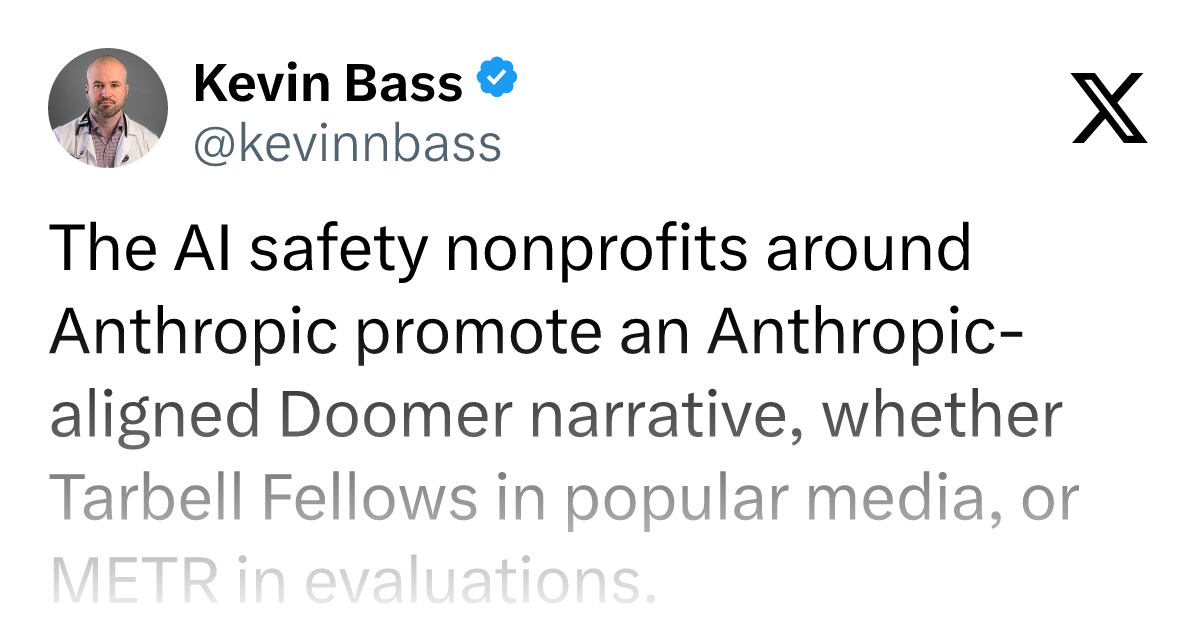
Regulatory Capture Accusations: The Controversy Over Anthropic's Capital and Policy Loop
A Hacker News post questions whether Anthropic is caught in a regulatory capture financial loop. We unpack the concept and why it's being aimed at top AI firms.