Why Is AI Agent the Next Big Thing? From Digital Employees to Enterprise Deployment
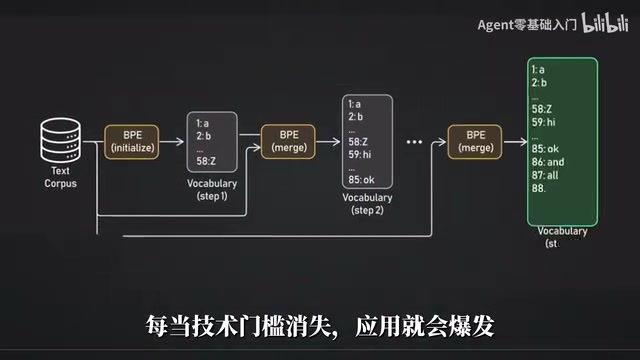
AI Agents are moving from concept to enterprise reality — hands-on builders are now the scarcest talent.
As large model API costs plummet and technical barriers fall, AI Agents are entering a pivotal shift from arms race to engineering deployment. Unlike chatbots, Agents can autonomously plan, invoke tools, handle exceptions, and deliver results — true digital employees. Real deployments in customer service, finance, and operations prove their value in high-repetition workflows. The market's scarcest resource isn't people who understand Agent concepts, but those who can actually get systems running. The article likens this moment to the early days of WeChat Official Accounts and short video, urging aspiring practitioners to act now while the window remains open.
ByteDance is pouring hundreds of billions into AI infrastructure. Jensen Huang, during his visit to China, openly declared that China is a core battleground for global AI. Meanwhile, domestic large model API prices have been slashed nearly in half within six months. These signals, taken together, point to a fundamental shift: the logic driving enterprise AI is moving away from a capital-intensive arms race and toward a relentless pursuit of engineering efficiency.
The pattern of technological evolution hasn't changed. Every time the technical barrier drops significantly, a true application explosion follows. And in this current wave, the answer is becoming increasingly clear: AI Agent (intelligent agents).
What Exactly Is an AI Agent
In one sentence: an Agent is a digital employee that can do work on your behalf.
It's fundamentally different from the chatbots we're familiar with. A chatbot operates in a back-and-forth conversational mode — its essence is question and answer. An Agent's capability boundary is far broader. It can read business data, call system APIs, autonomously break down tasks and sequence execution steps, work around problems it encounters along the way, and ultimately deliver a usable result to you.
In other words, a chatbot "chats with you"; an Agent "works for you." This difference may seem like a simple extension of capability, but it actually represents a role shift from "tool" to "executor." When a system can perceive its environment, plan a path, invoke tools, and handle exceptions, it has the foundational conditions to replace repetitive human labor.
From a technical architecture perspective, an Agent is supported by four core modules: the perception layer (receives user instructions or environmental data), the planning layer (the large language model responsible for task decomposition and decision-making), the tool layer (calls external APIs, databases, code executors, etc.), and the memory layer (stores context and interaction history). It is precisely this closed-loop mechanism of "perceive → plan → act → feedback" that distinguishes Agents from single-turn chat models. Current mainstream Agent frameworks include LangChain, AutoGen, and CrewAI, which provide capabilities such as task orchestration, tool registration, and multi-agent collaboration — significantly lowering the development barrier. It's worth noting that Agents are not all-powerful. In scenarios with ambiguous boundaries, requirements for highly creative judgment, or complex ethical decisions, their reliability still has notable limitations. This is exactly where fallback mechanisms need to be most carefully designed during engineering deployment.
What Does an Agent Look Like Inside an Enterprise
These capabilities are not theoretical — they are already running in real business environments.
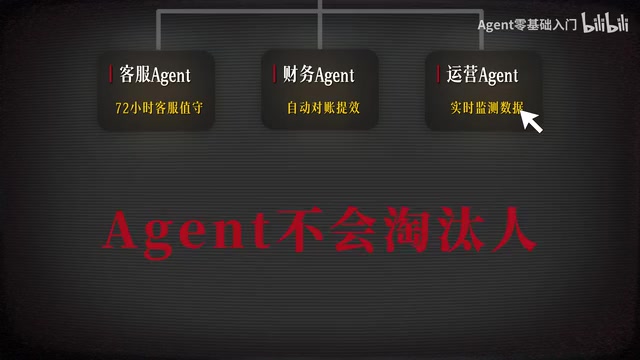
A customer service Agent can operate 24/7 and handle 90% of common inquiries without any human intervention. A finance Agent can automatically verify invoices and generate reports, compressing a month-end reconciliation process from three days down to three hours. An operations Agent can continuously monitor backend data — automatically triggering restocking when inventory runs low, and automatically sending alerts when anomalies appear.

What these three types of scenarios have in common is that they all involve roles with clear processes, well-defined rules, and high repetition. The value Agents bring in these areas isn't about replacing human judgment — it's about freeing people from mechanical, repetitive labor.
It's important to emphasize: Agents won't directly make people obsolete. But there will be a noticeable gap between those who can use Agents and those who can't. This is the new challenge that this wave of technological change poses to individual professional capabilities.
The Signals the Job Market Is Sending
With the peak hiring season approaching, job descriptions on recruitment platforms are already starting to feature phrases like "Agent deployment experience."
Imagine two candidates for the same position: one lists "proficient in office software," the other writes "independently built a customer service Agent and a reporting Agent." Which resume a hiring manager clicks first is obvious.
What's worth paying attention to is the real gap in the market. There's a pointed observation that captures it well: what's truly scarce right now isn't people who "understand Agents" — it's people who can take them from a PowerPoint slide into actual business operations.
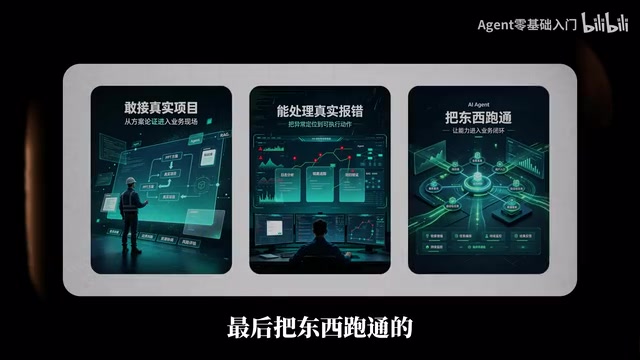
People who know about RAG (Retrieval-Augmented Generation) and understand Agent architecture are no longer rare. But people who are willing to take on real projects, handle real error messages, and ultimately get the system running — "you can't find one in ten." This capability gap is precisely where the opportunity window lies for ordinary people.
RAG (Retrieval-Augmented Generation) is one of the most commonly used core technologies in enterprise Agent deployment today. The principle is straightforward: before a large model generates a response, it first retrieves relevant document fragments from an external knowledge base, then feeds those fragments as context into the model along with the original query. This allows the model's answers to be grounded in the company's private data rather than relying solely on general knowledge from training. This mechanism effectively addresses the two major pain points of large models: "hallucination" and outdated knowledge. For enterprise customer service Agents, internal knowledge Q&A Agents, and similar use cases, RAG is virtually a standard architecture. Mastering RAG means being able to complete engineering tasks such as vector database selection (e.g., Chroma, Milvus, Pinecone), document chunking and embedding, and retrieval recall optimization — which is exactly the dividing line between "heard of it" and "actually done it."
The Opportunity Window and Learning Path
The current Agent opportunity can be compared to the early days of WeChat Official Accounts ten years ago, or short-form video five years ago — the first people to capture the dividends were rarely the most technically sophisticated. They were the ones who moved first.
This reasoning has a solid real-world logic. In a phase where technology hasn't fully proliferated and industry standards haven't solidified, the experience accumulated by early movers is itself a competitive moat. As the Agent toolchain matures and API costs continue to decline, the barrier to hands-on practice is dropping rapidly.
On learning pace, the recommendation is simple: two hours a day, three months of consistency — enough to move Agent from "heard of it" to "done it." The feasibility of this time commitment is itself evidence that the technical barrier is genuinely coming down.
From getting started to real deployment, a clear learning path looks roughly like this: understand the foundational capabilities of large models → master RAG and knowledge base construction → learn Agent architecture and tool calling → move into engineering deployment with real projects and exception handling. What truly separates people, more often than not, is that final step of "actually getting the thing to run."
A Final Word
This wave of applications centered on Agents is, at its core, an inevitable consequence of falling technical barriers. For individuals, rather than agonizing over whether to get involved, it's worth accepting a simple reality: the wave won't wait, but the learning window is still open.
For enterprises, Agents don't present a question of whether to adopt them — they present an engineering challenge of how to deploy them efficiently. Whoever can move intelligent agents from proof-of-concept to a functioning business loop first will be the one who gains the efficiency advantage in this competitive landscape.
Related articles
AI Agent Fundamentals: The Three Core Components — Brain, Memory, and Tools
A beginner's guide to AI Agents: covering the three core components (brain, memory, tools), four stages of LLM deployment, and why Agents matter for real business use cases.

Boycotting Software That Doesn't Support Linux: One Developer's Philosophy of Choice
A Linux-only developer shares his philosophy of boycotting non-Linux software — without sacrificing productivity — and explains how coding agents like Claude Code are closing the gap with commercial tools.
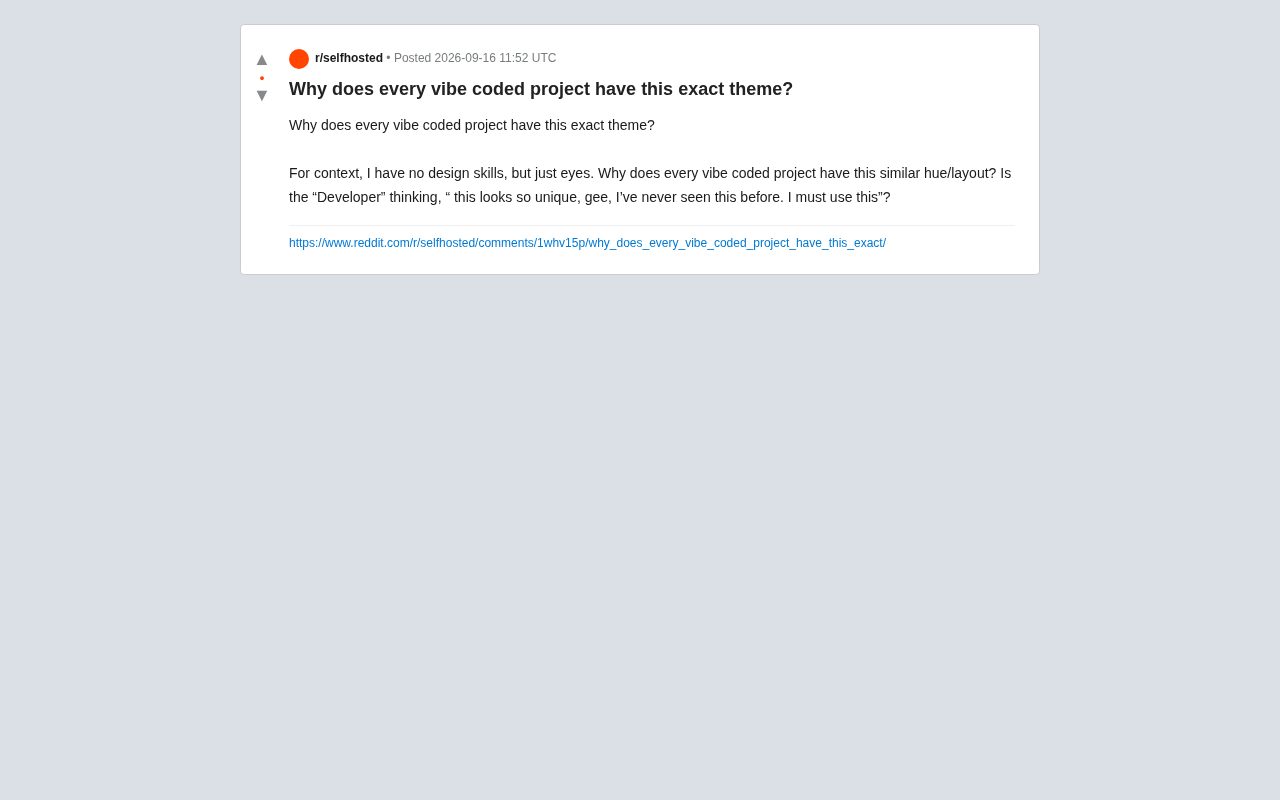
Why Do All AI-Generated Projects Look the Same? The Aesthetic Homogenization Problem in Vibe Coding
Why do vibe coding projects all use purple gradients and dark glassmorphism? We break down the technical roots of AI aesthetic homogenization and how to escape it.