Deep Dives
247 articles
 Deep Dives
·4 min
Kortix Open-Sources Agent Computer Use: A Rust-Powered CLI Tool for AI Computer Control
Kortix AI open-sources Agent Computer Use, a high-performance Rust CLI tool enabling AI agents to control computers. Explore its architecture, advantages over Anthropic's Claude Computer Use, and future of open-source computer control tools.
Read more →
 Deep Dives
·3 min
LLM 0.32 Refactor: How Message Sequences and Streaming Chunks Are Reshaping Python LLM Interactions
Simon Willison releases LLM 0.32a0 alpha with message sequences and typed streaming chunks, redefining how Python developers interact with LLMs while maintaining full backward compatibility.
Read more →
 Deep Dives
·4 min
Agent, MCP, and Function Calling: A Complete Guide to Their Differences and Relationships
A deep dive into the relationships between AI Agent, MCP protocol, Function Calling, and Prompt. From basics to full architecture, build a clear cognitive framework for AI app development.
Read more →
 Deep Dives
·3 min
Claude's Advisor Strategy: Small Models Execute, Large Models Supervise — A New Cost-Saving Paradigm for AI Agents
Anthropic's Advisor Strategy lets Sonnet execute tasks while Opus serves as advisor, cutting costs 12% while boosting SWE-Bench by 2.7 points. A new multi-model AI Agent paradigm explained.
Read more →
 Deep Dives
·3 min
Augment Code Architecture Revealed: Dedicated Subagents Replace KV Cache, Cutting Costs by 90%
Deep dive into how Augment Code uses Mercury 2 dedicated subagents to replace traditional KV cache, achieving 82% faster context compaction, 90% lower summarization costs, and 30% reduced LLM spending.
Read more →
 Deep Dives
·3 min
LLM Guardrails Index: A Deep Dive into the Most Comprehensive LLM Safety Evaluation Framework
An in-depth look at LLM Guardrails Index — the most comprehensive open-source LLM safety evaluation framework covering PII protection, jailbreak defense, and more for enterprise LLM security.
Read more →
 Deep Dives
·3 min
Why Is AI Agent Testing So Hard? How Simulation Testing Cracks the Infinite Input Space Problem
AI Agents face infinite input spaces and non-deterministic outputs. Learn how simulation testing systematically validates Agent reliability through scenario generation, environment simulation, and behavior evaluation.
Read more →
 Deep Dives
·3 min
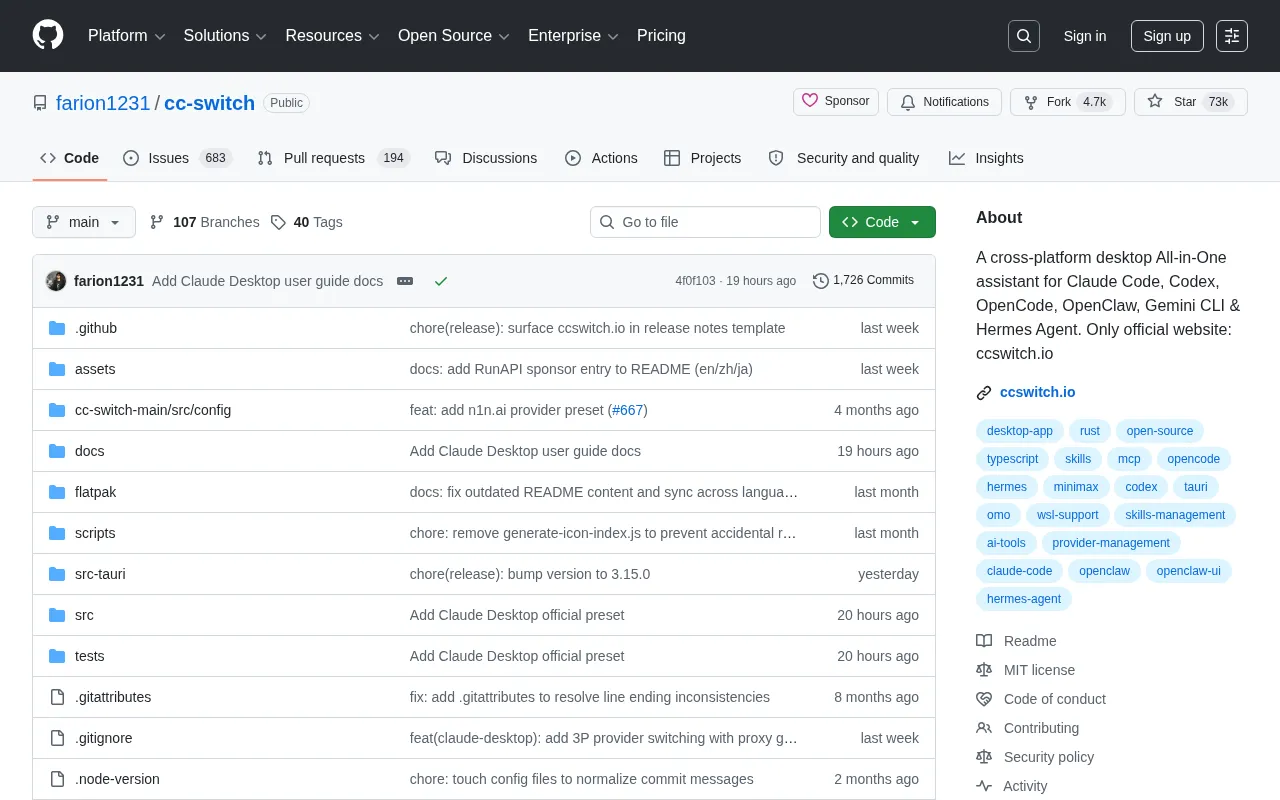
CC-Switch: An Open-Source Desktop Tool to Manage Six Major AI Coding Assistants in One Interface
CC-Switch is a Rust-based cross-platform desktop app that unifies Claude Code, Codex, Gemini CLI, and three other AI coding assistants in one interface, with 67,000+ GitHub Stars.
Read more →
 Deep Dives
·3 min
LangGraph Deep Dive: An Open-Source Framework for Building Resilient AI Agents
Deep dive into LangGraph's core architecture, StateGraph design, multi-Agent collaboration, and deployment. Learn how this 31K+ Star project helps build reliable AI Agents.
Read more →
 Deep Dives
·3 min
Leashed Open-Source Framework: A Practical Guide to AI Agent Permission Control and Security Governance
Explore Leashed, an open-source security framework for AI Agents offering policy control, audit trails, and Kill Switch mechanisms to build safe, controllable AI agent applications.
Read more →
 Deep Dives
·4 min
Deep Dive into Claude Code Source Code: A Complete Guide to Agent Loops, Context Engineering, and Architecture Design
Deep analysis of Claude Code's source architecture: Agent loop mechanism, context engineering strategies, tool system design, and permission controls. Based on the viral GitHub project how-claude-code-works.
Read more →
 Deep Dives
·3 min
Deep Dive into Claude Code's System Prompts: A 10K-Star GitHub Project Reveals How AI Coding Assistants Work Under the Hood
Deep analysis of the 10K-star GitHub project claude-code-system-prompts, fully deconstructing Claude Code's system prompts, 24 built-in tools, and sub-agent architecture for prompt engineering and AI Agent development.
Read more →
 Deep Dives
·3 min
Why WebRTC Is a Poor Fit for AI Voice: The Fatal Flaw of Latency-First Design
Analysis of WebRTC's design flaws for AI voice: its packet-dropping strategy corrupts user prompts and degrades LLM responses. Exploring how MoQ better balances data integrity with low latency.
Read more →
 Deep Dives
·3 min
Open-Source Replication of OpenAI Operator: Building a Computer-Controlling AI Agent in 48 Hours
A developer open-source replicated OpenAI's $200/month Operator in 48 hours using Anthropic Computer Use, building a full-stack Dockerized computer-controlling AI Agent with deep analysis of architecture and industry trends.
Read more →
 Deep Dives
·2 min
Claude-Claw Open Source Project Analysis: The Brain + Hands AI Agent Orchestration Architecture
Deep analysis of the Claude-Claw open-source project: how it combines Claude Code reasoning with OpenClaw GUI automation to build a brain + hands AI Agent orchestration architecture for autonomous computer control.
Read more →
 Deep Dives
·3 min
AI-Assistant Open Source Project Analysis: Building a Local AI Agent with the Anthropic API
Deep analysis of the open-source AI-Assistant project built on Anthropic Claude API for local AI Agents, covering architecture, use cases, security, and agentic AI trends.
Read more →
 Deep Dives
·3 min
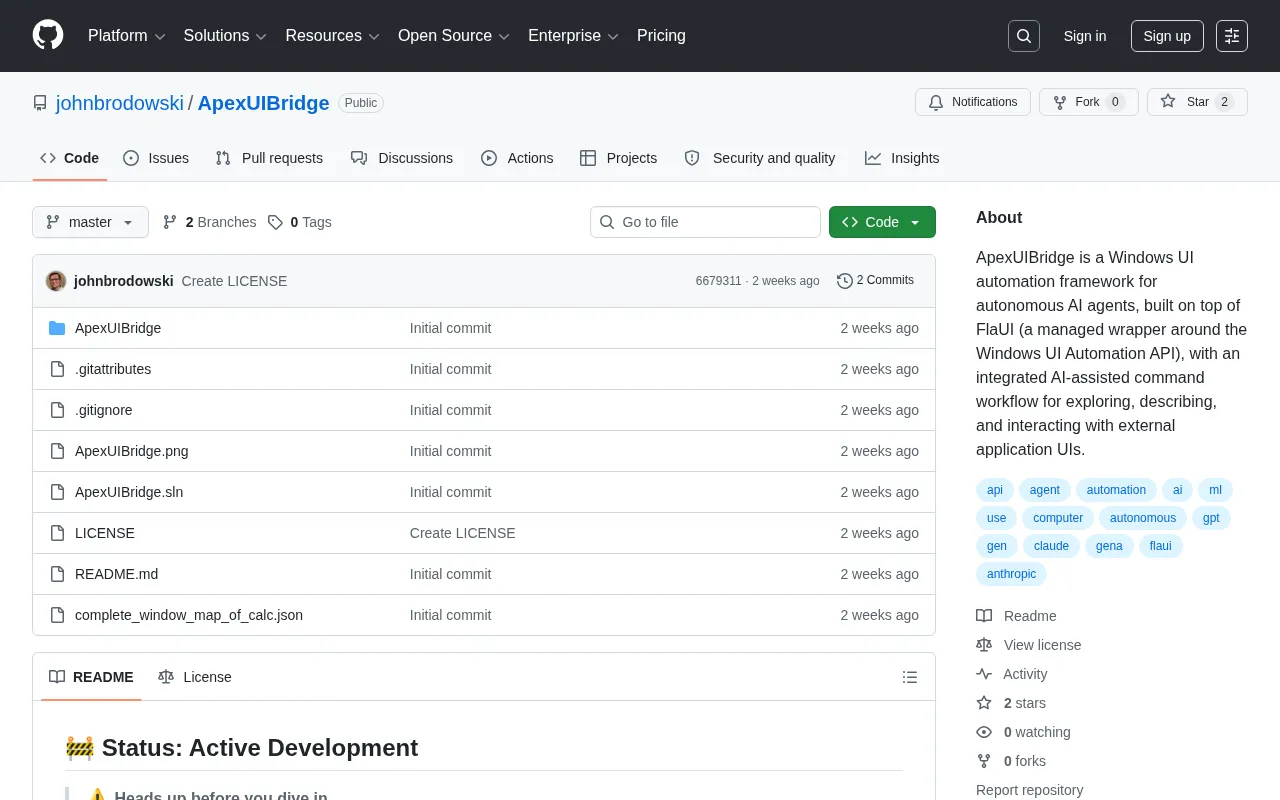
ApexUIBridge: A UI Automation Framework That Lets AI Agents Control Windows Desktop Applications
Deep dive into ApexUIBridge, an open-source AI agent automation framework built on FlaUI and Windows UI Automation API, enabling UI exploration, semantic description, and interaction with desktop apps.
Read more →
 Deep Dives
·3 min
WKAppBot SDK: Open-Source AI Agent Framework for Windows Desktop Automation
Deep dive into WKAppBot SDK, an open-source AI Agent automation framework for Windows. Features Computer Use, focusless operation, multi-AI model support, and self-healing capabilities for AI-driven RPA.
Read more →
 Deep Dives
·3 min
Open Computer Use: An Open-Source Framework for AI Agents to Autonomously Control Computers
Open Computer Use is an open-source TypeScript AI agent framework enabling automated computer control via browser, terminal, and desktop. Learn about its features, architecture, and comparison with Claude Computer Use.
Read more →
 Deep Dives
·2 min
application-use: A Native macOS Desktop Automation CLI Tool Rivaling Anthropic Computer Use
application-use is a Go-based macOS desktop automation CLI tool designed for AI Agents. It rivals Anthropic Computer Use with a native API approach for faster, more precise app control.
Read more →