#AI voice programming
311 related articles

·3 min
HeyZoku: Command Multiple AI Coding Agents to Work Together Using Your Voice
HeyZoku is a Mac voice-first agentic dev environment that runs 10 coding agents simultaneously. Command Claude, Codex, and Cursor by name with on-device voice recognition and one-time pricing.
Read more →

·3 min
HeyZoku: Command Multiple AI Coding Agents to Work Together Using Your Voice
HeyZoku is a Mac voice-first agentic dev environment that runs 10 coding agents simultaneously. Command Claude, Codex, and Cursor by name with on-device voice recognition and one-time pricing.
Read more →

·3 min
Is a Linguistics-to-Computational Linguistics Master's Worth It? Career Prospects and Transition Advice
Is a linguistics-to-computational-linguistics master's worth it? This article analyzes career paths in computational linguistics in the AI era, the competitive advantages of a hybrid background, and practical advice for transitioning from humanities to NLP.
Read more →

·1 min
Heard: An Open-Source Tool That Adds a Voice Layer to AI Coding Agents
Heard is a free, open-source macOS tool that turns AI coding agent outputs into intelligent voice summaries, helping developers monitor multiple agents hands-free.
Read more →

·2 min
Wisprkey: A Free Tool That Enables Voice Input in Any Mac App
Wisprkey is a free Mac voice input tool with a global shortcut for voice-to-text in any app, claiming 98% accuracy and 31-language support.
Read more →

·3 min
Open Weight Models: The Strategic Game Between AI Democratization and American Competitiveness
Explore how open weight models achieve both global AI democratization and maintain U.S. competitiveness. Learn the differences between open weight, open source, and closed models, and their strategic impact.
Read more →

·4 min
Pure Vibecoding Builds a 130+ Card Multiplayer CCG: Full AI Tech Stack Breakdown
An indie dev built a 130+ card multiplayer CCG entirely through vibecoding with Claude Code, GPT, and ElevenLabs. Full AI tech stack breakdown and analysis of vibecoding's capabilities and limits.
Read more →

·3 min
Kimi K3 Reaches 2.5T Parameters, MiniMax M3 Pro Brewing Simultaneously: China's LLM Arms Race Escalates
Kimi K3 adopts new architecture with 2.5T parameters and 1M token context. MiniMax M3 Pro targets 2.7-3T. OpenAI surpasses 7M users, HY-OCR 1.5 achieves SOTA, Amap launches world model.
Read more →

·5 min
July 24 AI Daily Brief: Flux 3 Multimodal Release, Kimi K3 Lags in Testing, Qwen Tops TTS Rankings
July 24 AI news: Black Forest Labs launches Flux 3 multimodal model, Kimi K3 lags in US-UK gov tests, Alibaba Qwen tops TTS rankings, Etched raises $300M, AMD unveils MI430X.
Read more →

·5 min
Open-Source STEM Education Robot: Smart Ball-Fetching Interaction Powered by Edge AI Object Detection
An open-source STEM education robot using Edge Impulse edge AI for local object detection, teaching kids computer vision and ML through an engaging ball-fetching game with anthropomorphic design.
Read more →

·4 min
OpenAI Employee Shares How to Build an AI Work Operating System with Codex
OpenAI's Jason Liu shares how he uses ChatGPT Workbench and Codex to build an AI work OS: Chief of Staff automation, persistent threads, Skills/Plugins, browser control, and app-building methodology.
Read more →

·3 min
Spring AI Explained: Unified API, RAG, and Enterprise AI Development Practical Guide
Deep dive into Spring AI framework's core features including provider-agnostic unified API abstraction, RAG retrieval-augmented generation, and structured output to help Java developers build enterprise AI apps.
Read more →

·3 min
OpenAI Academy's European Tour: How SMEs Can Break Through with AI
OpenAI Academy visits six European nations with its SME AI Accelerator and multilingual workshops, helping small businesses overcome AI adoption barriers through real-world training and hands-on use.
Read more →

·3 min
How AI Agents Are Reshaping Enterprise Work: From Task Automation to Organizational Restructuring
Explore how AI agents are redefining enterprise work—from applied AI partnerships and multi-agent collaboration to structural workflow redesign and organizational transformation.
Read more →

·4 min
The New Coding Paradigm in the AI Era: Why You Should Generate More Code Instead of Reading Every Line
Explore the new code review mindset in the AI era: now that code is cheap, engineers should generate more code to validate critical code rather than reading every line.
Read more →

·5 min
A Beginner's Guide to Prompt Engineering: From One-Off Instructions to a Systematic Methodology
A beginner's guide to prompt engineering covering the four functions of prompts, the key differences from prompt engineering, a six-step systematic workflow, and critical technical and practical limitations.
Read more →

·3 min
Chinese Open-Source AI Conquers Silicon Valley: The Industry Upheaval Behind a 58% Compute Share
Chinese open-source AI models surged from under 10% to 58% of U.S. AI consumption. Kimi K3, DeepSeek, and Qwen are reshaping AI cost structures as DoorDash, Airbnb, and other Silicon Valley giants adopt them at scale.
Read more →
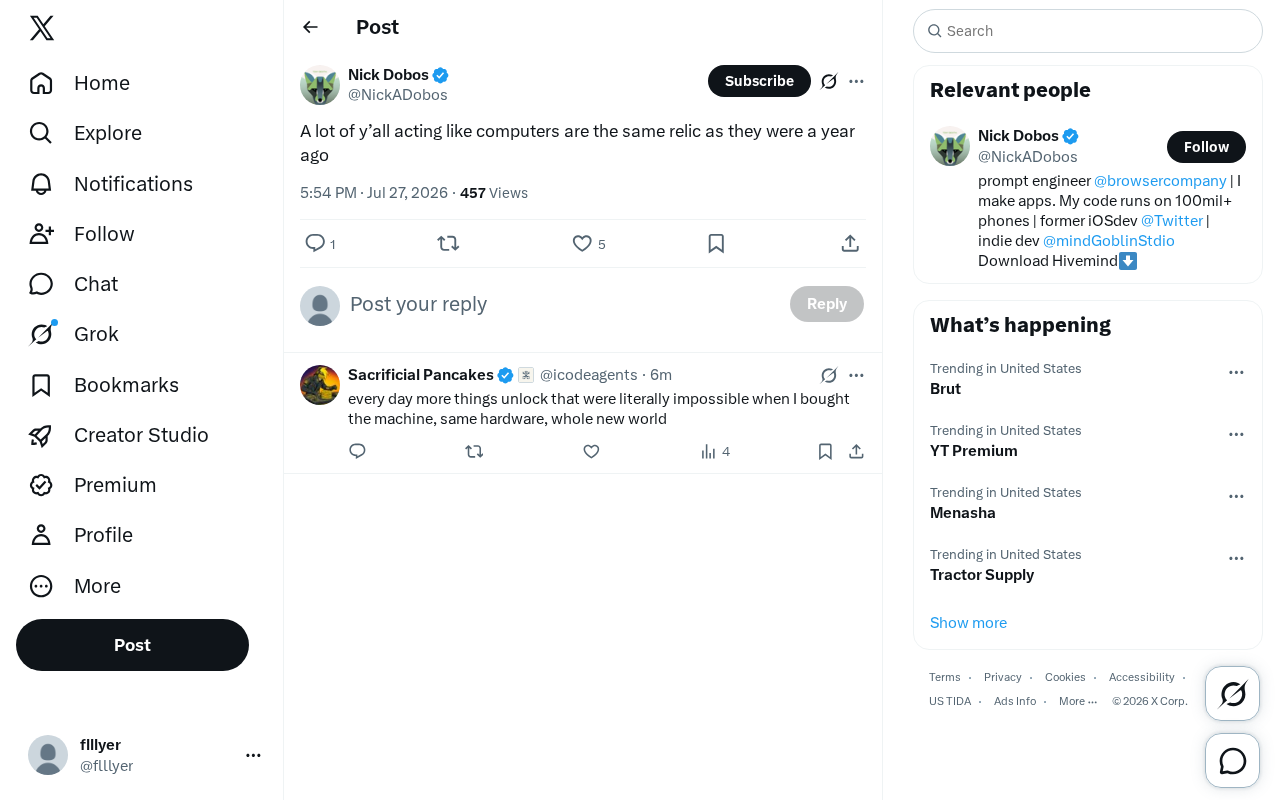
·3 min
The Computer Is Being Redefined in the AI Era — Has Your Understanding Kept Up?
Generative AI is profoundly redefining the personal computer — from passive tool to intelligent collaborator. This article examines the core shifts of the AI PC era and the productivity gap created by cognitive lag.
Read more →

·3 min
Jensen Huang's First Tweet Backs AI Open Source — But It's Really About NVIDIA's Ecosystem Anxiety
Jensen Huang's first tweet backs AI open source, but behind it lies NVIDIA's deep anxiety over CUDA ecosystem displacement. We analyze why open-source models matter and what's really at stake.
Read more →
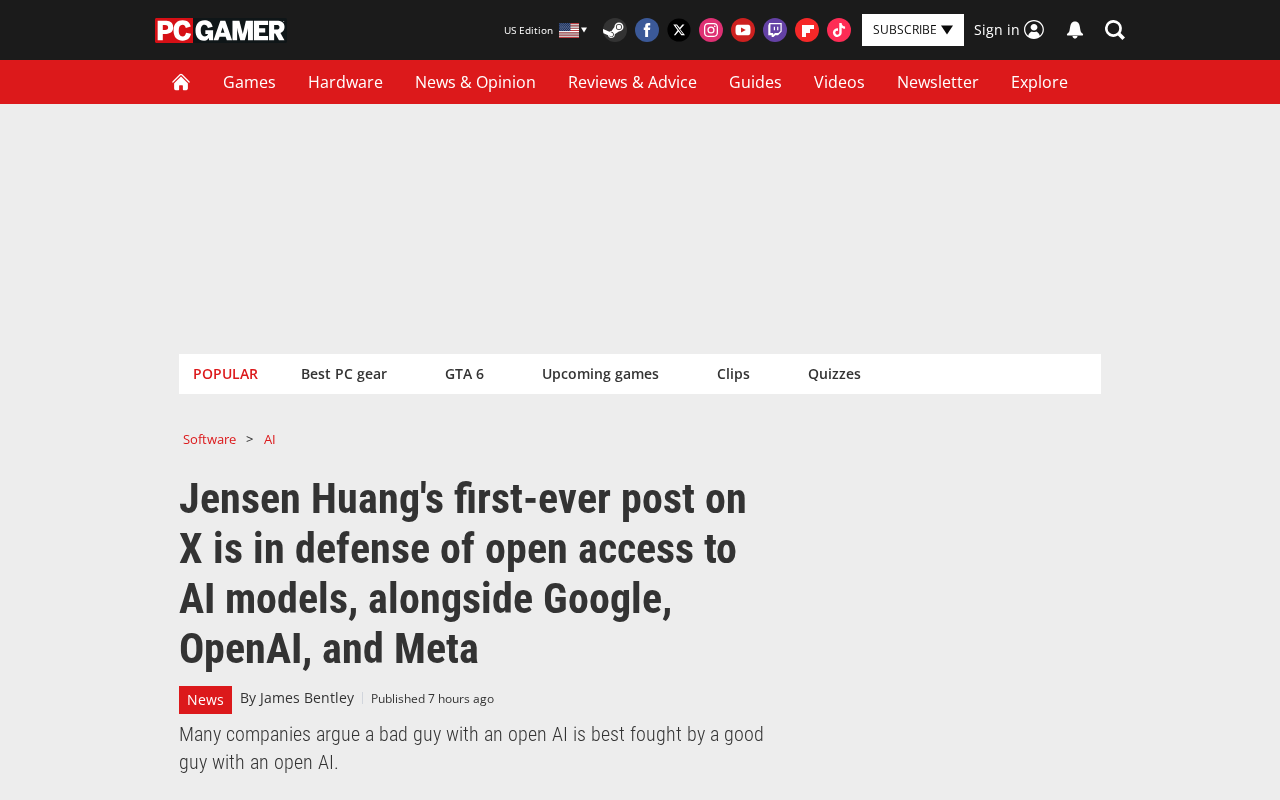
·3 min
Jensen Huang's First X Post Backs Open AI: Why the Computing Power King Sides with Open Source
NVIDIA CEO Jensen Huang's first X post champions open AI access. We analyze the business logic, policy dynamics, and the open vs. closed AI debate shaping the industry.
Read more →