#Agent harness
278 related articles
·4 min
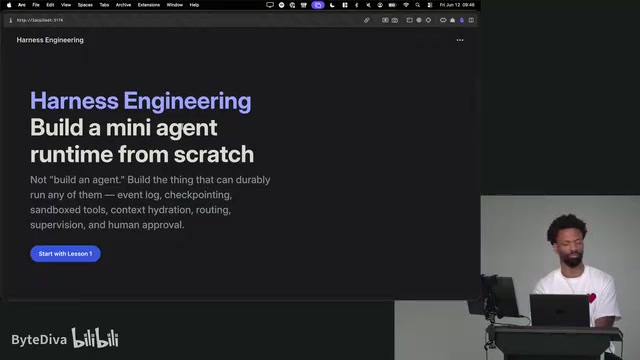
Harness Engineering: The Core Infrastructure for Taking AI Agents from Demo to Production
Deep dive into Harness Engineering: why AI Agents need memory management, durable execution, guardrails & approvals to go from demo to production.
Read more →

·4 min
Harness Engineering: The Core Infrastructure for Taking AI Agents from Demo to Production
Deep dive into Harness Engineering: why AI Agents need memory management, durable execution, guardrails & approvals to reach production. Based on Scott Moss's workshop.
Read more →

·3 min
LangSmith Triple Release: Harness, Sandboxes, and Eval Complete the Agent Engineering Toolchain
LangChain launches Harness, Sandboxes, and Eval integrated into LangSmith, creating the first complete Agent engineering toolchain from development to acceptance testing.
Read more →

·3 min
Harness Architecture in Practice: A Deep Dive into Enterprise-Level Agent Projects
A deep dive into Harness architecture in enterprise Agent projects, covering MCP protocol, sandbox isolation, multi-model scheduling, and ASGI deployment — key topics for LLM job interviews.
Read more →

·6 min
A Deep Dive into AI Agent Harnesses: The Core Engineering Behind Agent Frameworks
What is an AI Agent's harness? This article systematically dissects the core components of agent frameworks: context management, tool use, control loops, and caching strategies—revealing why the same model performs so differently across harnesses.
Read more →

·4 min
Why Do AI Agents Crash the Moment They Go Live? A Practical Guide to Harness Engineering for Runtime
A deep dive into the Claude Code source code, systematically analyzing the five-layer Harness Engineering architecture: environment, tool, control, memory, and evaluation. Build a stable runtime system for production AI Agents.
Read more →

·5 min
From Prompts to Harness Engineering: The Evolution of AI Agent Development Paradigms
Why has AI engineering methodology evolved from prompts to context engineering and now Harness engineering? This article examines three paradigms, key bottlenecks, and the Agent = Model + Harness formula.
Read more →
·6 min
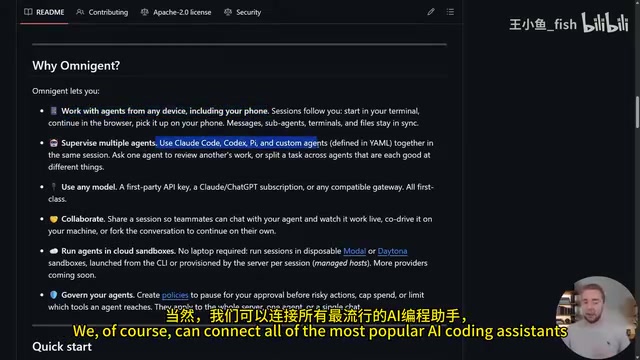
Omnigent Open-Sourced: A Meta-Harness for AI Coding Agents Built by Databricks
Databricks open-sources Omnigent, a Meta-Harness for orchestrating Claude Code, Codex, and more AI coding assistants together—with built-in guardrails, cross-model workflows, and real-time collaboration. Get started in 10 minutes.
Read more →

·4 min
Harness Engineering: The Third Phase of AI Coding and a Practical Guide to agents.md
A deep dive into Harness Engineering — the third phase of AI coding. Based on research across 2,853 GitHub repos, explore agents.md, Skills, MCP, and eight configuration mechanisms to control your AI coding assistant.
Read more →

·7 min
Harness Engineering: The Six-Layer Engineering Framework for Enterprise AI Agent Deployment
From Prompt Engineering to Harness Engineering, a deep dive into the core challenge of truly deploying AI Agents in enterprises. This article breaks down the six-layer architecture and shares real-world Hermes Agent practice.
Read more →

·6 min
LangChain 1.3 in Practice: A Complete Guide to DeepAgent Architecture and the Harness Philosophy
An in-depth look at LangChain 1.3's core modules and DeepAgent architecture—covering the Harness philosophy, LangGraph internals, HITL, memory management, and guardrails to master production-grade AI Agent development.
Read more →

·3 min
Harness Architecture Explained: The Next-Generation Design Paradigm for Agent Development
A deep dive into Harness Architecture — the next-gen Agent design paradigm. Covers its evolution from prompt engineering and context engineering, multi-agent collaboration, sandbox security, feedback loops, and why it's a must-have for LLM developer interviews.
Read more →

·3 min
Harness Engineering in Practice: A Guide to Enterprise-Grade Multi-Agent System Architecture
A deep dive into Harness Engineering architecture: building an AI procurement assistant on ERP systems, covering multi-agent orchestration, MCP protocol, ASGI deployment, and sandbox isolation.
Read more →

·2 min
Harness Engineering Architecture Explained: An Essential Skill for AI Agent Developer Roles
Harness Engineering is becoming a must-have skill for AI agent developer roles. Learn the architecture, how top agent products use it, and how to practice with LangChain DeepAgents.
Read more →

·4 min
OpenAI Agents SDK in Practice: Harness and Sandbox Separation Architecture Explained
Deep dive into OpenAI Agents SDK updates covering Harness-Compute separation, Codex-style orchestration, sandbox snapshots, skills system, and multi-agent collaboration with practical demos.
Read more →

·4 min
LLM Job Interviews: Multi-Agent and Harness Engineering Are Now Must-Know Topics
Deep analysis of LLM job interview essentials: Multi-Agent architecture, Harness engineering, Agent Loop, sandbox isolation, and memory management with career transition tips.
Read more →

·3 min
Agent Harness: A New AI Agent Paradigm from Prompt Engineering to Execution Environment Orchestration
Deep dive into Agent Harness Engineering: how loop execution and context isolation overcome the bottlenecks of prompt and context engineering in modern AI coding agents like Cursor.
Read more →

·3 min
TraeHarness Open-Sourced: 18 AI Agents Form a Virtual Development Team
TraeHarness is an open-source multi-agent framework with 18 specialized AI Agents simulating a real software team, covering requirements, architecture, development, testing, and deployment.
Read more →

·4 min
Agent Harness: The Paradigm Leap from Prompt Engineering to Harness Engineering
Deep dive into Agent Harness: tracing the paradigm evolution from Prompt Engineering to Context Engineering to Harness Engineering, and how loop-based architectures solve context loss in AI coding agents.
Read more →

·4 min
Harness Engineering in Practice: Taming AI Agents with Hermes Agent
Deep dive into Harness Engineering: using the open-source Hermes Agent framework's four-layer memory system and Skill evolution to build controllable, evolvable AI agents.
Read more →