#Agent-First framework
13 related articles

·7 min
Harness Engineering: Why a Powerful Model Isn't Enough — Here's What Really Matters
A data-deletion disaster reveals the biggest AI Agent risk: the problem isn't the model, it's Harness design. Learn context management, process standards, and permission isolation.
Read more →

·4 min
GPT-5.6 & OpenAI Super App Deep Dive: Loop Engineering as the New Paradigm Replacing Prompt Engineering
Deep dive into GPT-5.6 (Sol/Terra/Luna) and OpenAI's Super App: Loop Engineering, Parallel Agents, and Computer Use — unpacking the shift from prompt to loop engineering with real test cases and a startup framework.
Read more →

·3 min
OpenAI Merges ChatGPT and Codex: The Birth of an AI OS and Four Core Strategies
OpenAI merges ChatGPT and Codex into a Super App, unveiling the early blueprint of an AI OS. A deep-dive into four core strategies: Loop workflows, tool stack economy, multi-threading, and Sites.
Read more →

·2 min
Deep Dive into Tencent Hunyuan Hy3: How a 295B MoE Model Cracks the Agent Deployment Challenge
Tencent Hunyuan Hy3 launches with a 295B MoE architecture activating just 21B params and 256K context. Hallucination cut from 12.5% to 5.4%, MRCR nearly doubled, with MTP and EAGLE decoding and Day-0 SGLang support.
Read more →
·5 min
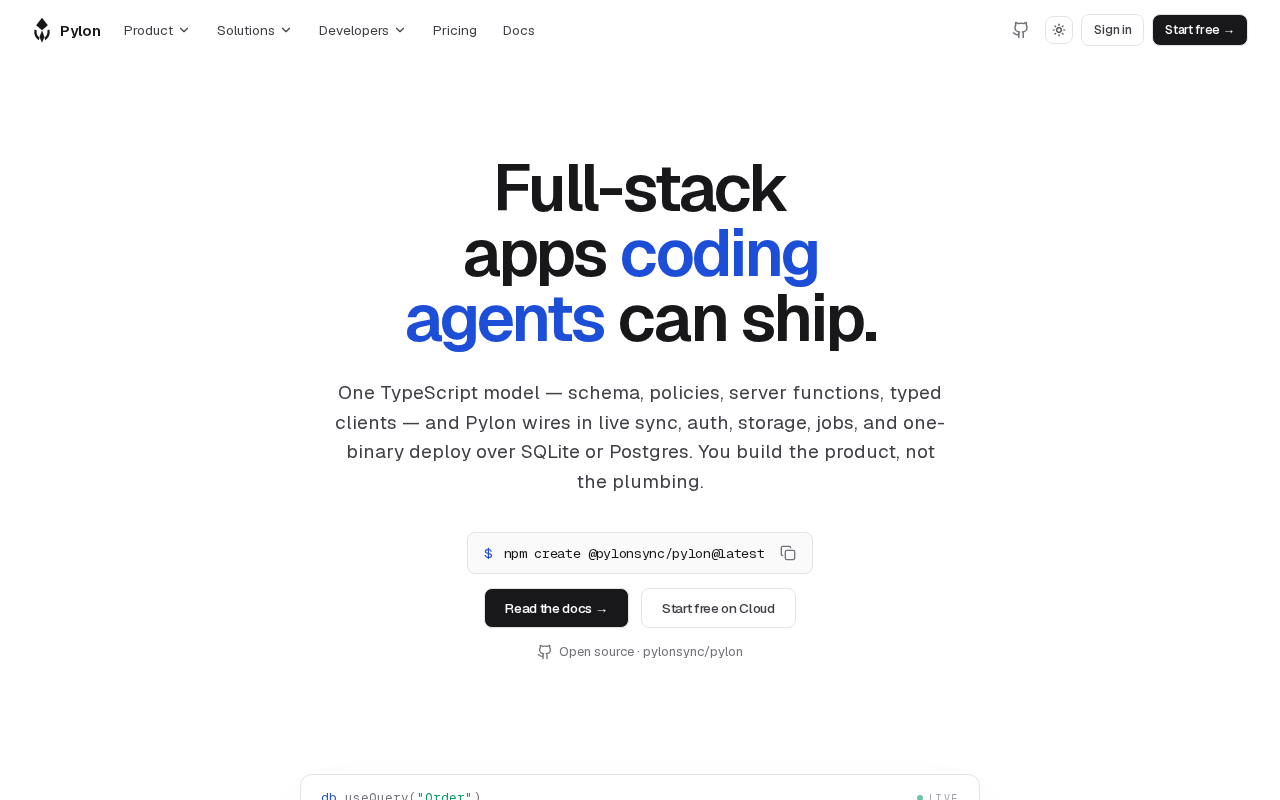
Pylon Sync: An In-Depth Look at the Full-Stack Realtime Framework Built for AI Agents
Pylon Sync is an "Agent-First" full-stack realtime framework that treats AI Agents as first-class design citizens, reducing coding errors via strong conventions.
Read more →

·5 min
Cursor Reshapes AI Programming: Cloud Agents, the Origin Platform, and a Custom-Built Foundation Model
Cursor launches three major products: cloud agents on mobile, Origin — an agent-native Git platform challenging GitHub, and a custom foundation model with 10-20x compute. AI coding enters the Agent-First era.
Read more →

·3 min
Three-Layer Workflow Optimization for Claude Code: Requirements Extraction, HTML Specs, and Embedded Verification in Practice
Anthropic engineer Arno shares a Claude Code workflow: AI-driven requirements extraction, HTML specs over Markdown, and DOM-embedded verification to boost AI-assisted coding efficiency.
Read more →
 Product Reviews
·3 min
Google Antigravity IDE Deep Dive: Can This Free AI Coding Tool Replace Cursor?
Deep dive into Google's Antigravity IDE: analyzing this free AI coding tool built by the Windsurf team, its agent-first development mode, real-world performance, and full comparison with Cursor.
Read more →
 Product Reviews
·3 min
OpenSlide: An Open-Source Framework That Lets AI Agents Write React Code to Create Presentations
OpenSlide is an Agent-native open-source slide framework that lets AI Agents write React code to generate professional presentations. Supports Claude Code, Cursor, and other coding Agents.
Read more →
 Product Reviews
·3 min
Cursor 3.0 Deep Dive: The AI Agent Command Center Rewritten in Rust
Cursor 3.0 abandons VS Code entirely, rewritten from scratch in Rust as an AI agent management platform. Deep dive into its three evolutions, Composer 2 controversy, parallel agent orchestration, and the paradigm shift from assisted to autonomous coding.
Read more →
 Deep Dives
·3 min
Single-Agent vs Multi-Agent: A Three-Step Decision Framework for Choosing the Right Architecture
Based on Anthropic's engineering practices, a detailed three-step decision framework for single-agent vs multi-agent architecture: bottleneck identification, technical feasibility, and business value filtering.
Read more →
 Expert Opinions
·2 min
Karpathy on the Future of Programmers in the AI Era: Outsource Thinking, But Not Understanding
OpenAI co-founder Karpathy explains why taste, judgment, and deep understanding remain irreplaceable for programmers in the AI era, plus startup opportunities in agent-native infrastructure.
Read more →
