#Amazon AI coding tool
236 related articles

·3 min
The Jargon Trap: Why Engineers Can Never Seem to Speak Plain Language
Why do engineers struggle to communicate in plain language? Exploring the curse of knowledge, jargon as identity, and practical tips for clearer technical communication.
Read more →

·3 min
Simplified Technical English (STE): A Cross-Disciplinary Approach to Optimizing LLM Prompts
Explore how ASD-STE100 Simplified Technical English from aviation can be applied to LLM prompt engineering. STE's disambiguation principles—controlled vocabulary, short sentences, active voice—can improve LLM output accuracy and consistency.
Read more →

·3 min
Learning to Code in the AI Era: The Worst and Best of Times
AI coding tools are reshaping software development. Is learning to code still worthwhile? This article analyzes the challenges and opportunities of learning programming in the AI era.
Read more →

·3 min
HuggingHack Update: S3 Storage, Dual-Engine Scheduling, and GGUF Inspection Get Major Upgrades
HuggingHack releases major updates with S3/MinIO storage, Ollama + vLLM dual-engine scheduling, GGUF inspection, and local accounts for enterprise-grade local LLM management.
Read more →

·4 min
Building Self-Hosted Tunnels Under Extreme Censorship: A Layered Architecture with VLESS Reality
Deep analysis of building layered tunnel architectures using VLESS+Reality to evade DPI and domestic relays with whitelisted IPs to bypass geographic blocking in extreme censorship environments.
Read more →

·5 min
Multiway Turing Machines: A New Paradigm from Single Computation to Multiple Possibilities
An in-depth analysis of Wolfram's multiway Turing machines, exploring how computation expands from single paths to multiway graph structures, and deep connections to AI search algorithms and quantum computing.
Read more →
·2 min
DeepSeek V4 Coming Soon; Meituan Open-Sources 1.6-Trillion-Parameter LongCat 2.0
DeepSeek V4 official release expected mid-July with peak/off-peak pricing; Meituan open-sources trillion-parameter MoE model LongCat 2.0 with million-token context; Cursor launches iOS app. A quick look at the latest AI industry news.
Read more →
·2 min
DeepSeek V4 Coming Soon, Meituan Open-Sources 1.6 Trillion Parameter LongCat 2.0
DeepSeek V4 launches mid-July with peak/off-peak pricing; Meituan open-sources trillion-parameter MoE model LongCat 2.0 with million-token context; Cursor debuts iOS app. A quick look at the latest AI industry news.
Read more →

·6 min
How the Creator of Redis Squeezed a 284B-Parameter DeepSeek into an Ordinary Laptop
Redis creator antirez built DS4 "Dwarf Star," a pure-C inference engine, using asymmetric quantization to compress DeepSeek V4 Flash from 500GB to 80.8GB for local 128GB unified-memory deployment at 26.7 tokens/sec.
Read more →

·6 min
How the Creator of Redis Squeezed a 284-Billion-Parameter DeepSeek Into an Ordinary Laptop
Redis author antirez built the pure-C inference engine DS4 "Dwarf Star," compressing DeepSeek V4 Flash from 500GB to 80.8GB via asymmetric quantization for local deployment on 128GB unified memory at 26.7 tokens/sec.
Read more →

·7 min
Getting Started with Codex: Installation and Usage Guide for OpenAI's AI Coding Agent
A comprehensive guide to OpenAI's new AI coding agent Codex: from concept and comparison of its four forms, to installing Git/Node.js/VS Code, configuring the API Key, and creating a workspace.
Read more →

·6 min
The AI Industrial Age Arrives: Compute Wars, Chip Reconstruction, and the GPT-5.6 Cheating Scandal Explained
Five key AI industry trends: Doubao surpasses 180 trillion daily calls, OpenAI's in-house AI chip, NVIDIA's $3-4 trillion compute forecast, China catching up, and the GPT-5.6 cheating scandal.
Read more →
·7 min
Auditing Cryptographic Libraries with AI: What We Found in Cloudflare's CIRCL
An in-depth look at using AI LLMs to audit Cloudflare's open-source cryptographic library CIRCL, covering constant-time detection, side-channel vulnerabilities, and human-AI collaboration.
Read more →

·6 min
The Boundaries of AI Coding: When Should You Show Yourself a Red Card?
As AI coding assistants like Codex become standard, the risks of overreliance grow too. Learn when developers should "show a red card," reclaim control, and safeguard code quality and responsibility.
Read more →

·7 min
Alibaba Open-Sources 2.4T Qwen Model as Chinese AI Sweeps the Global Competitive Landscape
Alibaba open-sources a 2.4 trillion parameter Qwen model and launches the Qwen Token Plan. Chinese models surge, Kimi K3 tops global rankings, and China's AI is reshaping the global competitive landscape.
Read more →

·2 min
On-Device LLMs, Custom Silicon, and 100K-GPU Clusters: AI Industry Enters Full-Spectrum Competition
Apple's 1-bit compression fits 27B models on iPhone, Meta builds custom chip Iris, China's 100K-GPU cluster goes live, Samsung enters AI PC — a deep dive into AI's new full-spectrum competition.
Read more →

·3 min
How to Choose AI Learning Books: A 5-Dimension Rational Evaluation Framework
How to evaluate AI/ML books rationally? Use these 5 dimensions—content depth, code quality, currency, community reputation, and companion resources—to choose wisely.
Read more →
·4 min
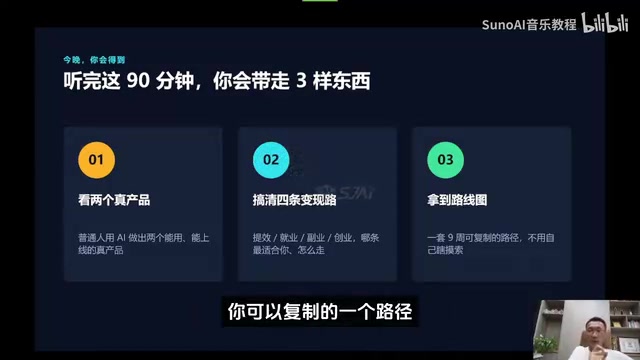
Codex Tutorial: Build Monetizable Products with AI Coding — No Experience Required
Step-by-step Codex tutorial: build a product finder tool and a flashcard mini program from scratch. Learn prompt techniques, requirements breakdown, and 4 monetization paths.
Read more →

·2 min
Cursor Usage Dropped Overnight? A Deep Dive Into the Auto Quota Anomaly
A Cursor user's Auto+Composer usage dropped from 16% to 8% overnight. Explore 4 possible causes: billing resets, silent rule changes, refunds, and UI bugs.
Read more →

·4 min
Cursor's Recursive Self-Improvement: A Complete Path to Models Training the Next Generation
Cursor ML engineer reveals Recursive Self-Improvement (RSI) in practice: dual-loop flywheels, agent-driven data, anti-cheating evals, SpaceX compute, and how models are training the next generation.
Read more →