#Claude Code DeepSeek
893 related articles
 Product Reviews
·2 min
Page Agent: Alibaba's Open-Source AI Browser Extension for Form Automation
Page Agent is Alibaba's open-source AI browser extension that automates form filling and data entry via natural language. Supports Chrome, multiple LLMs, and backend integration.
Read more →
 Tutorials
·3 min
Complete Vibe Coding Tutorial: 15 Key Steps to Building an AI Agent from Scratch
A systematic breakdown of 15 key steps for building AI Agents with Vibe Coding, covering environment setup, product docs, frontend UI, backend APIs, databases, and deployment.
Read more →
 Tutorials
·3 min
Claude Agent SDK + LiteLLM + Local LLMs: Building a Zero-Cost AI Agent Platform
Learn how to redirect Claude Agent SDK API requests to local LLMs via LiteLLM Proxy, achieving zero-cost inference while retaining full agent framework capabilities.
Read more →
 Deep Dives
·2 min
AI Agent Development Methodology: A Complete Guide from ReAct to Enterprise-Grade Tech Stack
A deep dive into AI Agent development methodology, from the ReAct theoretical framework to a four-layer enterprise tech stack covering model services, Agent types, LangChain, and production deployment.
Read more →
 Tutorials
·2 min
LangGraph vs LangChain: How to Choose Your Agent Development Framework
In-depth comparison of LangGraph vs LangChain: controllability, extensibility, and FastAPI-powered performance. Covers storage, enterprise private deployment, and migration guidance for agent developers.
Read more →
 Tutorials
·3 min
Getting Started with Spring AI: How Java Developers Can Integrate Large Language Models
Spring AI is the LangChain for Java, helping Java developers integrate LLMs using Spring Boot conventions. This guide covers its 6 core features, setup requirements, and enterprise positioning including RAG, Tool Calling, and Chat Memory.
Read more →
 Tutorials
·3 min
Claude Code Beginner's Guide: Installation, Cost-Saving Solutions & Source Code Architecture Analysis
Claude Code beginner tutorial covering installation, common issues, low-cost alternatives for budget users, and deep analysis of 8 Agent design patterns revealed by the 510K-line source code leak.
Read more →
 Tech Frontiers
·3 min
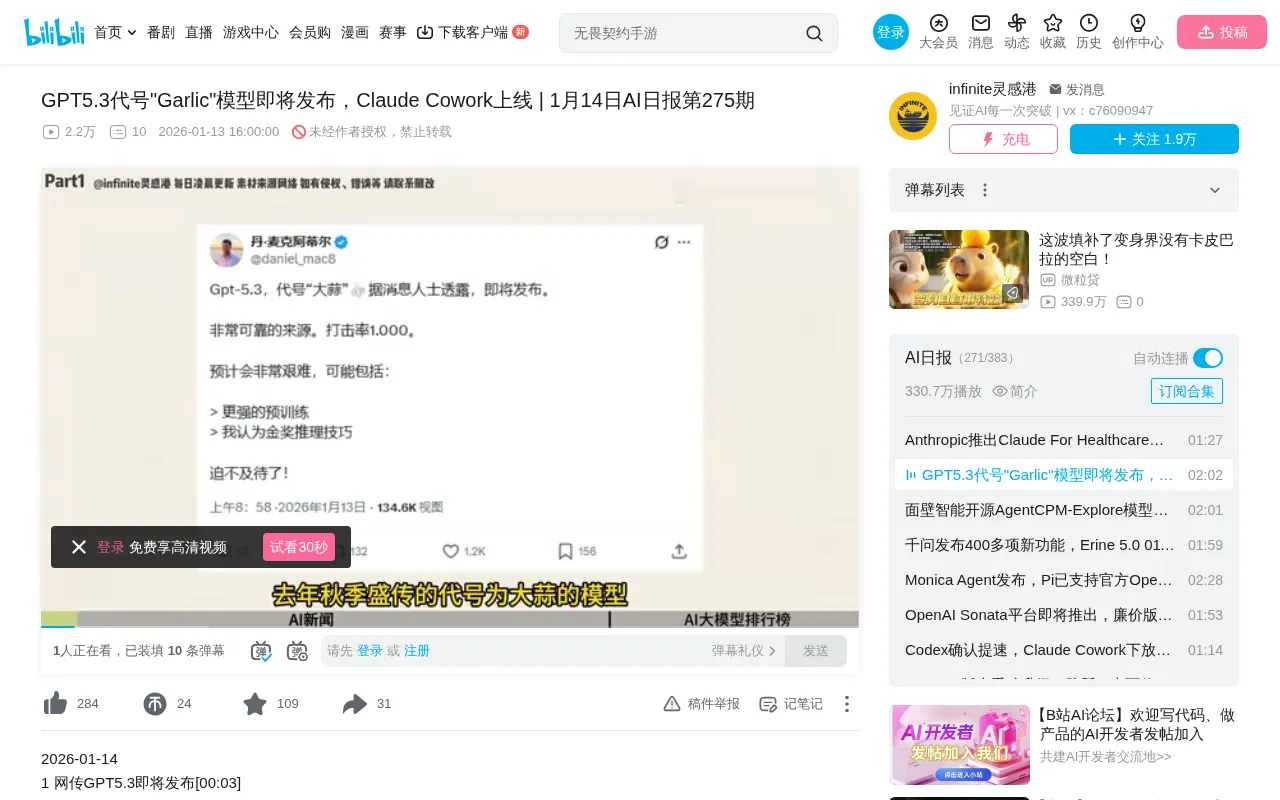
GPT-5.3 Codenamed "Garlic" Coming Soon, Claude Cowork Launches Targeting Non-Developers
OpenAI's GPT-5.3 codenamed Garlic is coming soon, Anthropic launches Claude Cowork for non-developers, plus breakthroughs in Baichuan M3 medical and SiNong agricultural AI models.
Read more →
 Product Reviews
·2 min
Kimi K2.6 In-Depth Review: Comprehensive Evaluation of Coding, Multi-Agent, and Frontend Development Capabilities
In-depth review of Kimi K2.6 open-source model across frontend development, multi-agent collaboration, and long-horizon tasks, covering four professional modes, 3D/SVG generation, and pricing analysis.
Read more →
 Tutorials
·2 min
Five Core Differences Between Claude Code and Traditional AI Chat Tools
Compare Claude Code vs traditional AI chat tools like ChatGPT across 5 dimensions: interaction, context, execution, memory, and tool invocation to decide if this AI coding assistant is right for you.
Read more →
 Product Reviews
·3 min
Kimi K2.6 In-Depth Review: A Complete Breakdown of Its Coding and Agent Capabilities
In-depth review of Kimi K2.6's coding, Agent collaboration, and visual development capabilities. #1 open-source on SWE-Bench Pro, 300 parallel sub-agents, API priced at 1/3 of competitors.
Read more →
 Tech Frontiers
·2 min
Kimi K2.5 Fully Open-Sourced: Deep Dive into 1T Parameter MoE Architecture + Agent Cluster Capabilities
Deep dive into Moonshot AI's fully open-sourced Kimi K2.5: 1T parameter MoE architecture, Vision-to-Code capabilities, and 100-Agent parallel cluster system topping open-source benchmarks.
Read more →
 Tutorials
·3 min
Deep Agents: Enterprise-Grade Agent Engineering and Deep Research Implementation Guide
Learn how the Deep Agents framework solves enterprise AI Agent challenges like tool sprawl and context pollution, with a complete Deep Research implementation guide covering task decomposition, multi-source integration, and structured report generation.
Read more →
 Product Reviews
·3 min
Local Deployment of Qwen 3.6 27B on 4×3080Ti: Real-World Coding Test with OpenCode
Real-world test of Qwen 3.6 27B FP8 deployed on 4×3080Ti 16GB modded GPUs with OpenCode for system tool development. Covers hardware setup, inference speed, context management, and productivity gains.
Read more →
 Product Reviews
·2 min
The Truth Behind Windsurf's "Unlimited Credits" Hack: Shared Account Pool Rotation Mechanism and Risk Analysis
Deep analysis of how Windsurf's "unlimited credits" actually works—third-party plugins rotate shared account pools, not an official bug. Covers mechanisms, security risks, and safer alternatives.
Read more →
 Tutorials
·2 min
Codex++: Connect Codex to DeepSeek, GLM, and Other Chinese LLMs
Codex++ is a free open-source tool that connects Codex to DeepSeek, GLM, and other Chinese LLMs while unlocking plugin features in API mode. Full setup guide included.
Read more →
 Tutorials
·2 min
Building a Multi-Platform Content Distribution Assistant with Zero Code: AI Coding in Practice
Build a multi-platform content assistant with zero code using AI Coding tools. Input a Bilibili video link to auto-generate copy for Xiaohongshu, WeChat, Weibo, and Douyin in 30 seconds.
Read more →
 Tutorials
·2 min
Pi Agent in Practice: A Complete Guide to the Minimalist Terminal AI Coding Assistant
Hands-on experience with Pi Agent, an open-source terminal AI coding assistant, covering agents.md config, Terraform automation, and session management for DevOps engineers.
Read more →
 Tutorials
·1 min
The Indie Developer's Budget Meal: A Practical Guide to Launching a Complete App at Zero Cost
How can indie developers launch a complete app at zero cost? A verified free tech stack covering AI coding (Cline+OpenRouter), Next.js, Neon database, Vercel deployment, and more.
Read more →
 Product Reviews
·1 min
OpenClaw Hands-On: Can AI Automation Replace Traditional RPA?
A hands-on evaluation of OpenClaw across two real-world cases, comparing AI automation vs. traditional RPA on Android and Windows, and analyzing how the Skills module reduces token costs.
Read more →