#Coding Agent orchestration
753 related articles

·3 min
DeerFlow: Deep Dive into ByteDance's Open-Source Long-Horizon SuperAgent Framework
Deep analysis of ByteDance's open-source DeerFlow long-horizon SuperAgent framework, covering six core components, architecture design, use cases, and industry significance.
Read more →

·2 min
General Agents Are Essentially Coding Agents: The Paradigm Shift from Tool Calling to Code Execution
Explore why general AI agents are essentially coding agents. From Turing completeness to composability and verifiability, discover the paradigm shift from Function Calling to Code as Action.
Read more →

·3 min
Self-Hosting a Code Review AI Agent: From Architecture Design to Engineering Implementation
A deep dive into building and self-hosting a code review AI Agent from scratch, covering architecture design, context management, model selection, and noise control.
Read more →

·3 min
Graph Engineering: The Core Paradigm and Design Patterns for AI Agent Orchestration
Explore how graph engineering uses state machines and directed graph structures to constrain AI agent behavior, covering reflection, routing, human-in-the-loop, and parallel execution patterns.
Read more →

·3 min
Graph Engineering: The Core Paradigm and Design Patterns for AI Agent Orchestration
Deep dive into how graph engineering uses state machines and directed graphs to constrain AI agent behavior, covering reflection, routing, human-in-the-loop, and parallel execution patterns.
Read more →

·3 min
13 Models, 4 Agents: Who Is the Best Coding AI?
A systematic evaluation of 13 LLMs, 4 agent frameworks, and 5 programming languages reveals the real differences in AI coding capabilities and optimal model-framework pairing strategies.
Read more →

·5 min
Customer.io Summer Release Breakdown: Geofencing, Live Notifications, and Multi-Channel Engagement Get a Major Upgrade
Deep dive into Customer.io's major summer release: geofencing triggers, live notifications, flexible SMS providers, notification inbox, and WhatsApp management upgrades for unified multi-channel engagement.
Read more →

·3 min
What Kind of GUI Do AI Agents Need? The Evolution from Chat Boxes to Task Consoles
Exploring GUI design for AI Agents: why chat boxes fall short, and how ideal agent interfaces need task visualization, human-in-the-loop intervention, state presentation, and multi-agent orchestration.
Read more →
·2 min
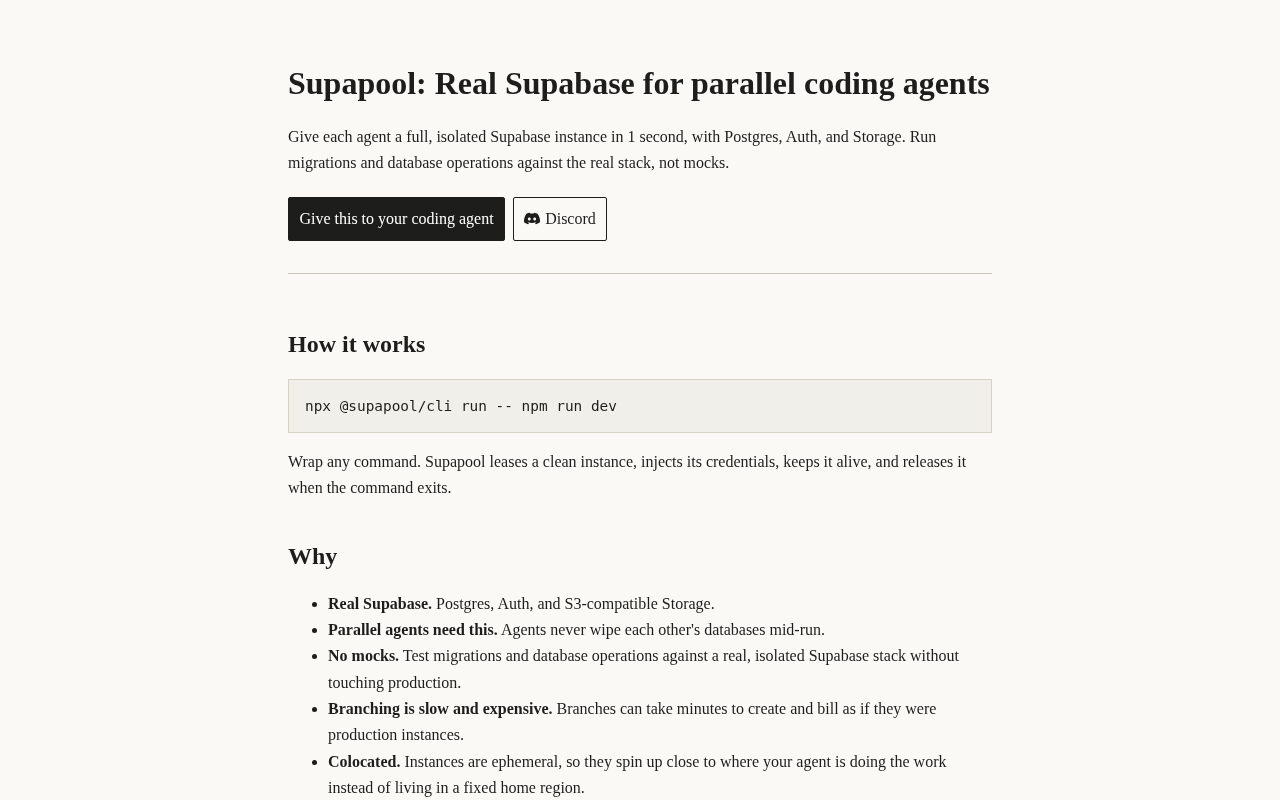
Supapool: Creating Isolated Databases for AI Coding Agents in 400 Milliseconds
Supapool uses pool prewarming to create isolated Supabase database instances in 400ms for AI coding agents like Claude, Cursor, and Devin, solving the database isolation challenge.
Read more →

·2 min
Supapool: Creating Isolated Databases for AI Coding Assistants in 400 Milliseconds
Supapool uses pool prewarming to create isolated Supabase database instances in 400ms for AI coding assistants like Claude, Cursor, and Devin—a prime example of AI-native infrastructure.
Read more →

·3 min
Jina v3 Matryoshka Embeddings in Practice: Cut Vector Storage Costs by 75%
Use Jina v3 Matryoshka embeddings to truncate 1024-dim vectors to 256-dim, cutting Pinecone storage costs by 75% while maintaining retrieval quality with task-specific LoRA adapters and circuit breakers.
Read more →

·3 min
Jina v3 Matryoshka Embeddings in Practice: Cut Vector Storage Costs by 75%
Use Jina v3's Matryoshka embeddings to truncate 1024-dim vectors to 256-dim, cutting Pinecone storage costs by 75%. Covers dimension truncation, task-specific LoRA adapters, and circuit breakers for reliable RAG systems.
Read more →

·2 min
Task Monki: An Open-Source Multi-Agent Collaborative Programming Workflow Platform
Task Monki is an open-source desktop app that lets coding agents handle the full dev workflow from task planning to Pull Request, with multi-agent parallel execution, code review, and collaborative discussion.
Read more →

·3 min
Agent-Manager: Unified Management of Multiple AI Coding Assistants with Tmux
Agent-Manager is an open-source Tmux-based TUI for managing multiple AI coding agents like Claude Code, Codex, and OpenCode in a unified terminal interface with quick switching and session persistence.
Read more →

·3 min
Agent-Manager: Unified Management of Multiple AI Coding Assistants with Tmux
Agent-Manager is an open-source Tmux-based terminal tool for managing multiple AI coding agents like Claude Code, Codex, and OpenCode in a unified interface with quick switching and session persistence.
Read more →

·4 min
Liminal: A Shared Team Second Brain Workspace for Humans and AI Agents
Liminal is a shared workspace designed for human-AI Agent collaboration, auto-rendering Markdown and HTML into visual interfaces with real-time sync and team collaboration.
Read more →

·3 min
Gstack Agents: Open-Source AI Expert Panel Joins Your Google Meet Video Calls
Gstack Agents is an MIT open-source tool that adds 18+ AI personas (CEO, CSO, YC partner, etc.) as voice bots to Google Meet, providing real-time multi-perspective structured feedback on your demos.
Read more →

·2 min
Grok 4.5 Released: A Next-Gen AI Model Targeting Coding and Agentic Tasks
Grok 4.5 is officially released, purpose-built for coding, agentic tasks, and knowledge work. A deep dive into its core positioning, efficient reasoning, three key use cases, and value for developers.
Read more →

·3 min
Gstack Agents: Open-Source AI Expert Panel Joins Your Google Meet Video Conferences
Gstack Agents is an MIT open-source tool that adds 18+ AI personas (CEO, CSO, YC Partner, etc.) as voice bots to Google Meet, providing real-time multi-perspective structured feedback on your product demos.
Read more →

·3 min
HeyZoku: Command Multiple AI Coding Agents to Work Together Using Your Voice
HeyZoku is a Mac voice-first agentic dev environment that runs 10 coding agents simultaneously. Command Claude, Codex, and Cursor by name with on-device voice recognition and one-time pricing.
Read more →