#GGUF vs AWQ
20 related articles

·2 min
Qwen Scribe: A Deep Dive into the Local Speech Transcription Tool for Apple Silicon
Qwen Scribe is a local speech transcription tool optimized for Apple Silicon, running fully offline with Qwen models. Explore its technical features, privacy benefits, and comparison with Whisper.
Read more →
·2 min
Qwen Scribe: A Deep Dive into the Local Speech Transcription Tool for Apple Silicon
Qwen Scribe is a local speech transcription tool optimized for Apple Silicon, powered by Qwen models for fully offline use. Explore its technical features, privacy benefits, and comparison with Whisper.
Read more →

·4 min
Getting Started with AI Agent Development: A Complete Guide from Concept to Practice
A comprehensive guide to AI Agent architecture and development, covering automated marketing, intelligent customer service, and investment analysis scenarios with single and multi-agent collaboration.
Read more →
·3 min
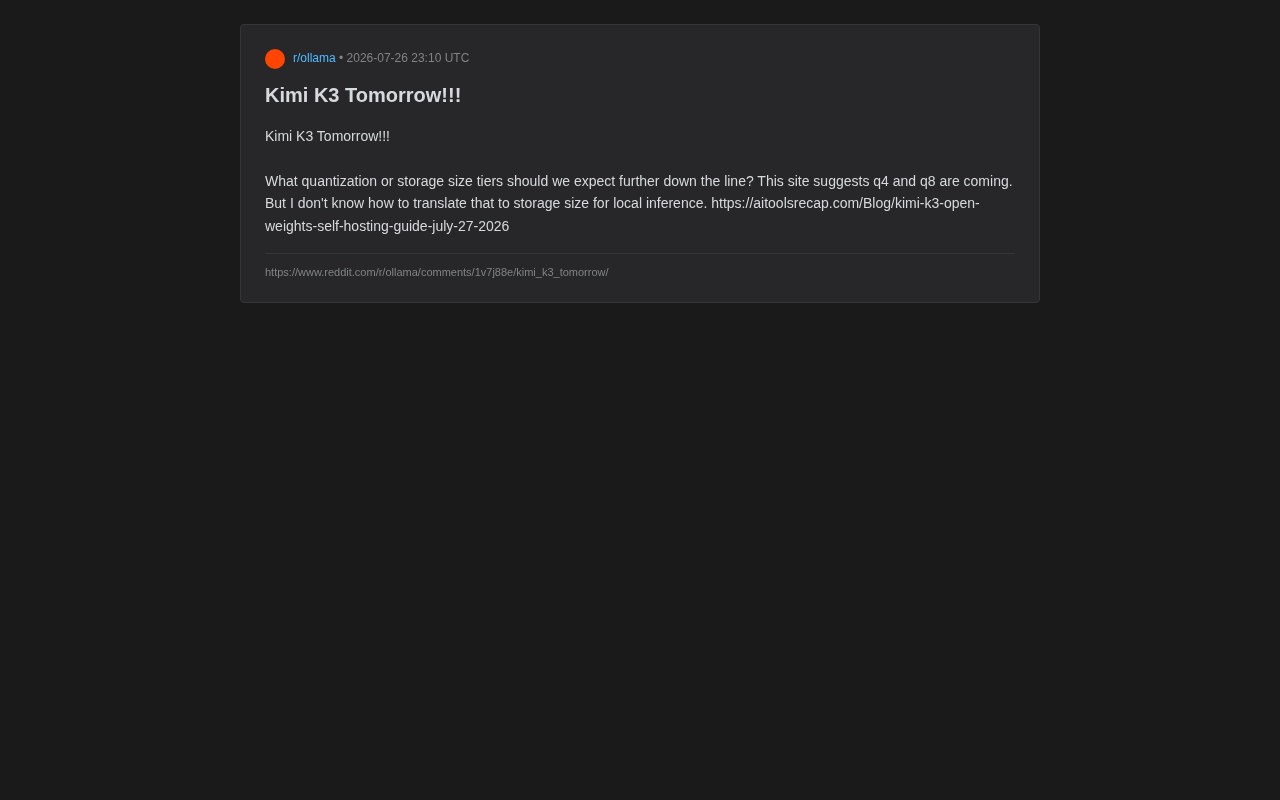
Kimi K3 Local Deployment Guide: Storage Requirements for q4 and q8 Quantization Explained
Detailed analysis of Kimi K3 quantization deployment options, comparing q4 vs q8 storage requirements, precision trade-offs, and hardware configurations for local self-hosting.
Read more →
AirLLM: How a 4GB GPU Can Run a 70B Mo…
·2 min
AirLLM: How a 4GB GPU Can Run a 70B Model — Core Principles and Use Cases
AirLLM is an open-source project that uses layer-by-layer inference to run 70B LLMs on a single 4GB GPU. Learn how it works, its tradeoffs, and ideal use cases.
Read more →
The Guardian Angels Framework: How LLM…
·3 min
The Guardian Angels Framework: How LLM Personalization Can Achieve Both Efficiency and Data Security
The Guardian Angels framework shows how LLM personalization can achieve both productivity and data security through local deployment, differential privacy, and tiered permissions.
Read more →

·4 min
Can Local Models Replace Cloud AI? Five Key Questions That Determine Success or Failure
71% of ChatGPT queries can be handled by local models — but "going local" isn't a one-step move. This guide breaks down the three tiers of local models, license traps, deployment methods, and cost logic to help you find the optimal routing strategy between local and cloud AI.
Read more →
·3 min
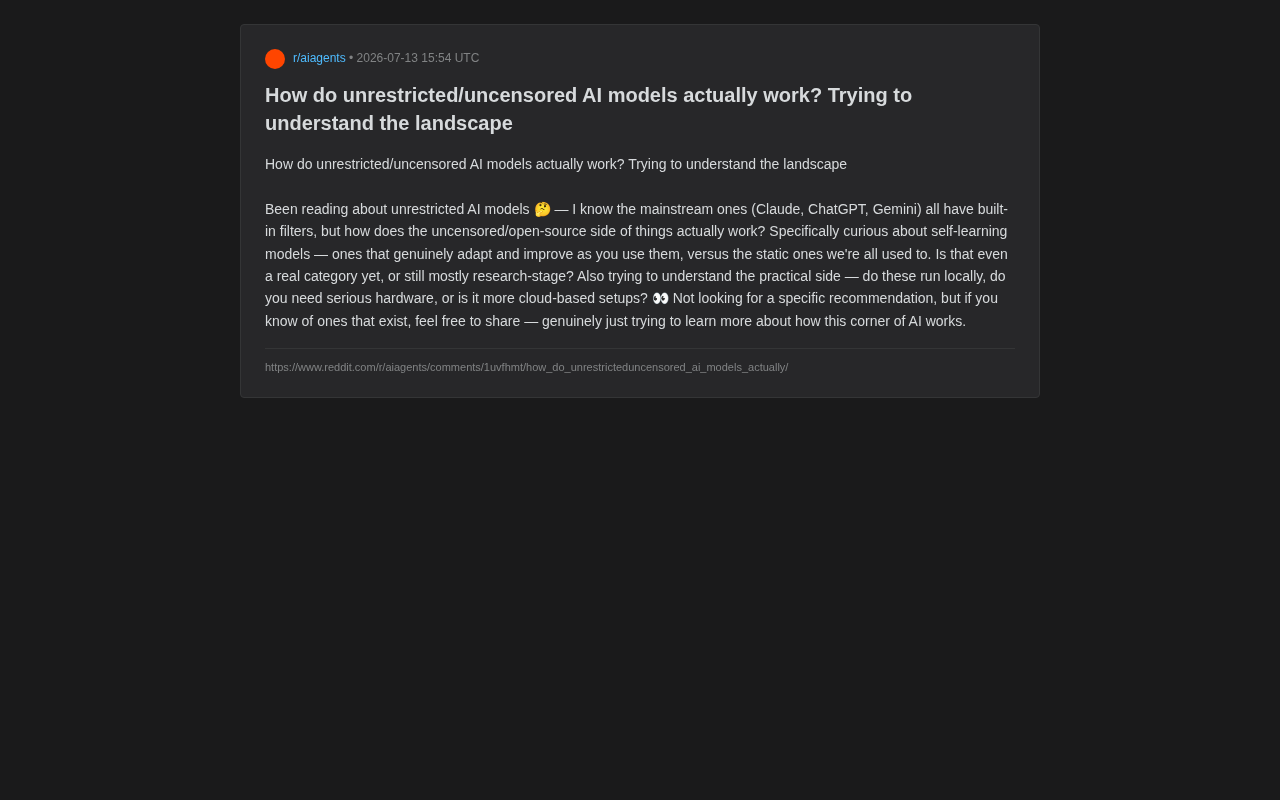
Uncensored AI Models Deep Dive: How They Work, Local Deployment, and the Truth About Self-Learning
A deep dive into uncensored AI models: how censorship is removed, whether self-learning is real, and hardware requirements for local deployment. Covers Ollama, LM Studio, Llama, quantization, and more.
Read more →

·6 min
Home Self-Hosting Server Setup Guide: Building a Private Cloud Ecosystem from Scratch
One 32GB server, 8 hours to build a complete home self-hosting ecosystem. This article details the selection logic behind core services like Jellyfin, Forgejo, Immich, and Ollama, plus infrastructure setup essentials for Nginx Proxy Manager and Podman Compose.
Read more →
Local Coding Agents in Practice: A Com…
·6 min
Local Coding Agents in Practice: A Complete Guide to Replacing Your Claude Subscription with Open-Source Models
An in-depth look at local coding agents—core concepts, advantages, and real challenges. Compare against Claude Code and learn to build a zero-subscription, private AI coding workflow with open-weight models.
Read more →

·5 min
Ollama Raises $65M Series B: 85% of Fortune 500 Have Already Deployed Local LLMs
Local LLM tool Ollama closes a $65M Series B, bringing total funding to $88M. With 9M developers and 85% of Fortune 500 having deployed internally, this deep dive explores why enterprises embrace local LLMs: compliance, Agent cost savings, and open-source ecosystem.
Read more →
·7 min
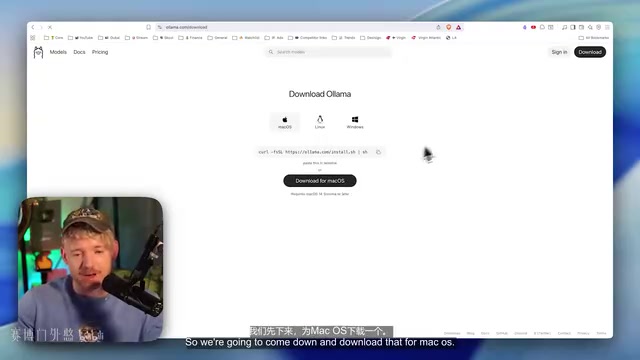
Ollama + Hermes Local AI Deployment: Building a 100% Private Personal AI Operating System
Build a fully private local AI system with Ollama + Hermes: zero cost, no rate limits, data stays local. Learn deployment steps, model selection tips, and private/cloud hybrid workflows.
Read more →

·7 min
Electron + LangGraph in Practice: Building an AI Agent Visual Orchestration App from Scratch
A hands-on guide to building an enterprise-grade AI Agent workflow orchestration app with Electron Forge and LangGraph, covering local LLM deployment (Qwen3-0.6B), node-based visual canvas design, and full Function Calling integration.
Read more →
The Complete Guide to Local LLM Deploy…
·2 min
The Complete Guide to Local LLM Deployment: Tools, Hardware, and Model Selection
A complete guide to locally deploying open-source LLMs: covering VRAM requirements, quantization, tools like Ollama and LM Studio, and model selection tips for Llama, Qwen, and more.
Read more →

·3 min
Claude Code Local Deployment: A Practical Guide to Connecting Local LLMs
Complete guide to deploying Claude Code locally with Ollama, LM Studio, or vLLM. Covers architecture, protocol translation, hardware requirements, and model selection for zero-cost, private AI coding.
Read more →
 Deep Dives
·3 min
Complete Guide to LLM Training: Pre-training, SFT Fine-tuning, and Preference Alignment Explained
Complete guide to the three core LLM training stages: pre-training, supervised fine-tuning (SFT), and preference alignment (DPO/PPO), covering LoRA, distillation, quantization, and pruning.
Read more →
 Tech Frontiers
·2 min
DeepSeek-V3.2 Released: Coding and Math Capabilities Join the Global Top Tier
DeepSeek-V3.2 released with coding, math, and Agent capabilities matching Gemini 3.0 Pro, setting new open-source SOTA. Detailed analysis of performance gains, use cases, and deployment tips.
Read more →
 Product Reviews
·3 min
Google Gemma 4 Hands-On Review: Offline on Smartphones + Ollama Deployment Tutorial
Hands-on testing of Google Gemma 4 open-source models running offline on three phones, with Dense vs MOE architecture explained and a complete Ollama + Claude Code deployment tutorial.
Read more →
 Tutorials
·3 min
Decoding LLM Naming Conventions: Parameter Counts, Quantization Formats & VRAM Requirements Quick Reference
Decode LLM naming conventions, understand 32B parameters & AWQ/GGUF quantization formats, with 4-bit VRAM estimation formulas, MOE model pitfalls, and model selection by GPU tier.
Read more →
 Tech Frontiers
·4 min
Step 3.5 Flash Deep Dive: How a 196B Parameter Open-Source Model Beat Gemini
Deep dive into StepFun's Step 3.5 Flash: 196B parameter MoE model activating only 11B, 350 tokens/sec coding speed, 256K context window, local deployment ready. How it beats Gemini 3 Flash.
Read more →