#GPU kernel tuning
156 related articles

·2 min
Building Custom C/C++ Inference Engines: A Deep Dive into the Tradeoffs Between Performance, Control, and Engineering Cost
Deep analysis of why teams build custom C/C++ inference engines instead of using PyTorch or TensorRT, exploring performance, minimal dependencies, and long-term maintenance tradeoffs.
Read more →

·2 min
antirez Strikes Again: ds4, a Pure C Local Inference Engine for DeepSeek 4
Redis creator antirez open-sources ds4, a pure C local inference engine for DeepSeek 4 Flash and PRO with native Metal, CUDA, and ROCm support, earning nearly 20K GitHub stars.
Read more →

·3 min
MI355X Running Kimi K3 Benchmark: The Logic Behind Outperforming B300 in Performance per Dollar
Deep analysis of AMD MI355X running Kimi K3 with superior cost-efficiency vs NVIDIA B300, and its implications for the AI inference hardware market.
Read more →

·3 min
GPT-5.6 Sol Self-Optimization in Practice: How AI Cuts Its Own Costs and Boosts Its Own Efficiency
GPT-5.6 Sol achieves 20% GPU serving cost reduction and 15%+ token generation efficiency gains through self-optimization. A deep dive into AI recursive efficiency improvement.
Read more →

·3 min
PyTorch vs TensorFlow: How Beginners Should Choose a Deep Learning Framework
Should deep learning beginners choose PyTorch or TensorFlow? This article compares both frameworks on research trends, ecosystem, and deployment, with practical switching advice.
Read more →

·3 min
Reproducing GPT-2: How a Hidden Bug Affected Weight Training
An in-depth analysis of a hidden bug discovered while reproducing GPT-2 from scratch, revealing how implementation errors silently degrade weight quality and sharing practical debugging methodologies.
Read more →

·2 min
EQK 3.0 Review: The First Dynamic AI Equalizer for Mac with Per-App Audio Control
EQK 3.0 is the first dynamic AI equalizer for Mac, featuring per-app EQ, 3985+ headphone correction profiles, native audio capture without virtual drivers, and 100% local processing with no subscription.
Read more →

·3 min
The Open-Weight Model Alliance: The Dual Game of AI Safety and American Competitiveness
Analysis of how the open-weight model alliance serves both digital safety and U.S. competitiveness, exploring transparency, ecosystem building, and geopolitical AI competition.
Read more →

·3 min
GPT-5.6 Autonomously Optimizes Its Own Kernels: How AI Recursive Self-Improvement Could Cut Service Costs by 20%
OpenAI's internal model GPT-5.6 reportedly autonomously rewrites production kernels, achieving ~20% service cost reduction. Deep analysis of this AI recursive self-optimization event's technical plausibility and industry impact.
Read more →

·3 min
GPT-5.6 Autonomously Optimizes Its Own Kernels: How AI Recursive Self-Improvement Could Cut Service Costs by 20%
OpenAI's internal model GPT-5.6 reportedly autonomously rewrote production compute kernels, achieving ~20% cost reduction. Deep analysis of this AI recursive self-optimization event's technical plausibility, industry impact, and key questions.
Read more →

·2 min
Reverse Engineering Apple's ANE: Open-Source Project Enables On-Device Training on the Neural Engine
Deep dive into the maderix/ANE GitHub project that reverse engineers Apple's private APIs to enable neural network training on the Apple Neural Engine, exploring its technical approach, efficiency gains, compliance risks, and implications for on-device AI.
Read more →

·3 min
GitHub Daily · July 29: Voice AI and On-Device Training Take Flight as Open-Source Alternatives Rise
GitHub Trending July 29: Microsoft's VibeVoice leads voice AI open-source wave, MoonshotAI's FlashKDA CUDA kernel surges 25%, and open-source alternatives rise.
Read more →
·3 min
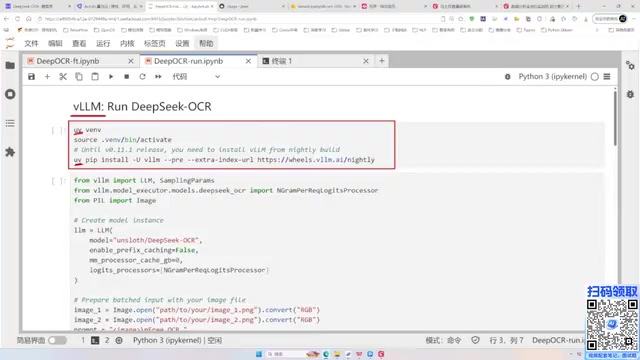
DeepSeek-OCR Deployment & Fine-Tuning in Practice: From vLLM Inference to Unsloth Fine-Tuning
Complete guide to DeepSeek-OCR from vLLM inference deployment and Unsloth model loading to fine-tuning, covering cloud server setup, GPU selection, and code examples — all on a single 4090 GPU.
Read more →
·7 min
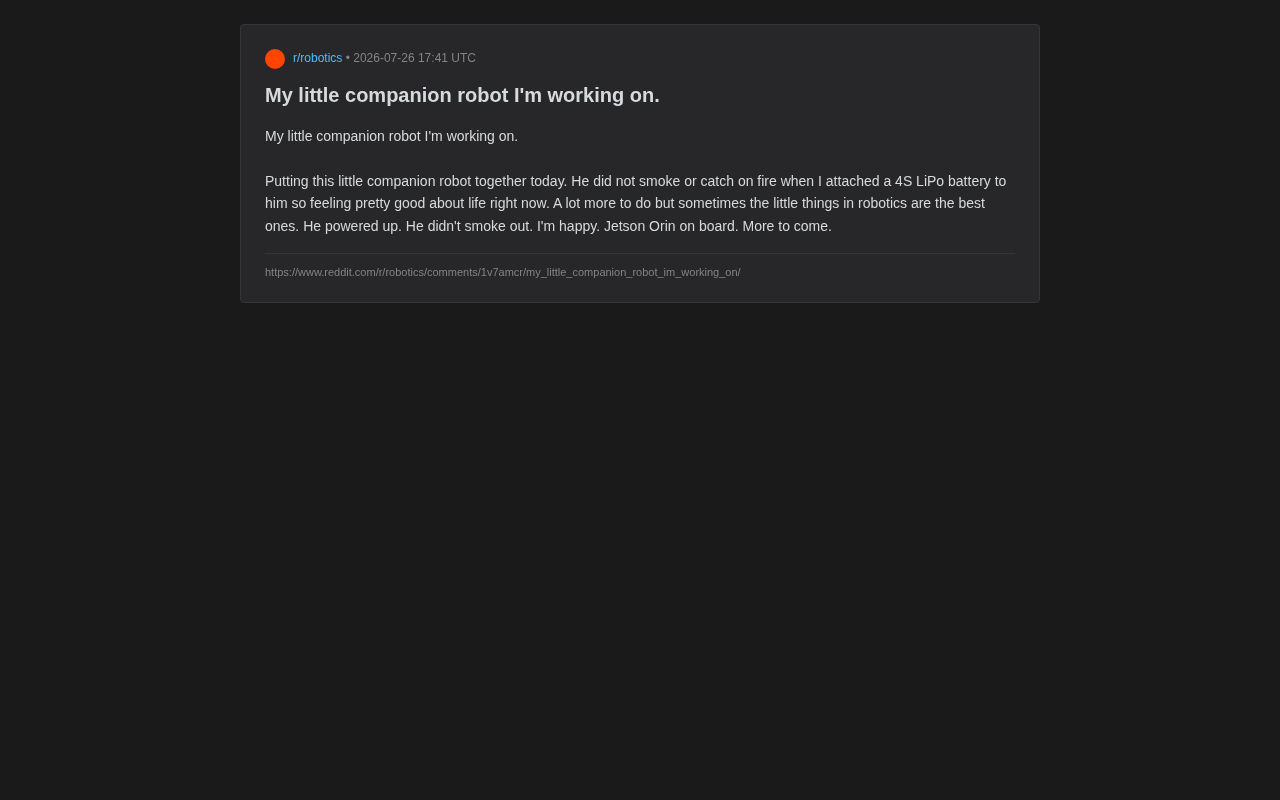
DIY Companion Robot: Building Your AI Desktop Buddy with Jetson Orin
A maker builds a DIY companion robot with NVIDIA Jetson Orin and 4S LiPo battery. Explore the full development journey from first power-up to AI interaction, including edge computing, power design, and companion robot trends.
Read more →

·3 min
DeepSeek-OCR Deployment and Fine-Tuning: A Complete Hands-On Guide
Master the full DeepSeek-OCR deployment and fine-tuning workflow: vLLM inference deployment, efficient Unsloth fine-tuning, dataset preprocessing, LoRA training, validation, and RAG vector database integration.
Read more →

·3 min
Jensen Huang Backs Chinese Open-Source AI: Great Models Deserve to Be Widely Used
NVIDIA CEO Jensen Huang says US companies should absolutely be allowed to use Chinese open-source AI models like DeepSeek and Kimi, calling backdoor fears a misunderstanding and arguing great models drive more compute demand.
Read more →
·6 min
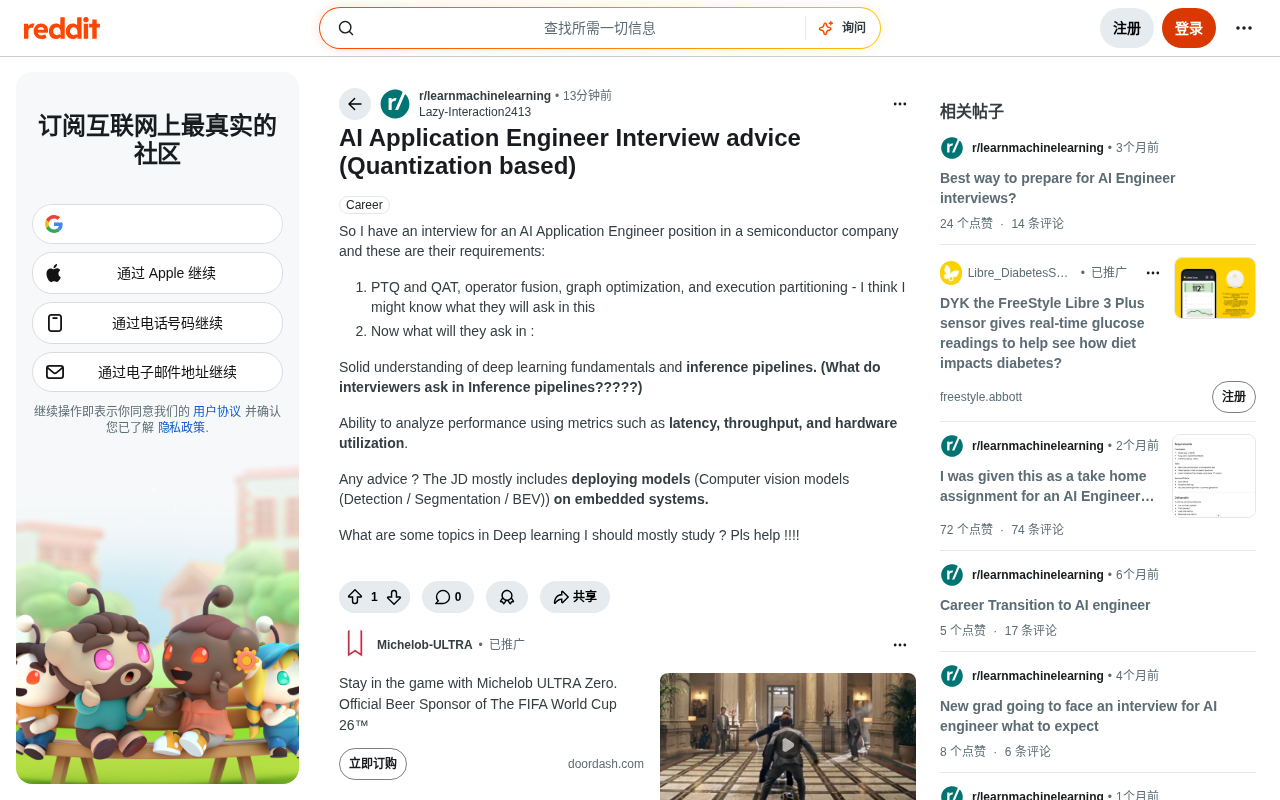
AI Application Engineer Interview Guide: Core Topics on Model Quantization and Inference Deployment
A systematic guide to must-know AI application engineer interview topics: PTQ/QAT quantization, operator fusion, inference pipelines, latency/throughput analysis, and edge deployment of detection/segmentation/BEV models.
Read more →
·6 min
AI Application Engineer Interview Guide: Core Topics in Model Quantization and Inference Deployment
A systematic review of must-know topics for AI Application Engineer interviews: PTQ/QAT quantization, operator fusion, inference pipelines, latency/throughput analysis, and edge deployment of detection/segmentation/BEV models.
Read more →

·7 min
The Complete Guide to LLM Application Engineer Interviews: Six High-Frequency Agent Topics
A focused guide to core LLM application engineer interview topics, covering agent architecture, Multi-Agent, Langfuse evaluation, security, and RAG optimization.
Read more →

·7 min
The Complete Guide to LLM Application Engineer Interviews: Six High-Frequency Topics in the Agent Domain
A focused guide to the core interview topics for LLM application engineers, covering agent architecture, Multi-Agent, Langfuse evaluation & tracing, security, and RAG optimization.
Read more →