#IBM
204 related articles

·3 min
Open Weight Models: The Strategic Game of AI Accessibility and American Competitiveness
Explore how open weight models simultaneously enable global AI accessibility and maintain U.S. competitiveness. Learn the differences between open weight, open source, and closed source models.
Read more →

·3 min
TokenTown: A Visual Approach to Understanding How LLMs Predict the Next Token
TokenTown is an open-source visualization project that intuitively presents the internal token prediction process of LLMs using a town metaphor. Learn its design philosophy and educational value.
Read more →

·3 min
Behind Log4Shell: The Plight and Reflections of Open Source Maintainers
An in-depth look at the Log4Shell vulnerability from a core Log4j maintainer's perspective, exploring open source sustainability, supply chain security, and the burden on volunteer maintainers.
Read more →

·3 min
Behind Log4Shell: The Plight and Reflections of Open Source Maintainers
A deep dive into the Log4Shell incident from the perspective of Log4j's core maintainers. Exploring the open source sustainability crisis, supply chain security awakening, and the challenge of volunteers maintaining critical infrastructure.
Read more →

·3 min
Fast Remediation Replaces Zero Vulnerabilities: A New Trust Model for Software Security in the AI Era
In the AI era, zero vulnerabilities is unrealistic. Explore why fast remediation is becoming the new security trust model and how MTTR metrics are reshaping software supply chain security.
Read more →
·3 min
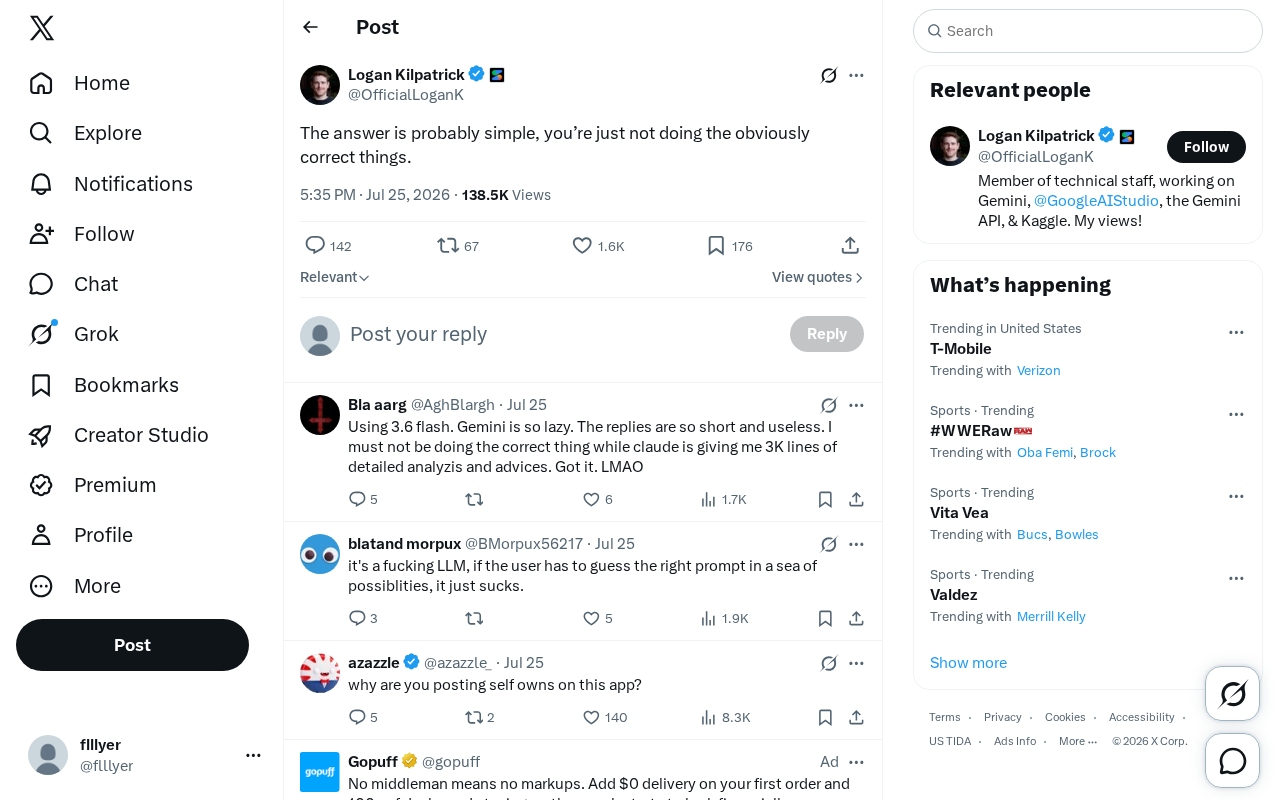
AI Not Performing Well? Start by Getting These Simple but Often Overlooked Things Right
When your AI system underperforms, the problem is often not the model or algorithm — it's basic work like data cleaning, prompt writing, and evaluation that hasn't been done right.
Read more →
·3 min
AI Not Working Well? Start by Getting These Simple but Often Overlooked Things Right
When AI systems underperform, the problem often isn't the model or algorithm — it's that basics like data cleaning, prompt writing, and evaluation aren't done right. Learn the simple fixes that matter most.
Read more →

·2 min
Why 'Clean Code' Author Uncle Bob No Longer Reviews AI-Generated Code Line by Line
Clean Code author Robert C. Martin no longer reviews AI-generated code line by line, shifting to test-driven verification. We explore the logic, debate, and implications.
Read more →

·3 min
Agent Skills Explained: Solving the MCP Context Bloat Problem
Deep dive into Anthropic's Agent Skills mechanism, explaining how Progressive Disclosure solves MCP context bloat and tool calling accuracy issues in AI agents.
Read more →

·3 min
Docker Containers vs Virtual Machines for Home Servers: How to Choose the Best Architecture
Docker containers vs VMs for home servers: compare resource usage, management, security isolation, and TrueNAS considerations to find the optimal Home Lab architecture.
Read more →

·4 min
Jensen Huang Rallies 20 American Companies Behind Open-Source AI, Mounting Pressure on Closed-Model Approach
Jensen Huang's AI manifesto rallies Microsoft, Meta, Dell & 17 more companies behind open-source AI, challenging closed-model monopolies on pricing, IP, and security.
Read more →

·3 min
Liang Wenfeng on AGI Strategy: Team Stability Is DeepSeek's Only Core Interest
DeepSeek raises over 50B RMB at a 350B valuation. Founder Liang Wenfeng explains why team stability is the only core interest on the path to AGI.
Read more →

·2 min
Impeccable Open Source Project Deep Dive: A Design Language Framework That Gives AI a Designer's Eye
Deep dive into the trending open source project Impeccable — a design language framework that enables AI tools to generate professional-grade UI. Learn how it bridges the design quality gap in AI-generated interfaces.
Read more →

·3 min
Simplified Technical English (STE): A Cross-Disciplinary Approach to Optimizing LLM Prompts
Explore how ASD-STE100 Simplified Technical English from aviation can be applied to LLM prompt engineering. STE's disambiguation principles—controlled vocabulary, short sentences, active voice—can improve LLM output accuracy and consistency.
Read more →

·3 min
Facial Recognition Training Data: The Real-World Dilemma of Consent and Bias
Exploring the consent and bias challenges in facial recognition training data, analyzing the ethical and cost tradeoffs of scraping, licensing, and self-collection approaches.
Read more →

·3 min
When Should You Use Machine Learning? A Pragmatic Decision Guide for Data Scientists
Not every data science problem needs ML. This guide offers a decision framework across four dimensions — rule complexity, data quality, prediction needs, and interpretability — to avoid over-engineering.
Read more →

·2 min
Codex Voice Mode Hidden Trick: Tap the Circle to Instantly Show Subtitles
Discover a hidden trick in Codex iOS voice mode: tap the central circle to show subtitles, solving pain points like unclear code names and hard-to-distinguish technical content in voice interactions.
Read more →

·5 min
Liang Wenfeng's 4-Hour Internal Talk: DeepSeek's Philosophy of Restraint and Its Path to AGI
DeepSeek founder Liang Wenfeng shares his views on open source, pricing, computing power, and the five-stage roadmap to AGI in a 4-hour internal investor talk.
Read more →
Alibaba Open-Sources Code Review Tool …
·5 min
Alibaba Open-Sources Code Review Tool open-code-review: Deterministic Pipeline + LLM Dual-Engine Analysis
Alibaba open-sources code review tool open-code-review, using a hybrid architecture of deterministic rule pipelines and LLM Agents. Supports line-level comments, OpenAI/Anthropic APIs, battle-tested at Alibaba scale, written in Go, fully free and open-source.
Read more →

·3 min
From Word Vectors to Large Language Models: The Complete Evolution of AI 2.0 Technology
From word vectors and embeddings to RNNs, BERT, Transformers, and ChatGPT — a complete guide to the technical evolution of large language models and the AI 2.0 era.
Read more →