#JSON Schema
496 related articles

·3 min
Claude Code Enterprise Guide: Environment Setup, Git Workflows, and Switching to Chinese AI Models
Enterprise guide to Claude Code: CLI setup, switching to DeepSeek and other Chinese AI models, Git workflow automation, and bug fix loops to boost team productivity.
Read more →

·2 min
Forge: Adding Reliability Guardrails to Local Model Tool Calling
Forge is an open-source Python middleware for local models (Ollama, llama.cpp, vLLM) that boosts tool-calling reliability via three-layer guardrails: validation, rescue parsing, and retry.
Read more →
·3 min
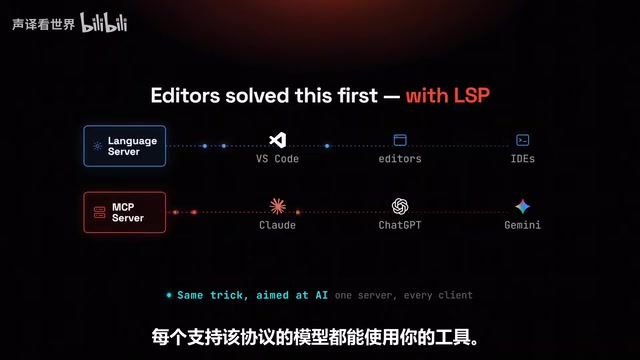
Build an MCP Server in 10 Minutes: Let AI Call Your Code Directly
MCP (Model Context Protocol) is the open standard for AI tool integration. Build your own MCP server with ~20 lines of Python. Learn tools, resources, prompts, and both local and remote deployment.
Read more →
Designing APIs for AI Agents: A Paradi…
·3 min
Designing APIs for AI Agents: A Paradigm Shift from Human Interfaces to Agent-Friendly Design
When AI Agents become the primary API callers, traditional interface design assumptions break down. This article explores agent-friendly API design principles and how MCP is driving this paradigm shift.
Read more →

·3 min
Chrome Built-in AI in Action: Six APIs for Building a Smart Blog Editor
Deep dive into Chrome Built-in AI's six core APIs — Summarizer, Prompt API, Translator and more — applied to a real blog editor. Local, private, no server needed.
Read more →

·2 min
Agent Skills Deep Dive: From Core Concepts to Business Customization
A deep dive into Agent Skills: what they are, how they differ from Function Calling, and a 3-step guide to understanding and customizing Skills for real business use cases.
Read more →

·4 min
LangChain + LangGraph Full-Stack in Practice: A Production-Ready Guide to Six Core Modules and Agent Deployment
A systematic breakdown of LangChain's six core modules (Models/Prompts/Chains/Memory/RAG/Agent) and LangGraph's state graph, persistence, and HITL — with production deployment tips.
Read more →
·3 min
Claude Opus 4 + RAG + Knowledge Graph: A Real-World Architecture for AI Novel Writing
Microsoft MVP Michael shares how AI Story Builders uses Claude Opus 4, RAG, and Knowledge Graphs to solve consistency in long-form AI fiction writing.
Read more →

·3 min
The Truth About Codex Ultra Mode: It's Not a Reasoning Level
Deep dive into OpenAI Codex's Ultra mode: it's not a reasoning level but a system prompt switcher. Learn why Ultra burns tokens, the V1/V2 agent system issues, and how Claude Code Workflows gets it right.
Read more →

·2 min
The Four Core Concepts of AI Agents Explained: Function Calling, Tool, MCP, and Skill
A clear breakdown of the four core AI Agent concepts: Function Calling, Tool, MCP, and Skill — understand the full tech stack behind intelligent agent development.
Read more →

·3 min
Adversarial Testing of AI Agents in the Terminal via MCP
Learn how to use MCP (Model Context Protocol) to run adversarial tests on AI agents in the terminal, covering prompt injection, privilege escalation, and dangerous command execution scenarios.
Read more →
StyleSeed: A Design Rules Engine to En…
·2 min
StyleSeed: A Design Rules Engine to End the Homogenization Problem in AI-Generated UI
StyleSeed is an open-source design-rules engine that injects structured color, typography, and component specs into AI workflows to eliminate generic UI output.
Read more →
How DSLs Make LLM Outputs More Reliabl…
·3 min
How DSLs Make LLM Outputs More Reliable: Principles and Practice
LLM output instability is a core production challenge. This article analyzes how DSLs improve LLM reliability through verifiability, semantic convergence, and structural constraints.
Read more →
Agentic Loop Explained: The Three-Loop…
·2 min
Agentic Loop Explained: The Three-Loop Architecture of Reasoning, Tool Use, and Orchestration
A deep dive into the Agentic Loop — breaking down the three-layer architecture of reasoning, tool use, and orchestration to help developers build and debug reliable AI agent systems.
Read more →

·3 min
n8n Automated AI Video Generation Pipeline: From Prompts to Batch Output — Complete Guide
A complete guide to n8n AI video generation automation: LLM-structured prompts, batch reference images, async video polling, and Google Sheets cost tracking — triggered by a single Webhook.
Read more →

·2 min
Quantifying LLM Output Quality with Pydantic Evals and Integrating It into CI Quality Gates
Learn how to build an LLM evaluation system with Pydantic AI and Amazon Bedrock — turning fuzzy AI output quality into automated, CI-enforceable engineering metrics.
Read more →

·3 min
Introducing LLM Gateways in Production: Five Key Concerns and the Prerequisites for Trust
Introducing an LLM Gateway in LangChain production brings unified APIs and auto-fallback, but also quality drift, cost spikes, and debug black boxes. This article breaks down the five key engineering concerns and what it takes to earn trust.
Read more →

·4 min
Six Layers of Defense: Engineering Reliable Structured Output from LLMs
LLM JSON output unstable in your Agent? This guide covers 6 engineering layers: constrained decoding, validation retry, fake tool calls, Logit Masking, Schema contracts, and anti-pattern locking.
Read more →

·4 min
LangChain in Practice: Mastering the Four Core Modules of the Agent Ecosystem
A deep dive into LangChain's four core modules: LangChain components, LangGraph orchestration, Deep Agents, and LangSmith. Build your first Agent from scratch.
Read more →

·3 min
Complete Guide to LangChain 1.3: From Models and Agents to DeepAgent Architecture
A complete guide to LangChain 1.3: LLM invocation, Agent tool calling, Harness architecture, LangGraph, RAG, and DeepAgent — build a clear, modern Agent development knowledge base.
Read more →