#JavaScript AI framework
596 related articles

·2 min
Testing Fan Browser Agent: Auto-Filling a Korean Visa Application End-to-End
A developer tests Fan Browser Agent on a real Korean visa application: autonomous flow planning, filling 30+ form fields automatically, and handling upload errors.
Read more →

·4 min
Building an AI-Automated Topic Selection System: A Practical Guide to the Three-Dimension Method
Learn how Bilibili creator JK built an AI-automated topic selection system using Codex and Feishu — covering the three-dimension method: practice, trending topics, and benchmarking.
Read more →
Ego-lite: An Open-Source Browser Desig…
·3 min
Ego-lite: An Open-Source Browser Designed for Humans and AI Agents to Work in Parallel
ego-lite is an open-source AI-native browser by citrolabs that lets humans and AI Agents work in parallel in the same environment. Explore its design and value.
Read more →

·7 min
Getting Started with Codex: Installation and Usage Guide for OpenAI's AI Coding Agent
A comprehensive guide to OpenAI's new AI coding agent Codex: from concept and comparison of its four forms, to installing Git/Node.js/VS Code, configuring the API Key, and creating a workspace.
Read more →

·8 min
LangChain Crash Course: A Complete Roadmap from Zero to Agent Development
A systematic roadmap from LangChain and LangGraph to multi-agent development, covering RAG, Tool Calling, MCP, and more, helping developers break into AI app development.
Read more →

·6 min
The Complete Guide to Using Claude in China: In-Depth Comparison of 4 Solutions and How to Choose
How can users in China use Claude? This article deeply compares four solutions: official subscription, proxy subscription (WildCard), relay platforms (2233/0011.ai), and API aggregation (OpenRouter).
Read more →

·3 min
Claude Code Artifacts Now Open: AI Agent Race Shifts Into High Gear
Claude Code Artifacts opens to Pro/Max users with real-time web deployment. Roundup of AI Agent news: Alipay Abao beta, ByteDance EdgeBench, Microsoft Frontier Company, and OpenAI/Anthropic compute strategies.
Read more →

·6 min
Vue3 from Scratch: A Hands-On Journey to Building an AI Health Monitoring System
A Vue3 beginner tutorial centered on "learn just enough, apply immediately." A three-stage path covers reactivity, Composition API, Element Plus, and data visualization, culminating in an enterprise-grade AI health monitoring system with blood sugar management, RAG consultation, and doctor-patient collaboration.
Read more →

·3 min
AI-Assisted GeeTest Four-Image CAPTCHA Reverse Engineering: A Complete Efficiency Guide
A complete walkthrough of AI-assisted GeeTest four-image CAPTCHA reverse engineering: from capturing the w parameter to AI analyzing obfuscated code and generating runnable scripts in minutes.
Read more →

·6 min
Hands-On with Qwen 3.8 Max: How an Open-Source Model Closes In on Top-Tier Closed Models
Qwen 3.8 Max has 2.4 trillion parameters and will be open-sourced. In KingBench testing it scored 81.25%, ranking second, beating Claude Opus 4.8 and trailing only Fable 5. A deep dive into its performance across 8 tests.
Read more →

·2 min
Getting Started with LangGraph: Graph Orchestration and State Machines for AI Agents
A comprehensive guide to LangGraph's core concepts: Graph API vs Functional API, three-layer architecture, and workflow visualization methods for building AI Agents.
Read more →
·7 min
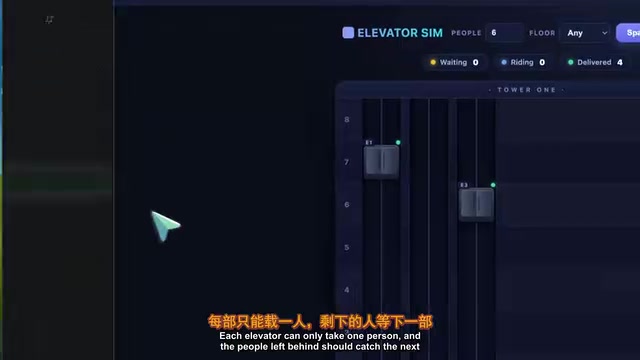
Qwen3 235B A22B in Practice: A 2.4-Trillion-Parameter Open Model Surpasses Claude Opus
Hands-on with Alibaba Tongyi Qianwen's strongest Qwen3: a 2.4-trillion-parameter open weight model scoring 81.25% on KingBench, ranking second and beating Claude Opus 4.8 with perfect scores in game dev, math, and agent tasks.
Read more →

·7 min
Dify Local Deployment Guide: Full Walkthrough with BT Panel + Docker
A step-by-step guide to locally deploying the Dify open-source AI platform using BT Panel on a VMware virtual machine, covering Ubuntu setup, Docker config, and image pull troubleshooting—beginner-friendly.
Read more →

·7 min
Dify Local Deployment in Practice: A Complete Guide with BT Panel + Docker
A step-by-step guide to locally deploying the open-source Dify AI platform using the BT Panel on a VMware virtual machine—covering Ubuntu setup, Docker config, and image pull troubleshooting.
Read more →

·6 min
The Boundaries of AI Coding: When Should You Show Yourself a Red Card?
As AI coding assistants like Codex become standard, the risks of overreliance grow too. Learn when developers should "show a red card," reclaim control, and safeguard code quality and responsibility.
Read more →

·7 min
Harness Engineering: Why a Powerful Model Isn't Enough — Here's What Really Matters
A data-deletion disaster reveals the biggest AI Agent risk: the problem isn't the model, it's Harness design. Learn context management, process standards, and permission isolation.
Read more →

·2 min
FastAPI Fundamentals: Frontend-Backend Separation and RESTful Design Explained
Learn the core concepts behind FastAPI: frontend-backend separation, API interface design, and RESTful specification. Master resource-oriented design before writing your first line of code.
Read more →

·3 min
Buyer's Guide to Cheap Cursor Tools: How to Spot Ban Risks and Privacy Traps
Cheap Cursor tools hide ban risks and privacy traps. Learn how client tampering and API relays create vulnerabilities, and how to identify trustworthy tools.
Read more →

·6 min
The Complete Codex Guide: From Beginner to Pro with the All-in-One AI Assistant
OpenAI Codex is more than a coding tool—it's an AI agent that writes code, makes slides, and operates browsers. This guide covers its four versions, permission modes, plugins, automation, and six best practices.
Read more →

·6 min
Claude Sonnet 5 In-Depth Testing: 8 Real-World Tasks Reveal Its True Capability Boundaries
Bilibili creator KaterSony tests Claude Sonnet 5 across 8 real-world tasks—image recognition, 3D modeling, web generation—comparing it against GPT-5.5, Gemini 3.1 Pro, and revealing its true capability limits and cost traps.
Read more →