#LLM guardrails
146 related articles

·3 min
AI Agents Used for Automated Network Intrusion for the First Time: Technical Breakdown and Defense Insights
Deep technical breakdown of an AI Agent-driven intrusion at a frontier AI lab, covering the full attack timeline from reconnaissance to data exfiltration, plus defense strategies.
Read more →

·3 min
AI Agents Used for Automated Network Intrusion for the First Time: Technical Breakdown and Defense Insights
Deep technical breakdown of an AI Agent-driven frontier lab intrusion, covering the full timeline from reconnaissance to data exfiltration, with analysis of growing offense-defense asymmetry.
Read more →

·4 min
Infrastructure Architecture for Agent Applications: Four Core Patterns Explained
A deep dive into infrastructure architecture patterns for production-grade Agent applications, covering state persistence, sandbox isolation, LLM observability, and cost control.
Read more →

·4 min
Infrastructure Architecture for Agent Applications: Four Core Patterns Explained
Deep dive into infrastructure architecture patterns for production-grade Agent applications, covering state persistence, sandbox isolation, LLM observability, and cost control.
Read more →

·2 min
AI-Driven Persistent RPG Engine: A Full-Stack Practice Guide with React + Supabase
Deep dive into an AI persistent RPG game engine built with React SPA and Supabase, exploring how LLMs combine with modern web stacks for cross-session memory, dynamic narrative, and game state management.
Read more →

·3 min
Two Highly Effective AI Debugging Prompts: Cracking YOLOv8 and OpenCV Challenges
In-depth analysis of two battle-tested AI debugging prompts for diagnosing YOLOv8 training mAP collapse and OpenCV RTSP stream corruption, revealing structured debugging prompt design patterns.
Read more →

·3 min
Long Documents Don't Work: Why AI Agents Can't Follow Your Rules
Analysis of why AI Agents can't reliably follow long policy documents, covering context dilution, rule conflicts, and soft constraint limitations, with more reliable governance architectures.
Read more →

·4 min
11-Node LangGraph in Practice: Complete Architecture Breakdown of a Compliance-Grade RAG Agent
Deep dive into an 11-node Agentic RAG agent built with LangGraph, featuring 6-way intelligent routing, hallucination guards, PII masking, circuit breakers, and zero-cost deployment.
Read more →

·2 min
AI-Automated Cyberattacks Emerge: Security Boundaries Are Being Reshaped
In-depth analysis of AI-driven automated cyberattack trends, exploring LLM weaponization risks, what rogue AI really means, and how enterprises can build AI defense systems against emerging threats.
Read more →

·2 min
Grok 4.6 and 4.7 Roadmap Leaked: Analyzing xAI's Rapid Iteration Strategy
Reddit leaks suggest Grok 4.6 arrives around August 7 and Grok 4.7 in early September. This article analyzes xAI's rapid iteration strategy and token efficiency improvements.
Read more →

·3 min
Gemini Managed Agents API Update: Environment Hooks and Free Tier Fully Explained
Google Gemini Managed Agents API introduces environment hooks, model selection, free tier support, and default model upgrades—empowering AI Agent developers with stronger execution control and lower barriers to entry.
Read more →

·3 min
Why Are Uncensored Open-Source LLMs More Optimistic? A Deep Dive into Alignment Side Effects
Research finds uncensored open-source LLMs are measurably more optimistic than base models. This article analyzes how uncensoring changes model personality and the coupling effects of alignment.
Read more →
·4 min
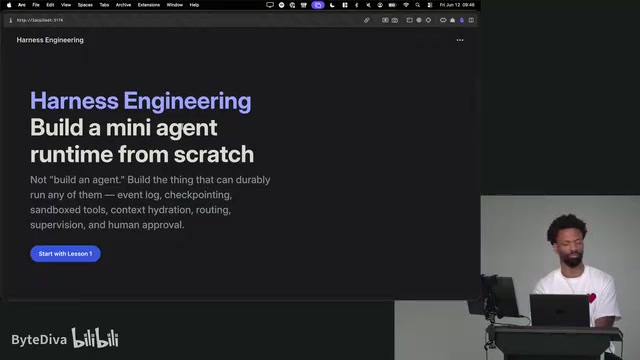
Harness Engineering: The Core Infrastructure for Taking AI Agents from Demo to Production
Deep dive into Harness Engineering: why AI Agents need memory management, durable execution, guardrails & approvals to go from demo to production.
Read more →

·4 min
Harness Engineering: The Core Infrastructure for Taking AI Agents from Demo to Production
Deep dive into Harness Engineering: why AI Agents need memory management, durable execution, guardrails & approvals to reach production. Based on Scott Moss's workshop.
Read more →

·4 min
LangChain Guardrails Explained: Building Safe and Controllable AI Agents
A detailed guide to LangChain Guardrails covering layered ecosystem architecture, middleware implementation, deterministic and model-driven protection for building production-grade secure AI Agents.
Read more →

·3 min
How to Choose an AI Agent Platform for Your Team: 5 Evaluation Dimensions and a Decision Framework
Choose the right AI Agent platform by evaluating model flexibility, observability, tool integration, security compliance, and total cost. A complete decision framework to help technical leaders avoid vendor lock-in.
Read more →

·3 min
How to Choose an AI Agent Platform for Your Team: 5 Evaluation Dimensions & Decision Framework
Choose an AI Agent platform by evaluating model flexibility, observability, tool integration, security compliance, and total cost. A complete decision framework to avoid vendor lock-in.
Read more →

·4 min
The New Coding Paradigm in the AI Era: Why You Should Generate More Code Instead of Reading Every Line
Explore the new code review mindset for the AI programming era: now that code is cheap, engineers should generate massive amounts of code to verify critical code rather than obsessing over reading every line.
Read more →
·3 min
The Open-Weights Model Debate: Balancing Safety and Openness
An in-depth analysis of the open-weights model debate: public release brings transparency and innovation, but raises safety and misuse risks. Exploring tiered release, red-teaming, and governance challenges.
Read more →
·3 min
The Open-Weights Model Debate: Balancing Safety and Openness
An in-depth analysis of the open-weights model debate: publicly releasing model weights enables transparency and innovation but raises safety risks. Explores tiered release, red-teaming, and the industry dynamics behind open AI governance.
Read more →