#LLM hallucination control
602 related articles

·2 min
AI-Driven Persistent RPG Engine: A Full-Stack Practice Guide with React + Supabase
Deep dive into an AI persistent RPG game engine built with React SPA and Supabase, exploring how LLMs combine with modern web stacks for cross-session memory, dynamic narrative, and game state management.
Read more →

·3 min
Verification Browser for AI Agents: How 13ms Ultra-Fast Validation Solves the Trust Problem in Automation
Deep dive into the verification browser for AI agents: how 13ms verification windows and one-call checks solve hallucination problems in browser automation, enabling the leap from capability to trustworthiness.
Read more →

·3 min
Two Highly Effective AI Debugging Prompts: Cracking YOLOv8 and OpenCV Challenges
In-depth analysis of two battle-tested AI debugging prompts for diagnosing YOLOv8 training mAP collapse and OpenCV RTSP stream corruption, revealing structured debugging prompt design patterns.
Read more →

·3 min
Long Documents Don't Work: Why AI Agents Can't Follow Your Rules
Analysis of why AI Agents can't reliably follow long policy documents, covering context dilution, rule conflicts, and soft constraint limitations, with more reliable governance architectures.
Read more →

·4 min
11-Node LangGraph in Practice: Complete Architecture Breakdown of a Compliance-Grade RAG Agent
Deep dive into an 11-node Agentic RAG agent built with LangGraph, featuring 6-way intelligent routing, hallucination guards, PII masking, circuit breakers, and zero-cost deployment.
Read more →

·2 min
CodeCrucible: A New Paradigm for LLM-Driven Static Code Security Analysis
Explore how CodeCrucible uses LLMs to revolutionize static code security analysis (SAST), comparing traditional tool limitations with semantic-driven vulnerability detection.
Read more →

·2 min
CodeCrucible: A New Paradigm for LLM-Driven Static Code Security Analysis
Explore how CodeCrucible uses LLMs to revolutionize static code security analysis (SAST), comparing traditional tool limitations with semantic-driven vulnerability detection approaches.
Read more →

·3 min
LLMOps Tool Selection Guide: An In-Depth Comparison of Tracing, Evaluation, and Governance Capabilities
In-depth analysis of LLMOps tool selection, comparing Langfuse, LangSmith, Helicone, and Orq.ai across tracing, evaluation, and governance capabilities with practical recommendations.
Read more →

·3 min
AI Coding Gone Wrong? Viral Reddit Post Reveals the Truth: It's a Skill Issue, Not a Tool Issue
A viral Reddit post sparks debate: AI coding failures stem from users' engineering skills, not the tools themselves. Deep analysis of how to properly harness AI coding tools like Cursor and Copilot.
Read more →

·3 min
The ISNAD Framework: Building a Trust Verification Layer for Multi-Agent AI Systems Using a Millennium-Old Scholarly Tradition
The ISNAD framework adapts Islamic chain-of-transmission verification to build a trust layer for multi-agent AI systems, focusing on claim verification over agent authentication to combat hallucinations and silent failures.
Read more →

·3 min
Truth Has No Direction: How the Tarski Paradox Challenges LLM Truth Probe Techniques
How a Tarski-style attack challenges LLM truth probes from the foundations of logic. Is the linear representation hypothesis valid, or is the "truth direction" in AI activations just a statistical illusion?
Read more →

·2 min
OpenReviewer: An Open-Source LLM Built Specifically for Scientific Paper Review
OpenReviewer is an open-source LLM for generating critical scientific paper reviews. This article analyzes its technical approach, use cases, and limitations.
Read more →

·2 min
OpenReviewer: An Open-Source LLM Built Specifically for Scientific Paper Review
OpenReviewer is an open-source LLM for generating critical scientific paper reviews. This article analyzes its technical approach, use cases, and limitations.
Read more →

·3 min
Is Useful AI Just a Fantasy? A Deep Examination of Expectations vs. Reality
As AI hype sweeps the globe, have our expectations far exceeded reality? This article examines the demo-vs-production gap, self-reinforcing capital narratives, and cognitive biases to provide a sober framework for judging AI's true utility.
Read more →

·3 min
Discovering Cryptographic Vulnerabilities with Claude: A New Paradigm for AI-Assisted Security Research
How Anthropic's Claude assists in discovering cryptographic implementation vulnerabilities, analyzing AI's real capabilities and limitations in code review, side-channel detection, and protocol analysis.
Read more →

·3 min
Should the ACM Digital Library Open Up to Large Language Models? The Battle Between Academic Corpora and AI Training
Exploring whether the ACM Digital Library should open to LLM training. Analyzing the value of academic corpora for AI, data exhaustion concerns, copyright battles, and pragmatic paths including licensing and RAG.
Read more →

·2 min
Gemini 3.6 Flash Hands-On: Upgrades in Both Quality and Token Efficiency
In-depth analysis of Google Gemini 3.6 Flash's core upgrades including output quality improvements and token consumption optimization, with developer migration advice.
Read more →

·2 min
What AI Developers Can Learn from Bukowski: Authenticity, Restraint, and the Philosophy of Slowness
Exploring Bukowski's creative philosophy for AI developers: avoid over-engineering, fight hallucinations, stay humble. Authenticity and patience are key to building reliable AI systems.
Read more →
·4 min
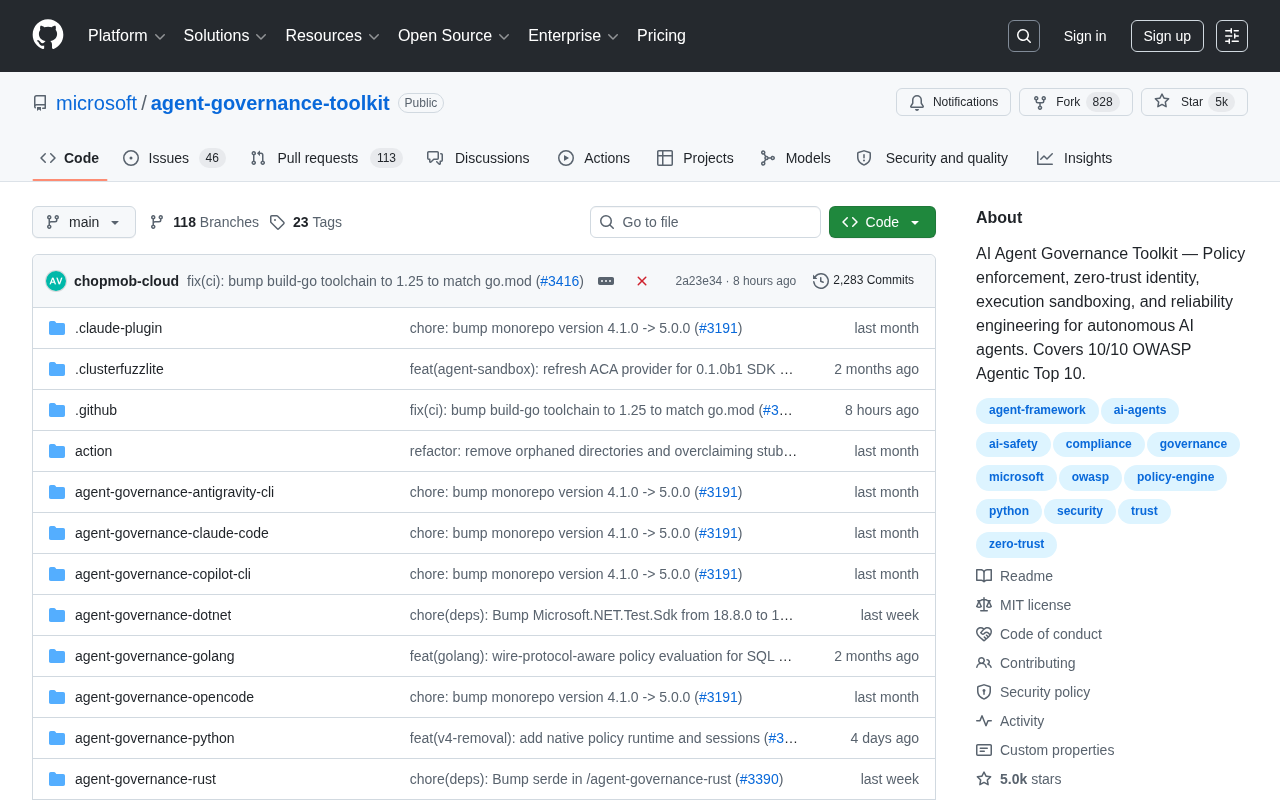
Microsoft Open-Sources AI Agent Governance Toolkit: Comprehensive Coverage of OWASP Top 10 Risks
Microsoft open-sources agent-governance-toolkit covering all OWASP Agentic Top 10 risks through policy enforcement, zero-trust identity, execution sandboxing, and reliability engineering for production AI Agent deployment.
Read more →
·4 min
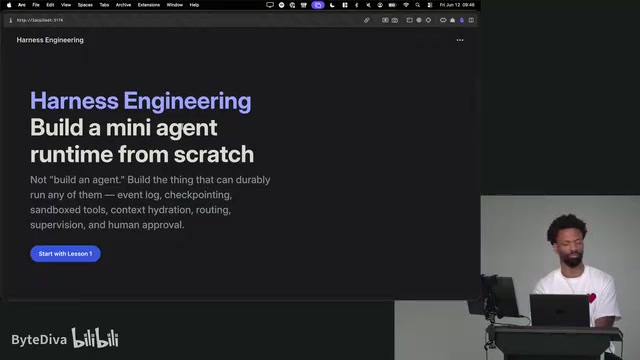
Harness Engineering: The Core Infrastructure for Taking AI Agents from Demo to Production
Deep dive into Harness Engineering: why AI Agents need memory management, durable execution, guardrails & approvals to go from demo to production.
Read more →