#LLM inference speedup
71 related articles

·4 min
Running Qwen3.6 27B Locally on a Single RTX 3090: A Complete Guide to Cloud-Rivaling Performance
One used RTX 3090, one 16.8GB GGUF file, and Qwen3.6 27B runs locally offline. SWE-bench score of 77 rivals Claude Sonnet. MTP boosts speed to 59 tok/s. Full local AI coding assistant deployment guide.
Read more →

·4 min
RAM: First-Principles Approach to 50x Faster RL Post-Training for Diffusion Models
RAM (Reinforce Adjoint Matching) achieves 50x faster RL post-training for diffusion models by discarding path costs, combining ODE sampling with decorrelated training objectives. A deep dive into RAM's core principles and experiments vs. Flow-GRPO.
Read more →
MemStitch Zero-Copy Context Bridging: …
·2 min
MemStitch Zero-Copy Context Bridging: How It Achieves 25x TTFT Speedup in vLLM
A deep dive into how MemStitch's zero-copy context bridging achieves 25x TTFT speedup in vLLM. Covers KV Cache optimization, prefill acceleration, and practical developer value.
Read more →

·3 min
31 Companies Sign Agent Privacy Pact: Industry Self-Regulation Framework Goes into Effect
31 companies sign China's first AI agent privacy pact covering screen-reading authorization, training data restrictions, and payment caps. Plus: domestic LLM tops OpenRouter, Meta's $40B compute bet, and agent commercialization challenges.
Read more →

·4 min
AI Weekly Recap: Four Major Vendors Cut Prices Together, Copilot's Paid Conversion Rate Just 4.5%
In one week, OpenAI, xAI, Google, and Microsoft all cut AI prices, driving near-frontier inference costs sharply lower. Meanwhile, Microsoft Copilot's paid conversion across 450M seats is under 4.5%, exposing the monetization challenge of general AI assistants.
Read more →

·2 min
LingBot-Video 1.3B Selective FP8 Quantization Benchmark: 22% Faster Sampling
Reddit developer ALX-CODE shares a selective FP8 quantization scheme for LingBot-Video 1.3B, achieving ~22% faster sampling (4.65s→3.65s) on an RTX 5080. This article breaks down the mixed-precision strategy, open-source resources, and ComfyUI adaptation.
Read more →

·4 min
Unsloth Releases Qwen3.6 NVFP4 Quantization: 2.5x Faster with Zero Accuracy Loss
Unsloth releases NVFP4 quantization for Qwen3.6 using W4A4 true 4-bit Tensor Core computation, delivering up to 2.5x inference speedup over NVIDIA's official implementation with accuracy matching or exceeding BF16 on benchmarks like MMLU-Pro.
Read more →

·3 min
Benchmarking LLMs on Smartphones: A Deep Dive into the MELTing Point Benchmark
The MELTing Point paper is the first to evaluate mobile LLM performance in real user scenarios, covering iPhone, Samsung, Pixel and more, testing TinyLlama, Mistral-7B and others—revealing GPU inference gains, 47°C heat warnings, and prefill-decode disaggregation.
Read more →

·5 min
GPT-5.6 In-Depth Field Test: A Real-World Log After Burning Through $200K
A developer stress-tested GPT-5.6 for six weeks across 67 projects, burning $180K-$240K in inference. Real cases of task persistence, Rust rewrites, autonomous browser control — plus honest frontend and 3D shortfalls.
Read more →

·3 min
CPU-Native Language Models: Breaking Through Inference Bottlenecks with Memory Bandwidth Co-Design
SiliconLLM builds a CPU-native LLM architecture from scratch, combining selective SSM, ternary (1.58-bit) LUT MLP, and granular MoE, co-designed around the L3 cache bandwidth cliff. Ternary kernels show 4-5x speedup over fp32.
Read more →

·4 min
LingBot-World 2.0 Meets SGLang: A Deep Dive into the Evolution of Real-Time Interactive World Models
SGLang-Diffusion now officially supports LingBot-World 2.0, delivering leaps in resolution and temporal consistency. With live sessions, chunked streaming, and camera control, world models achieve low-latency controllable interaction.
Read more →

·4 min
INT4 ConvRot W4A4 Quantization: Running Large Image Models on Low-VRAM GPUs in ComfyUI
An in-depth look at INT4 ConvRot W4A4 quantization, covering conversions of Krea2, Qwen-Image, and other diffusion models to help ComfyUI users run large image models on 8GB GPUs.
Read more →
·5 min
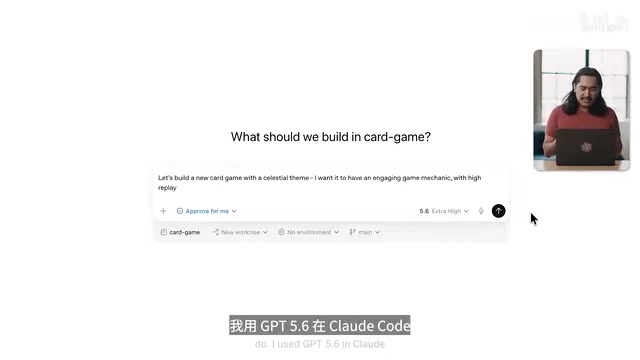
GPT-5.6 Released: Hands-On Analysis of Programmatic Tool Calling and Autonomous Agents
GPT-5.6 is officially released with core upgrades including programmatic tool calling, autonomous subagent delegation, and higher token information density. A hands-on card game build reveals its Agentic power.
Read more →
·3 min
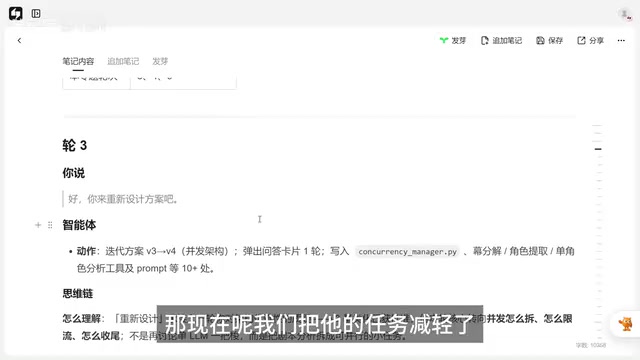
Vibecoding in Practice: Task Concurrency Splitting Makes AI Inference 3x Faster
Learn how to split AI reasoning tasks by act and character, run 14 concurrent streams, and cut processing time from 100s to 30s — a reusable schedule-concurrency-aggregate methodology.
Read more →

·2 min
Deep Dive into Tencent Hunyuan Hy3: How a 295B MoE Model Cracks the Agent Deployment Challenge
Tencent Hunyuan Hy3 launches with a 295B MoE architecture activating just 21B params and 256K context. Hallucination cut from 12.5% to 5.4%, MRCR nearly doubled, with MTP and EAGLE decoding and Day-0 SGLang support.
Read more →

·2 min
AI Agents for SGLang Kernel Optimization: Real-World Performance Gains and Engineering Methodology
SGLang's team converted expert knowledge into agent skills, achieving 71.4% throughput gains, TTFT reduced from 456ms to 168ms. A deep dive into agent-assisted kernel optimization methodology.
Read more →

·6 min
GPT-5.6 Now Widely Available: The Era of Three-Tier Models and Multi-Agent Orchestration Arrives
OpenAI releases GPT-5.6 (SOUL/TERRA/LUNA), with Ultra mode running four agents in parallel; Meta launches Muse Spark 1.1 with million-token context; ChatGPT desktop unifies Chat, Work, and Codex.
Read more →

·2 min
DeepSeek Speculative Decoding Algorithm Merged into vLLM Main Branch — Single-User Token Speed Jumps Dramatically
DeepSeek's speculative decoding algorithm (DSpark) is now merged into vLLM main branch, natively supporting Qwen3 and Gemma. Tests show ~150× single-user token speed gains and ~40–50% throughput improvement.
Read more →

·4 min
DeepSeek-V4 Deep Dive: Million-Token Context Architecture Breakthrough and Core Innovations
Deep dive into DeepSeek-V4: 1.6T-parameter MoE, CSA+HCA hybrid attention, MHC & MUON optimizer. Inference FLOPs drop to 27% of V3.2, redefining open-source LLM SOTA.
Read more →

·5 min
DeepSeek Boosts Inference Speed by 85%: How Speculative Decoding Is Reshaping the AI Speed Race
DeepSeek and Peking University's DS Spark paper boosts AI inference speed by up to 85% via confidence scheduling and semi-autoregressive speculative decoding — no model or GPU changes.
Read more →