#Linus Torvalds
64 related articles

·2 min
Linus Torvalds: Linux Is Not Anti-AI — Technical Merit Is the Only Standard
Linus Torvalds says Linux is not anti-AI and never a social warrior project. AI is a useful tool; the answer is better integration, not rejection. Technical merit remains the only standard.
Read more →

·3 min
OpenAI's Git Optimization: Tackling Performance Bottlenecks in Massive Repositories
Analysis of how OpenAI optimizes Git for massive repositories, covering monorepo bottlenecks, partial clone, sparse checkout, fsmonitor, and practical tips for engineering teams.
Read more →

·3 min
Using AI Agents to Write Research Experiment Logs: A Complete Methodology and Workflow
A detailed guide on using AI Agents to build Research Logs for scientific experiments, covering skeleton structure, daily workflows, pre-experiment thinking standards, code change tracking, and Agent-researcher division of labor.
Read more →

·3 min
Using AI Agents to Write Research Experiment Logs: A Complete Methodology and Workflow
Learn how to use AI Agents to build a Research Log for scientific experiments, covering structure, daily workflows, pre-experiment thinking, code change tracking, and human-AI division of labor.
Read more →

·7 min
Getting Started with Codex: Installation and Usage Guide for OpenAI's AI Coding Agent
A comprehensive guide to OpenAI's new AI coding agent Codex: from concept and comparison of its four forms, to installing Git/Node.js/VS Code, configuring the API Key, and creating a workspace.
Read more →

·6 min
The Complete Codex Guide: From Beginner to Pro with the All-in-One AI Assistant
OpenAI Codex is more than a coding tool—it's an AI agent that writes code, makes slides, and operates browsers. This guide covers its four versions, permission modes, plugins, automation, and six best practices.
Read more →
CS Self-Study Guide: The 74K-Star Comp…
·2 min
CS Self-Study Guide: The 74K-Star Computer Science Learning Roadmap
A 74K-star GitHub project by Peking University students curates MIT, Stanford, and CMU open courses into a complete CS self-study roadmap covering algorithms, OS, databases, and more.
Read more →

·3 min
14 Days of AI Programming: From Zero to Product with Vibe Coding
A zero-to-product AI coding bootcamp by Guo Ke: 14 live sessions, 6 real projects, covering Cursor, Trae, and Codex. Full walkthrough from setup to deployment.
Read more →

·3 min
Can Open Source Topple ChatGPT? CSDN Founder Jiang Tao Breaks Down DeepSeek's Game-Changing Strategy
CSDN founder Jiang Tao analyzes how DeepSeek uses open source to challenge ChatGPT's dominance — from technical transparency to national AI strategy.
Read more →
·2 min
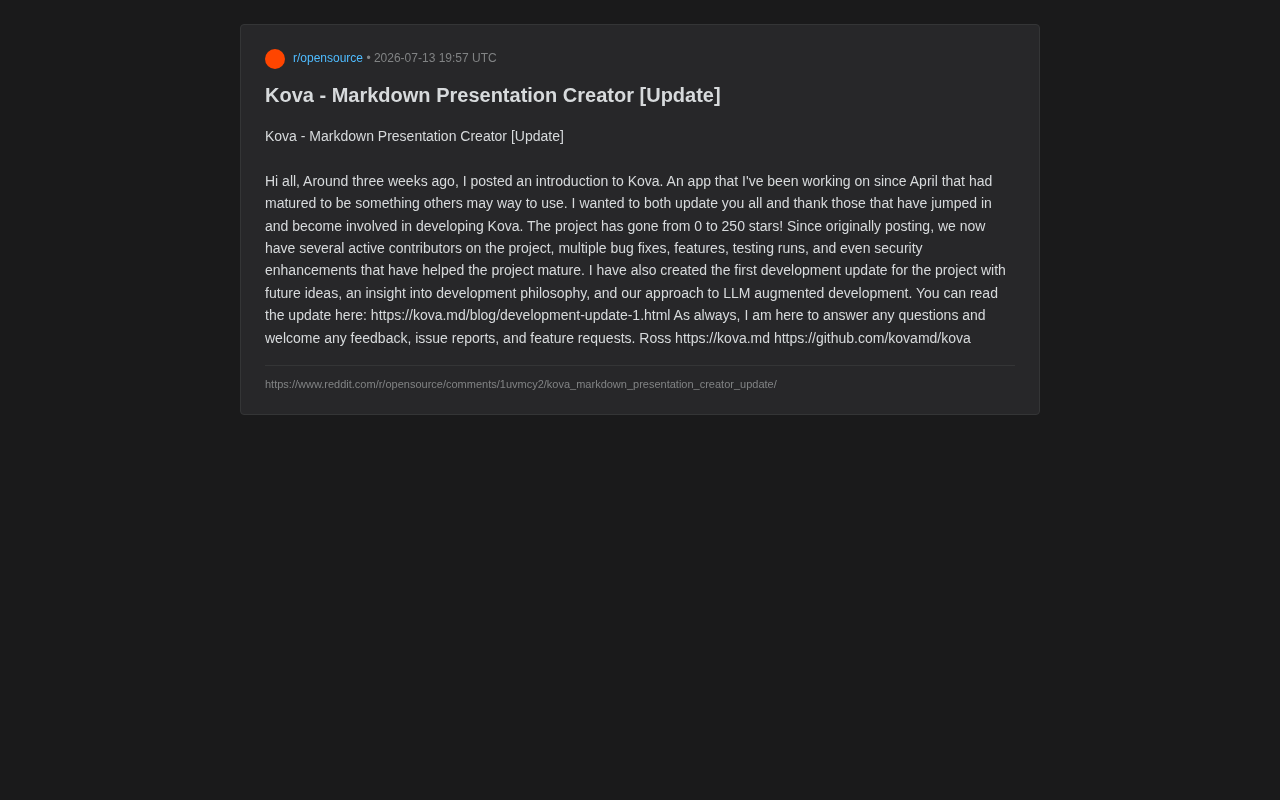
Kova: The Open-Source Tool for Building Presentations with Markdown
Kova is an open-source Markdown presentation tool for developers. With Git support and content-style separation, it hit 250 GitHub Stars in just three weeks.
Read more →

·4 min
No-Code Guide to Claude Code: Building Your Personal AI Automation OS
No coding needed: master Claude Code workflows with folder structure, sub-agents, third-party connectors, and scheduled routines to build your own AI automation OS.
Read more →

·1 min
Juggler: An AI Coding Agent Built for Programmers Who Demand Full Control
Juggler is an open-source AI coding agent for hardcore programmers that treats LLM context as an editable document, offering deep inspection, fast navigation, and flexible local/remote deployment.
Read more →
The Quiet Drop: GitHub's Culture of Si…
·2 min
The Quiet Drop: GitHub's Culture of Silent Releases and Why Developers Love It
A tweet reveals GitHub's 'quiet drop' culture — releasing code silently and waiting for the community to notice. Explore why developers go low-key and whether it works.
Read more →
·3 min
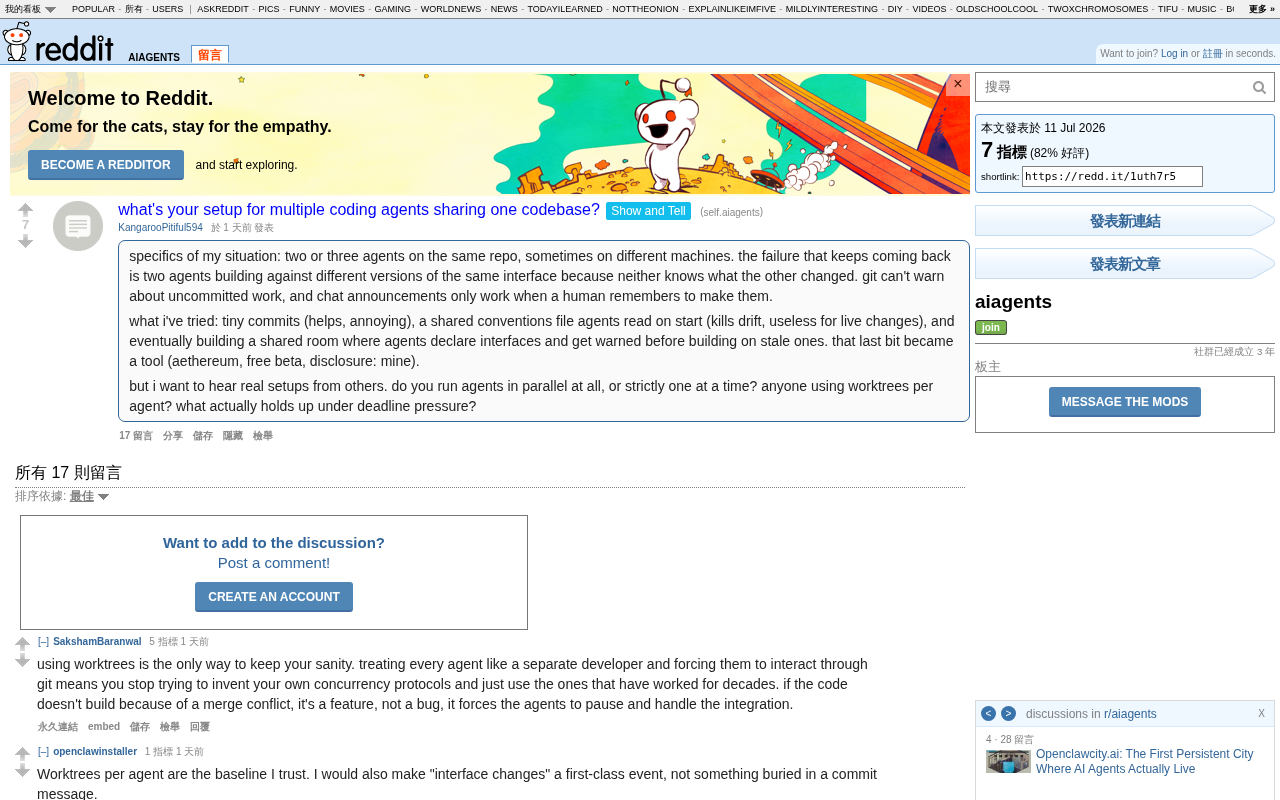
Multiple AI Agents Sharing a Codebase: Parallel Collaboration Conflicts and Practical Solutions
When multiple AI coding agents work on the same codebase simultaneously, how do you avoid interface conflicts and coordination chaos? A deep dive into Git worktree isolation, contract-first design, and intent declaration.
Read more →

·4 min
The Age of AI Agents: How Version Control Must Adapt to a Paradigm Shift
AI agents are breaking Git's core assumptions. Explore the three key challenges—concurrent conflicts, history readability, and code review—and where version control is headed next.
Read more →

·6 min
Rereading The Mythical Man-Month in the AI Era: Can the Strongest Copper Bullet Break Brooks's Law?
Does The Mythical Man-Month still hold 50 years on? A deep analysis of Brooks's Law, the second-system effect, and conceptual integrity in the AI coding era.
Read more →

·5 min
Embedded Linux vs. AI Agent Development: A Comprehensive Comparison of Salary, Job Availability, and Career Stability
Embedded Linux or AI Agent development? This in-depth comparison covers salary, job availability, and career stability to help developers pick the right path.
Read more →

·7 min
Fable AI Coding in Practice: Optimizing Reasoning Levels and Multi-Model Collaboration to Cut Costs
How developer Theo used Anthropic's Fable model to rebuild his AI coding workflow — controlling reasoning levels, multi-model routing with Codex, and sub-agent orchestration to cut costs from thousands to $150.
Read more →

·7 min
Fable AI Coding in Practice: Optimizing Reasoning Levels and Multi-Model Collaboration to Save Money
Hands-on guide: Use Anthropic's Fable model to optimize AI coding workflows — control reasoning levels, leverage Claude-Codex multi-model collaboration, and cut costs from thousands to $150.
Read more →

·5 min
Git Hash Chain Malleability: How Fragile Is the Immutability You Trust?
Are Git hash chains truly immutable? This article dives into Git hash chain malleability, SHA-1 collision risks, and security boundaries, offering practical tips like GPG signing and SHA-256 migration to build a correct Git security trust model.
Read more →