#Memory
2922 related articles

·3 min
Running AI Inside DRAM: A Processing-in-Memory Experiment That Breaks DDR4 Timing Rules
Explore how deliberately violating DDR4 timing rules enables running PrismML's Bonsai AI model inside DRAM, covering the principles, energy benefits, and challenges of processing-in-memory.
Read more →

·2 min
LLM Agent Long-Term Memory Security: A Six-Stage Attack Surface and Defense Framework
Deep analysis of LLM agent long-term memory security threats, covering persistence, statefulness, and propagation of memory poisoning, with a six-stage lifecycle defense framework.
Read more →

·3 min
AI Project Memory Systems: Building a Continuously Accumulating Context Architecture in Four Stages
As models get stronger, why does the experience feel worse? The root cause is missing context. This article breaks down four stages—project descriptions, progressive disclosure, intra-memory, and three guardrails—to build a sustainable AI project memory system.
Read more →

·7 min
Enterprise AI Agent Security Isolation and Memory Design: NanoClaw Founder Breaks Down Real-World Lessons
NanoClaw founder David Boyd breaks down the core engineering of enterprise autonomous Agents: a triple security isolation model, LLM Wiki memory design, and the real-world path from personal Agents to team-scale deployment.
Read more →

·3 min
LoRA Fine-tuning or Prompt Engineering? Two Paths to Solving LLM Long-Conversation Memory
A developer fine-tunes a small model with LoRA to extract conversation state, tackling the LLM long-conversation memory problem. A deep dive into the technical approach, dataset design, and the real trade-offs between fine-tuning and prompt engineering.
Read more →
Cognee: The Open-Source Knowledge Grap…
·2 min
Cognee: The Open-Source Knowledge Graph Engine for Persistent AI Agent Memory
Cognee is an open-source AI memory platform using knowledge graphs to give AI agents persistent cross-session memory. Self-hosted, graph + vector hybrid retrieval. 28K+ GitHub stars.
Read more →

·3 min
LightMem-Ego: The AI Memory Assistant That Remembers the Details of Your Daily Life
LightMem-Ego is an AI life assistant with long-term memory — tracking object locations, meetings, and life events over time. A deep dive into its technology and real-world challenges.
Read more →
Block Low-Rank Compression: A Guide to…
·2 min
Block Low-Rank Compression: A Guide to Accelerating Large Model Inference on Memory-Constrained GPUs
Learn how Block Low-Rank (BLR) decomposition compresses large model memory usage and accelerates GPU inference, including CUDA kernel optimization and combination with quantization and pruning.
Read more →
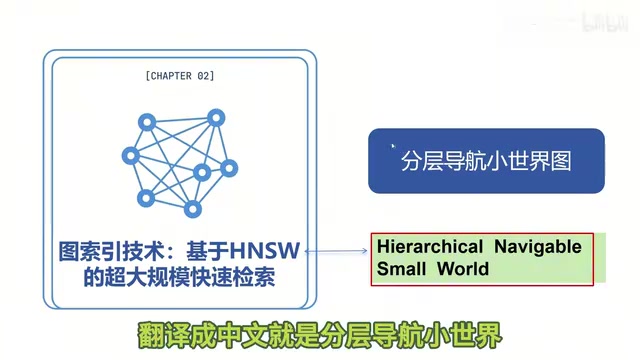
·5 min
A Deep Dive into Vector Search for AI Agents: The Technical Foundations of RAG and Long-Term Memory
An in-depth look at the core tech behind AI Agents: how the HNSW, IVF, and PQ vector search algorithms power RAG and long-term memory. Understand where a model's "memory" and "knowledge" come from.
Read more →
AI Coding Agents Have Amnesia — An Ope…
·2 min
AI Coding Agents Have Amnesia — An Open-Source SSH-Synced Memory System Wants to Fix That
Tired of AI coding agents forgetting everything? Explore an open-source SSH-synced memory system that lets Cursor, Claude Code, and other agents retain project context across sessions and devices — no cloud required.
Read more →
ContextVault: Building a Shared Memory…
·2 min
ContextVault: Building a Shared Memory Layer for Team AI Collaboration
ContextVault builds a shared memory layer for team AI collaboration, tackling fragmented AI context and knowledge silos. Explore its technical positioning, use cases, and challenges in context engineering.
Read more →
Apple M7 Ultra Leaked: Can 1.5TB Unifi…
·2 min
Apple M7 Ultra Leaked: Can 1.5TB Unified Memory Challenge NVIDIA Blackwell?
Apple's M7 Ultra chip rumored to feature 1.5TB unified memory targeting NVIDIA Blackwell-level AI performance. A deep dive into UMA advantages, what "matching Blackwell" really means, and Apple's AI strategy.
Read more →

·2 min
LeakCanary Comes to Android Studio: Say Goodbye to Guesswork Memory Leak Debugging
LeakCanary is now natively integrated into Android Studio Profiler — with one-click dependency injection and desktop-side Shark heap analysis to pinpoint memory leaks fast.
Read more →

·2 min
LangChain Chain & Memory: Building AI Applications with Persistent Memory
Learn how LangChain's Chain and Memory components overcome LLM limitations. Build intelligent AI apps with multi-step workflows and persistent memory.
Read more →
CUDA Kernel Fusion: A Practical Guide …
·2 min
CUDA Kernel Fusion: A Practical Guide to Reducing Memory Bandwidth and Launch Overhead
Learn how CUDA Kernel Fusion merges multiple GPU kernels to reduce global memory traffic and launch overhead, with real-world examples from AI inference and deep learning.
Read more →
Apple M7 Ultra Chip Leaked: Can 1.5TB …
·2 min
Apple M7 Ultra Chip Leaked: Can 1.5TB Unified Memory Reshape Local AI Inference?
Reddit leaks suggest Apple's M7 Ultra chip could feature up to 1.5TB unified memory. We analyze the architecture, pricing debate, bandwidth limits, and ecosystem trade-offs for local LLM inference.
Read more →

·2 min
A College Student Built a Cross-Model Persistent Memory System with Ollama: Decoupled Architecture + AES-256 Encryption
A college student built a ~40K-line Mac app around Ollama featuring a decoupled persistent memory system: standalone embeddings, local vector index, self-healing, AES-256 vault, and local voice mode.
Read more →
JAX Host Offloading: A Practical Guide…
·2 min
JAX Host Offloading: A Practical Guide to Breaking Through LLM Training Memory Bottlenecks
Memory capacity is the core bottleneck in LLM training. This guide explores JAX-based host offloading — covering optimizer state offloading, activation strategies, PCIe bandwidth trade-offs, and how it complements activation recomputation.
Read more →
Adaptive Recall: A Deep Dive into Pers…
·2 min
Adaptive Recall: A Deep Dive into Persistent Memory for AI Assistants via MCP
Adaptive Recall uses MCP (Model Context Protocol) to give AI assistants like Claude persistent memory across sessions, featuring vector storage, semantic retrieval, and adaptive forgetting.
Read more →

·2 min
Hombre: An Open-Source Visual Dashboard for Honcho AI Memory Server
Hombre is an open-source web GUI for self-hosted Honcho AI memory servers. Features workspace management, semantic search, real-time sync, and RBAC — built with FastAPI and native frontend, MIT licensed, Docker-ready.
Read more →