#PBR material generation
21 related articles

·3 min
Single-Image 3D Garment Model Generation in Seconds: AI Reconstruction Technology Explained
Deep dive into AI single-image 3D garment reconstruction technology, from technical principles (parametric templates, implicit representations, diffusion models) to applications (virtual try-on, game assets, e-commerce displays).
Read more →

·3 min
Korvix3D Deep Dive: Can a Subscription-Based 3D Model Platform Disrupt Traditional Asset Marketplaces?
Deep dive into Korvix3D's subscription-based 3D model marketplace, covering native plugin workflow integration, subscription model pros and cons, and comparison with TurboSquid and other competitors.
Read more →

·2 min
Ctruh Studio: A Deep Dive into the AI-Powered No-Code 3D & XR Creation Platform
Deep dive into Ctruh Studio, an AI-powered no-code 3D creation platform covering AI-generated 3D assets, immersive product showcases, virtual stores, and more for web-based 3D & XR experiences.
Read more →

·4 min
9 Hours, 4 Million Tokens: AI Creates a Stunning WebGPU Snow Rendering Masterpiece with Claude Code
Reddit user Noniv used Claude Code with the Opus model to build SNOWFLOW, a stunning WebGPU real-time snow renderer, in just 9 hours using 4 million tokens. A deep dive into prompt strategy, snow shaders, and performance optimization.
Read more →

·5 min
Opus 5 Builds a No Man's Sky-Style Exploration Game in One Day: MCP and Sub-Agent Architecture Explained
A developer used Anthropic's Opus 5 model to build a No Man's Sky-style space exploration game in one day using Blender MCP and sub-agents. Deep dive into the technical architecture and industry implications.
Read more →
·3 min
Sebastian Lague's Custom Graphics Library: A Complete Breakdown of Building a Renderer from Scratch
Deep dive into Sebastian Lague's experiment building a graphics library from scratch, covering rasterization, depth buffering, texture mapping, and the educational value of software renderers.
Read more →

·6 min
Claude Sonnet 5 In-Depth Testing: 8 Real-World Tasks Reveal Its True Capability Boundaries
Bilibili creator KaterSony tests Claude Sonnet 5 across 8 real-world tasks—image recognition, 3D modeling, web generation—comparing it against GPT-5.5, Gemini 3.1 Pro, and revealing its true capability limits and cost traps.
Read more →

·3 min
Building Real-Time 3D Digital Twin Wind Farms with Microsoft Fabric: AI Conversation + LIDAR Terrain + Telemetry Fusion
A wind farm digital twin built on Microsoft Fabric and Azure AI Foundry, fusing Finnish LIDAR terrain, real-time telemetry, and conversational AI for smart industrial operations.
Read more →

·2 min
Indie Dev's Honest Take: Hi3D vs Hunyuan 3D vs Yovo 3D — A Deep Comparison
An indie dev's real-world breakdown of Hi3D, Hunyuan 3D, and Yovo 3D: which AI 3D tool fits which stage of game development, and why workflow fit matters most.
Read more →

·2 min
Local Image-to-3D on Apple Silicon: 20 Seconds, 2GB RAM — Modelr Open-Source App Tested
A developer ports Tencent's Hunyuan3D to Apple MLX. M4 Max benchmarks: shape generation in 20s, 5.6GB peak RAM. Quantized versions run on iPhone. Modelr is the first local image-to-3D app for Apple Silicon.
Read more →

·2 min
Open-Source 3D Generation Models Tested: Can Trellis 2 Challenge Paid Products?
A deep comparison of open-source Trellis 2, Hunyuan 2.1, UltraShape vs. paid Tripo 3.1 and Hi3D — covering geometry, texture, and complex details to help you decide.
Read more →

·3 min
The Progress and Bottlenecks of AI-Generated Video: Stunning Lighting, Questionable Logic
An AI-generated rainy-night walk video sparked debate on Reddit: stunning wet-surface reflections and color temperature contrast, yet flawed logic like pedestrians on roadways. This article unpacks the true state of AI video generation.
Read more →
·2 min
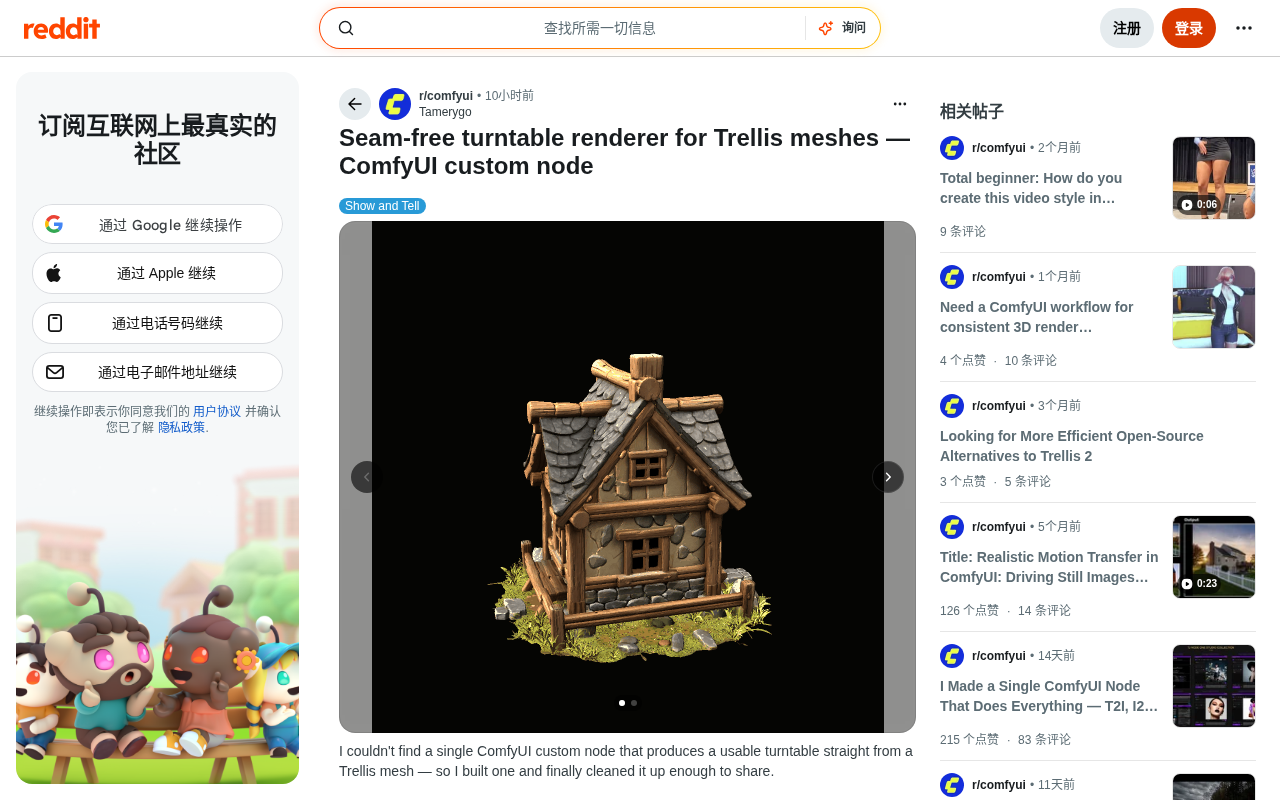
ComfyUI Trellis Turntable Rendering Node: Finally Solving the Texture Seam Problem
A practical breakdown of the ComfyUI-TrellisNativeTurntable node: render Trellis mesh turntables inside ComfyUI without Blender, plus deep dives on UV seam fixes, camera control, SSAA, and camera data export.
Read more →

·6 min
Grok 4.5 Deep Dive: Coding on Par with Top Models, at a Fraction of the Cost
A senior developer's 24-hour deep test of Grok 4.5: a 1.5T-param MoE model at $2/M input tokens, with coding benchmarks rivaling GPT-5.5. Real performance, token efficiency, and limits explained.
Read more →

·6 min
Hands-On with Mixar: An AI-Native Blender Fork That Handles Baking and LOD with a Single Prompt
Mixar is an AI-native fork of Blender 5.0 that embeds AI into the kernel layer. This hands-on review tests texture baking, LOD generation, mood boards, image-to-3D, and more, comparing it to MCP. Fully open source and free.
Read more →

·3 min
Meshy AI Modeling Agent: Generate Complete 3D Model Assets in a Single Conversation
Hands-on with Meshy AI modeling agent: generate 3D scenes, PBR materials, and low-poly bakes through natural language. Includes cyberpunk and character tests with Blender import verification.
Read more →

·4 min
Claude Code Controlling Unreal Engine 5: Two Free Plugins for AI Game Development
Learn how to connect Claude Code to UE5 for free using Unreal Cloud and Vibe UE plugins. AI builds game levels, edits Blueprints, and adjusts materials.
Read more →

·3 min
UE5 + Claude Code Hands-On: A Free Plugin Combo for an AI Game Development Workflow
A detailed breakdown of a free UE5 + Claude Code plugin workflow, covering setup of Unreal Claude and Vibe UE, prompt techniques, and building an endless runner game from scratch.
Read more →

·2 min
Unreal Engine 5.8 MCP Server Setup Tutorial: AI Agent-Driven Game Development in Practice
A detailed guide to configuring Unreal Engine 5.8's built-in MCP server for AI agent-driven game development, covering DeepSeek API setup, plugin activation, and natural language scene building.
Read more →
 Tutorials
·3 min
Getting Started with Cocos Creator 3D Particle Effects: Create Stars, Explosions, and Smoke with Zero Code
Learn how to create 3D particle effects in Cocos Creator with zero code — covering twinkling stars, explosions, smoke, converging particles, and sprite sheet animations using the visual editor.
Read more →