#PTQ
187 related articles

·2 min
Qwen Scribe: A Deep Dive into the Local Speech Transcription Tool for Apple Silicon
Qwen Scribe is a local speech transcription tool optimized for Apple Silicon, powered by Qwen models for fully offline use. Explore its technical features, privacy benefits, and comparison with Whisper.
Read more →

·3 min
Production-Grade LLM Inference Deployment: A Practical K8s Handbook
Complete guide to deploying production-grade LLM inference on Kubernetes, covering GPU scheduling, vLLM engine selection, autoscaling, observability, and cost optimization.
Read more →

·2 min
Agenta: A Detailed Look at the Open-Source Self-Hosted Claude Cowork Alternative
Agenta is an open-source AI Agent collaboration platform supporting self-hosted models and any Agent framework, positioned as an open-source Claude Cowork alternative.
Read more →

·2 min
HuggingFace Open-Source Voice Assistant: A Complete Guide to Local Deployment
A deep dive into HuggingFace's speech-to-speech open-source project, covering its modular VAD, STT, LLM, and TTS pipeline architecture and the advantages of local deployment for privacy, cost, and latency.
Read more →

·4 min
Colibri: Running a 744-Billion-Parameter LLM on an Ordinary Laptop
Colibri uses MoE hot-cold separation and 4-bit quantization to run 744B-parameter models like GLM 5.2 on consumer hardware. Learn about its three-tier memory architecture and speculative decoding.
Read more →

·3 min
Apple Silicon LLM Inference Speed Benchmarks: A Complete Guide to Local Large Model Performance on Mac
In-depth analysis of Apple Silicon local LLM inference speed benchmarks covering M-series memory bandwidth, model quantization, MLX framework optimization, and Mac configuration guidance.
Read more →

·4 min
A Beginner's Guide to AI Agents: Core Principles and Learning Paths Explained
Learn AI Agent core principles from scratch: understand how Agents differ from LLMs, their execution mechanisms, why rule design matters, and find the right learning path for your goals.
Read more →

·3 min
From Frontend to Agent Development: A Complete 6-Week Systematic Learning Path
A 6-week systematic learning path for frontend engineers transitioning to AI Agent development, covering core architecture, ReAct, multi-agent collaboration, RAG integration, and deployment.
Read more →
·4 min
A Beginner's Guide to AI Agents: Core Principles and Learning Paths Explained
A beginner's guide to AI Agents: understand core principles, how Agents differ from LLMs, their execution mechanisms, and get tailored learning path recommendations.
Read more →

·2 min
RX 9060 XT vs RTX 5060 Ti: Which GPU to Pick for Local AI?
RX 9060 XT vs RTX 5060 Ti — both 16GB VRAM, but which is better for local AI? We compare CUDA ecosystem, ROCm compatibility, LLM inference, and real-world usability.
Read more →

·2 min
RX 9060 XT vs RTX 5060 Ti: How to Choose a GPU for Local AI
RX 9060 XT vs RTX 5060 Ti both offer 16GB VRAM — which is better for local AI inference? A full comparison of CUDA ecosystem, ROCm compatibility, LLM performance, and real-world usability.
Read more →
·3 min
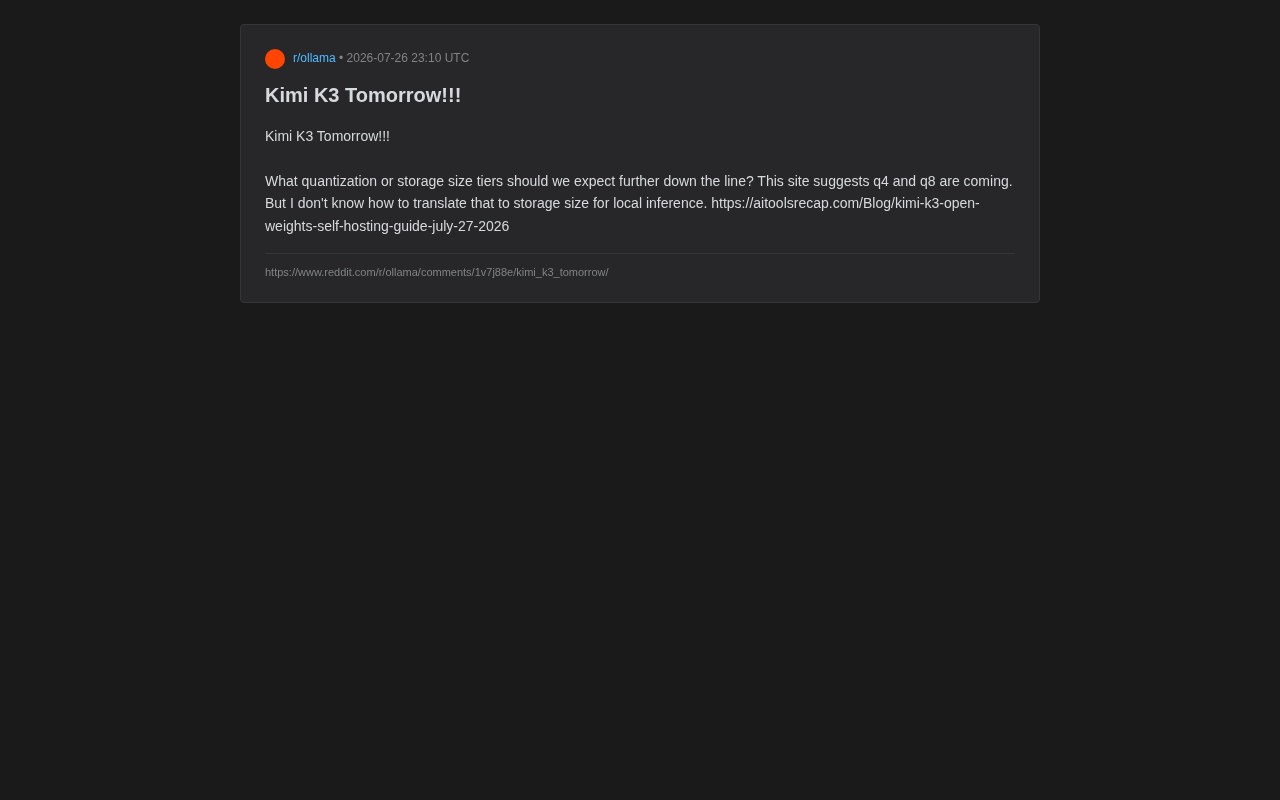
Kimi K3 Local Deployment Guide: Storage Requirements for q4 and q8 Quantization Explained
Detailed analysis of Kimi K3 quantization deployment options, comparing q4 vs q8 storage requirements, precision trade-offs, and hardware configurations for local self-hosting.
Read more →

·3 min
Build RAG and AI Agent Projects at Zero Cost: A Practical Guide to Open-Source Tools
Build high-quality AI projects on a budget. Learn how to use Ollama, Groq, Chroma, and other free open-source tools to build RAG systems and multi-Agent workflows from scratch.
Read more →
·3 min
Build RAG and AI Agent Projects at Zero Cost: A Practical Guide to Open-Source Tools
Build high-quality AI projects on a budget. Learn how to use Ollama, Groq, Chroma, and other free open-source tools to build RAG systems and multi-Agent workflows from scratch.
Read more →

·6 min
How the Creator of Redis Squeezed a 284B-Parameter DeepSeek into an Ordinary Laptop
Redis creator antirez built DS4 "Dwarf Star," a pure-C inference engine, using asymmetric quantization to compress DeepSeek V4 Flash from 500GB to 80.8GB for local 128GB unified-memory deployment at 26.7 tokens/sec.
Read more →

·6 min
How the Creator of Redis Squeezed a 284-Billion-Parameter DeepSeek Into an Ordinary Laptop
Redis author antirez built the pure-C inference engine DS4 "Dwarf Star," compressing DeepSeek V4 Flash from 500GB to 80.8GB via asymmetric quantization for local deployment on 128GB unified memory at 26.7 tokens/sec.
Read more →
·6 min
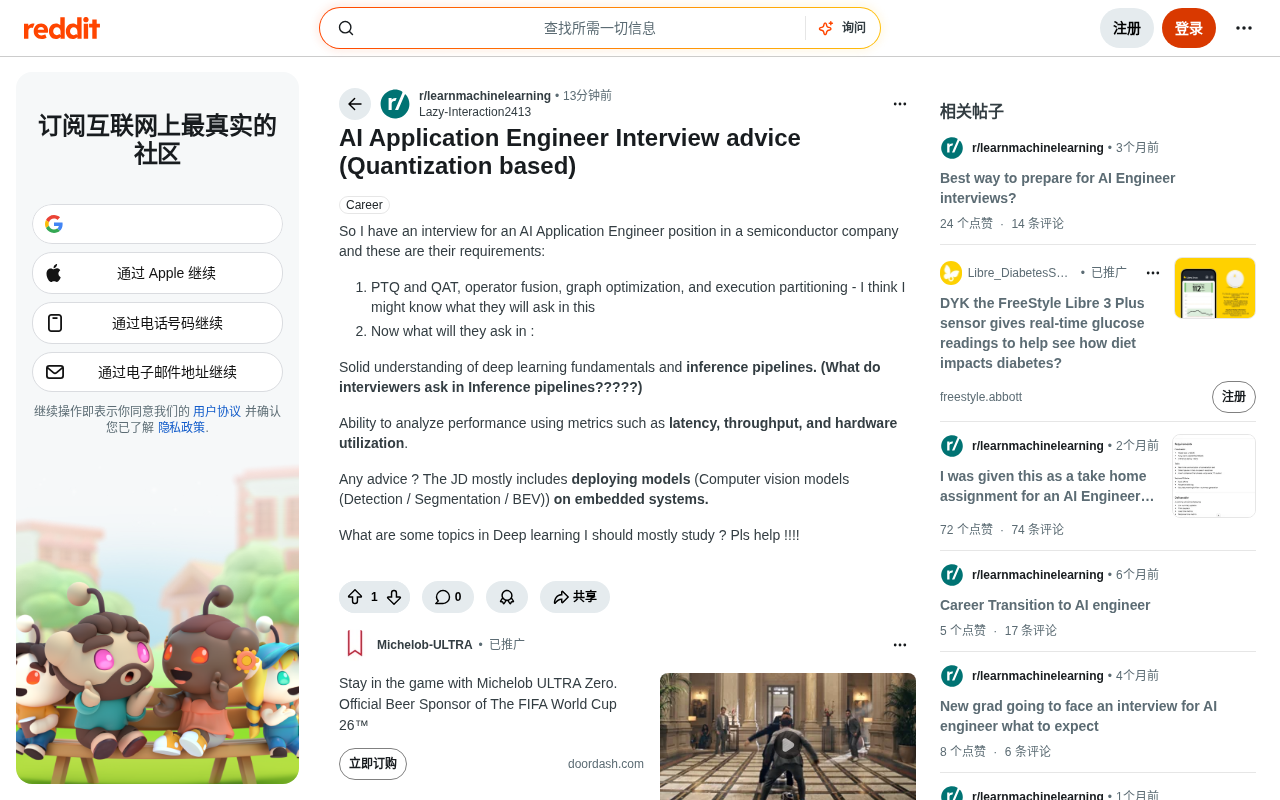
AI Application Engineer Interview Guide: Core Topics in Model Quantization and Inference Deployment
A systematic review of must-know topics for AI Application Engineer interviews: PTQ/QAT quantization, operator fusion, inference pipelines, latency/throughput analysis, and edge deployment of detection/segmentation/BEV models.
Read more →
·6 min
AI Application Engineer Interview Guide: Core Topics on Model Quantization and Inference Deployment
A systematic guide to must-know AI application engineer interview topics: PTQ/QAT quantization, operator fusion, inference pipelines, latency/throughput analysis, and edge deployment of detection/segmentation/BEV models.
Read more →

·3 min
Claude Opus 5 Launch Imminent, Alibaba Qwen Officially Integrated into Apple Intelligence
Claude Opus 5 launches next week; Alibaba Qwen integrates into Apple Intelligence for Chinese users; 27B on-device model compressed to 3.8GB; open-source models narrow gap to closed-source by 3.3%.
Read more →

·2 min
MiniMax M3 Local Deployment: 23B Active Parameters ≠ 23GB VRAM — A Complete Guide to MoE Architecture
MiniMax M3 is a 428B MoE model. Its 23B active parameters reflect per-token compute, not VRAM needs. Learn the MoE trade-offs, quantization options, and deployment paths to avoid the most common misconception.
Read more →